Go Back
Cheese Pancakes with Apple

Cheese Pancakes with Apple

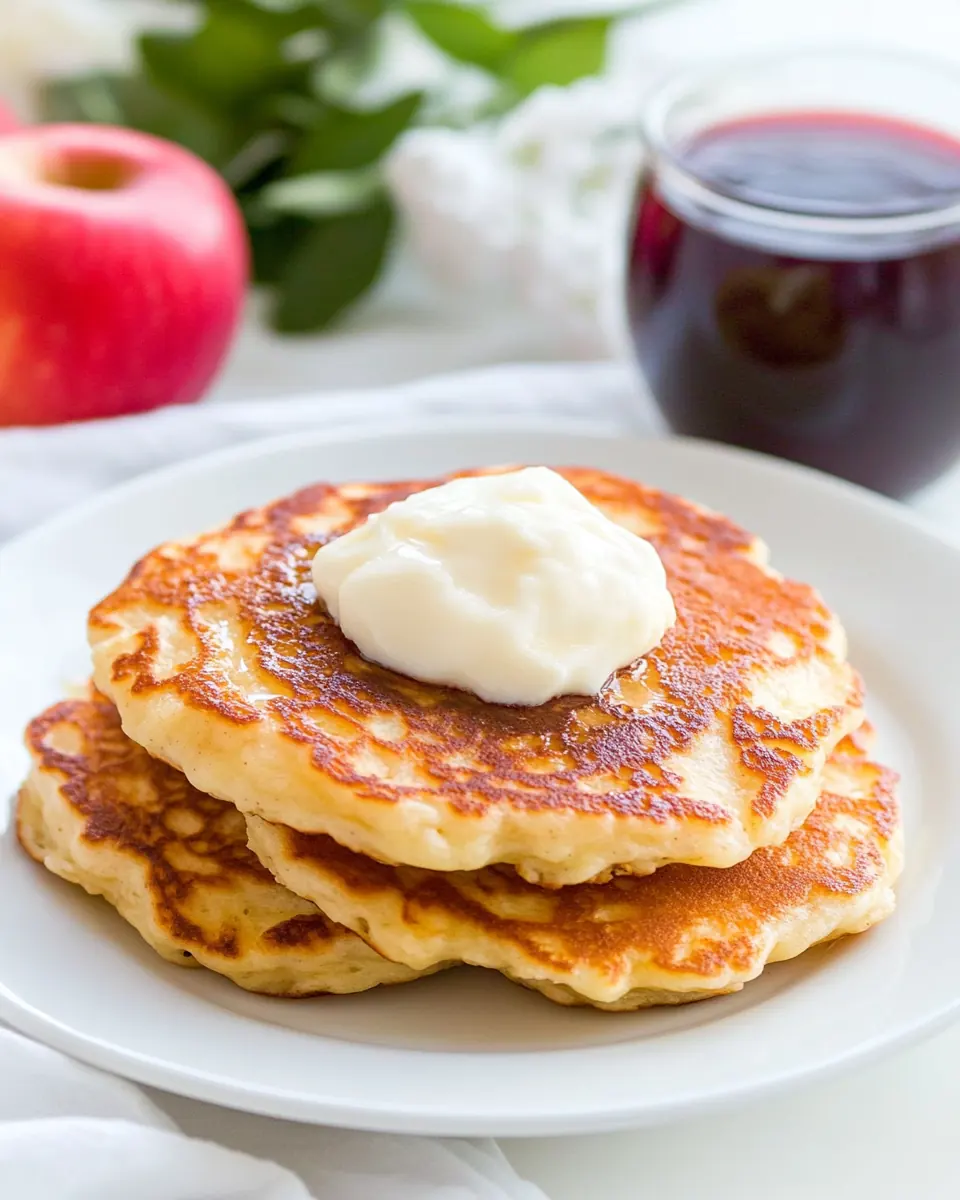
Cheese Pancakes with Apple are creamy, slightly crisp, and studded with tender apple pieces for a comforting weekend brunch. This easy, quick recipe yields golden pancakes with a tangy farmers cheese center and warm cinnamon notes, perfect for an easy weeknight dinner or relaxed morning. Make them for a crowd or a cozy two person meal, they are irresistibly satisfying.
Prep Time 10 minutes
Cook Time 24 minutes
Total Time 34 minutes
Servings: 4 servings
Course: Breakfast
Cuisine: Eastern European
Calories: 250

Ingredients
  

  • 2 cups farmers cheese, homemade or store-bought Provide a rich, tangy base and creamy texture that yields tender, slightly tangy pancakes when mixed with eggs and flour. Add moisture and structure while contributing subtle dairy sweetness and a pleasant curdled appearance when warmed. Combine well to avoid lumps and to distribute curds evenly throughout the batter.
  • 4 large eggs Bind wet and dry ingredients together while adding lift and richness, creating a tender crumb and helping the pancakes set during cooking. Whisk thoroughly to incorporate air for lighter pancakes and to emulsify with the farmers cheese and flour. Use room-temperature eggs for best blending and consistent batter texture.
  • 3/4 cups all-purpose flour + 1/2 cup for dredging Stabilize and bulk the batter, offering structure so pancakes hold their shape during frying; reserve 1/2 cup for dredging to create a light protective coating on each patty. Blend into the cheese and egg mixture until smooth to avoid dense pockets, and use the extra flour to absorb excess moisture from the apple and cheese. Sift or whisk before measuring to ensure accurate volume.
  • 3 tbsp granulated sugar Sweeten the batter lightly to balance the tang of the cheese and the brightness of the apple, contributing mild caramelization during cooking. Adjust amount to taste if you prefer sweeter or more neutral pancakes, and dissolve the sugar well to avoid grainy texture. Combine with eggs and cheese to distribute sweetness evenly.
  • 1/2 tsp salt Enhance overall flavor by adding a small amount of salt to heighten sweetness and balance the dairy flavors, preventing a flat taste. Dissolve into the batter for even seasoning throughout the pancakes. Keep measurements accurate since excess salt can overpower delicate flavors.
  • 1/2 tsp cinnamon Add warm, aromatic spice that complements the apple and cheese, giving depth and a cozy note to each pancake. Sprinkle into the dry or wet mixture to ensure even distribution and avoid clumping. Adjust slightly based on personal preference for spiciness.
  • 1 tsp baking soda Provide gentle leavening to help pancakes puff slightly and achieve a lighter texture without large holes, especially when combined with the vinegar for an instant reaction. Mix evenly into the dry ingredients to ensure consistent rise. Measure precisely to avoid a chemical aftertaste.
  • 1 tsp white vinegar React with baking soda to produce carbon dioxide bubbles, boosting rise and creating a tender crumb; also introduce a mild tang that complements the cheese. Add to the wet ingredients briefly to activate before cooking and mix promptly. Use immediately after combining to maximize leavening effect.
  • 1 medium apple, any variety, peeled, cored and finely diced (about 1 1/2 cups) Contribute fresh fruitiness, moisture, and subtle acidity that brightens the pancakes while adding pleasant texture from the finely diced pieces. Peel, core, and dice finely so the apple cooks through quickly and distributes evenly without making the batter soggy. Choose a slightly firm variety to hold shape during sautée and frying.
  • Light olive oil, canola or vegetable oil, to sautee Provide a neutral, high-heat-friendly fat for sautéeing the diced apple and for shallow frying the pancakes until golden and crisp at the edges. Use an oil with a mild flavor to avoid overpowering the delicate cheese and apple notes, and control temperature to prevent burning. Add just enough to coat the pan for even browning.

Equipment

  • Large bowl
  • electric hand mixer
  • Small ramekin
  • Large non-stick pan
  • Flat ice cream scoop or tablespoon
  • Spatula

Method
 

  1. How to Make Farmer Cheese Pancakes:: The scent of the batter coming together is mild and tangy, with a whisper of dairy that promises richness. At this stage I focus on the bowl, listening for the slight change in texture as eggs emulsify into the farmers cheese . The reason this pre-step matters is that it sets the stage for a cohesive batter later on, preventing pockets of dry flour or unevenly mixed curds. A common mistake here is overbeating which can make the mixture too loose and difficult to shape; if you notice a very runny consistency, let it rest for a few minutes to hydrate the flour and firm up slightly.
  2. In a large bowl combine 2 cups farmers cheese, 4 eggs, 3/4 cup flour, 3 Tbsp sugar, 1/2 tsp salt and 1/2 tsp cinnamon. Use an electric hand mixer on medium speed and mix just until well blended.: As you mix, watch how the batter transforms from separate curds and eggs into a cohesive, slightly lumpy batter with flecks of cinnamon and cheese. The sound of the mixer will shift to a steadier hum when things are combined. This technique helps distribute the flour and sugar evenly, which is essential for uniform texture during cooking. Avoid overmixing because that can break down curds too much and yield a pasty final texture; stop as soon as the ingredients look homogenous and fold any remaining bits gently with a spatula.
  3. Place 1 tsp baking soda into a small ramekin and add 1 tsp vinegar then stir to combine. It should fizz. Pour this mixture into the batter and mix until well blended. Use a spatula to fold in diced apples. The mixture will thicken slightly as it stands.: The fizz is an immediate sensory cue, a small pop of activity that indicates the leavening is alive. When you pour the foamy mixture in, you will notice the batter lighten and tiny air bubbles appear, which translate to fluffiness when cooked. The diced apple should be folded in gently so it does not mash and release too much juice; otherwise the batter can become soggy. A typical pitfall is waiting too long to add the fizzed solution, which reduces its leavening power. Mix and proceed promptly to retain the lift.
  4. Heat a large non-stick pan over medium/low heat and add 2 to 3 Tbsp oil.: As the pan warms, you will see a faint shimmer on the surface and the oil will thin and spread. The correct temperature is crucial, because too hot and the outside will brown before the center cooks through, too cool and the pancakes will absorb oil and become greasy. I test the pan by flicking a drop of batter in; it should sizzle gently, not erupt. A common error is using high heat to rush cooking, which results in an undercooked interior while the exterior appears done, so keep the flame moderate and steady.
  5. Fill a shallow bowl with 1/2 cup flour. Add batter a heaping tablespoon at a time (I used a flat ice cream scoop). Sprinkle flour generously over the top then gently lift pancake and pat from one hand to another to remove excess flour.: You will notice the flour forms a thin shell around each mound, helping create a protective crust while frying. The tactile sensation of patting away excess flour is oddly satisfying and essential, because too much dredge creates a dry, chalky mouthfeel. Aim for a light dusting that clings but does not cake. One thing to watch for is inconsistent sizes; try to scoop similarly sized portions so they cook evenly and you do not have to juggle timing in the pan.
  6. Saute in hot oil over med/low heat about 3 min per side. Flip when starting to form tiny bubbles on top. Transfer to a platter and serve warm with your favorite topping such as jam and sour cream!: As the pancakes sizzle, you will smell warm cinnamon and a gentle toasty note from the cheese. Tiny bubbles forming on the surface are your flip cue, and the edges should be golden but not dark brown. When you lift one gently with a spatula the underside should be a caramelized shade signaling readiness. The reason slow frying matters is it allows the interior to set without burning the outside. A common mistake is flipping too often, which prevents a stable crust from forming; let them cook undisturbed until you see those surface bubbles. Serve immediately for best texture, as they tend to soften if held too long.
  7. What I really mean to say is smothered in jam and sour cream. Absolutely delicious!: The final sensory pleasure is the contrast between warm pancakes and cool, tangy sour cream or a bright jam. The interplay of sweet, tart, and creamy heightens each bite and creates a balanced mouthfeel. If your pancakes feel oily after plating, it usually means the pan was too hot or the oil was too plentiful, so blot quickly with a paper towel before serving. Enjoy them while they are warm for the optimal combination of texture and flavor.
Notes

  • Measure flour correctly, spoon it into the cup and level it off rather than scooping, to avoid dense, flour heavy pancakes that feel pasty.
  • Let the batter rest briefly, about five to ten minutes, so the flour hydrates and the batter thickens just enough to shape easily without spreading too thinly.
  • Use a neutral oil with a medium smoke point such as canola or vegetable oil, which browns the pancakes evenly without imparting strong flavors or smoking excessively.
  • Pat the dredged pancakes gently to remove excess flour before frying, this prevents a dry outer shell and promotes a delicate crispness instead.
  • Flip only once, when small bubbles appear on the surface, to allow a stable crust to develop and avoid tearing or uneven browning.
  • Serve immediately for best texture, the contrast between warm centers and crisp edges is most pronounced right out of the pan, while they are still slightly steaming.