In a saucepan over medium heat, combine sugars, cornstarch, salt, and milk. Stir until thickened and bubbly. Lower the heat and continue to cook for 2 minutes.: You will notice the aroma shift as the milk warms and the sugars dissolve, releasing an inviting, toasty sweetness; the mixture should transform from thin to noticeably thicker, gaining body and slowly forming tiny bubbles around the edges, not an aggressive boil but a steady simmer. Stir consistently with a whisk to prevent hot spots and to dissolve the cornstarch , which is responsible for the pudding's silky set; if you stop stirring the custard can cling and scorch on the pan, leaving brown bits and a burnt taste. Aim for a texture that coats the back of a spoon, and when you dip a spoon and run your finger across it the line should hold briefly. If the mixture stays watery, continue gentle simmering but be mindful because overcooking will make it gummy and overly thick; if lumps form, remove from heat and whisk vigorously to smooth them out.
Add the chocolate and stir until melted.: Once the base is thick, sending in the chopped semisweet Belgian chocolate will change the texture and perfume the kitchen with deep cocoa notes; stir continuously so the residual heat melts the pieces to a glossy sheen rather than leaving streaks. You should watch the chocolate lose its rigid shape and become a shiny ribbon that blends into the pudding, signaling a homogeneous mixture. Stirring too slowly can cause uneven melting and small unmelted bits, while stirring too vigorously risks incorporating air that may thin the custard; aim for smooth, patient strokes. If the chocolate seems stubborn, remove the pan briefly from heat and keep stirring off-heat to avoid scorching the chocolate's delicate flavor.
Pour the mixture into a bowl and stir in the vanilla extract. Allow to cool slightly and cover the pudding with plastic wrap. Place in the fridge for at least 2 hours or until cold.: After adding the vanilla extract , you will get a fragrant, layered aroma where floral vanilla tempers the chocolate; pour into a shallow bowl to speed cooling, and press plastic wrap directly onto the pudding surface to prevent a skin from forming. Cooling gradually mellows the chocolate and helps the texture firm to a spreadable, mousse like consistency; impatience here leads to a runny layer that slides, so plan at least the stated two hours. If you chill it uncovered, you will likely get an undesirable skin that changes mouthfeel, so always seal it closely.
Preheat the oven to 325 degrees F. Grease 4 8-inch round baking pans and line the bottoms with parchment paper.: Heating the oven to a steady 325 degrees F ensures even rising and a tender crumb rather than a domed, overbrowned top; the preheated environment sets batter structure quickly. Greasing and lining with parchment prevents sticking and aids clean release, so you will flip the cakes confidently onto racks; if you skip parchment you risk tearing the delicate layers when turning them out. Take a moment to place racks in the center of the oven for uniform baking.
In a medium bowl mix flour, baking powder, baking soda, and salt.: Combine the dry all purpose flour with leaveners and salt to get an even distribution, which prevents pockets of rising agent that can cause uneven texture. Whisking these dry components creates an airy, homogenous blend that is easier to fold into wet ingredients without overworking the batter. If you add the flour directly without sifting or whisking, you may end up with lumps or dense spots in the finished cake, so take the few minutes to mix well.
Place a large saucepan over medium heat and melt the butter. Stir in cocoa and cook for a few minutes. After that, stir in sugars and chocolate until melted.: As the unsalted butter melts, it will foam briefly and then calm, creating a glossy base for the Dutch processed cocoa powder to bloom, releasing dark, roasted chocolate notes; cooking them together briefly helps integrate flavor and remove raw cocoa edge. When you add both granulated sugar and brown sugar , they begin to dissolve into the warm fat, softening the batter's texture and increasing moisture. Introducing chopped Belgian dark chocolate at the end allows it to melt into a silky mass, offering sheen and depth. A common mistake here is overheating which can scorch the cocoa or burn the butter, giving bitter, off flavors; keep it gentle and stir continuously for a uniform emulsion.
After that, remove the mixture from the heat and stir in buttermilk, coffee, and vanilla extract.: Off the heat, the hot chocolate mixture accepts cool liquids like buttermilk and coffee without curdling, and you will notice the batter loosen and steam rise as these ingredients integrate; the acidity in the buttermilk reacts with baking soda later to tenderize crumb, while the hot coffee intensifies chocolate notes via flavor synergy. Adding liquids off heat prevents the eggs from cooking prematurely in the next step, keeping batter smooth. If the mixture is too hot before you add eggs, you risk scrambling them, so always allow a brief cool down.
Whisk in the eggs one by one.: As you incorporate each large egg , the batter will lighten slightly and look glossier, creating structure through proteins that will set during baking. Whisking gradually ensures even distribution, avoiding streaks of egg white or thick pockets. If you add all eggs at once, you may overwhelm the emulsion and create separation, so patience yields a cohesive, homogeneous batter ready to accept dry ingredients.
Slowly, while stirring add the flour mixture, and mix until fully combined and the batter is smooth.: Adding the dry mix slowly while stirring prevents flour dusting and ensures the batter becomes smooth without overmixing; you want to blend until there are no visible streaks of flour, but avoid vigorous mixing which builds gluten and leads to a tough cake. The final batter should be chocolate glossy and pourable, not dense, signaling it will bake into a tender crumb. If you see heavy streaks or a lumpy texture, fold gently until smooth rather than whipping vigorously.
Pour the batter into the prepared pans. Bake for about 35 minutes, or until a toothpick inserted in the center comes out clean or with just a few crumbs.: As the pans go into the 325 degrees F oven, you will hear no audible change but visually the batter will set and pull slightly from the pan edges; aroma will intensify after about 20 minutes, filling your kitchen with roasted chocolate notes. The toothpick test should yield a few moist crumbs, not wet batter, indicating perfect doneness and a tender crumb. Overbaking dries the layers, while underbaking leaves gummy centers, so check at the thirty five minute mark and adjust slightly if needed based on your oven's temperament.
Remove the pans from the oven, and let them cool for 10 minutes before inverting the cakes on a cooling rack. Allow to cool completely before adding the frosting.: Resting the pans ten minutes helps the cake set and reduces the chance of it breaking when inverted; the steam escapes and crumb firms just enough to release cleanly. Inverting onto a rack allows air to circulate, preventing sogginess on the bottom. If you try to frost while warm, the frosting will melt and slide, so be patient until the layers reach room temperature.
First, melt the chocolate and butter over hot water in a double boiler or in the microwave in 30-40 seconds increments. Once melted, gradually whisk in the hot water, corn syrup, and vanilla.: Melting over a gentle double boiler keeps the chocolate glossy and prevents seizing, and microwaving in short bursts with stirring can achieve the same effect if you watch carefully; once shiny, the addition of hot water and light corn syrup loosens the ganache to a spreadable consistency and adds sheen, while the vanilla ties the layers together aromatically. Adding water bit by bit prevents the ganache from becoming too thin, and whisking continuously creates a smooth emulsion. If you pour liquid too quickly, the mixture can split or become runny, so proceed slowly and test spreadability.
Chill the mixture in the fridge for 25-30 minutes, or until spreadable.: Chilling firms the frosting so it will hold shape on the cake and pipe into decorative touches rather than sliding; you will feel the texture change from syrup like to a thick, spreadable paste that yields to a knife and holds peaks. Keep an eye on timing, because overchilling can make it too stiff to spread, while underchilling risks slippage. If it becomes too firm, let it sit a few minutes at room temperature and stir to soften gently.
Cut the top of each cake horizontally with a long serrated knife to make it flat. Add the tops to a bowl and use your hands to make them into crumbs.: Leveling creates even layers for stable stacking and attractive slices, while reserved tops turned into cake crumbs provide texture for the outside. Use a gentle sawing motion with a long serrated knife to avoid tearing, and handle crumbs with clean, dry hands to prevent clumping. If you slice too deeply you waste height, so aim for a thin even layer removal.
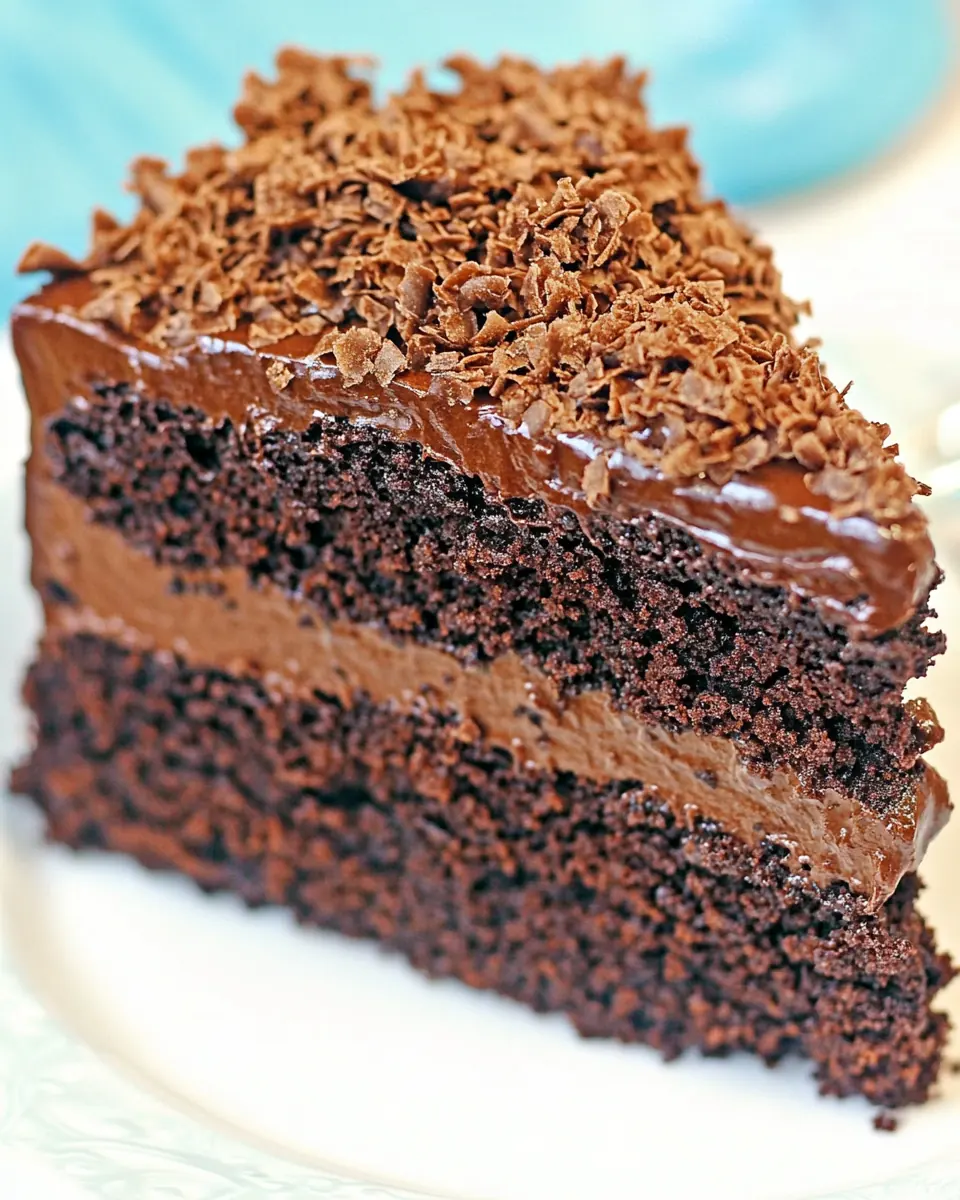
Arrange each cake layer on a serving plate and distribute the pudding mixture over each layer. Layer the cakes on top of each other.: Spreading the chilled pudding on each layer adds a cool, creamy contrast to the warm, tender cake; press lightly so the pudding adheres without squeezing out. Layering requires alignment so slices look clean, so rotate as you stack to match edges. Too much pudding between layers can cause slipping, so use measured amounts for stability and even distribution.
Cover the sides and top of the cake with frosting. Pipe also some roses on top.: When you crumb coat and then fully frost with the glossy ganache, the cake will acquire a professional, reflective finish; use an offset spatula for smooth coverage and a piping bag for decorative roses that hold shape. Work with slightly chilled cake if the pudding seems soft, and clean the spatula between passes for a sleek look. If you rush and the filling is too soft, the frosting will tear the layers, so chill as needed between steps.
Sprinkle the cake crumbs and toasted peanuts or almonds over the sides of the cake and press lightly to adhere.: Pressing crumbs and toasted peanuts or almonds into the sides provides contrast and a rustic finish while adding nutty crunch; do this while the frosting is tacky so pieces stick easily. Toasted nuts should be cooled before adding to prevent oil transfer that can soften the coating. Apply gently to avoid dislodging frosting or creating bare patches.
Place in the refrigerator to chill for at least 8 hours before serving.: Extended chilling lets flavors meld and the pudding set fully so slices are clean and the ganache firms to a sliceable texture; after eight hours the cake is cohesive and the chocolate profile deepens as components marry. If served too soon the layers may shift and frosting will be softer, so plan ahead for this resting period. Protect the cake from absorbing other fridge odors by covering lightly while chilling.