Preheat oven to 350 degrees Fahrenheit. Spray a square 8×8 inch baking dish and set aside.: As the oven warms, you will notice a gentle warmth in the kitchen and the faint metallic hum of racks heating, which signals the environment is reaching steady heat. Preheating ensures that the casserole begins cooking immediately and the top crisps evenly rather than slowly steaming, which would make the stuffing soggy. A common mistake is sliding the dish into an oven that is not fully preheated, leading to longer cook times and uneven browning. To check readiness, give the oven at least 10 minutes after you set it, and place a rack in the center so heat circulates around the dish.
In a medium sized mixing bowl mix together milk and cream of chicken soup.: The slick sound and sheen of the cooking spray on the glass are small comforts, and the nonstick coating keeps the baked casserole from sticking to the edges. Using an 8×8 dish creates the right depth for layers to meld while still allowing the top to brown; too deep a dish may lengthen the bake time significantly. Avoid skipping this step because if the casserole clings to the dish, you risk tearing the top when serving. If you do not have a sprayer, rub the dish with a little softened butter to achieve the same effect.
Place chicken breasts in prepared glass baking dish. Pour chicken soup mixture over chicken breasts. Layer cheese on top and then sprinkle stuffing over the cheese. Pour butter over the stuffing mix.: When you stir the condensed cream of chicken soup into the milk , you should see it loosen into a velvety, glossy sauce with a smooth consistency, and light steam if the milk is warm. This mixture coats the chicken and interacts with the cheese and stuffing to keep everything moist. The reason we mix before pouring is to avoid lumps of undissolved soup in the finished dish, which can create pockets of heavy saltiness. If the sauce looks too thin, let it rest for a minute so the condensed soup absorbs some liquid, and whisk again to achieve a cohesive texture.
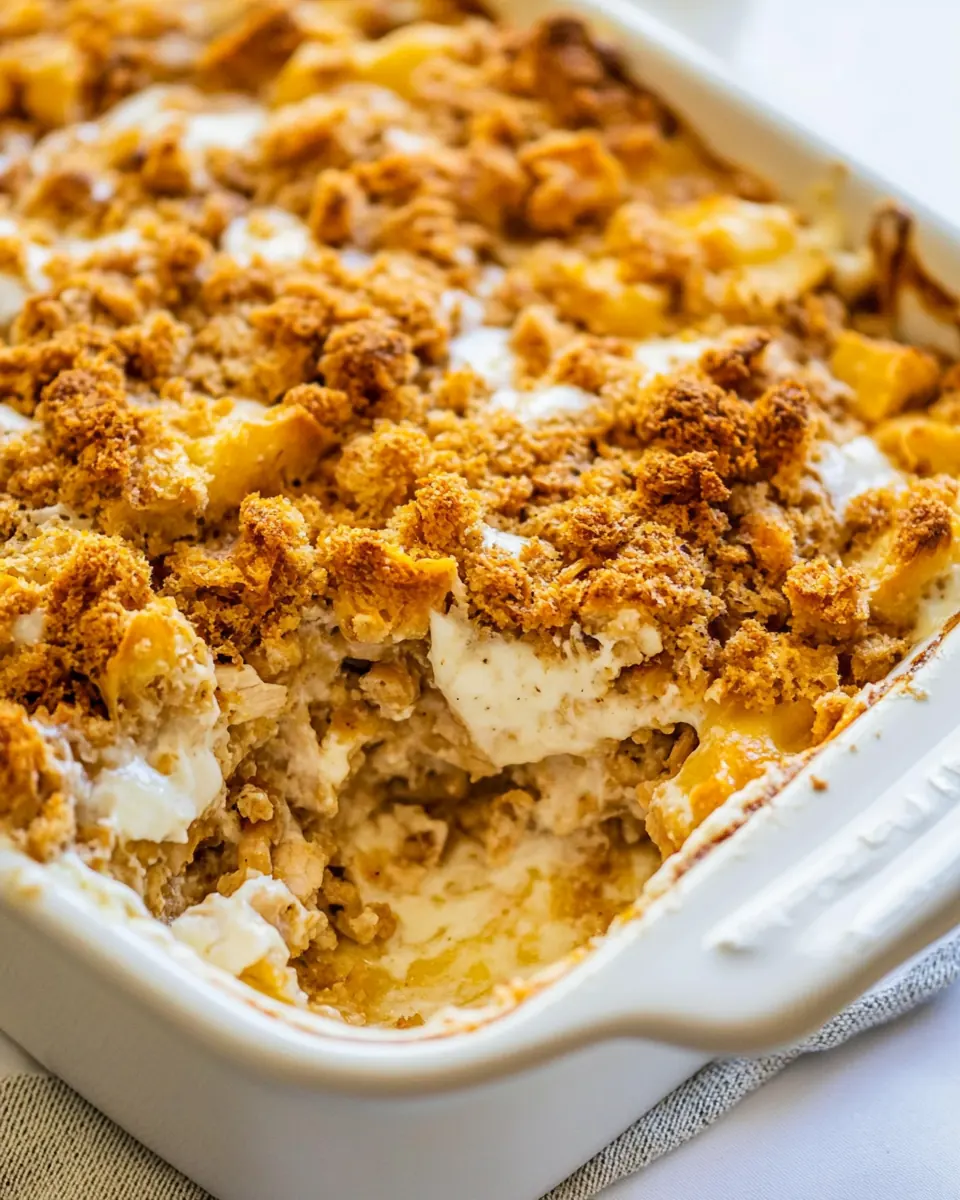
Bake for 1 hour or until chicken is cooked through and stuffing is golden brown.: Lay the chicken breasts flat in the greased dish, giving each piece a little space so heat can flow around them as they cook. You should be able to see the pale pink dull to a slightly glossy surface that will transform in the oven. Proper placement ensures even cooking, whereas stacking or overcrowding leads to inconsistent doneness. If your breasts are unevenly thick, consider pounding them to a uniform thickness to avoid overcooking thin parts while waiting for the thick center to finish.
Pour chicken soup mixture over chicken breasts: As you pour the sauce, it should pool around and over the chicken , filling the dish without submerging the top completely, which helps keep the meat moist while still allowing the cheese to melt properly. This step matters because the sauce transfers flavor into the chicken and prevents dryness. Be mindful not to over pour, as too much liquid can lead to a soggy topping. If you see excess pooling, spoon some back into the bowl to maintain balance.
Layer cheese on top and then sprinkle stuffing over the cheese: Lay the slices of Mozzarella cheese evenly across the sauce so they overlap slightly and will melt into a unified blanket, then scatter the dry stuffing mix on top to form a crust. You should hear a soft rustling as the dry stuffing settles, and visually you will get a contrast between the white cheese and the coarse golden crumbs. This layering is essential because the melting cheese anchors the stuffing and creates the crunchy top. A common error is pressing the stuffing firmly into the cheese, which can compress it and prevent air pockets needed for crisping.
Pour butter over the stuffing mix: Drizzling the warm, glossy melted butter across the top will soak into the bits of stuffing mix and promote browning and toasty aroma. The sizzling scent as the butter hits the hot layer when it first bakes is a good sign the top will crisp. Butter also adds flavor depth, and without it the stuffing may remain pale and soft. Pour evenly and avoid concentrating butter in one spot, which could leave other areas underbrowned.
Bake for 1 hour or until chicken is cooked through and stuffing is golden brown: During the bake you will see the casserole bubble gently around the edges, hear a soft crackle as moisture escapes, and smell a savory, toasty aroma as the top caramelizes. The center should register an internal temperature of 165 degrees Fahrenheit for safe consumption, and the stuffing mix should be a warm golden brown with crisp edges. This baking period allows flavors to meld and textures to set. A common pitfall is relying solely on visual cues if your oven runs hot or cool; use a thermometer to confirm doneness. If the top is browning too quickly, tent loosely with foil for the final 10 to 15 minutes to prevent burning while the center finishes cooking.