Adjust oven racks to upper and lower-middle positions. Place a 12-inch oven-safe skillet on the upper rack. Line a rimmed baking sheet with aluminum foil for easy cleanup and place on lower rack. Preheat the oven to 425 degrees.: You will smell the warm oven as it reaches temperature, and placing a 12 inch oven safe skillet on the upper rack helps the pan come up to temperature so the batter starts cooking on contact, which encourages a crisp edge. One common mistake is skipping the preheat with the skillet inside, which can lead to a soggy edge because the fruit releases juices before the batter begins to set.
In a medium bowl, add cherries, 2 teaspoons flour, lemon juice, and cinnamon. Toss until evenly coated.: The oven should feel hot when you open it, and that burst of heat is what makes the batter puff and the edges brown. If your oven runs cool, the clafoutis will take longer to set and may remain underbaked in the center, so consider using an oven thermometer for accuracy.
In a large bowl, whisk together eggs, sugar, vanilla, and salt until pale and smooth, about 1 minute. Whisk in remaining 1/2 cup flour until smooth. Whisk in cream and milk until combined.: You will appreciate the quiet ease of catching any drips, and the foil reflects heat slightly which helps even baking. A missed step here can mean more cleanup and a risk of sticky spills on the oven floor.
Carefully remove skillet from oven (handle will be very hot). Add butter and swirl to coat bottom and sides of skillet (butter will melt and brown quickly).: Tossing the cherries together coats them so they do not all sink to the bottom, and you will notice a faint dusting of flour clinging to the fruit. This step prevents an uneven distribution of fruit and a dense bottom layer, which is a common problem when fruit is added uncoated.
Immediately pour batter into skillet and top evenly with cherries (it's okay if some sink into the batter). Transfer skillet to upper rack.: You will hear soft sliding as the cherries move and smell the citrus as it mingles with the fruit. Ensure each piece has a light dusting; clumps of flour can make pockets in the batter, so separate them gently with your fingers if needed.
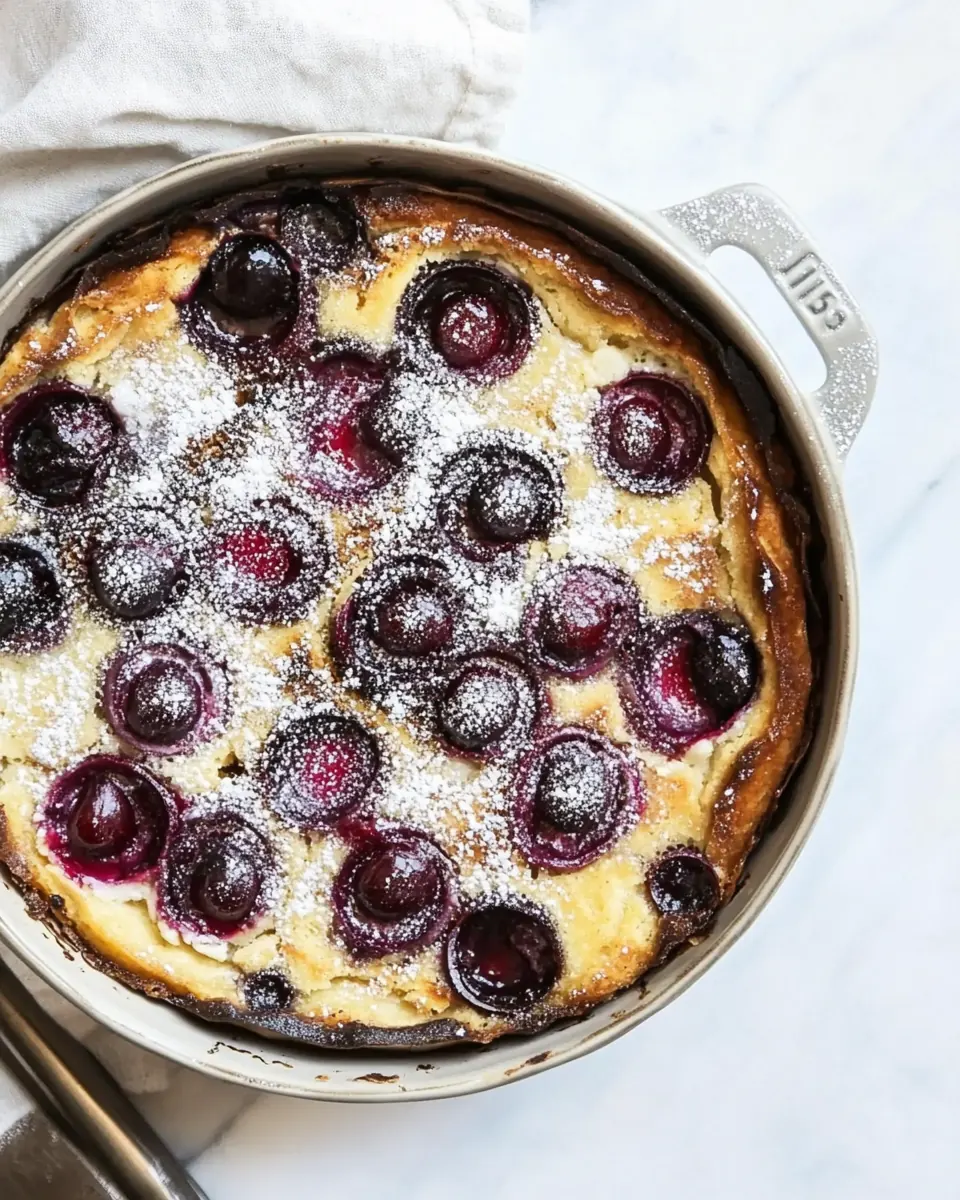
Bake until puffy and golden brown, about 18 to 22 minutes, rotating skillet halfway through baking time. The center of the clafouti should reach 195 degrees on an instant-read thermometer and the edges will be dark brown.: The whisk will make a rhythm and the mixture will brighten in color, which indicates the sugar is dissolving and the air is being incorporated. Under whisking can yield a denser custard, while over whisking will not harm but is unnecessary here.
Transfer to a wire rack and cool 25 minutes. Dust with powdered sugar. Slice into wedges to serve.: As you add the flour , the batter will thicken slightly and become velvety. It should be free of lumps, so take an extra moment to scrape the sides. A common mistake is rushing and leaving flour pockets that bake into grainy bits.
Whisk in cream and milk until combined: The batter will loosen and develop a glossy sheen, and you will notice a rich aroma from the dairy. This step creates the custardy texture, so do not skimp on whisking to fully incorporate the liquids.
Carefully remove skillet from oven (handle will be very hot): When you lift the skillet, you will feel radiant heat and possibly a faint toasted scent if the pan warmed a touch. Use a thick oven mitt and set the skillet on a heat resistant surface; failing to protect your hands is the most common hazard here.
Add butter and swirl to coat bottom and sides of skillet (butter will melt and brown quickly): The butter will sizzle and release a nutty aroma as it browns slightly, which adds depth to the crust. Make sure the entire surface is coated to prevent sticking; an uneven coating can cause the clafoutis to cling to the pan when you try to slice it.
Immediately pour batter into skillet and top evenly with cherries (it's okay if some sink into the batter): As the batter hits the hot pan you will see a gentle steam rise, and the edges will begin to set almost at once. Arrange the cherries so they are evenly distributed; piling them can cause uneven baking and dense pockets.
Transfer skillet to upper rack: Sliding the skillet onto the hot rack ensures direct heat at the top and bottom for even browning. If you place it too low, the top may remain pale while the bottom overcooks.
Bake until puffy and golden brown, about 18 to 22 minutes, rotating skillet halfway through baking time: You will hear an almost inaudible crackle as the edges brown, and the top will take on a warm, golden hue. Rotate once to promote uniform color. A common error is opening the oven too often, which lets heat escape and prevents proper puffing.
The center of the clafouti should reach 195 degrees on an instant-read thermometer and the edges will be dark brown: Use a thermometer to confirm doneness, the center should feel set but still slightly springy. If it reads lower, return it to the oven in short increments. Cutting too early will give you a runny center and a disappointed audience.
Transfer to a wire rack and cool 25 minutes: As it cools, the clafoutis will gently settle and the texture will become creamier. Cool on a wire rack to prevent condensation underneath; leaving it in the hot pan can cause residual steam to make the crust soft.
Dust with powdered sugar: The fine sugar will melt slightly into the warm surface, adding a delicate finish and aroma. If you dust too early while it is blistering hot it may dissolve completely and not give the pretty powdered look.
Slice into wedges to serve: The knife will glide through the tender custard, revealing streaks of ruby cherries . Use a sharp, thin knife and wipe it between cuts for clean slices; a dull blade can tear the delicate interior.