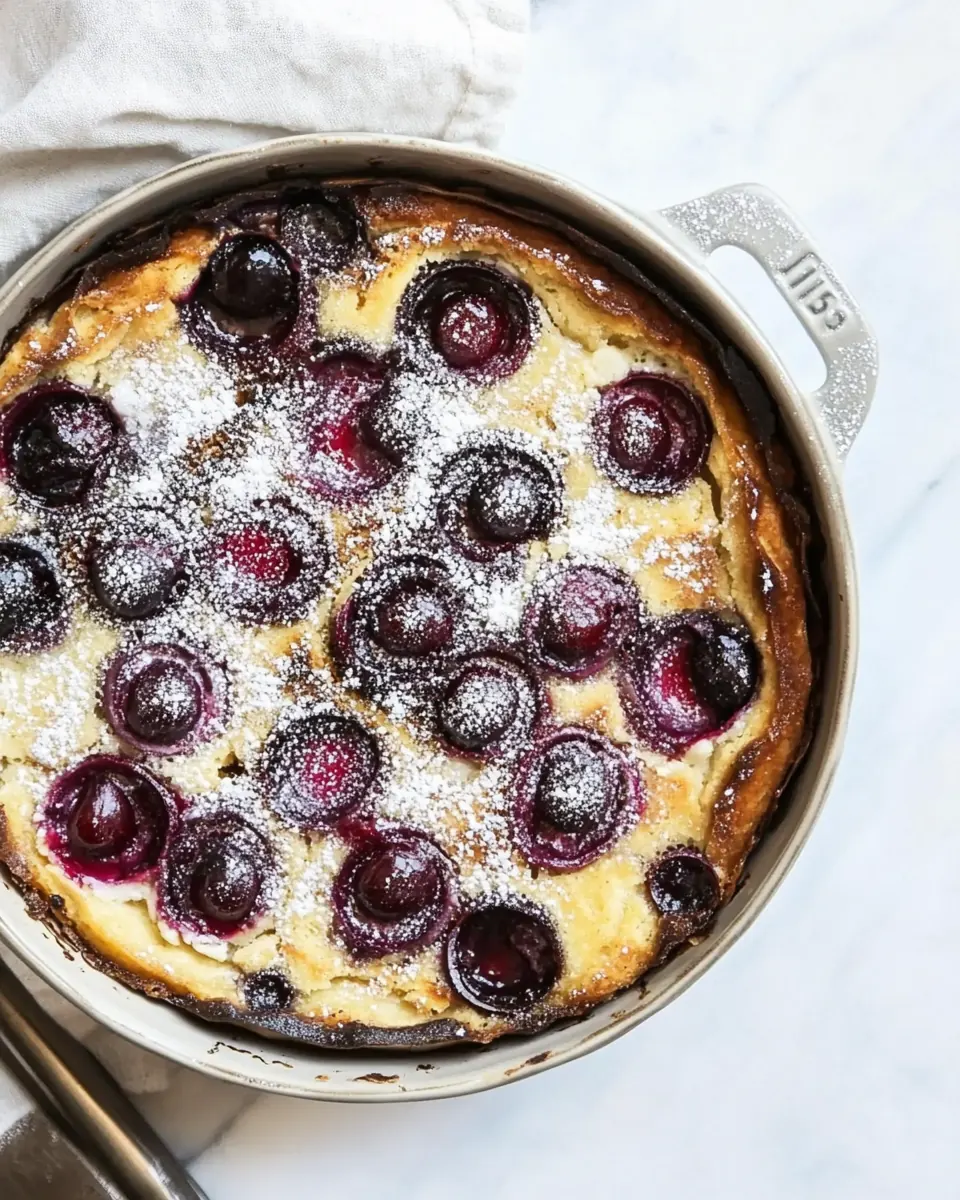
Cherry Clafoutis
Cherry Clafoutis has been my go to when summer cherries start showing up at the farmer market, and the first bite always takes me back to a sunlit kitchen where my grandmother would hand me a warm slice straight from the skillet. The texture is somewhere between a custard and a pancake, and the gentle perfume of baked cherries mixed with vanilla will stop you mid conversation. I remember one rainy afternoon when I threw this together with whatever I had on hand, and it turned into an impromptu tea time for neighbors who needed a little cheering up.
There is something honest about a recipe that needs only a handful of ingredients and a single pan, and Cherry Clafoutis is exactly that kind of dessert. I like how the cherries sink into the batter while baking, creating pockets of jammy sweetness surrounded by a tender, custardy base. Over the years, I have swapped small things, observed how the batter puffs and then gently settles, and learned tiny tricks that make the difference between a so so clafoutis and one that everyone asks for the recipe for.
Recipe Snapshot
35 mins
10 mins
25 mins
Medium
300 kcal
French
Gluten-Free, Low FODMAP
Desserts
12 inch oven safe skillet, rimmed baking sheet, medium bowl, large bowl, whisk, instant read thermometer, wire rack
What We Adore About This Cherry Clafoutis
Simple ingredients, dramatic results
I love that Cherry Clafoutis takes a very short list of pantry staples and turns them into something that feels almost celebratory. The interplay of eggs, flour, and dairy creates a custard that is both delicate and structured, so the dessert slices cleanly yet remains soft.
Seasonal star power
When cherries are at their peak, they bring brightness and natural sweetness so you need less added sugar. I always reach for the ripest fruit I can find because it intensifies the aroma and gives the clafoutis a more complex flavor profile, which I find irresistible.
One pan, minimal fuss
I appreciate recipes that let me focus on company rather than complicated technique. With Cherry Clafoutis you preheat, toss, whisk, and bake. The cleanup is easy, and that makes it perfect for casual dinners where you still want a dessert that feels thoughtful.
Textures that sing
The contrast between the slightly chewy, jam like cherries and the tender, custardy base keeps every bite interesting. I especially love the edges where the batter browns and caramelizes a little, adding a toasty note that balances the fruit.
Flexible and forgiving
I often use this recipe as a template: swap the cherries for other stone fruit, adjust the sugar, or use part milk and part cream to change the richness. Because the technique is straightforward, small variations rarely fail, which gives me confidence to experiment for seasonal menus.
What You’ll Need for Cherry Clafoutis
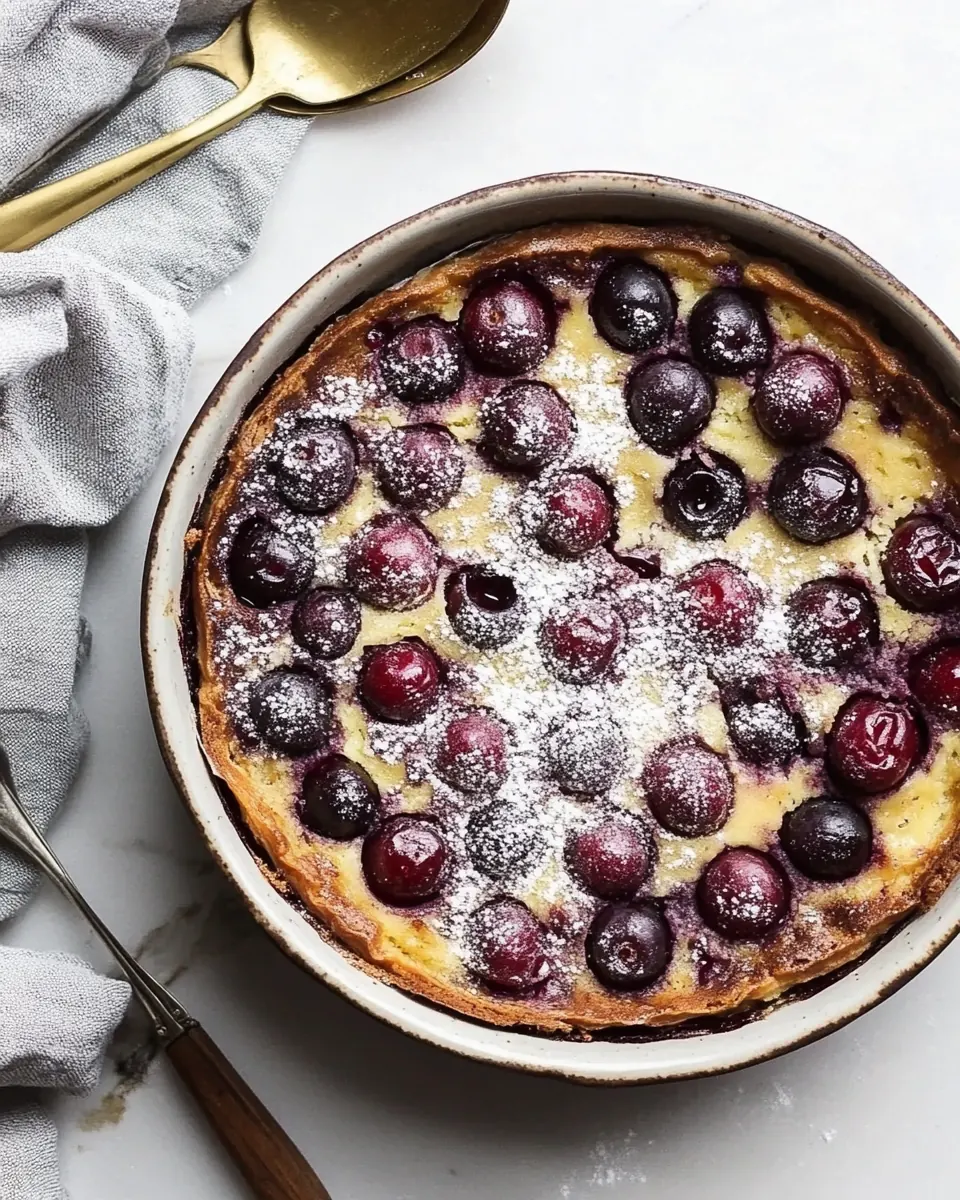
This recipe relies on straightforward ingredients that play clear roles. The cherries provide fruity brightness and pockets of syrupy texture, while the batter made from eggs, flour, and dairy sets into a tender custard. A small amount of sugar and vanilla highlight the fruit without overpowering it. I think of the recipe as a small orchestra where each player supports the others, yielding a balanced, homey dessert.
- 1 1/2 pounds fresh sweet cherries pitted and halved (see note 1): Provide juicy, tart-sweet flavor and moisture; pitting and halving exposes fruit for even baking and integration into the custard, while contributing natural juices that infuse the batter and create delightful pockets of fruit throughout the clafoutis.
- 1/2 cup + 2 teaspoons all-purpose flour divided: Give structure and lightness to the custard batter; dividing the flour allows an initial coating of cherries to prevent sinking and a subsequent incorporation into the liquid to thicken and stabilize the batter for a tender finished texture.
- 1 teaspoon lemon juice: Add bright acidity to balance sweetness and lift flavors; a small amount of lemon juice enhances fruit brightness and helps preserve the cherries' color while subtly cutting through the richness of the custard.
- 1/8 teaspoon ground cinnamon: Introduce a warm, aromatic note that complements the cherries; a touch of ground cinnamon adds subtle spice depth without overpowering the delicate custard and enhances overall flavor complexity.
- 4 eggs: Provide richness, structure, and leavening through incorporation; eggs set the custard during baking, create a smooth, silky texture, and help bind dry and wet components into the classic clafoutis consistency.
- 2/3 cup granulated sugar: Contribute sweetness and tenderness to the batter; granulated sugar dissolves into the custard, aids in browning the top, and balances the fruit acidity for a pleasant, not-overly-sweet dessert.
- 2 1/2 teaspoons vanilla extract: Add floral, vanilla aromatic depth to the custard; vanilla extract rounds and enhances the overall flavor profile, bringing cohesion between the cherries, sugar, and dairy components.
- 1/4 teaspoon salt: Enhance flavor balance and strengthen structure; a pinch of salt lifts the sweetness, sharpens the other flavors, and slightly modifies protein interactions in the batter for better texture.
- 1 cup heavy cream: Provide richness and a creamy mouthfeel; heavy cream adds fat that yields a luscious, velvety custard, contributes to a tender crumb, and helps create a luxuriously smooth bake.
- 2/3 cup whole milk: Contribute lightness and loosen the custard for proper set; whole milk dilutes the cream to the right consistency, helps achieve a custardy texture, and prevents the clafoutis from being too heavy.
- 1 tablespoon butter: Grease the baking dish and promote even browning; melted butter prevents sticking, adds a toasted, slightly nutty flavor around the edges, and contributes to a shiny, appealing crust.
- 2 teaspoons powdered sugar for dusting: Finish with a delicate, sweet visual touch; powdered sugar dusting adds a gentle sweetness and an attractive, classic presentation while enhancing the dessert's overall appeal.
Directions for Cherry Clafoutis
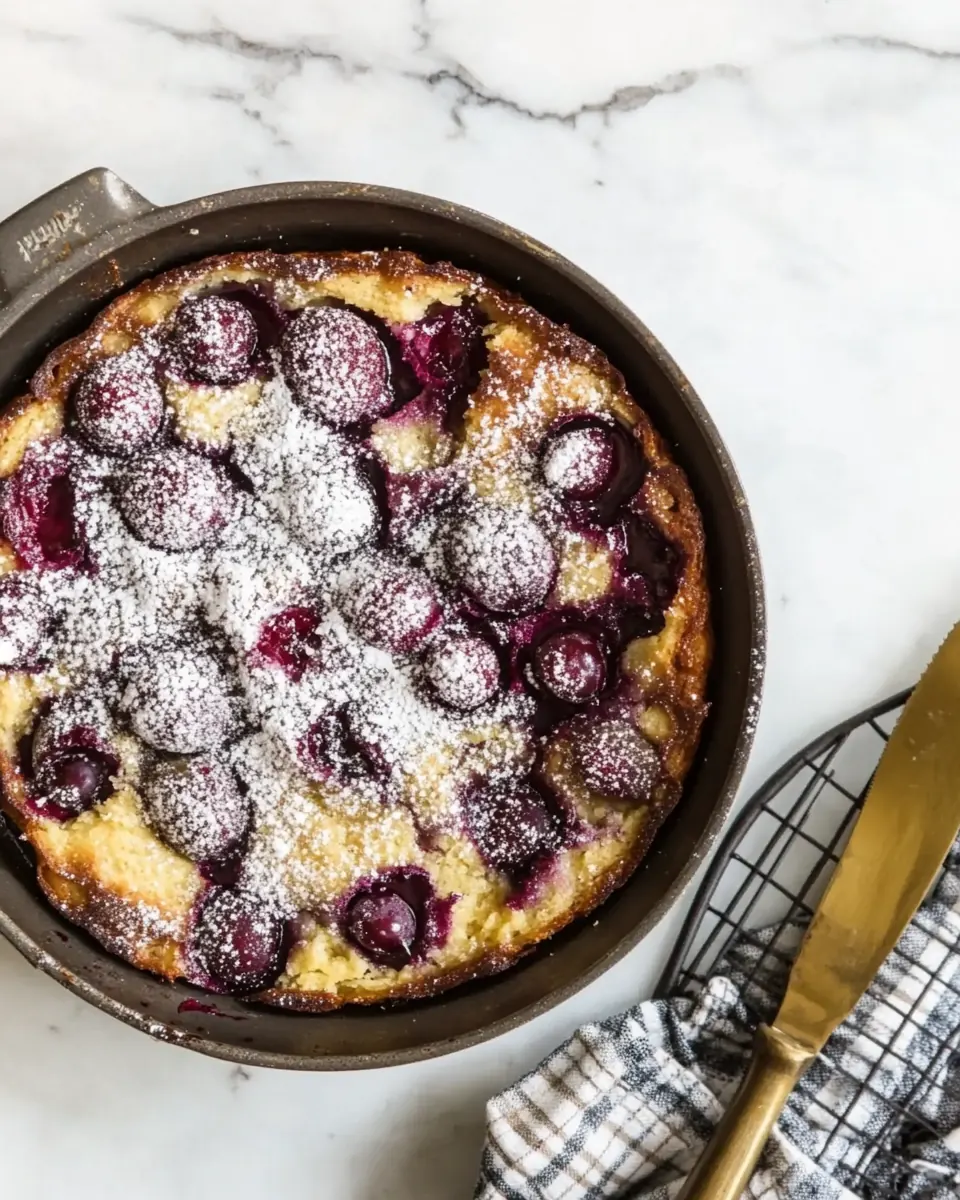
I like to approach the oven stage with confidence, so I set up my pan and ingredients beforehand. These directions will walk you through each phase with sensory cues so you know when things are right and how to avoid common pitfalls.
- Adjust oven racks to upper and lower-middle positions. Place a 12-inch oven-safe skillet on the upper rack. Line a rimmed baking sheet with aluminum foil for easy cleanup and place on lower rack. Preheat the oven to 425 degrees.: You will smell the warm oven as it reaches temperature, and placing a 12 inch oven safe skillet on the upper rack helps the pan come up to temperature so the batter starts cooking on contact, which encourages a crisp edge. One common mistake is skipping the preheat with the skillet inside, which can lead to a soggy edge because the fruit releases juices before the batter begins to set.
- In a medium bowl, add cherries, 2 teaspoons flour, lemon juice, and cinnamon. Toss until evenly coated.: The oven should feel hot when you open it, and that burst of heat is what makes the batter puff and the edges brown. If your oven runs cool, the clafoutis will take longer to set and may remain underbaked in the center, so consider using an oven thermometer for accuracy.
- In a large bowl, whisk together eggs, sugar, vanilla, and salt until pale and smooth, about 1 minute. Whisk in remaining 1/2 cup flour until smooth. Whisk in cream and milk until combined.: You will appreciate the quiet ease of catching any drips, and the foil reflects heat slightly which helps even baking. A missed step here can mean more cleanup and a risk of sticky spills on the oven floor.
- Carefully remove skillet from oven (handle will be very hot). Add butter and swirl to coat bottom and sides of skillet (butter will melt and brown quickly).: Tossing the cherries together coats them so they do not all sink to the bottom, and you will notice a faint dusting of flour clinging to the fruit. This step prevents an uneven distribution of fruit and a dense bottom layer, which is a common problem when fruit is added uncoated.
- Immediately pour batter into skillet and top evenly with cherries (it's okay if some sink into the batter). Transfer skillet to upper rack.: You will hear soft sliding as the cherries move and smell the citrus as it mingles with the fruit. Ensure each piece has a light dusting; clumps of flour can make pockets in the batter, so separate them gently with your fingers if needed.
- Bake until puffy and golden brown, about 18 to 22 minutes, rotating skillet halfway through baking time. The center of the clafouti should reach 195 degrees on an instant-read thermometer and the edges will be dark brown.: The whisk will make a rhythm and the mixture will brighten in color, which indicates the sugar is dissolving and the air is being incorporated. Under whisking can yield a denser custard, while over whisking will not harm but is unnecessary here.
- Transfer to a wire rack and cool 25 minutes. Dust with powdered sugar. Slice into wedges to serve.: As you add the flour , the batter will thicken slightly and become velvety. It should be free of lumps, so take an extra moment to scrape the sides. A common mistake is rushing and leaving flour pockets that bake into grainy bits.
- Whisk in cream and milk until combined: The batter will loosen and develop a glossy sheen, and you will notice a rich aroma from the dairy. This step creates the custardy texture, so do not skimp on whisking to fully incorporate the liquids.
- Carefully remove skillet from oven (handle will be very hot): When you lift the skillet, you will feel radiant heat and possibly a faint toasted scent if the pan warmed a touch. Use a thick oven mitt and set the skillet on a heat resistant surface; failing to protect your hands is the most common hazard here.
- Add butter and swirl to coat bottom and sides of skillet (butter will melt and brown quickly): The butter will sizzle and release a nutty aroma as it browns slightly, which adds depth to the crust. Make sure the entire surface is coated to prevent sticking; an uneven coating can cause the clafoutis to cling to the pan when you try to slice it.
- Immediately pour batter into skillet and top evenly with cherries (it's okay if some sink into the batter): As the batter hits the hot pan you will see a gentle steam rise, and the edges will begin to set almost at once. Arrange the cherries so they are evenly distributed; piling them can cause uneven baking and dense pockets.
- Transfer skillet to upper rack: Sliding the skillet onto the hot rack ensures direct heat at the top and bottom for even browning. If you place it too low, the top may remain pale while the bottom overcooks.
- Bake until puffy and golden brown, about 18 to 22 minutes, rotating skillet halfway through baking time: You will hear an almost inaudible crackle as the edges brown, and the top will take on a warm, golden hue. Rotate once to promote uniform color. A common error is opening the oven too often, which lets heat escape and prevents proper puffing.
- The center of the clafouti should reach 195 degrees on an instant-read thermometer and the edges will be dark brown: Use a thermometer to confirm doneness, the center should feel set but still slightly springy. If it reads lower, return it to the oven in short increments. Cutting too early will give you a runny center and a disappointed audience.
- Transfer to a wire rack and cool 25 minutes: As it cools, the clafoutis will gently settle and the texture will become creamier. Cool on a wire rack to prevent condensation underneath; leaving it in the hot pan can cause residual steam to make the crust soft.
- Dust with powdered sugar: The fine sugar will melt slightly into the warm surface, adding a delicate finish and aroma. If you dust too early while it is blistering hot it may dissolve completely and not give the pretty powdered look.
- Slice into wedges to serve: The knife will glide through the tender custard, revealing streaks of ruby cherries . Use a sharp, thin knife and wipe it between cuts for clean slices; a dull blade can tear the delicate interior.
Pro Tips and Tweaks
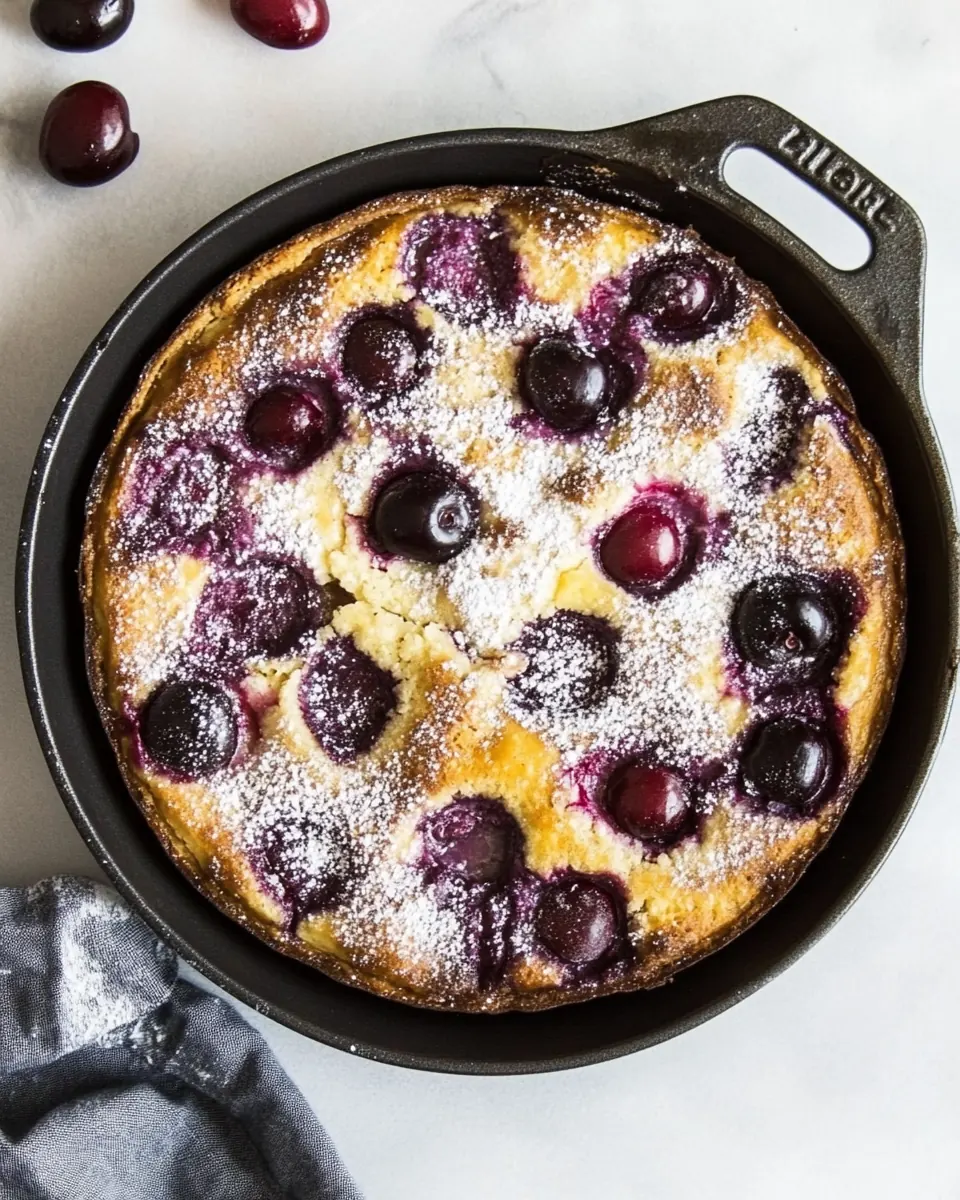
I like to test a few small changes when I want a different result, and these tips reflect years of tinkering. Below are practical adjustments and small hacks that will help you get the exact texture and flavor you prefer.
- Tip 1 Make sure your cherries are well drained if using frozen or canned fruit, pat them dry so excess moisture does not thin the batter and make the clafoutis soggy.
- Tip 2 For a lighter texture, let the batter rest for 10 minutes before baking to allow the flour to hydrate and air bubbles to settle, this leads to a smoother custard.
- Tip 3 If you want more caramelization at the edges, use a cast iron skillet and ensure it is properly preheated, as the retained heat promotes browning and a slightly crisp rim.
- Tip 4 To intensify fruit flavor, macerate the cherries with a teaspoon of sugar and the lemon juice for 10 minutes before tossing with flour so they release their juices and concentrate their sweetness.
- Tip 5 If you prefer a less rich custard, substitute half the heavy cream with additional milk, which keeps the texture tender but reduces overall richness.
- Tip 6 For clean slices, let the clafoutis cool for the recommended 25 minutes; cutting too soon will produce messy pieces and a runny center.
- Tip 7 If you do not have powdered sugar, a light brush of warmed apricot jam gives a glossy finish and a hint of extra sweetness without overdoing it.
Perfect Matches for Cherry Clafoutis
Cherry Clafoutis works beautifully as a relaxed dessert or an elegant brunch offering. Below are serving ideas, pairings, and storage notes to help you present it well for different occasions.
- Casual brunch Serve warm wedges with a dollop of plain yogurt or a spoonful of crème fraîche to add a tangy counterpoint to the sweet cherries.
- After dinner dessert Present slices with a small scoop of vanilla bean ice cream for contrast in temperature and texture, the melting ice cream complements the warm custard.
- Seasonal centerpiece Use Cherry Clafoutis as a late summer showpiece for garden parties, offering it on a simple cake stand so guests can help themselves to slices.
- Storage tips Cover leftovers and refrigerate for up to 4 days; reheat gently in the microwave or a low oven to refresh the texture before serving.
- Occasion ideas This recipe is excellent for weekend brunches, casual dinner parties, or a cozy afternoon tea when you want a dessert that is easy but impressive.
- Seasonal pairing Highlight the seasonal nature of cherries by serving this in summer and pairing with other fruit forward dishes, or use preserved fruits in cooler months for a similar effect.
FAQ
Conclusion
Cherry Clafoutis stands out for its charming simplicity and the way a few quality ingredients can yield a dessert that feels both elegant and homey. Give it a try when cherries are in season or anytime you want a fuss free dessert that still looks special. I hope this recipe becomes one of your go to treats for casual brunches, intimate dinners, or sunny afternoons when you want something comforting and reliably delicious.
Cherry Clafoutis
Ingredients
Equipment
Method
- Adjust oven racks to upper and lower-middle positions. Place a 12-inch oven-safe skillet on the upper rack. Line a rimmed baking sheet with aluminum foil for easy cleanup and place on lower rack. Preheat the oven to 425 degrees.: You will smell the warm oven as it reaches temperature, and placing a 12 inch oven safe skillet on the upper rack helps the pan come up to temperature so the batter starts cooking on contact, which encourages a crisp edge. One common mistake is skipping the preheat with the skillet inside, which can lead to a soggy edge because the fruit releases juices before the batter begins to set.
- In a medium bowl, add cherries, 2 teaspoons flour, lemon juice, and cinnamon. Toss until evenly coated.: The oven should feel hot when you open it, and that burst of heat is what makes the batter puff and the edges brown. If your oven runs cool, the clafoutis will take longer to set and may remain underbaked in the center, so consider using an oven thermometer for accuracy.
- In a large bowl, whisk together eggs, sugar, vanilla, and salt until pale and smooth, about 1 minute. Whisk in remaining 1/2 cup flour until smooth. Whisk in cream and milk until combined.: You will appreciate the quiet ease of catching any drips, and the foil reflects heat slightly which helps even baking. A missed step here can mean more cleanup and a risk of sticky spills on the oven floor.
- Carefully remove skillet from oven (handle will be very hot). Add butter and swirl to coat bottom and sides of skillet (butter will melt and brown quickly).: Tossing the cherries together coats them so they do not all sink to the bottom, and you will notice a faint dusting of flour clinging to the fruit. This step prevents an uneven distribution of fruit and a dense bottom layer, which is a common problem when fruit is added uncoated.
- Immediately pour batter into skillet and top evenly with cherries (it's okay if some sink into the batter). Transfer skillet to upper rack.: You will hear soft sliding as the cherries move and smell the citrus as it mingles with the fruit. Ensure each piece has a light dusting; clumps of flour can make pockets in the batter, so separate them gently with your fingers if needed.
- Bake until puffy and golden brown, about 18 to 22 minutes, rotating skillet halfway through baking time. The center of the clafouti should reach 195 degrees on an instant-read thermometer and the edges will be dark brown.: The whisk will make a rhythm and the mixture will brighten in color, which indicates the sugar is dissolving and the air is being incorporated. Under whisking can yield a denser custard, while over whisking will not harm but is unnecessary here.
- Transfer to a wire rack and cool 25 minutes. Dust with powdered sugar. Slice into wedges to serve.: As you add the flour , the batter will thicken slightly and become velvety. It should be free of lumps, so take an extra moment to scrape the sides. A common mistake is rushing and leaving flour pockets that bake into grainy bits.
- Whisk in cream and milk until combined: The batter will loosen and develop a glossy sheen, and you will notice a rich aroma from the dairy. This step creates the custardy texture, so do not skimp on whisking to fully incorporate the liquids.
- Carefully remove skillet from oven (handle will be very hot): When you lift the skillet, you will feel radiant heat and possibly a faint toasted scent if the pan warmed a touch. Use a thick oven mitt and set the skillet on a heat resistant surface; failing to protect your hands is the most common hazard here.
- Add butter and swirl to coat bottom and sides of skillet (butter will melt and brown quickly): The butter will sizzle and release a nutty aroma as it browns slightly, which adds depth to the crust. Make sure the entire surface is coated to prevent sticking; an uneven coating can cause the clafoutis to cling to the pan when you try to slice it.
- Immediately pour batter into skillet and top evenly with cherries (it's okay if some sink into the batter): As the batter hits the hot pan you will see a gentle steam rise, and the edges will begin to set almost at once. Arrange the cherries so they are evenly distributed; piling them can cause uneven baking and dense pockets.
- Transfer skillet to upper rack: Sliding the skillet onto the hot rack ensures direct heat at the top and bottom for even browning. If you place it too low, the top may remain pale while the bottom overcooks.
- Bake until puffy and golden brown, about 18 to 22 minutes, rotating skillet halfway through baking time: You will hear an almost inaudible crackle as the edges brown, and the top will take on a warm, golden hue. Rotate once to promote uniform color. A common error is opening the oven too often, which lets heat escape and prevents proper puffing.
- The center of the clafouti should reach 195 degrees on an instant-read thermometer and the edges will be dark brown: Use a thermometer to confirm doneness, the center should feel set but still slightly springy. If it reads lower, return it to the oven in short increments. Cutting too early will give you a runny center and a disappointed audience.
- Transfer to a wire rack and cool 25 minutes: As it cools, the clafoutis will gently settle and the texture will become creamier. Cool on a wire rack to prevent condensation underneath; leaving it in the hot pan can cause residual steam to make the crust soft.
- Dust with powdered sugar: The fine sugar will melt slightly into the warm surface, adding a delicate finish and aroma. If you dust too early while it is blistering hot it may dissolve completely and not give the pretty powdered look.
- Slice into wedges to serve: The knife will glide through the tender custard, revealing streaks of ruby cherries . Use a sharp, thin knife and wipe it between cuts for clean slices; a dull blade can tear the delicate interior.
Notes
- Tip 1 Make sure your cherries are well drained if using frozen or canned fruit, pat them dry so excess moisture does not thin the batter and make the clafoutis soggy.
- Tip 2 For a lighter texture, let the batter rest for 10 minutes before baking to allow the flour to hydrate and air bubbles to settle, this leads to a smoother custard.
- Tip 3 If you want more caramelization at the edges, use a cast iron skillet and ensure it is properly preheated, as the retained heat promotes browning and a slightly crisp rim.
- Tip 4 To intensify fruit flavor, macerate the cherries with a teaspoon of sugar and the lemon juice for 10 minutes before tossing with flour so they release their juices and concentrate their sweetness.
- Tip 5 If you prefer a less rich custard, substitute half the heavy cream with additional milk, which keeps the texture tender but reduces overall richness.
- Tip 6 For clean slices, let the clafoutis cool for the recommended 25 minutes; cutting too soon will produce messy pieces and a runny center.
- Tip 7 If you do not have powdered sugar, a light brush of warmed apricot jam gives a glossy finish and a hint of extra sweetness without overdoing it.