Preheat the oven to 375°F. Spray a 9×13 baking dish with cooking spray.: As the oven warms, you should sense a dry, rising heat and the faint metallic hum of the oven cycling, which signals a stable baking environment. Ensuring the oven reaches a steady 375°F before you insert the casserole promotes even baking and helps the stuffing brown reliably. Lightly coating the pan with cooking spray prevents the casserole from sticking, so the edges lift cleanly when served. A common mistake here is putting the dish into an oven that is not fully heated, which can lengthen bake time and yield uneven browning; allow the full preheat period to complete for best results.
Add the chicken broth and butter to a medium saucepan, and bring the mixture to a boil. Stir in the stuffing mix, remove from heat, and cover. Let stand for five minutes, then fluff with a fork.: At the stove you will hear the broth begin to chatter and see small bubbles form as it reaches a boil, carrying buttery aroma that tells you it is hot enough. Stirring in the stuffing causes it to absorb the hot liquid quickly, swelling into a tender crumb. Covering and letting it rest for five minutes allows the steam to finish hydrating the crumbs so they are moist but not soggy. Fluffing with a fork introduces air and separates clumps, producing a lighter topping. Avoid skipping the rest time or failing to fluff, as packed stuffing will become dense instead of crisping on top.
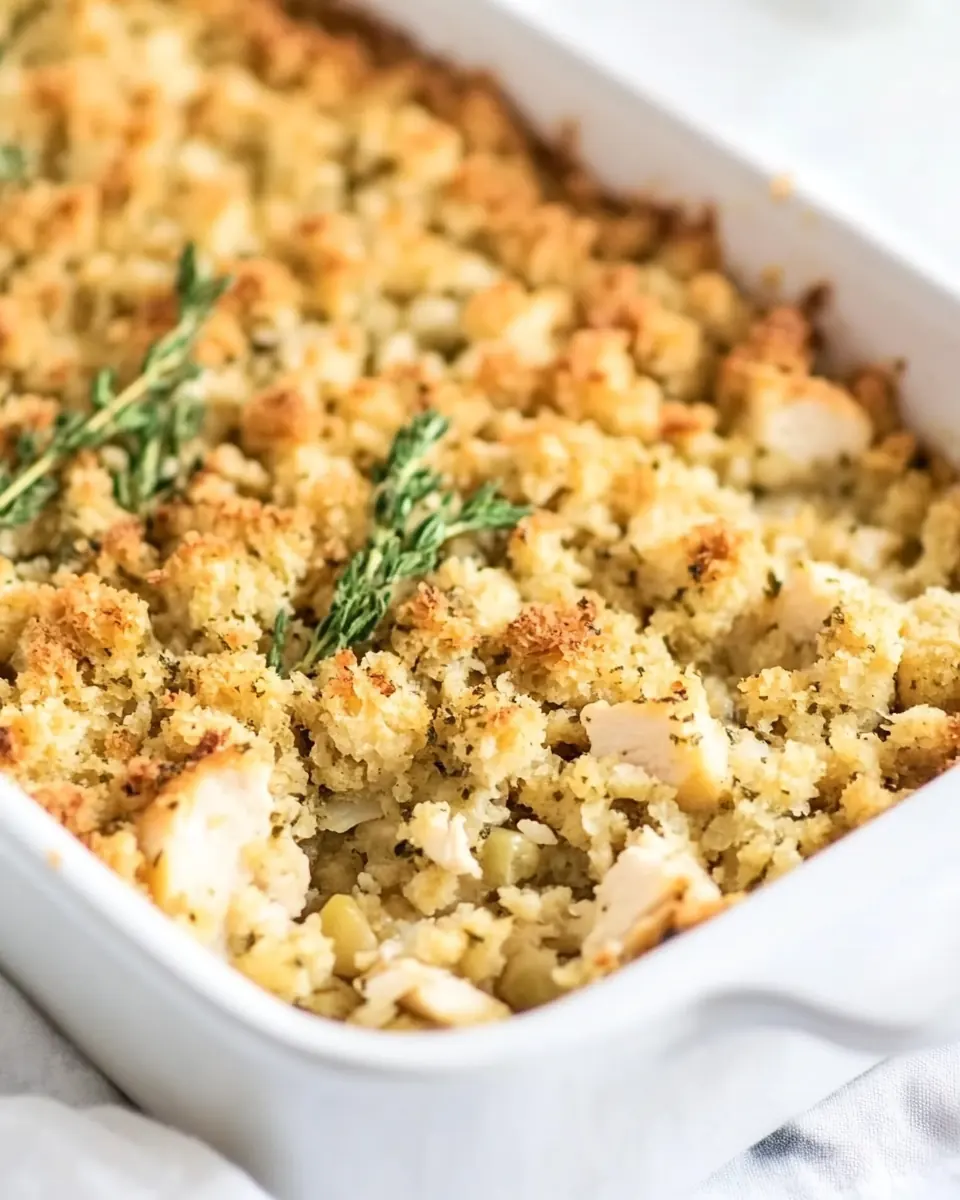
In a large bowl, mix the cream of chicken soup, sour cream, and cream of mushroom soup. Add the rotisserie chicken and mixed vegetables, and stir to combine. Pour the mixture into the prepared baking dish, spreading evenly. Add small dollops of stuffing evenly over the top.: When you stir the soups and sour cream together you will notice a glossy, velvety texture and a savory perfume that foreshadows the baked filling. Folding in the shredded chicken and thawed vegetables distributes protein and color, creating a balanced mouthfeel. As you spread the mixture into the baking dish, aim for an even layer so the filling cooks uniformly and bubbles consistently. Placing small dollops of the prepared stuffing across the surface rather than packing it in encourages pockets of golden crisp and soft crumb underneath. A frequent error is over mixing at this stage which can break down the vegetables or compress the stuffing, reducing contrast in texture.
Bake for 1 hour (uncovered), until the stuffing is lightly browned and the filling is bubbling.: During baking the kitchen will fill with a warm, savory aroma as the filling begins to bubble and steam escapes from the surface. Keep the dish uncovered so moisture can evaporate and the stuffing can crisp, watching for a gentle, even browning on top. The filling bubbling around the edges is a visual cue that internal temperature is sufficient and the components have melded. If the top browns too quickly, tent loosely with foil for the final minutes to prevent burning while the center finishes cooking. An easy mistake is removing the casserole too early when the center still looks wet; wait for those bubbling cues to ensure the proper texture.