Finely chop the onion, and cut the carrots and parsnips into 1-2 cm (1/2 – 3/4 of an inch) pieces and cook them together with the onion.: The aroma of softened onion and the faint caramel notes from the edges of the carrots and parsnips signal that you are developing the base. You should hear a gentle sizzle as the vegetables hit the hot pan and see translucency in the onion , with the root vegetables becoming tender at the edges. This stage is crucial because it releases sugars that round out the final broth. If the vegetables brown too quickly you likely have the heat too high, so lower the temperature and stir more often to prevent burning. A common mistake is skipping this step or rushing it, which yields a flat tasting sauce.
While the vegetables are cooking, dice the chicken breast, zucchini and bell pepper and add to the pot to cook.: As you add the diced chicken , listen for the fresh sear, a slight pop and sizzle, which means the meat is beginning to develop color and flavor. The visual cue is that pieces start turning opaque and edges take on a pale golden tint. Adding the zucchini and red pepper at this point allows them to warm through and absorb the spices without disintegrating. I like to toss everything so the oil coats each piece, ensuring even cooking. A typical error is overcrowding the pot, which leads to steaming instead of searing, so work in batches if needed.
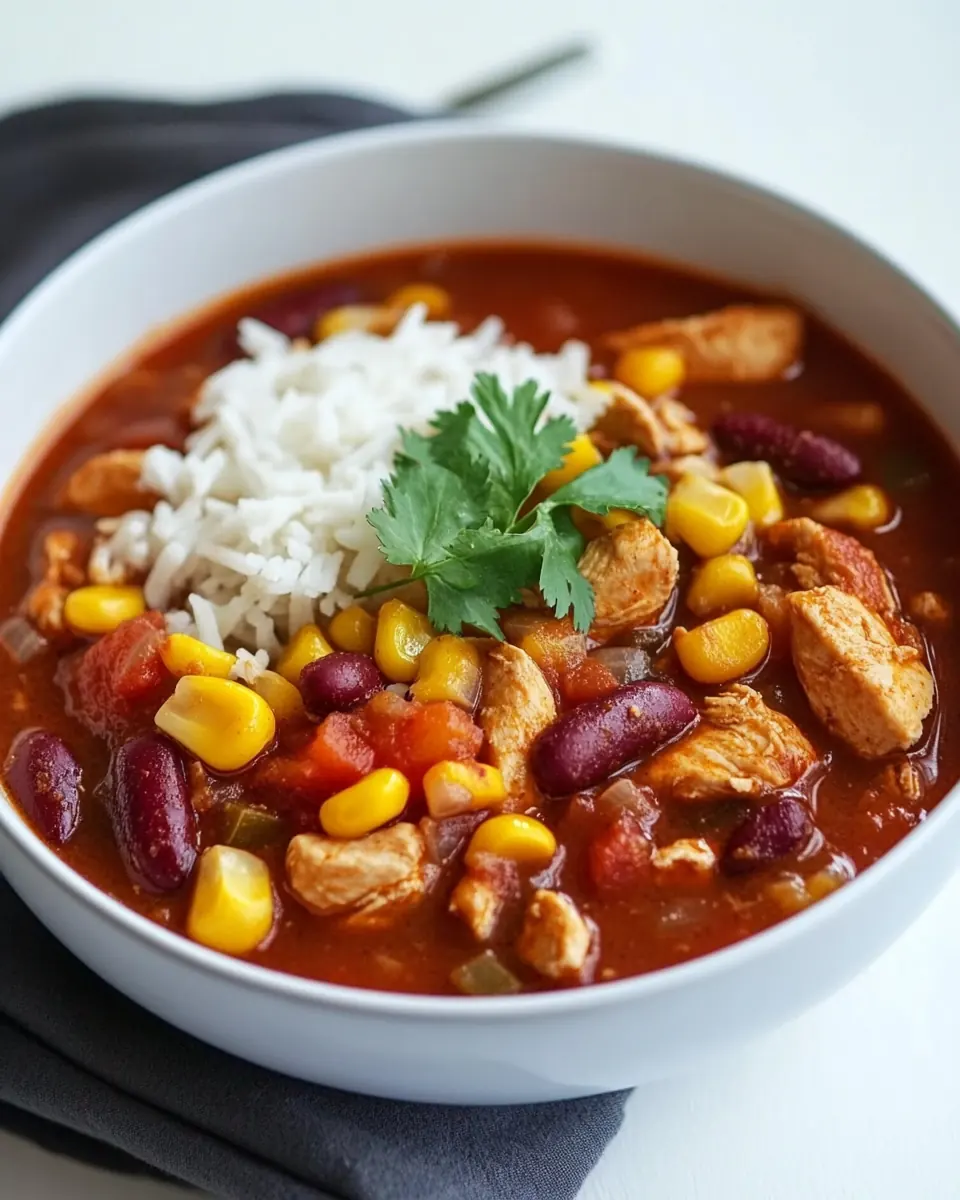
When the chicken begins to brown, add the Cajun seasoning, paprika, salt and pepper and simmer for 1-2 minutes, then add the canned tomatoes. Cook over low heat for about 10-15 minutes, then add the canned red beans (beans and liquid) and corn.: You will smell the spices blooming immediately, releasing deep, smoky, and peppery aromatics that lift the pot. The surface of the liquid should shimmer as flavors meld. Those short simmering minutes toast the spices lightly, making them more complex, before the canned tomato pulp brings acidity and body. Visually, the pot starts to take on a reddish hue and the steam becomes fragrant with spice. Avoid adding spices to a cold pan, because they will not bloom and your chili will taste flat.
Simmer until the chili reaches the right consistency.: A gentle simmer is key here, you want small bubbles breaking at the surface and a slow reduction that thickens the sauce. During this period the flavors knit together, and the texture of the chicken becomes tender as it absorbs the tomato and spice notes. When you add the red beans and sweet corn , keep some of the bean liquid to maintain a luscious consistency. The beans will plump slightly and the corn will add bright pops against the savory base. Stir carefully to avoid breaking the beans, and if the pot looks too thin you can let it reduce a little longer.
You can add chili peppers if you like it hot and also whatever herbs you like.: Keep a watchful eye on simmering, you are aiming for a sauce that clings slightly to a spoon but still flows easily. The aroma should be rich and rounded, with the sweetness of corn and the depth of tomato pulp in harmony. Taste and adjust the seasoning late in the cook, because salt and pepper will change as the liquid reduces. A common misstep is overcooking, which can make the chicken dry or cause vegetables to fall apart, so remove the pot from heat once you have the desired body.
You can add chili peppers if you like it hot and also whatever herbs you like: Adding fresh chilis or herbs at the end brightens the bowl and customizes heat level for your guests. The smell of fresh herbs or sliced peppers is immediate and lively, making the dish feel fresh even after a long simmer. This is where you tune the final personality of the chili, so add sparingly and taste as you go. Avoid adding excessive raw heat early in the cook, because it can overpower the nuanced flavors developed earlier.