Saute: Add 1 Tablespoon butter, 1 cup onions, 2 sliced carrots and 3 sliced celery stalks to a large pot. Allow to cook 2-3 minutes and then add in 1 teaspoon garlic, 1 teaspoon Italian seasoning and S&P to taste. Cook an additional minute. Add in 1 bay leaf, 1 pound chicken cut into pieces, 1/2 cup peas and 5-6 cups broth. Stir until combined and bring to a simmer for 8-10 minutes.: The air will fill with a gentle onion sweetness as the butter melts and the onion , carrot , and celery begin to soften. Listen for a quiet sizzle that turns steady, and watch the onion become translucent, a sign the natural sugars are releasing. The vegetables should smell fragrant and slightly sweet rather than burnt. This technique matters because properly softened aromatics build the base flavor without bitterness, and a common mistake here is rushing the heat, which leads to browned bits that can taste harsh. If you notice any dark browning, lower the heat and stir more frequently so everything sweats gently.
Seasoning: Salt and pepper to taste. If you'd like to thicken the sauce, simply remove 1/4 cup of liquid from the pot and whisk in 1-2 Tablespoons of flour cornstarch. Then add back to the pot and let simmer a few more minutes.: After the vegetables have softened you will sense a warm herbal note when the garlic and Italian seasoning join the pot. The aromas should pop quickly, so keep the heat modest to avoid burning the garlic , which turns bitter. This brief step is crucial for layering flavor, and a typical error is adding salt only at the end, which can leave the dish underseasoned; taste the broth as it simmers and adjust gradually. If the broth seems thin, remove a small cup of liquid and whisk in a little extra flour or cornstarch until smooth, then stir it back to add body without clumps.
Make dumplings: While the soup is cooking, whisk together 1 cup flour, 2 teaspoons baking powder, 1/2 teaspoon salt and 1/4 teaspoon pepper. Pour 1/3 cup milk and 2 Tablespoon butter into the flour mixture and use a wooden spoon to mix until combined (it will be a soft dough).: The dough comes together into a soft, slightly sticky mass when you combine flour , baking powder , salt , pepper , milk , and melted butter . You should feel a cohesive, tender dough that holds its shape when scooped. The texture matters because overworked dough can become tough, while underhydrated dough will not cook through evenly. Avoid the common trap of adding too much liquid at once; add it slowly and stop when the dough pulls away from the bowl. If the dough seems too wet, add a dusting of flour .
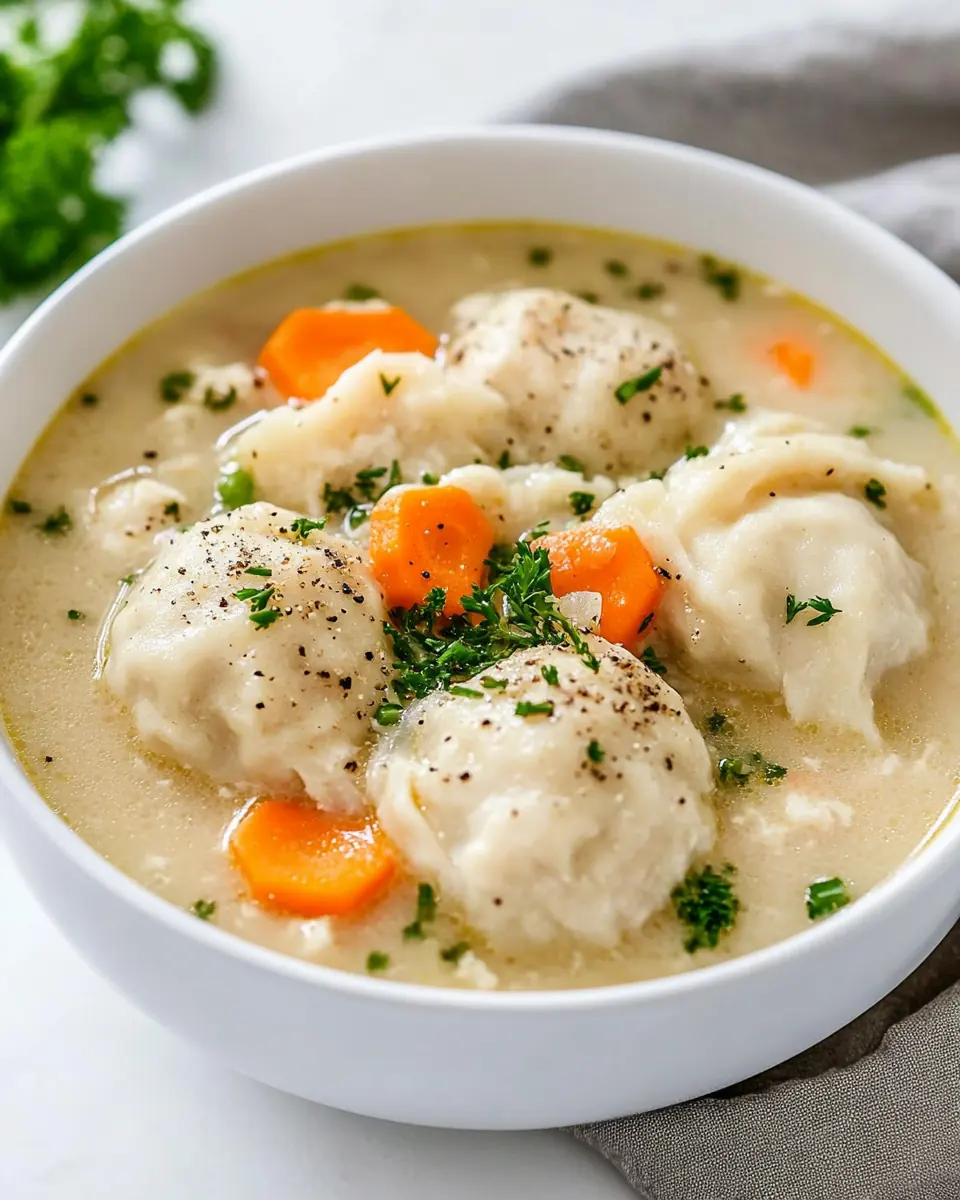
Cook dough: Drop small amounts of the dough into the pot (about 1-2 teaspoons per ball), then cover the pot slightly with a lid. Simmer for 10-15 more minutes or until dough is cooked through the center.: When you drop the dumpling pieces into the simmering broth you will hear a soft plop and see them bob gently on the surface. Cover the pot slightly to trap steam, and you should notice a quiet simmer rather than a full boil. The smell at this point becomes cozy and homey, with the broth and dumplings melding together. This technique helps the dumplings steam through for an even, fluffy interior; a common mistake is boiling vigorously, which can break the dumplings apart and make them dense. Keep the heat steady and patient, and check one dumpling by splitting it to ensure it is cooked in the center.
Serve: Ladle the soup into bowls and serve while warm.: Ladling the soup into bowls releases a final warm aroma of herbs and cooked chicken , and the dumplings present as soft pillows on the surface. Serve while hot so the dumplings are at their tender best. The finishing moment matters because the contrast of warm broth and soft dumplings is at its peak right away; a typical oversight is letting the soup sit too long, which causes dumplings to absorb too much liquid and swell. If you need to hold the soup, keep the dumplings separate and add them back when reheating to preserve texture.