Place the chicken pieces in a large bowl and add the yogurt, salt, Kashmiri powder, and garam masala. Use your hands or two wooden spatulas to stir everything together until the chicken is completely coated. Set aside.: The room fills with a tangy, spiced scent as the yogurt and powders hit the chicken . At this stage you will notice the surface of the meat taking on a light coating, and the yogurt begins to cling to the pieces. This initial contact helps break down proteins slightly for a tender texture during cooking, and it also ensures the spice color will penetrate the meat. A common mistake is to skip adequate mixing, which can leave pockets of seasoning and uneven flavor. Use clean hands or two wooden spatulas to work the marinade so every piece is evenly covered, then set the bowl aside to rest and develop flavor.
Heat the ghee in a large saucepan over medium heat.: As the ghee warms it will release a warm, buttery aroma that signals it is ready. The surface of the fat will shimmer, and you may see small wisps of steam. This is the moment to watch closely because fat that is too cool will not bloom spices, while overheated ghee can brown too fast and take on a bitter note. A common pitfall is allowing the pan to smoke, so adjust the flame to maintain a medium heat and keep the scent clean and nutty.
Add the onions with a sprinkle of salt. Cook, stirring often, until lightly browned and starting to caramelize, about 15 to 20 minutes. Allow to cool briefly.: The onions will go through stages, from soft and translucent to golden, then to jammy brown. You will hear gentle sizzles and notice a deepening sweetness in the kitchen. Stirring often prevents sticking and ensures even caramelization, which builds the sauce base. A typical error is rushing this step with high heat, which leads to uneven browning and burnt edges. Patience here yields the savory sweetness that gives the korma its backbone.
Place the onions, cashews, ginger-garlic paste, and yogurt into a blender and purée until smooth and silky, about 1 minute. Check the consistency - it should be similar to a somewhat thin gravy. Add about 1/2 cup of water and purée again. Set aside.: The mixture should transform into a glossy purée that is slightly pourable, and its aroma will meld into a rich, nutty perfume. The texture matters, because a coarse blend will leave grainy bits rather than a silk sauce. If the purée is too thick, add about 1/2 cup of water and purée again to reach a thin gravy consistency. Avoid overthinning which will dilute flavor. A common oversight is not cooling the onions enough before blending, which can cause a hot splatter; allow a brief cooldown for safety.
In the same pan that you cooked the onions, add 2 more tablespoon of ghee over medium heat. Once melted, add the bay leaf, cinnamon stick, cloves, cardamom, and peppercorns. Let simmer for 1 to 2 minutes.: When the whole spices hit the warm ghee they will pop and release fragrant oils, and the aroma will deepen into a toasty, warm bouquet. Watch for tiny crackles and a rapid bloom of scent. This brief tempering is essential because it infuses the fat with spice, which then distributes through the sauce. The mistake some cooks make is skipping this step or doing it on too high a flame, leading to bitter flavors from overtoasted spices. Keep the heat steady and smell for a bright, fragrant note.
Add the chicken and cook, stirring often, for about 10 minutes (the chicken won't be fully cooked at this point).: As the chicken hits the pan you will hear a satisfying sizzle and see the edges firm up and take on a pale golden color. Stirring keeps pieces from sticking and helps them sear evenly, locking in juices. You are looking for a change in surface texture, not complete doneness, because this pre-sear develops flavor. A common error is overcrowding the pan which causes steaming instead of browning, so give the pieces breathing room or work in batches if needed.
Add the onion/cashew paste to the pot. Swish the hot water in the blender (to clean the insides somewhat) and pour into the pot. Stir in the salt, garam masala, coriander, and Kashmiri. Cover, reduce the heat to medium-low and let simmer for 10 minutes.: Rich, aromatic steam will rise when the purée meets the warmed pot, and the sauce will thicken as it hits the hot surface. Swish the hot water used in the blender into the pot to capture every bit of flavored purée, then stir in the salt , garam masala , ground coriander, and Kashmiri chili powder. These seasonings layer complexity, and as the mixture simmers the flavors knit together into a cohesive sauce. A typical mistake is underseasoning at this stage, so taste after a few minutes and adjust carefully. Cover, reduce the heat to medium low and let simmer for 10 minutes to allow the flavors to marry.
Remove the lid and stir in the cream. Cover, and simmer for another 10 minutes, or until chicken is cooked through, but still very tender.: Once you remove the lid you will notice a glossy surface and the crema like texture of the sauce. Stirring in the cream mellows the spices and gives the curry a silky finish. After adding the cream, cover again and simmer for another 10 minutes, or until chicken is cooked through but still tender. The gentle simmer allows connective tissue to break down without drying the meat. A common mistake is boiling vigorously after adding dairy, which can cause separation; keep the heat low and steady.
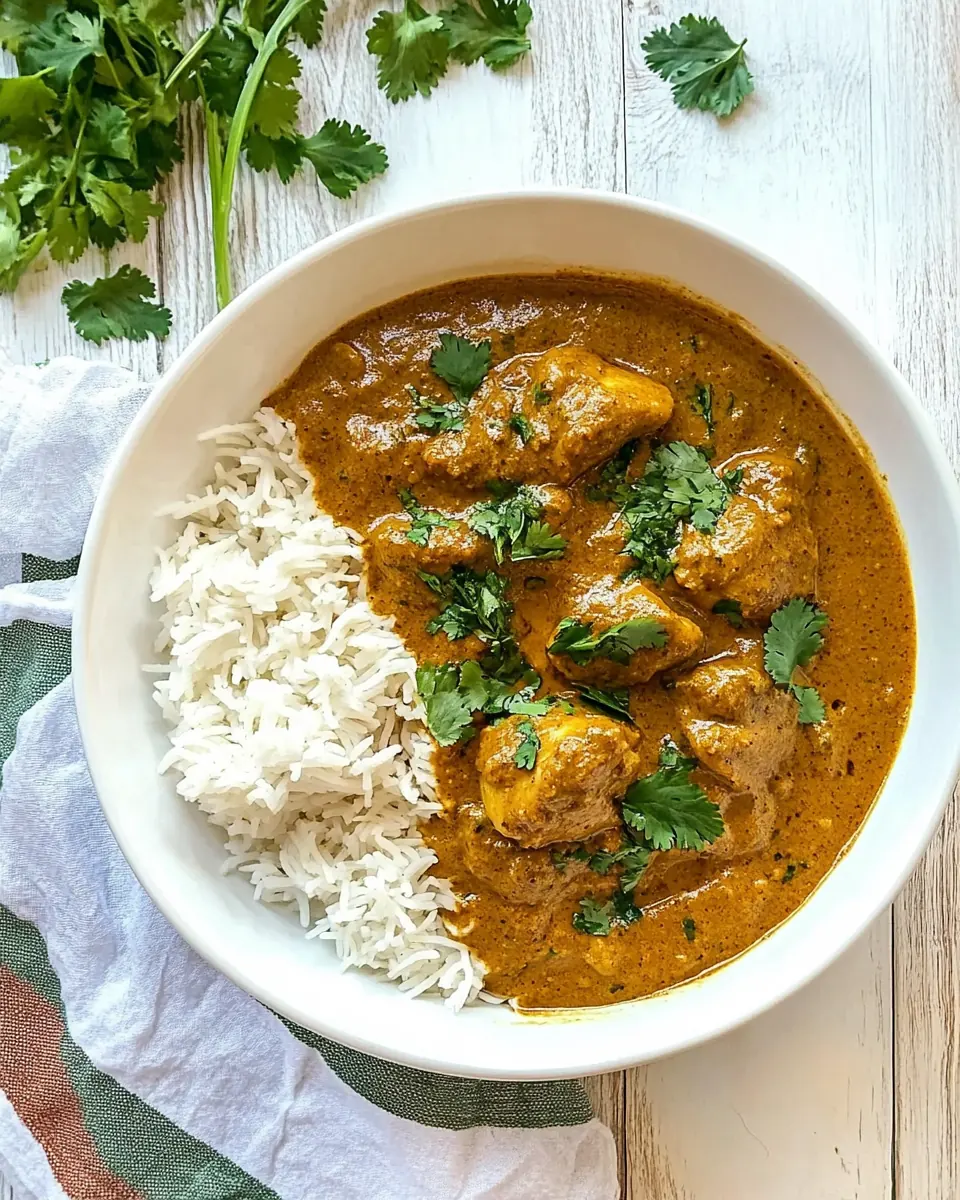
Serve at once with prepared basmati rice. Garnish with chopped cilantro and toasted almond slices, if desired.: During these final minutes the sauce deepens and clings to each piece, and you will sense a full, rounded aroma and a slightly thickened consistency. Check one piece to ensure it is cooked through and yields easily to a fork. Overcooking will make the chicken tough, so rely on texture rather than time alone. If the sauce seems too thick, a splash of hot water will loosen it while maintaining flavor.
Serve at once with prepared basmati rice: The final presentation is important, because steam and aroma rise as you plate. Spoon the Chicken Korma over fluffy Basmati rice , and garnish with chopped cilantro and toasted almonds if desired for color and contrast. The contrast of silky sauce and fragrant rice makes each bite balanced and satisfying. A common misstep is letting the curry sit too long before serving, which dulls the aromas, so serve promptly and enjoy the vibrant interplay of textures.