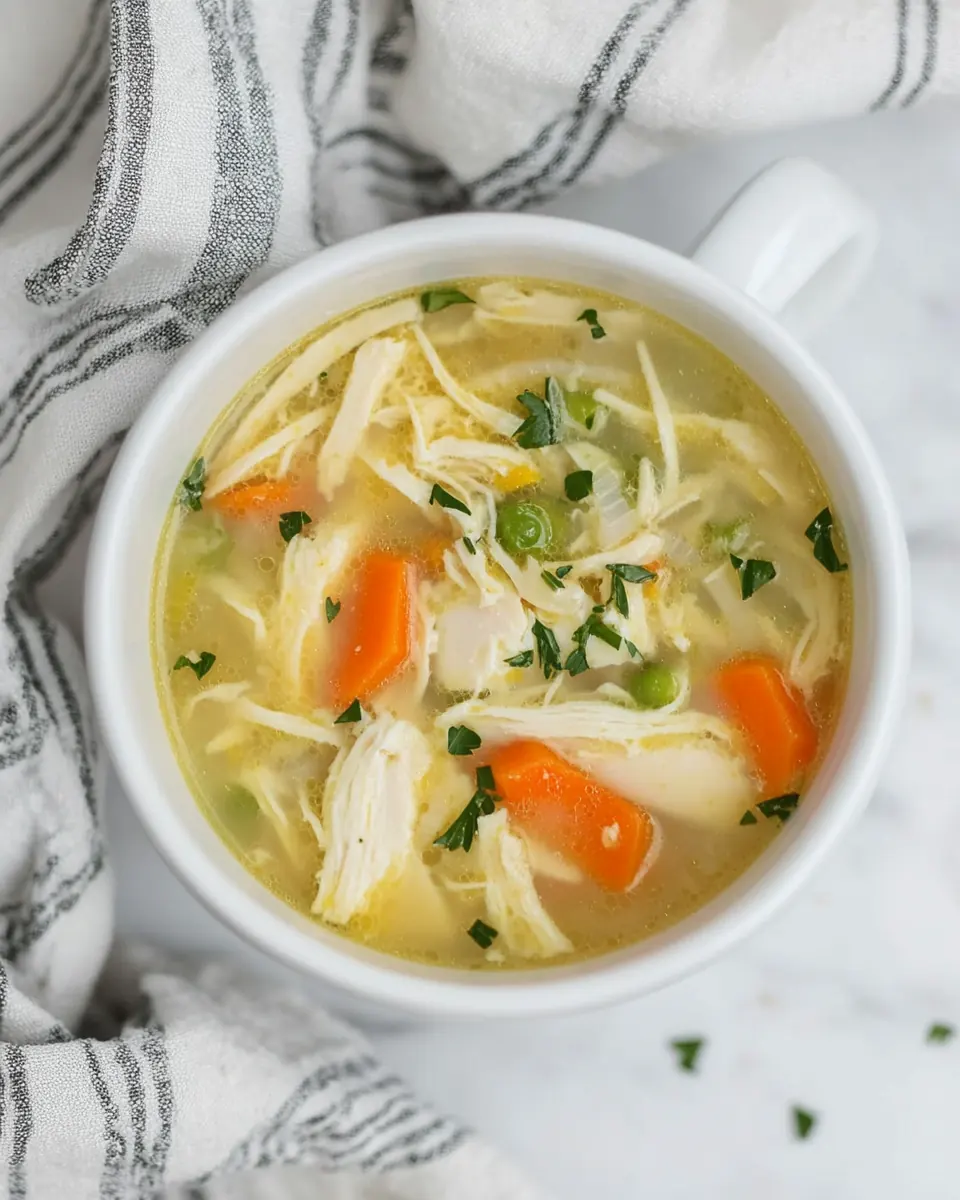
To make the stock, place the whole chicken, carrots, celery, onion, garlic, bay leaves, herbs, salt and pepper in a large stock pot. Cover the ingredients with water – enough to cover them by an inch or so. I usually use about 4 quarts (a gallon!) of water total and I find that makes for a very flavorful stock!: The room will fill with an earthy aroma as the water covers the ingredients, and that first gentle heat draws flavors from the chicken and aromatics. I aim for a calm simmer because it teases collagen from the bones without clouding the broth, and you will notice small bubbles rising slowly rather than a roiling boil. While it starts heating, make sure the chicken is fully submerged by about an inch so extraction is even. A common misstep is using too high heat which creates foam and a cloudy stock, so keep the temperature controlled and skim any foam that rises to the surface.
Bring the stock to a boil, then reduce it to a simmer and cover it. I tend to leave the lid very slightly cracked – enough so the stock doesn’t boil over, but not enough that the liquid evaporates. As you’re cooking the stock, you can skin the foam off the top. I let my stock simmer for 2 to 3 hours.: You will hear the pot move from aggressive bubbling to a steady faint murmur as it moves into simmer mode; that sound is what you want for long extraction. I crack the lid slightly to keep steam from building and evaporating too quickly. As you simmer for two to three hours, aromatic steam fills the kitchen and the liquid will take on a deep golden color, a sign the flavors are concentrating. If too much evaporates, add hot water to maintain level. Avoid boiling hard, which breaks proteins into the broth and makes it cloudy.
When it’s finished, I discard the vegetables and herbs. I place the chicken on a large platter to cool and then pull the meat from the chicken.: When you strain, the stock should smell rich and clean, and the softened vegetables will be spent of flavor. Transfer the chicken to a platter and let it cool until you can handle it; the meat will release easily and feel tender when properly cooked. I use tongs and forks to pull meat off the bones, aiming for consistent shredding or cubing. A common oversight is shredding while the meat is too hot which leads to fat fingers and splashes, so rest it briefly first.
I like to double strain the chicken stock. I place a fine mesh strainer over a large bowl or measuring cup and strain the stock once. This catches any loose herbs, vegetables or pieces of chicken. I then strain it one more time the same way.: Pouring the broth through a fine mesh strainer once and then again gives you a crystal clear liquid that feels refined. You will notice tiny bits and fine herbs captured in the first pass, and the second pass polishes it. The visual difference matters when serving because a clear broth looks and tastes more elegant. Avoid pushing solids through the strainer, which leads to grit in the finished soup.
I like to use the chicken from the whole bird that I use to make the stock. I always see conflicting information about this (some people think it’s flavorless, others think it’s dry, etc), but I think it works great and we love it. If you’d like to discard the entire chicken and meat, you can always use a store bought rotisserie chicken or cook other chicken breasts to get the meat for your soup.: Using this cooked chicken layers flavor and keeps the soup cohesive; the meat will have absorbed some of the stock and tastes integrated. If you prefer, store bought rotisserie meat works but the depth will differ. I find the pulled meat cooks back into the soup beautifully because it has already been infused with flavor. A mistake here is over shredding into tiny pieces which can make the texture too uniform; leave some chunkiness for interest.
To make the soup, heat the same stock pot over medium heat. Add the butter and once it’s melted, add the onions, carrots and celery with a pinch of salt and pepper. Cook, stirring often, until the vegetables soften, about 6 to 8 minutes.: When the unsalted butter melts and the vegetables hit the pot, you will hear a gentle sizzle and smell a sweet savory lift as the onions soften. Stir frequently so the pieces soften evenly and develop a little translucence without browning, which keeps the soup bright in flavor. This step builds a flavorful base and helps the vegetables keep their texture in the final dish. Avoid high heat which browns the vegetables and changes the intended profile.
Stir the chicken into the vegetables. Add the stock back into the pot. I usually add it all back in and this makes a large portion of chicken noodle soup! Depending on how many people you are feeding, you can take the soup and freeze it at this point, before adding the noodles. The noodles will soak up the liquid, so you want to add those in shortly before serving.: As the shredded or cubed chicken warms with the softened vegetables, aromas deepen and the mixture becomes cohesive. Pour the previously strained stock back in and watch the pot steam as everything reconnects. If you are planning to freeze portions, this is a good moment to portion and freeze before adding noodles because they will swell over time. A common slip is adding noodles too early, making the broth overly starchy and the noodles gummy.
Bring the mixture to a simmer. If you like a noodle heavy soup, you can go with a full 12 ounces. If you want a more brothy soup, start with 8 ounces. Add the noodles and within 15 minutes, the soup should be ready to serve. Squeeze in the lemon juice. Taste the soup and season it additionally with salt and pepper if desired.: The pot will steam and you will see the broth move gently; add wide egg noodles according to how brothy you want the soup to be. If you want more noodles use the higher amount, if you want more broth use the lower amount. The noodles will soften within about 15 minutes and slightly thicken the broth, so watch for tenderness and taste frequently. Overcooking the noodles makes them fall apart, so remove the pot from heat as soon as they are tender to the bite.
To serve bowls of the egg drop soup, take 1 to 2 eggs (your preference!) and lightly beat them in small bowl of measuring cup. Ladle the hot soup into bowls (this is the key! You want it to be hot!) and immediately drizzle in the beaten egg in a slow stream. Use your spoon to slowly swirl the soup back and forth.: The citrus brightens the whole pot and you will notice the broth lift immediately, turning from rich to lively. Add salt and pepper gradually and taste because the noodles absorb seasoning; you want the final bowl to taste balanced. A mistake is over salting early; always adjust at the end.
You can garnish the soup with fresh parsley or cilantro, as well as a drop of toasted sesame oil if you wish!: Ladle the hot soup into a bowl and stream the beaten eggs in a thin ribbon while stirring the surface gently. The heat will coagulate the egg into delicate ribbons that look silky and feel smooth in the mouth. This technique creates visual contrast and luscious texture, and you should do it at serving temperature rather than boiling to keep the ribbons tender. Avoid pouring eggs into lukewarm soup which will not form proper ribbons.
Garnish with fresh herbs and a drop of toasted sesame oil: A sprinkle of chopped fresh herbs and a tiny drizzle of toasted sesame oil finishes the bowl with aroma and a nutty pop. The herbal brightness and sesame note round the soup and make it feel restaurant quality while staying homey. Use the oil sparingly, as too much overwhelms the delicate broth.