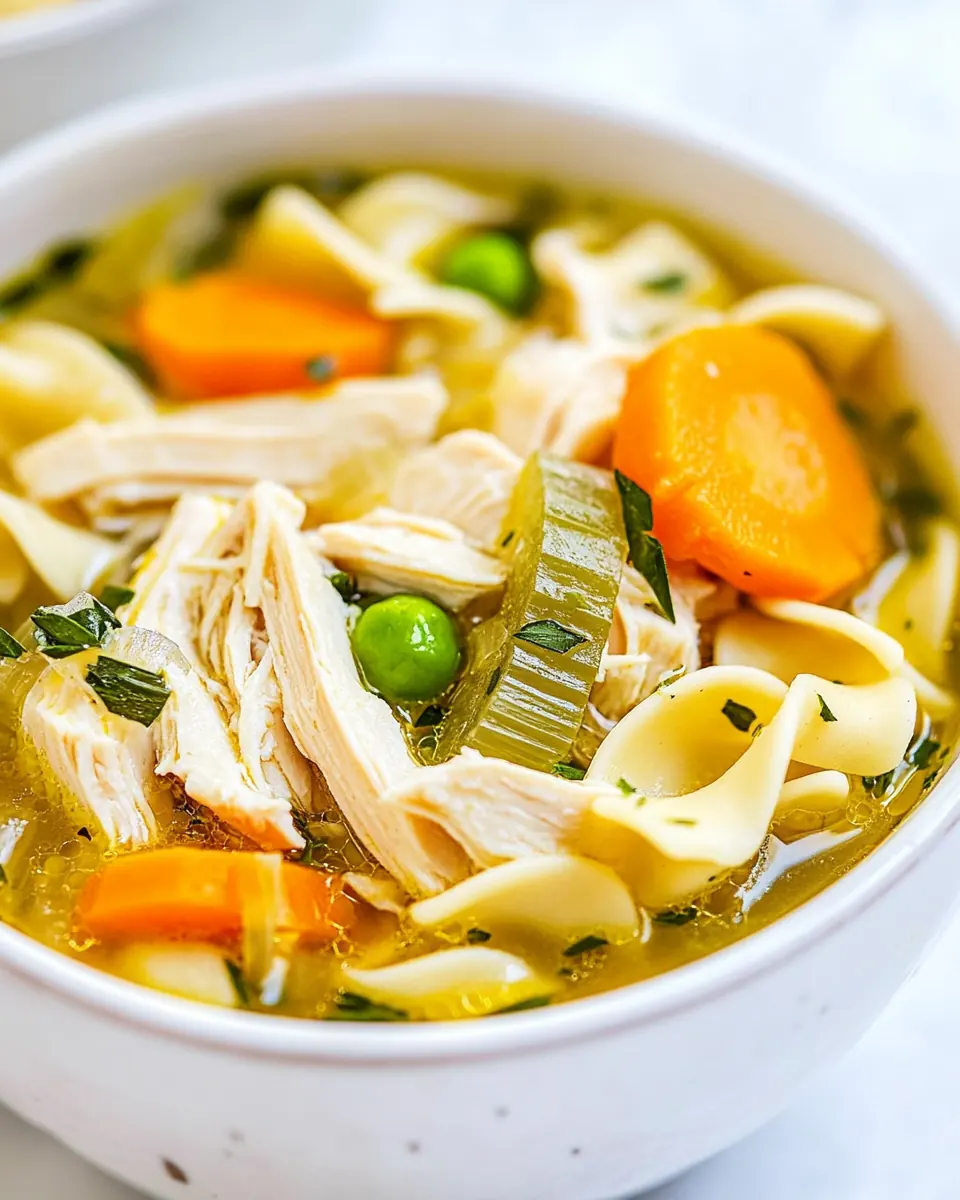
In a large dutch oven melt butter. Stir in onion, carrot, and celery. Saute vegetables in butter for about 7 minutes or until they are tender.: The kitchen should fill with a warm, creamy aroma as the butter liquefies, and you may hear a gentle sizzle if the pot is hot. This step matters because the melting butter creates the fat medium that carries and deepens flavor from the aromatics. If the butter starts to brown quickly, lower the heat to prevent a bitter, toasted note. A common mistake is rushing this step with too high heat, which will burn the butter and make the base bitter; take your time so the butter simply shimmers before adding the vegetables.
Whisk in broth. Add bay leaves, garlic powder and salt. Bring to a boil and add chicken and egg noodles. Return to a boil and reduce to simmer. Cook for 8-10 minutes or until egg noodles are al dente.: As you add the chopped onion , carrot , and celery , listen for a soft hiss as they hit the warm butter . The scent will quickly shift from fatty to fragrant, with sweet and vegetal notes rising. Softening these vegetables releases natural sugars that sweeten the broth and forms a cohesive flavor foundation. Stir frequently to ensure everything cooks evenly, and avoid cranking the heat, which can brown the edges too fast. A typical misstep is undercooking these aromatics, leaving a raw, sharp bite in the finished soup.
Remove bay leaves and serve.: You should see the onion turn translucent and the carrot begin to yield; the mixture will smell sweeter and richer. Taking these minutes builds depth, because the gentle cooking concentrates flavors and softens texture so the vegetables meld with the broth. If you notice any sticking, add a splash of the low sodium chicken broth to deglaze and lift fond, which enriches the soup. Overcooking can make the vegetables fall apart, so aim for tender but intact pieces to maintain texture contrast in each spoonful.
Whisk in broth: When you pour in the low sodium chicken broth , you will hear a low simmer begin as the liquid meets the hot pot, and the room will get that savory, warming aroma. This step dissolves any browned bits and integrates the softened vegetables into a unified liquid. Whisking helps distribute flavors evenly and prevents lumps if any bits have stuck. If the broth splatters, reduce heat carefully; splashes can create hot spots and uneven cooking. A common oversight is adding cold broth directly to hot fat without stirring, which can cause uneven temperature shifts.
Add bay leaves, garlic powder and salt: Dropping in the bay leaves will add a subtle herbal undercurrent that emerges as the soup simmers, while the garlic powder layers in mellow garlic warmth. The salt starts to awaken flavors, especially once the soup reduces slightly. Keep the bay leaves whole so you can find and remove them before serving. One mistake is over salting early; because the broth concentrates, taste later and adjust to avoid an overly salty bowl.
Bring to a boil and add chicken and egg noodles: When the pot reaches a gentle boil, you will see lively bubbles and steam, and that is the cue to add shredded chicken and dry egg noodles . The immediate heat jump seals in the savory flavors of the chicken , and the noodles begin to swell and soften as they absorb the savory liquid. Adding the chicken now warms it through without overcooking, preserving tenderness. Ensure the boil is even so the noodles cook uniformly; an uneven boil can leave some pasta chewy while other pieces are mushy.
Return to a boil and reduce to simmer: After the initial boil, the surface will be lively; lower the heat so the soup maintains a gentle simmer, with occasional small bubbles. Simmering allows flavors to marry and the noodles to cook through steadily without falling apart. This controlled heat preserves texture and prevents vigorous agitation that breaks down the softened vegetables. A common mistake is leaving a rolling boil, which makes the noodles and chicken tough or mushy due to over agitation.
Cook for 8 to 10 minutes or until egg noodles are al dente: During these minutes the noodles will absorb liquid and swell, and you should test for a tender bite with a slight chew. The broth will smell more concentrated, and the chicken will be fully warmed through. Al dente noodles help the soup retain body and prevent it from becoming gluey after chilling. Overcooking here results in mushy noodles that can turn the whole pot stodgy when stored.
Remove bay leaves and serve: There is a small, satisfying click as you fish the bay leaves from the pot, and then the aroma is bright and ready. Serving immediately preserves the texture of the noodles and the fresh finish of the chopped parsley if you use it. Make sure to taste one more time and adjust seasoning before plating. A common oversight is forgetting to remove the bay leaves, which can surprise a diner with a tough, fibrous bite.