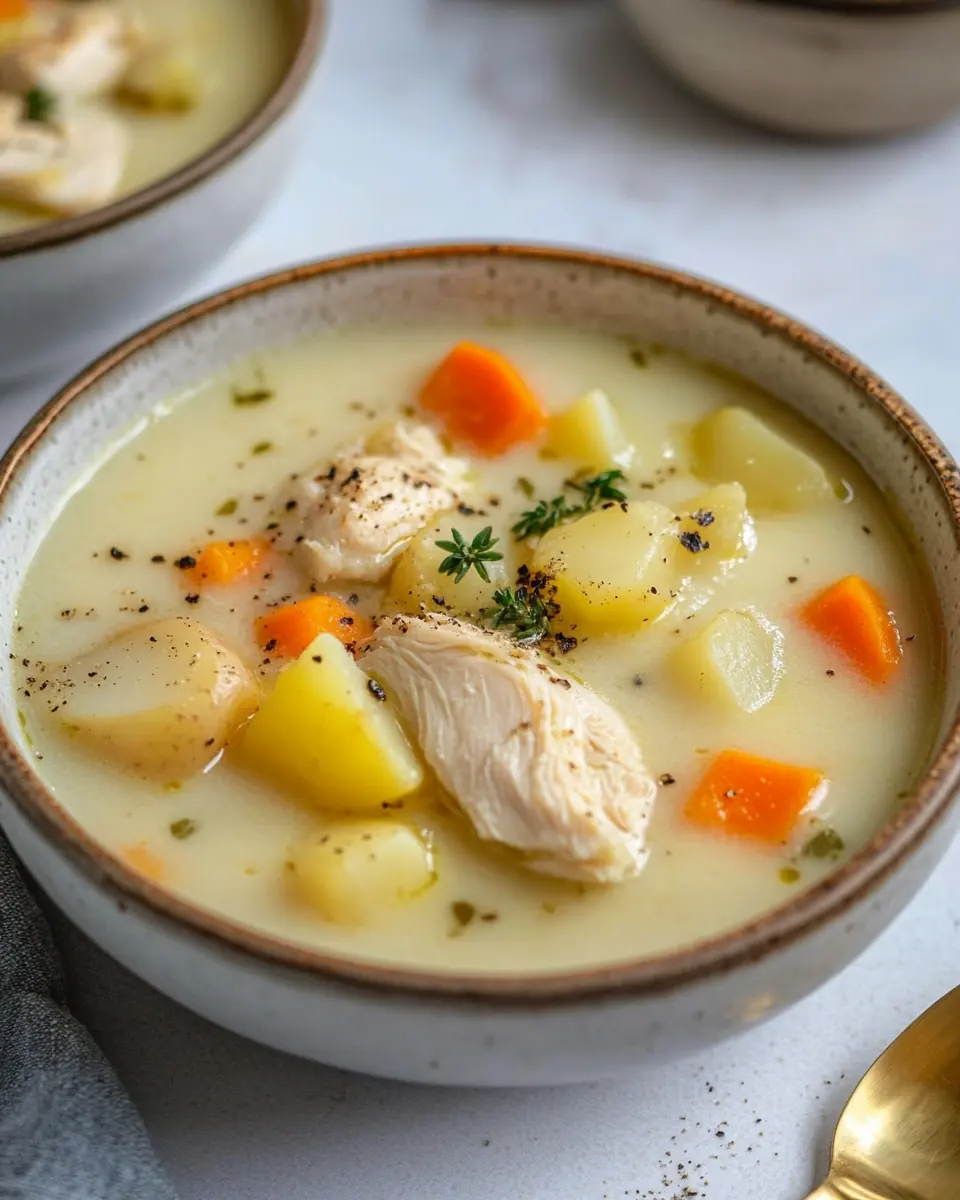
Place the chicken breasts in a large soup pot or Dutch oven. Pour in enough chicken broth to cover the chicken by about an inch. If necessary, add water to achieve this level. Bring the mixture to a boil over medium-high heat, then lower the heat and let it simmer for 15 minutes.: The aroma begins as the pot warms, and you will hear a gentle hiss as the liquid touches the hot metal, which signals the start of extraction. The reason we submerge the chicken is to coax savory gelatin and flavor into the broth, creating depth. Expect the kitchen to smell faintly meaty and cozy. Avoid boiling aggressively, because that makes the chicken tough and the broth cloudy; a steady simmer is the goal. If your pot is too small, the chicken might not cook evenly, so use something roomy enough.
Once cooked, transfer the chicken to a plate to cool. When it's cool enough to handle, shred the chicken into bite-sized pieces.: You'll see the liquid level rise until the chicken is just submerged with a thin water buffer. This ensures even cooking and flavor transfer. If you need to add water, do so carefully, because diluting too much will weaken the taste. I recommend using warm broth to avoid shocking the pot, and skim any foam that appears for a clearer soup. Leaving the broth low can leave parts of the chicken undercooked, which is a common oversight.
While the chicken is cooling, add the leeks, carrots, celery, potatoes, and dried thyme to the broth in the pot. Bring the broth back to a boil, then reduce the heat and simmer until the vegetables are tender, about 10 minutes.: You'll notice bubbles build and then settle into a gentle motion, which is the ideal simmer. That soft rolling simmer extracts collagen and concentrates flavor without making the meat stringy. Listen for a soft bubbling rather than a furious boil. Over simmering at high heat will toughen the chicken , so keep your eye on the flame and adjust as needed.
Stir the shredded chicken and half-and-half into the pot with the broth and vegetables.: The moment you lift the chicken out the broth smells deeper and richer, a sign flavor has migrated into the liquid. Let the chicken cool until safe to handle, which makes shredding easier and prevents you from scalding your fingers. Cooling briefly also preserves moisture in the meat. Rushing to shred hot meat can lead to steam burns, so be cautious and wait a few moments.
Season the soup to taste with the kosher salt and freshly ground black pepper. Continue to cook and stir the soup over medium heat until it's thoroughly heated, about 7-10 minutes more.: The texture should be tender and easy to pull apart, creating pleasing ribbons of protein. Shredding releases juices that will rejoin the broth and enhance the mouthfeel. Use two forks or your hands once cooled, pulling with the grain for the best texture. If you shred too finely you lose satisfying meaty bites, so aim for bite sized pieces.
Serve the soup while hot, garnished with chopped fresh parsley if desired.: As these vegetables hit the hot liquid you will hear a soft sound and see the broth bubble more energetically, releasing their aromatic compounds. The vegetables build layers of flavor, with the leeks giving sweet nuance and the potatoes adding body. Stir them gently so nothing sticks to the bottom. A typical mistake is adding everything unevenly chopped; consistent size ensures simultaneous tenderizing.
Bring the broth back to a boil then reduce the heat and simmer until the vegetables are tender about 10 minutes: Watch for the potatoes to become fork tender and the carrots to yield when pierced, which are your visual cues. The smell will become fuller and slightly sweeter as the vegetables release their starches and sugars. Avoid overcooking, because the vegetables will turn mushy and the texture will be one note. If you need a firmer bite, check a minute earlier than expected.
Stir the shredded chicken and half and half into the pot with the broth and vegetables: You will notice the broth turns creamier and more luxurious, with steam carrying gentle dairy notes. Incorporating the half and half at moderate heat prevents separation and gives body to the soup. Stir until everything is evenly distributed and you see a uniform, slightly opaque broth. Do not boil vigorously after adding dairy, as that can cause curdling; gentle warmth is best.
Season the soup to taste with the kosher salt and freshly ground black pepper: Seasoning unlocks the flavors, so taste and adjust incrementally. The salt brightens the savory notes while the black pepper adds a finishing bite. After seasoning, continue to cook and stir over medium heat until thoroughly heated about 7 to 10 minutes, so the flavors meld. Over salting is easy, so add small amounts and taste between additions to avoid going too far.
Continue to cook and stir the soup over medium heat until it is thoroughly heated about 7 to 10 minutes more: The pot will give off a comforting steam and you will see small bubbles at the surface, indicating the soup is hot and ready. This time lets the flavors harmonize and any remaining raw notes dissipate. Stir occasionally to prevent sticking and to ensure even heat. If you forget to stir you may end up with a scorched bottom, which will taint the whole batch.
Serve the soup while hot garnished with chopped fresh parsley if desired: The final presentation is simple but effective, with bright green parsley adding color and a fresh aroma right before serving. Ladle into warmed bowls so the soup stays hot longer, and notice how the first spoonful delivers savory broth, tender vegetables, and soft chicken all at once. Avoid adding garnish too early as it will wilt; wait until just before serving for the best visual and textural contrast.