In a small bowl, mix together the greek yogurt, lemon juice, oregano, garlic powder, salt, and pepper. Add the chicken chunks to a ziplock bag and pour the yogurt mixture over the top. Seal the bag and toss to coat. Refrigerate for thirty minutes.: The first breath of the dish comes from combining the creamy Greek Yogurt with bright Fresh Lemon Juice and the dried herbs and spices. As you stir, notice the aroma lift, the citrus cutting through the yogurt, producing a tangy, slightly herbal perfume. This emulsion clings to the chicken , so whisk until smooth and homogenous. A common mistake is under mixing which leaves pockets of intense acid that can unevenly tenderize meat. If the mixture seems too thick, let it sit a few minutes to relax, then whisk again before adding the chicken .
Thread the marinated chicken chunks onto skewers, alternating with chunks of red pepper and red onion.: Once the marinade is ready, transfer the uniformly cut chicken into a resealable bag to maximize contact. The sound of the liquid pooling around the pieces signals good coverage. Massage the bag gently with your hands so each chunk gets coated; you should see a glossy coating on every piece. A key why here is that close contact lets the tenderizing enzymes and acids start working quickly. Avoid overcrowding the bag, which can prevent proper coating and slow marination.
Grill on medium high heat for 6 to 8 minutes per side, until juices run clear. Alternatively, line a baking sheet with foil and place a cooling rack on top. Place the skewers on the cooling rack, and bake at 425 for 25-30 minutes.: After sealing, shake and squeeze the bag so the marinade envelopes the chicken . You should hear the soft swish of pieces moving, and the texture will shift as the yogurt adheres. This mechanical motion helps distribute salt and spices evenly. One frequent error is forgetting to remove excess air, which reduces contact between marinade and meat. Press out the air so the marinade rests directly against the chicken for best absorption.
Refrigerate for thirty minutes: While chilling, the marinade gently penetrates the chicken , improving tenderness and depth of flavor. In the refrigerator the mixture cools and the yogurt firms slightly, holding spices in place. Thirty minutes is a sweet spot for time pressed cooks, offering meaningful flavor without long wait. Over marinating can lead to a mealy exterior, so do not exceed recommended times if using the acidic lemon marinade.
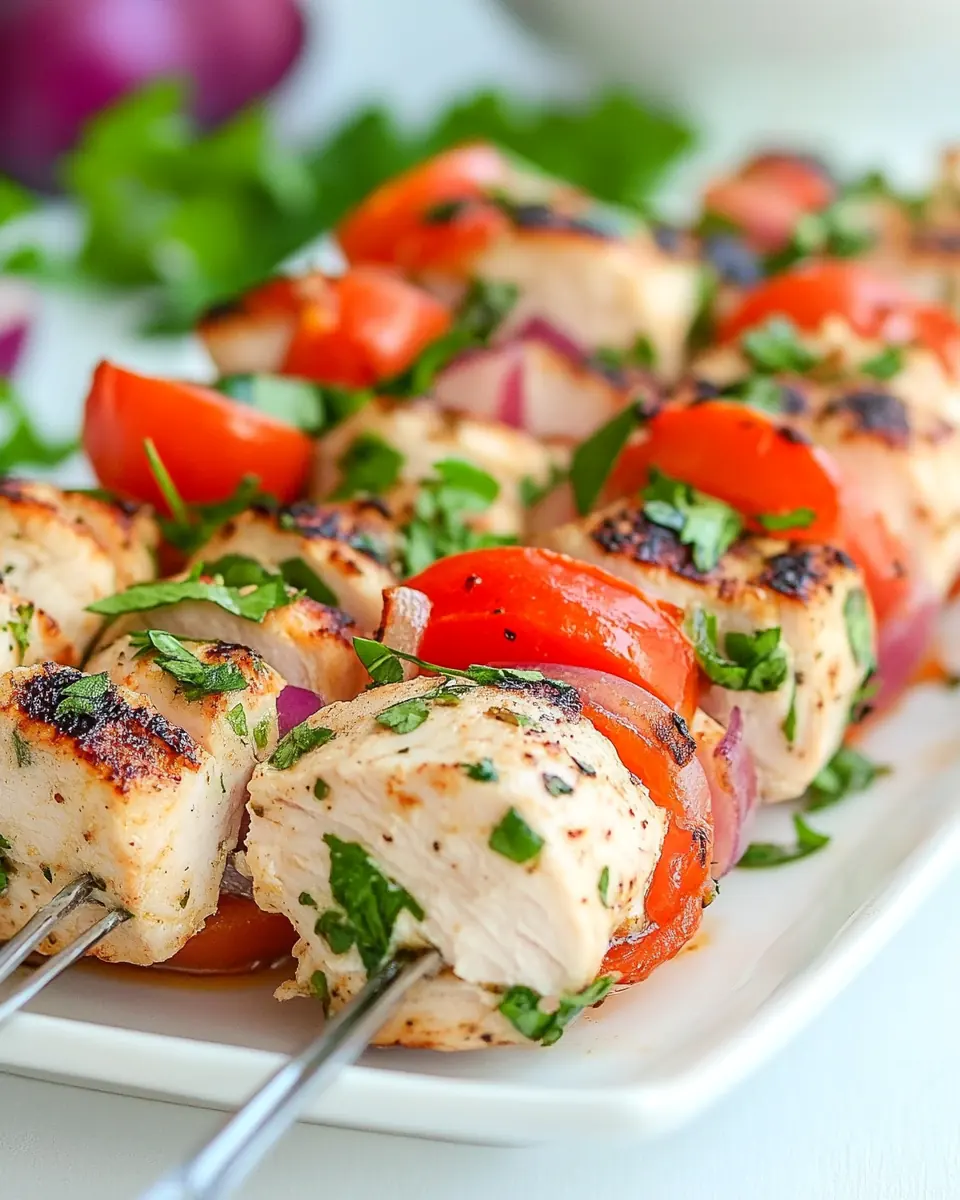
Thread the marinated chicken chunks onto skewers, alternating with chunks of red pepper and red onion: Skewering creates the visual and textural variety that defines the dish. As you thread, the contrast between the pale chicken , the glossy Red Bell Pepper , and the layered Red Onion is appealing. Aim for even spacing to ensure uniform cooking and avoid crowding, which can trap steam and prevent browning. A typical issue is uneven piece sizes, which leads to some parts finishing earlier than others; match dimensions closely for consistent doneness.
Grill on medium high heat for 6 to 8 minutes per side, until juices run clear: On a hot grill you will hear an energetic sizzle as the skewers hit the grates, and smell the marinade caramelize. Look for golden char marks and a slight resistance when you press the meat; those are signs of a properly seared exterior. Flipping once preserves juices and develops even color. Cook until the internal juices run clear and the internal temperature reaches a safe point. Avoid constantly flipping or pressing down, which squeezes out juices and dries the chicken .
Alternatively, line a baking sheet with foil and place a cooling rack on top: If you choose the oven route, set up for airflow by raising the skewers on a rack. You will still get some crisping as hot air circulates, and the foil keeps cleanup simple. The visual cue is a light bronzing on edges, and you will notice a gentle roasted scent differing from grill smoke. Common mistakes include placing skewers directly on foil which can lead to steaming rather than roasting, so use the rack for best texture.
Place the skewers on the cooling rack, and bake at 425 for 25 to 30 minutes: In the oven, the high temperature encourages attractive browning and even cooking. You may hear a soft sizzle and smell caramelizing sugars from the veggies. Check for color and for juices that run clear when pierced, as the tactile and visual signals for doneness. If your oven runs hot, shorten the time slightly and monitor closely. Overbaking will dry the lean chicken , so check early rather than late.