Using a fork, mash the chickpeas in a small bowl. Then, add the vegetables in.: From the first press of the fork you will notice the chickpeas giving way to a creamy yet slightly chunky paste, releasing a warm, nutty aroma that feels comforting. As you mash, the sound is quiet and steady, and the surface will look broken down but not pureed, with some whole beans still visible. This texture is important because it gives the filling body, preventing it from becoming mushy. If you over mash, the salad can lose its desirable bite and become pasty. A common mistake is using a food processor which can make the mixture too smooth and reduce textural interest. Pause occasionally to scrape the bowl with a spoon so all the beans are evenly mashed, and stop when you see a mix of smashed bits and whole pieces that hold together when scooped.
Add the mayo, mustard, salt, and pepper to the chickpeas and vegetables. Mix thoroughly.: As you add the shredded carrot , diced bell pepper, cherry tomatoes, and chopped scallion, you will notice a burst of color and a fresh vegetal scent that brightens the bowl. The carrot provides a crisp, slightly sweet contrast, while the bell pepper gives juicy pockets that pop. The scallion offers a subtle, onion like lift that ties flavors together. Fold the vegetables in gently so they remain distinct rather than breaking down into mush, which preserves the pleasing variety of textures. One misstep is adding overly wet tomatoes which can water down the mixture, so gently pat them dry if they look very juicy. Visually aim for a balanced spread of colors across the mash so each scoop has an appealing mix.
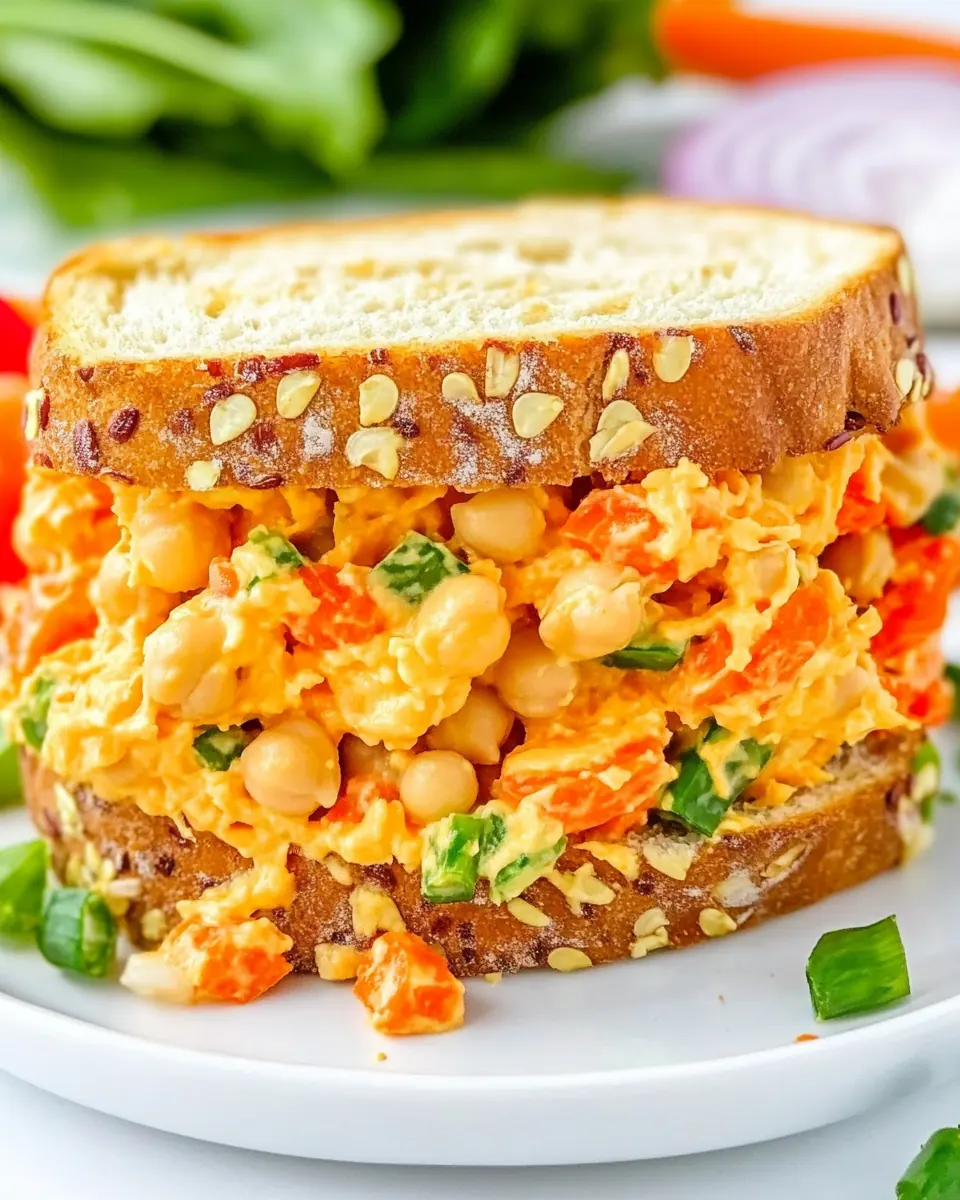
Toast two slices of bread and spoon some of the chickpea salad onto one slice. Cover with the second slice and serve.: When you add the mayo and Dijon mustard , the bowl will transform as the dressing clings to the solids and creates a glossy coating. The mayo softens the edges while the mustard introduces a bright, tangy note that cuts through the richness. Sprinkle in the salt and pepper little by little, tasting between additions to avoid over seasoning. The aroma will become more rounded and inviting. Stirring should be thorough but gentle, so you do not bruise the vegetables. A common error is to overdress the salad which makes it runny; if that happens, add a bit more mashed chickpeas to absorb the excess moisture. The right balance results in a cohesive, scoopable mixture that holds its shape on a slice of bread.
Mix thoroughly: As you mix, pay attention to the tactile feel of the salad in the bowl, it should be uniformly coated, not clumped in pockets. The sound is subtle, a soft shuffling as the fork or spoon moves through the ingredients, and visually you want the mixture to look evenly speckled with vegetables. Mixing well ensures each bite has a consistent flavor profile and prevents some pieces from being under seasoned. One pitfall is stirring too aggressively which can crush the vegetables and change the texture to something limp. If the salad seems dry after mixing, add a touch more mayo and blend until the texture is just moist enough to bind without being wet.
Toast two slices of bread: Toasting the whole grain bread creates a warm, crisp surface that contrasts beautifully with the soft filling. The toasting releases a toasty scent and a slight caramelization on the crumb which enhances flavor. Aim for a golden brown level so the slices are sturdy enough to hold the salad without tearing. A common mistake is skipping the toast, which can result in a soggy sandwich because untoasted bread soaks up moisture quickly. If you prefer a little char, toast a touch longer, but watch closely since bread can go from golden to bitter in seconds.
Spoon some of the chickpea salad onto one slice: When you spoon the salad, notice how it sits on the surface, slightly mounded and glossy from the dressing. Use a spoon or small spatula to place an even layer so each bite has a balanced filling to bread ratio. The visual cue is a neat mound that does not spill over the edges, and the sound is a soft plop as it lands. A common oversight is overfilling which leads to a messy sandwich that is hard to eat, so portion carefully. Press lightly with the back of the spoon to compact the filling a bit, ensuring it adheres to the bread.
Cover with the second slice and serve: As you place the top slice of bread, the sandwich will compress slightly, the textures combining into a single, unified bite. The contrast between the crunchy toast and the creamy salad is most satisfying here. Cut the sandwich in half if you like, watching the cross section reveal the colorful mixture inside, and plate it so it keeps its structure. A mistake to avoid is wrapping it too tightly for storage which can steam the toast and soften it. Serve promptly for the best textural experience, and enjoy the layers of flavor rolling across your palate.