Preheat the oven to 400 degrees Fahrenheit. Line a baking sheet with parchment paper and set aside.: The air warms quickly and the oven produces a steady heat that browns the edges as the squash softens, releasing a toasted, slightly sweet aroma. This step sets the stage for caramelization, which deepens the dish's flavor, and using parchment keeps cleanup easy. A common mistake is skipping the preheat, which results in uneven roasting. If you notice the oven takes longer to reach temperature, give it a few extra minutes so the squash roasts consistently.
Cut the acorn squashes in half lengthwise. Scoop out the seeds and cut a thin slice from the bottom of each to allow them to sit flat.: The click of the knife as you halve the squash is oddly satisfying, and removing the seeds creates a clean cavity for the filling. Trimming a sliver from the bottom prevents wobbling while roasting, which helps the squash cook evenly and keeps the filling from spilling. A frequent oversight is leaving the halves unbalanced, which can cause uneven browning. If one side seems unstable, trim a little more so each half sits steady on the pan.
Place the squash on the prepared baking sheet, hollowed-side up. Brush each one with olive oil and bake until tender, 30 to 40 minutes.: As they roast the edges will darken slightly and the flesh becomes soft, yielding to a fork with a gentle pull. Brushing with olive oil encourages golden edges and amplifies the squash's natural sugars. The scent in your kitchen will go from fresh to toasty and warm. Avoid under roasting; the filling will be watery if the squash isn't tender. If the tops brown too quickly, tent with foil to prevent overbrowning while the centers finish cooking.
Meanwhile, cook the wild rice according to the package directions.: As the wild rice simmers, it emits a nutty, grassy aroma and its grains plump while retaining a pleasant chew. Properly cooked rice adds structure to the filling and absorbs flavors without becoming mushy. A common trap is over cooking, which makes the texture pasty. Rinse, measure, and time the rice precisely so it remains al dente and distinct in the stuffing.
In a large skillet, heat the remaining tablespoon of olive oil over medium heat. Add the bell pepper and onion and cook until softened, about 10 minutes.: The pan will sizzle softly when the vegetables hit the oil, and after a few minutes you'll notice the onion turning translucent and the pepper releasing sweet notes. Low and slow softening encourages caramelization and draws out natural sugars, creating a rich base for the filling. Do not rush this step with high heat, which can cause uneven charring. Stir regularly to ensure even softening and avoid sticking.
Add the garlic, cumin, coriander, paprika, and cayenne. Cook until fragrant, about 1 minute.: A burst of perfume fills the air as the spices bloom in the oil, intensifying their flavors and marrying them with the softened vegetables. This quick step is important because it toasts the spices slightly, releasing essential oils that deepen the dish. Beware of leaving spices in the hot pan too long without stirring, which can produce a bitter note. Keep the heat moderate and move them around the skillet just until you smell the aroma.
Add the chickpeas and Swiss chard, lightly mashing the chickpeas as they cook. Cook until the chickpeas are heated through and the chard is wilted, about 5 minutes.: The texture here transforms as some chickpeas break down, creating a creamy binder while remaining some whole for bite, and the Swiss chard collapses into silky green ribbons. You'll hear a gentle sautéing sound and notice the mixture thickening slightly as moisture reduces. A typical mistake is over mashing, which eliminates texture, so press gently to retain contrast. If the pan looks dry, add a splash of water to prevent sticking while maintaining the desired consistency.
Stir the wild rice into the filling and season the mixture with salt and pepper, to taste.: The combined ingredients create a mosaic of textures and the flavors meld into a cohesive whole, with the wild rice absorbing the spiced, savory notes. Seasoning at this stage ensures the salt distributes evenly, enhancing each component. Taste as you go to avoid over-salting. If the filling tastes flat, a squeeze of lemon or a pinch more salt will brighten it, but add sparingly.
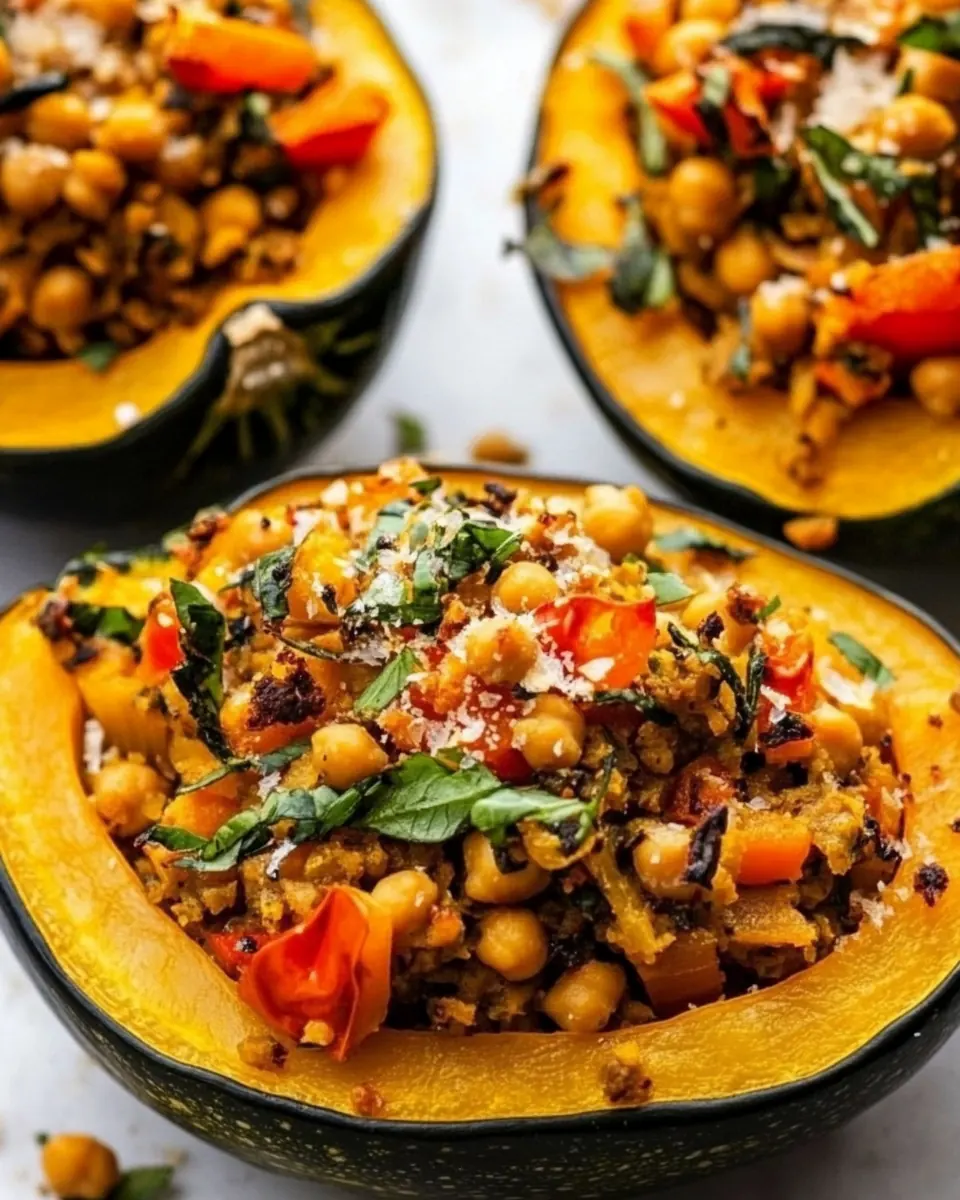
Divide the filling between the six squash halves. Return the squash to the oven to heat the filling through, if necessary.: Placing the mixture into the warm cavities produces an inviting visual contrast, and reheating allows the filling to meld into the roasted edges. You may see gentle bubbling and a faint toasty scent as flavors marry. One misstep is overfilling so the stuffing spills during reheating, so distribute evenly and press lightly to compact without packing too tightly.
Top each squash boat with the toasted pine nuts, cilantro, and green onions before serving.: The final garnishes add a crisp crunch, herbal lift, and sharp freshness that complete the dish. Toasted pine nuts should be fragrant and golden, and the bright green of chopped cilantro and green onions makes the plates sing. Avoid adding garnishes too early or they will wilt; reserve them until the moment of serving for maximum texture and color impact.