To prepare crust, whisk together flour, sugar, and salt in a bowl. Add butter and shortening and mix with a pastry blender until butter is pretty evenly broken up into pea sized chunks. You can also use your hands to flatten out and break up and larger pieces of butter, as long as your hands are not too warm and will melt the butter.: Feel the dry, fine texture of the flour as it shifts under your whisk, and notice the faint sweetness and saline specks that will soon become the foundation of your crust . This step ensures even seasoning and prevents pockets of salt or sugar. The whisking also aerates the flour slightly, giving the dough a gentler structure. If you skip a thorough mix you may end up with uneven flavor or spots of concentrated salt, so take a moment to combine until homogeneous.
Drizzle 1 tablespoon of ice water on one fourth of the dough mixture; blend with a fork until that section is evenly moistened. Sprinkle another tablespoon on the next section, and so forth. Mixing the dough a section at at time will help the dough get evenly moistened without getting overmixed. Only use as much water as you need to bring the dough together in a shaggy dough. You may need more or less depending on your specific conditions, but I found about 5 tablespoons was just the right amount.: As you cut butter and shortening into the flour, listen for the subtle change in sound as the pastry blender pushes through the pieces, and watch for small, coarse crumbs with visible bits of butter . Those pea sized pieces are crucial because they create steam pockets during baking, yielding flakiness. If the butter melts from warm hands you will lose that flakiness, so work quickly and chill your hands if they get warm.
Gather the dough together in a ball, pressing out any large cracks. Wrap tightly in plastic wrap and refrigerate for at least 30 minutes or more to allow the flour to fully absorb the water molecules.: Using cool palms, gently press the larger butter chunks until they are similar in size to the rest of the mixture, feeling for a sandy texture. The tactile feedback tells you when the pieces are right. Overworking will warm the fats and trigger gluten, making the dough tough, so stop as soon as the texture matches.
Roll out dough on a lightly floured surface or pastry cloth. For a 9-inch pie pan, you want a round approximately 12 inches in diameter. Drape the dough over your rolling pin and gently transfer it to your pie tin, easing it into the bottom without stretching.: The cold water should bead and slightly darken the flour rather than make it soggy, and doing this in sections helps you control hydration. The fork creates a coarse binding, preserving those fat pockets. If you add too much water at once the dough becomes sticky and loses its structure, so pause between additions.
Trim edges. If you will be crimping your dough, trim the edges about 1/2-inch out and then fold the edge under, then crimp as desired. For a cut out effect, trim the dough to the edge of the pie pan. Reroll the scraps and cut out shapes using a small cookie cutter. Brush the edge of the crust with an egg wash and then adhere the cut out shapes to it. When finished, brush the edges of the crust that will be exposed with an egg wash and sprinkle with granulated sugar. Refrigerate pie crust for at least 15 minutes while you prepare the filling.: Continue to hydrate slowly, assessing the dough after each addition so you achieve a shaggy but cohesive mass. The controlled approach prevents over mixing, which would develop gluten and toughen the crust . If you see the dough clumping into a compact ball immediately after water, you likely added too much, so try to disperse with a fork rather than kneading.
Preheat oven to 325 degrees F. Spread pecans (both chopped and halves) in a single layer on a baking sheet. Bake for 3 to 4 minutes or until lightly toasted and fragrant (watch them carefully as they will burn easily!) Set aside to cool.: As you work around the bowl the texture should remain slightly crumbly with areas just holding together, not overly smooth. This approach gives even hydration and better final flakiness. Resist the urge to knead the dough into uniformity, as that will tighten it and reduce tenderness.
Gently melt chocolate and butter together in a double boiler or in the microwave, heating in 30 second intervals at 50% power, stirring after each interval. When chocolate is melted and smooth, remove from heat and whisk in sugars and salt until mixture forms a smooth paste. Whisk in eggs, one at a time, until smooth. Whisk in vanilla.: The dough should just hold when squeezed, with visible flakes of butter . This conserves the fat pockets essential for a flaky bite. A common error is adding too much water because the dough looks dry; instead, chill it briefly and test again.
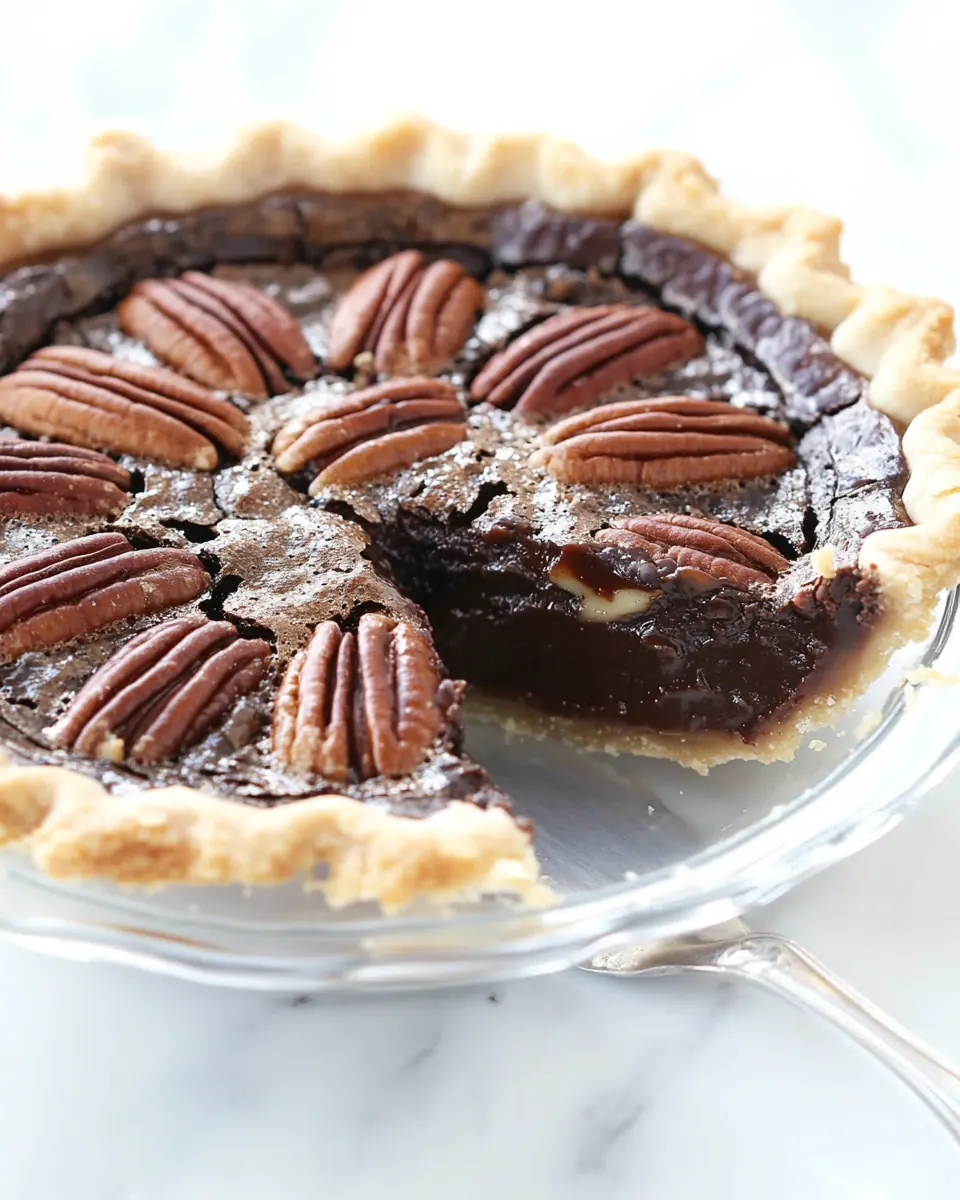
Spread chopped pecans in a layer in the bottom of chilled pie crust. Pour filling over top. Arrange pecan halves on top of filling in a decorative pattern as desired.: Ambient humidity and flour brand can change how much water you need, so treat the 5 tablespoon guideline as flexible. Trust the doughs feel rather than an exact number. If you overhydrate, put the dough in the refrigerator for 15 minutes to firm up before rolling.
Place pie on a baking sheet (just in case) and bake at 325 degrees F for 55 to 65 minutes or until crust is golden and pie is puffed and slightly cracked around the edges, and the center is still just barely jiggly (which will result in a slightly gooey center). If you prefer a firmer pie (more like a fudgy brownie) you can bake the pie slightly longer.: Gather the shaggy dough without compacting it fully, pressing gently to bring it into a cohesive ball with small fissures still visible. These fissures help the dough relax and roll evenly later. If you over press, the crust may become dense; handle with a light touch.
Transfer to a wire rack and let cool completely to room temperature, about 2 hours, before slicing and serving. After 2 hours if you are not serving it immediately, lightly cover with plastic wrap and refrigerate until ready to serve. Let come to room temperature prior to serving.: Chilling is a quiet but powerful step, letting the gluten relax and the butter firm up so the dough rolls cleanly. The refrigerated dough will be noticeably firmer to the touch and less sticky, which makes rolling and transferring much easier. Rushing this step often leads to a stubborn, elastic dough that springs back while rolling.
Roll out dough on a lightly floured surface or pastry cloth: When rolling, you should see an even, pale surface with a few scattered flecks of butter visible. A gentle pressure that begins from the center and works outward keeps thickness uniform. If the dough resists or tears, let it rest chilled for 10 minutes to relax the gluten .
For a 9 inch pie pan, you want a round approximately 12 inches in diameter: A 12 inch circle gives you enough overhang to ease the dough into the pan without stretching. Visualize the diameter as you roll, and rotate frequently to maintain a round shape. Stretching the dough to fit a pan will shrink it back while baking.
Drape the dough over your rolling pin and gently transfer it to your pie tin, easing it into the bottom without stretching: Use the rolling pin as a bridge to move the dough, keeping your motions gentle so the layers remain intact. Ease the dough into corners rather than pressing it down, which helps preserve flakiness. Pulling or stretching during transfer will cause the crust to contract in the oven.
Trim edges: Trim any excess dough for a neat edge, leaving about half an inch if you plan to fold under for crimping. A clean trim prevents overly thick edges that can bake unevenly. If you see thin spots after trimming, patch them with a bit of chilled dough to avoid leaks.
If you will be crimping your dough, trim the edges about 1/2 inch out and then fold the edge under, then crimp as desired: Folding under builds a sturdy rim that browns uniformly and supports decorative crimping. Use gentle, consistent pressure when crimping to create an even pattern. Overworking the edge will warm the fats and lose flakiness.
For a cut out effect, trim the dough to the edge of the pie pan: Trimming flush produces a tidy silhouette that is ideal for attaching cut out shapes, which will adhere better with an egg wash. Make sure the edge is smooth to avoid weak points that could tear while baking.
Reroll the scraps and cut out shapes using a small cookie cutter: Keep any re rolled dough chilled and handle it minimally to prevent toughness. The small cut outs will add charm and a slightly different texture where they sit exposed. If the scraps become warm, return them to the refrigerator before cutting.
Brush the edge of the crust with an egg wash and then adhere the cut out shapes to it: The egg wash acts as glue and gives a golden finish. Brush evenly and avoid dripping onto the bottom of the crust. A soggy edge can result if too much wash pools near the seam.
When finished, brush the edges of the crust that will be exposed with an egg wash and sprinkle with granulated sugar: The sugar adds sparkle and a slight crunch as the crust bakes. Apply a thin, even coat to avoid excess moisture. If sugar melts into the dough, the edge can become overly dark, so use a light hand.
Refrigerate pie crust for at least 15 minutes while you prepare the filling: A short chill firms the edge and helps prevent shrinkage during the initial bake, ensuring a crisp, defined rim. If you skip this chilling the edge may sag or the shape may distort.
Preheat oven to 325 degrees F: The oven should be fully heated so the filling sets properly and the crust browns gently. You will notice a warm, steady hum when the oven is ready. Baking in an oven that is not fully preheated leads to uneven texture and longer bake times.
Spread pecans both chopped and halves in a single layer on a baking sheet: Lay the pecan pieces and halves out so each has direct exposure to heat. This allows oils to bloom and surfaces to toast evenly. Crowding the sheet will lead to steaming rather than toasting.
Bake for 3 to 4 minutes or until lightly toasted and fragrant watch them carefully as they will burn easily: Pay close attention in those final moments, because pecan go from toasted to burnt quickly. You should smell a warm, toasty aroma and see a slightly deeper color without dark spots. If they darken unevenly, remove immediately and let cool.
Set aside to cool: Cooling the toasted pecan prevents them from continuing to bake in residual heat and keeps their crunch. Hot nuts can also melt the filling if layered warm, so wait until they are comfortably cool before using.
Gently melt chocolate and butter together in a double boiler or in the microwave heating in 30 second intervals at 50% power stirring after each interval: Watch for a glossy, smooth emulsion as the chocolate and butter meld. Stirring keeps heat even and prevents scorching, and the aroma will deepen to a rich cocoa aroma. If you overheat, the chocolate can seize and become grainy, so remove from heat while a few unmelted bits remain and stir to finish melting.
When chocolate is melted and smooth remove from heat and whisk in sugars and salt until mixture forms a smooth paste: The warm chocolate will dissolve the sugar , creating a glossy mass; whisk until you feel resistance ease into a silky texture. The mixture should be homogeneous with no gritty sugar. If grains remain, warm gently and whisk until smooth.
Whisk in eggs one at a time until smooth: Add the eggs gradually and whisk vigorously to integrate them without scrambling. The mixture will lighten slightly and become more fluid. If the chocolate mixture is too hot when you add eggs they can cook, so allow it to cool briefly if steam is rising.
Whisk in vanilla: The small addition of vanilla will lift the chocolate notes and round flavors. Whisk until incorporated and the mixture smells complete. Avoid adding anything acidic that could break the emulsion at this stage.
Spread chopped pecans in a layer in the bottom of chilled pie crust: A single even layer of chopped pecan ensures texture in every bite and keeps heavier components from pooling. Press lightly so they nestle without compacting. If nuts are piled unevenly the filling may set irregularly.
Pour filling over top: When you pour the filling it should move smoothly and settle around the pecan layer, creating a unified surface. The pour will highlight any air pockets that can be tapped out by gently tapping the pan once on the counter. Avoid overfilling beyond the rim.
Arrange pecan halves on top of filling in a decorative pattern as desired: Placing halves in a pattern gives the pie a polished, classic appearance and provides a crunchy top layer. Press them in slightly so they adhere, but do not submerge. If they float, they may sink unevenly as the filling sets.
Place pie on a baking sheet just in case and bake at 325 degrees F for 55 to 65 minutes or until crust is golden and pie is puffed and slightly cracked around the edges and the center is still just barely jiggly: The visual cues tell you the filling is set but still has a fudgy center. Look for a gently domed top with small cracks at the edge and a center that wiggles like soft gelatin. If the center is fully firm the result will be more brownie like, so watch the oven closely in the final 10 minutes.
If you prefer a firmer pie you can bake the pie slightly longer: Extending bake time yields a denser, less gooey interior. Check every 5 minutes to avoid overbaking, which will dry the filling and mute the chocolate flavor.
Transfer to a wire rack and let cool completely to room temperature about 2 hours before slicing and serving: Cooling on a rack allows air circulation so the filling firms evenly. This resting period is when the texture becomes sliceable and the flavors meld. Cutting too soon will produce a runny slice.
After 2 hours if you are not serving it immediately lightly cover with plastic wrap and refrigerate until ready to serve: Chilling preserves freshness while maintaining structure. Remove from the refrigerator and let come to room temperature before serving for the best texture and aroma. Slicing straight from cold will mute flavors and produce a firmer mouthfeel.