Chocolate Fudge Pecan Pie
Chocolate Fudge Pecan Pie has been my go to when I want to bring something that feels both nostalgic and a little decadent to the table. The first time I made this pie it was for a chilly family gathering in October, and I remember the kitchen filling with the warm, nutty scent of toasted pecan and the deep, cocoa perfume of melted chocolate. I was nervous about the crust, but the tactile pleasure of pressing a flaky dough into the pan soothed my jitters, and the payoff was immediate when the first slice revealed a shiny, fudgy interior studded with crunchy pecan pieces.
I often gravitate toward recipes that balance textures, and Chocolate Fudge Pecan Pie does just that. The contrast of a slightly crisp, buttery crust against a gooey, chocolate rich filling is the kind of thing that makes people pause mid conversation. I like to tell guests a little story about the pie while slicing, because the presentation invites a quiet reverence that I love to encourage. Everyone leans in as the knife glides through, and that moment of anticipation is part of the ritual.
When I make Chocolate Fudge Pecan Pie for holidays, I choose ingredients with intention. The toasted pecan aroma, the way the filling shimmers as it sets, these are sensory cues I watch for. Over time I’ve learned a few adjustments that keep the filling glossy and the crust perfectly baked, and I enjoy sharing those small techniques with friends. It feels like passing along a secret that elevates a familiar dessert into something you remember long after the last forkful is gone.
Recipe Snapshot
1 hr 30 mins
30 mins
60 mins
Medium
350 kcal
American
Gluten-Free, Low FODMAP
Desserts
Mixing Bowl, Pastry Blender, Rolling Pin, 9 inch Pie Pan, Baking Sheet, Double Boiler, Wire Rack
The Best Thing About This Chocolate Fudge Pecan Pie
Rich, layered texture
I love how Chocolate Fudge Pecan Pie manages to deliver both a silky, fudgy center and a crisp, buttery crust. The contrast in mouthfeel is the reason I reach for this recipe when I want to impress without fuss. When you cut a slice and see that glossy interior, you know the balance is right.
Nut forward flavor that complements chocolate
The combination of chopped pecan pieces and halves provides earthy, toasty notes that marry beautifully with melted chocolate. I always toast my pecan before baking because it wakes up the oils and deepens the aroma, and you can smell the difference the moment they hit the oven.
Reliable, classic technique
This recipe uses time tested pastry methods, from cutting in cold butter and shortening to chilling the dough so gluten relaxes. I appreciate recipes that teach technique because they build confidence. Once you master the basic crust and filling, you can replicate success for other tarts and pies.
Perfect for gatherings
Chocolate Fudge Pecan Pie is a showstopper that travels well and slices neatly after proper cooling. I like that it can be made ahead and lightly chilled, which frees up oven space and my headspace on a busy day. Guests always comment on the presentation, especially when pecan halves are arranged on top.
Flexible finish and serving options
You can leave the center slightly gooey for a more indulgent bite, or bake a touch longer for a denser, fudge like texture. I enjoy presenting it both ways depending on the crowd, and that flexibility makes it one of my most requested desserts.
Ingredients for Chocolate Fudge Pecan Pie
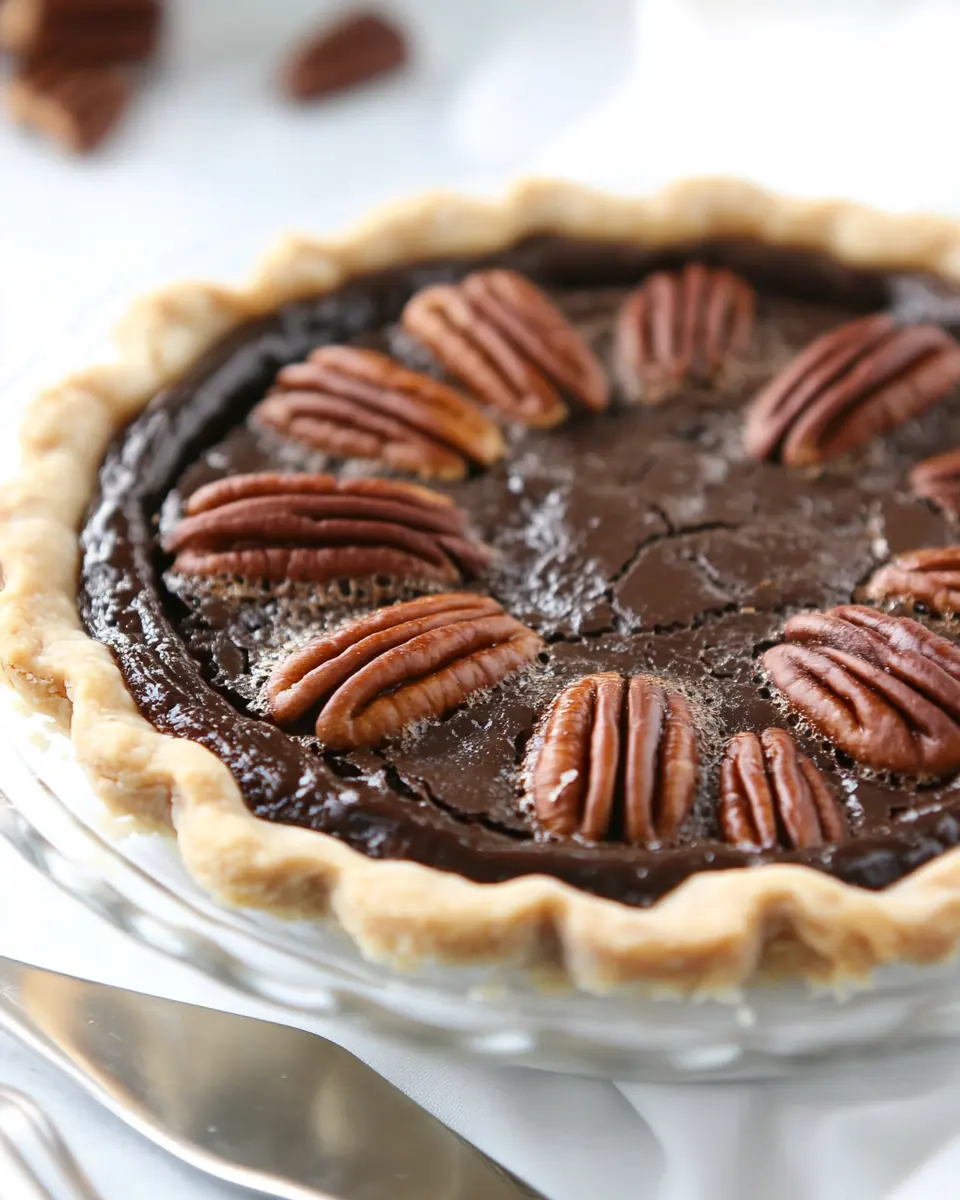
These ingredients form a harmonious team. The pastry serves as a crisp, buttery vessel, while the filling blends rich chocolate and sugars to create a glossy, fudgy custard. The dual use of chopped pecan pieces and halves gives the pie both texture inside and a decorative crown on top. Each element plays a specific role, from structure to flavor to mouthfeel.
- 1 3/4 cups (7.75 ounces) White Lily® All-Purpose Flour: Provide structure and body to the pie dough by forming the flour-based matrix that holds fats and liquid; measure accurately for proper gluten development and a tender crust. Sift or spoon into the bowl to avoid compacting and to ensure even mixing with other dry ingredients. Combine gently with cold fats to create flaky layers without overworking the dough.
- 1 teaspoon granulated sugar: Add a touch of sweetness to balance savory notes and enhance browning in the crust while slightly tenderizing gluten; use sparingly to keep dough texture light. Dissolve into the dry mixture for consistent distribution. Adjust slightly if making a sweeter crust variation.
- 1/2 teaspoon kosher salt: Season the pastry to enhance overall flavor and control sweetness perception while strengthening dough structure minimally; use kosher salt for its clean, less intense saltiness. Sprinkle evenly into dry ingredients to ensure even seasoning throughout the crust. Be cautious to avoid over-salting, which can mask other flavors.
- 6 tablespoons (3/4 stick) cold unsalted butter, cut into cubes: Create laminated pockets in the dough that melt during baking to produce a flaky, tender crust; keep butter very cold and cut into small cubes for even distribution. Work quickly to prevent warming and incorporate into flour until pea-sized pieces remain. Butter contributes rich, creamy flavor as well as structure.
- 4 tablespoons cold unflavored vegetable shortening, cut into cubes: Contribute solid fat that promotes flakiness and a tender crumb by remaining firm in the dough at low temperatures; keep shortening cold and cubed for optimal texture. Combine with butter to balance flavor and create distinct layers. Use as directed to maintain the dough's handling characteristics.
- 4 6 tablespoons ice water: Hydrate the dry ingredients to bind the dough components while controlling moisture to avoid a tough crust; add ice water gradually until dough just comes together. Keep water cold to minimize fat melting and preserve flakiness. Stop adding once the dough holds when pressed to avoid overhydration.
- 1 egg, lightly beaten with 1 teaspoon water: Provide an egg wash to promote golden color and a glossy finish on the baked crust when beaten with water; apply lightly before baking to avoid sealing edges too strongly. Brush evenly over chilled dough for an attractive appearance. Use food-safe brush and handle gently to prevent tearing the crust.
- 1/2 cup pecan halves: Offer whole, decorative pecan halves for topping or adding crunch, contributing distinctive nutty flavor and eye-catching texture; toast lightly to intensify aroma if desired. Arrange atop the filling or mix into the filling for layered texture. Store properly to preserve freshness and prevent rancidity.
- 1/2 cup chopped pecan pieces: Supply chopped pecan pieces to distribute nutty texture throughout the filling and provide more surface area for toasting and binding with the sweet filling. Fold in evenly so each bite contains nuts and to avoid clumping. Chop to uniform size for consistent baking and mouthfeel.
- 8 ounces dark chocolate, chopped: Provide rich cocoa solids and smooth melting properties that create the chocolate layer of the filling; chop to uniform pieces to ensure even melting. Use high-quality dark chocolate for depth of flavor and glossy finish in the filling. Temper melting gently over low heat or a double boiler to prevent burning.
- 1/2 cup (1 stick) unsalted butter, cut into cubes: Contribute creaminess and a silky mouthfeel to the chocolate filling while adding buttery flavor; cut unsalted butter into cubes to melt evenly with chocolate. Use unsalted to control overall sodium in the recipe and to allow precise seasoning. Incorporate gradually to create a smooth, cohesive filling.
- 3/4 cup granulated sugar: Add sweetness and structure to the filling while helping to dissolve and blend with fats for a glossy, set texture; measure granulated sugar accurately for proper crystallization. Stir into warm chocolate–butter mixture to dissolve fully. Balance with brown sugar for depth if recipe calls for both.
- 3/4 cup packed light brown sugar: Introduce moist sweetness and caramel-like depth to the filling while contributing to chewiness and color development; pack light brown sugar to measurement for consistency. Combine with granulated sugar to create layered sweetness and affect final texture. Ensure even mixing to prevent graininess.
- 3/4 teaspoon kosher salt: Enhance and balance sweet flavors while intensifying depth without making the filling overly salty; use kosher salt for a clean finish. Stir into the filling components to distribute evenly and highlight chocolate and pecan flavors. Adjust carefully to taste, as salt impacts perceived sweetness.
- 4 large eggs, at room temperature: Bind the filling and provide structure, richness, and a silky texture by incorporating whole eggs at room temperature for smooth emulsification. Beat lightly before adding to ensure even distribution and prevent curdling when combined with warm ingredients. Room–temperature eggs blend more uniformly for consistent baking.
- 1 teaspoon vanilla extract: Add aromatic floral and sweet notes to round out the filling's flavor profile and complement chocolate and nuts; measure vanilla precisely for balance. Stir into the filling after removing from heat to retain volatile aromatics. Use pure extract for best quality and depth.
Preparation Steps for Chocolate Fudge Pecan Pie
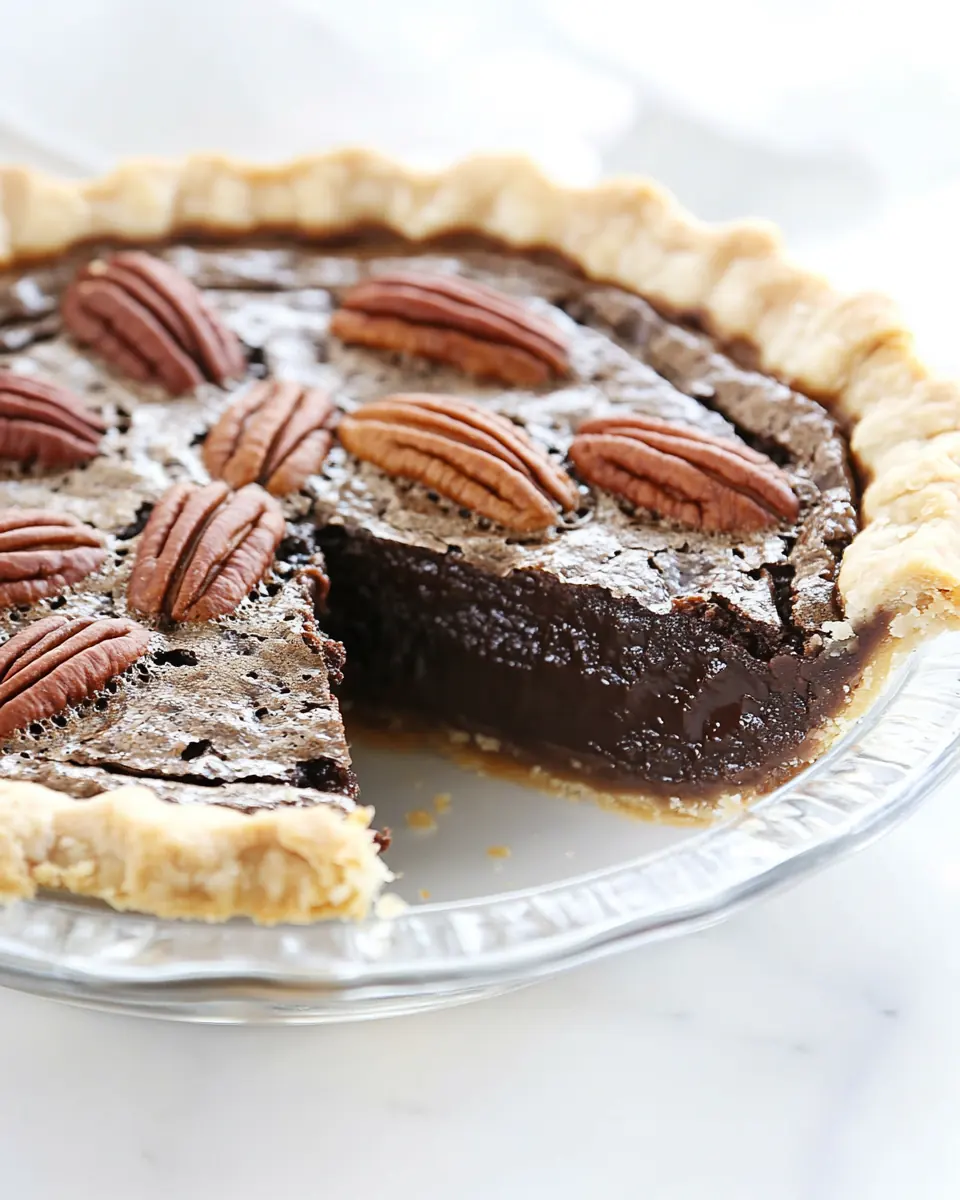
These directions translate the original method into conversational, sensory rich guidance so you can bake with confidence. I expand on each instruction, focusing on what to notice, why the technique matters, and common pitfalls to avoid. Keep your station organized, and take a breath between major steps.
- To prepare crust, whisk together flour, sugar, and salt in a bowl. Add butter and shortening and mix with a pastry blender until butter is pretty evenly broken up into pea sized chunks. You can also use your hands to flatten out and break up and larger pieces of butter, as long as your hands are not too warm and will melt the butter.: Feel the dry, fine texture of the flour as it shifts under your whisk, and notice the faint sweetness and saline specks that will soon become the foundation of your crust . This step ensures even seasoning and prevents pockets of salt or sugar. The whisking also aerates the flour slightly, giving the dough a gentler structure. If you skip a thorough mix you may end up with uneven flavor or spots of concentrated salt, so take a moment to combine until homogeneous.
- Drizzle 1 tablespoon of ice water on one fourth of the dough mixture; blend with a fork until that section is evenly moistened. Sprinkle another tablespoon on the next section, and so forth. Mixing the dough a section at at time will help the dough get evenly moistened without getting overmixed. Only use as much water as you need to bring the dough together in a shaggy dough. You may need more or less depending on your specific conditions, but I found about 5 tablespoons was just the right amount.: As you cut butter and shortening into the flour, listen for the subtle change in sound as the pastry blender pushes through the pieces, and watch for small, coarse crumbs with visible bits of butter . Those pea sized pieces are crucial because they create steam pockets during baking, yielding flakiness. If the butter melts from warm hands you will lose that flakiness, so work quickly and chill your hands if they get warm.
- Gather the dough together in a ball, pressing out any large cracks. Wrap tightly in plastic wrap and refrigerate for at least 30 minutes or more to allow the flour to fully absorb the water molecules.: Using cool palms, gently press the larger butter chunks until they are similar in size to the rest of the mixture, feeling for a sandy texture. The tactile feedback tells you when the pieces are right. Overworking will warm the fats and trigger gluten, making the dough tough, so stop as soon as the texture matches.
- Roll out dough on a lightly floured surface or pastry cloth. For a 9-inch pie pan, you want a round approximately 12 inches in diameter. Drape the dough over your rolling pin and gently transfer it to your pie tin, easing it into the bottom without stretching.: The cold water should bead and slightly darken the flour rather than make it soggy, and doing this in sections helps you control hydration. The fork creates a coarse binding, preserving those fat pockets. If you add too much water at once the dough becomes sticky and loses its structure, so pause between additions.
- Trim edges. If you will be crimping your dough, trim the edges about 1/2-inch out and then fold the edge under, then crimp as desired. For a cut out effect, trim the dough to the edge of the pie pan. Reroll the scraps and cut out shapes using a small cookie cutter. Brush the edge of the crust with an egg wash and then adhere the cut out shapes to it. When finished, brush the edges of the crust that will be exposed with an egg wash and sprinkle with granulated sugar. Refrigerate pie crust for at least 15 minutes while you prepare the filling.: Continue to hydrate slowly, assessing the dough after each addition so you achieve a shaggy but cohesive mass. The controlled approach prevents over mixing, which would develop gluten and toughen the crust . If you see the dough clumping into a compact ball immediately after water, you likely added too much, so try to disperse with a fork rather than kneading.
- Preheat oven to 325 degrees F. Spread pecans (both chopped and halves) in a single layer on a baking sheet. Bake for 3 to 4 minutes or until lightly toasted and fragrant (watch them carefully as they will burn easily!) Set aside to cool.: As you work around the bowl the texture should remain slightly crumbly with areas just holding together, not overly smooth. This approach gives even hydration and better final flakiness. Resist the urge to knead the dough into uniformity, as that will tighten it and reduce tenderness.
- Gently melt chocolate and butter together in a double boiler or in the microwave, heating in 30 second intervals at 50% power, stirring after each interval. When chocolate is melted and smooth, remove from heat and whisk in sugars and salt until mixture forms a smooth paste. Whisk in eggs, one at a time, until smooth. Whisk in vanilla.: The dough should just hold when squeezed, with visible flakes of butter . This conserves the fat pockets essential for a flaky bite. A common error is adding too much water because the dough looks dry; instead, chill it briefly and test again.
- Spread chopped pecans in a layer in the bottom of chilled pie crust. Pour filling over top. Arrange pecan halves on top of filling in a decorative pattern as desired.: Ambient humidity and flour brand can change how much water you need, so treat the 5 tablespoon guideline as flexible. Trust the doughs feel rather than an exact number. If you overhydrate, put the dough in the refrigerator for 15 minutes to firm up before rolling.
- Place pie on a baking sheet (just in case) and bake at 325 degrees F for 55 to 65 minutes or until crust is golden and pie is puffed and slightly cracked around the edges, and the center is still just barely jiggly (which will result in a slightly gooey center). If you prefer a firmer pie (more like a fudgy brownie) you can bake the pie slightly longer.: Gather the shaggy dough without compacting it fully, pressing gently to bring it into a cohesive ball with small fissures still visible. These fissures help the dough relax and roll evenly later. If you over press, the crust may become dense; handle with a light touch.
- Transfer to a wire rack and let cool completely to room temperature, about 2 hours, before slicing and serving. After 2 hours if you are not serving it immediately, lightly cover with plastic wrap and refrigerate until ready to serve. Let come to room temperature prior to serving.: Chilling is a quiet but powerful step, letting the gluten relax and the butter firm up so the dough rolls cleanly. The refrigerated dough will be noticeably firmer to the touch and less sticky, which makes rolling and transferring much easier. Rushing this step often leads to a stubborn, elastic dough that springs back while rolling.
- Roll out dough on a lightly floured surface or pastry cloth: When rolling, you should see an even, pale surface with a few scattered flecks of butter visible. A gentle pressure that begins from the center and works outward keeps thickness uniform. If the dough resists or tears, let it rest chilled for 10 minutes to relax the gluten .
- For a 9 inch pie pan, you want a round approximately 12 inches in diameter: A 12 inch circle gives you enough overhang to ease the dough into the pan without stretching. Visualize the diameter as you roll, and rotate frequently to maintain a round shape. Stretching the dough to fit a pan will shrink it back while baking.
- Drape the dough over your rolling pin and gently transfer it to your pie tin, easing it into the bottom without stretching: Use the rolling pin as a bridge to move the dough, keeping your motions gentle so the layers remain intact. Ease the dough into corners rather than pressing it down, which helps preserve flakiness. Pulling or stretching during transfer will cause the crust to contract in the oven.
- Trim edges: Trim any excess dough for a neat edge, leaving about half an inch if you plan to fold under for crimping. A clean trim prevents overly thick edges that can bake unevenly. If you see thin spots after trimming, patch them with a bit of chilled dough to avoid leaks.
- If you will be crimping your dough, trim the edges about 1/2 inch out and then fold the edge under, then crimp as desired: Folding under builds a sturdy rim that browns uniformly and supports decorative crimping. Use gentle, consistent pressure when crimping to create an even pattern. Overworking the edge will warm the fats and lose flakiness.
- For a cut out effect, trim the dough to the edge of the pie pan: Trimming flush produces a tidy silhouette that is ideal for attaching cut out shapes, which will adhere better with an egg wash. Make sure the edge is smooth to avoid weak points that could tear while baking.
- Reroll the scraps and cut out shapes using a small cookie cutter: Keep any re rolled dough chilled and handle it minimally to prevent toughness. The small cut outs will add charm and a slightly different texture where they sit exposed. If the scraps become warm, return them to the refrigerator before cutting.
- Brush the edge of the crust with an egg wash and then adhere the cut out shapes to it: The egg wash acts as glue and gives a golden finish. Brush evenly and avoid dripping onto the bottom of the crust. A soggy edge can result if too much wash pools near the seam.
- When finished, brush the edges of the crust that will be exposed with an egg wash and sprinkle with granulated sugar: The sugar adds sparkle and a slight crunch as the crust bakes. Apply a thin, even coat to avoid excess moisture. If sugar melts into the dough, the edge can become overly dark, so use a light hand.
- Refrigerate pie crust for at least 15 minutes while you prepare the filling: A short chill firms the edge and helps prevent shrinkage during the initial bake, ensuring a crisp, defined rim. If you skip this chilling the edge may sag or the shape may distort.
- Preheat oven to 325 degrees F: The oven should be fully heated so the filling sets properly and the crust browns gently. You will notice a warm, steady hum when the oven is ready. Baking in an oven that is not fully preheated leads to uneven texture and longer bake times.
- Spread pecans both chopped and halves in a single layer on a baking sheet: Lay the pecan pieces and halves out so each has direct exposure to heat. This allows oils to bloom and surfaces to toast evenly. Crowding the sheet will lead to steaming rather than toasting.
- Bake for 3 to 4 minutes or until lightly toasted and fragrant watch them carefully as they will burn easily: Pay close attention in those final moments, because pecan go from toasted to burnt quickly. You should smell a warm, toasty aroma and see a slightly deeper color without dark spots. If they darken unevenly, remove immediately and let cool.
- Set aside to cool: Cooling the toasted pecan prevents them from continuing to bake in residual heat and keeps their crunch. Hot nuts can also melt the filling if layered warm, so wait until they are comfortably cool before using.
- Gently melt chocolate and butter together in a double boiler or in the microwave heating in 30 second intervals at 50% power stirring after each interval: Watch for a glossy, smooth emulsion as the chocolate and butter meld. Stirring keeps heat even and prevents scorching, and the aroma will deepen to a rich cocoa aroma. If you overheat, the chocolate can seize and become grainy, so remove from heat while a few unmelted bits remain and stir to finish melting.
- When chocolate is melted and smooth remove from heat and whisk in sugars and salt until mixture forms a smooth paste: The warm chocolate will dissolve the sugar , creating a glossy mass; whisk until you feel resistance ease into a silky texture. The mixture should be homogeneous with no gritty sugar. If grains remain, warm gently and whisk until smooth.
- Whisk in eggs one at a time until smooth: Add the eggs gradually and whisk vigorously to integrate them without scrambling. The mixture will lighten slightly and become more fluid. If the chocolate mixture is too hot when you add eggs they can cook, so allow it to cool briefly if steam is rising.
- Whisk in vanilla: The small addition of vanilla will lift the chocolate notes and round flavors. Whisk until incorporated and the mixture smells complete. Avoid adding anything acidic that could break the emulsion at this stage.
- Spread chopped pecans in a layer in the bottom of chilled pie crust: A single even layer of chopped pecan ensures texture in every bite and keeps heavier components from pooling. Press lightly so they nestle without compacting. If nuts are piled unevenly the filling may set irregularly.
- Pour filling over top: When you pour the filling it should move smoothly and settle around the pecan layer, creating a unified surface. The pour will highlight any air pockets that can be tapped out by gently tapping the pan once on the counter. Avoid overfilling beyond the rim.
- Arrange pecan halves on top of filling in a decorative pattern as desired: Placing halves in a pattern gives the pie a polished, classic appearance and provides a crunchy top layer. Press them in slightly so they adhere, but do not submerge. If they float, they may sink unevenly as the filling sets.
- Place pie on a baking sheet just in case and bake at 325 degrees F for 55 to 65 minutes or until crust is golden and pie is puffed and slightly cracked around the edges and the center is still just barely jiggly: The visual cues tell you the filling is set but still has a fudgy center. Look for a gently domed top with small cracks at the edge and a center that wiggles like soft gelatin. If the center is fully firm the result will be more brownie like, so watch the oven closely in the final 10 minutes.
- If you prefer a firmer pie you can bake the pie slightly longer: Extending bake time yields a denser, less gooey interior. Check every 5 minutes to avoid overbaking, which will dry the filling and mute the chocolate flavor.
- Transfer to a wire rack and let cool completely to room temperature about 2 hours before slicing and serving: Cooling on a rack allows air circulation so the filling firms evenly. This resting period is when the texture becomes sliceable and the flavors meld. Cutting too soon will produce a runny slice.
- After 2 hours if you are not serving it immediately lightly cover with plastic wrap and refrigerate until ready to serve: Chilling preserves freshness while maintaining structure. Remove from the refrigerator and let come to room temperature before serving for the best texture and aroma. Slicing straight from cold will mute flavors and produce a firmer mouthfeel.
Expert Tips about Chocolate Fudge Pecan Pie
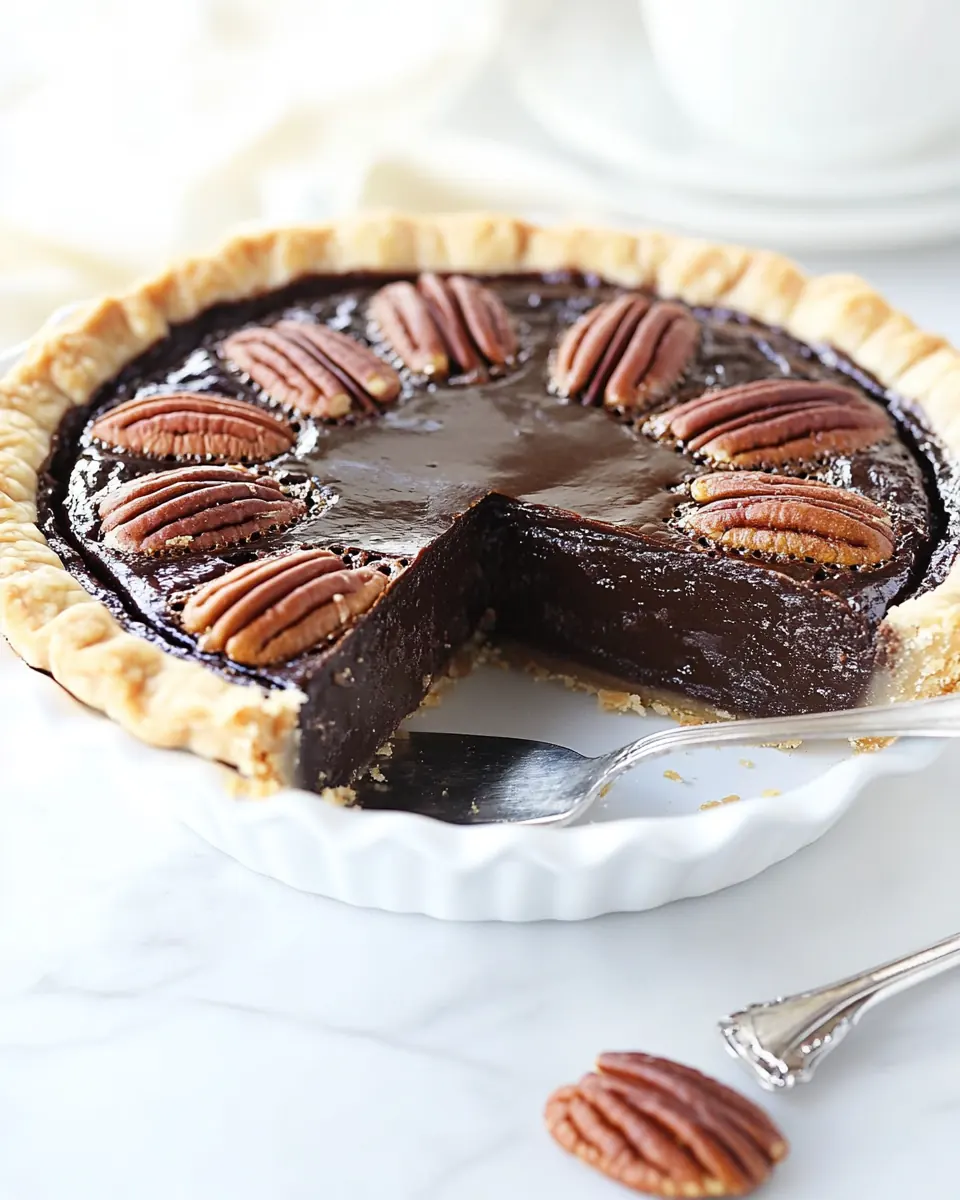
I like to think of these as small adjustments that yield big differences. Below are practical notes I use every time I make Chocolate Fudge Pecan Pie, presented as focused tips you can apply immediately.
- Keep everything cold: Keeping your butter, shortening, and even the bowl slightly cool helps preserve fat pockets that make the crust flaky. Chill tools and ingredients if your kitchen is warm.
- Control hydration: Add the ice water slowly and stop when the dough just holds together; overhydration causes toughness. If in doubt, err on the side of slightly drier and rest the dough longer.
- Watch the nuts: Toast pecan on a single layer for a few minutes until fragrant, turning once; they will deepen quickly so stay nearby to avoid burning.
- Temper eggs carefully: When adding eggs to warm chocolate, whisk a spoonful of the warm mixture into the eggs first, then add the tempered eggs back into the chocolate to prevent scrambling.
- Use a baking sheet underneath: Place the pie on a sheet to catch any spills from the filling, making oven cleanup easier and preventing drips from burning on the oven floor.
- Allow proper cooling: Let the pie rest at room temperature for about two hours; the filling firms as it cools, which gives cleaner slices and better balance of textures.
Best Served With
This pie pairs beautifully with restrained accompaniments that highlight its texture and flavor. I often serve it slightly warm for the gooey experience or at room temperature for cleaner slices, and I consider how guests will eat it when choosing sides and presentation.
- A dollop of softly whipped cream: The airy cream cuts through the richness and adds a lightness to each bite.
- Room temperature slices: Allowing the pie to come to room temperature enhances the chocolate aroma and yields a fudgy center that holds its shape.
- Warm coffee or tea: A hot beverage provides a pleasing temperature contrast, and the bitterness of coffee complements the dark chocolate.
- After holiday dinner presentation: This pie makes an elegant centerpiece for holiday tables such as Thanksgiving, where guests appreciate a dense dessert that slices well.
- Storage notes: Once cooled, lightly cover with plastic wrap and refrigerate; the pie keeps well for a few days and can be returned to room temperature before serving for best texture.
- Seasonal pairing: In fall, pair with warm spices on the table and roasted nuts to echo the pie’s nutty notes, making it perfect for cozy gatherings.
FAQ
Conclusion
Chocolate Fudge Pecan Pie is special because it combines a tender, flaky crust with a glossy, fudge like chocolate filling studded with toasted pecans for perfect textural contrast. I encourage you to give it a try because a few careful steps like keeping your fats cold and toasting the nuts make a big difference and reward you with a pie that looks and tastes like it came from a cherished family cookbook. Enjoy the process, take your time with the chilling stages, and share generously with friends and family.
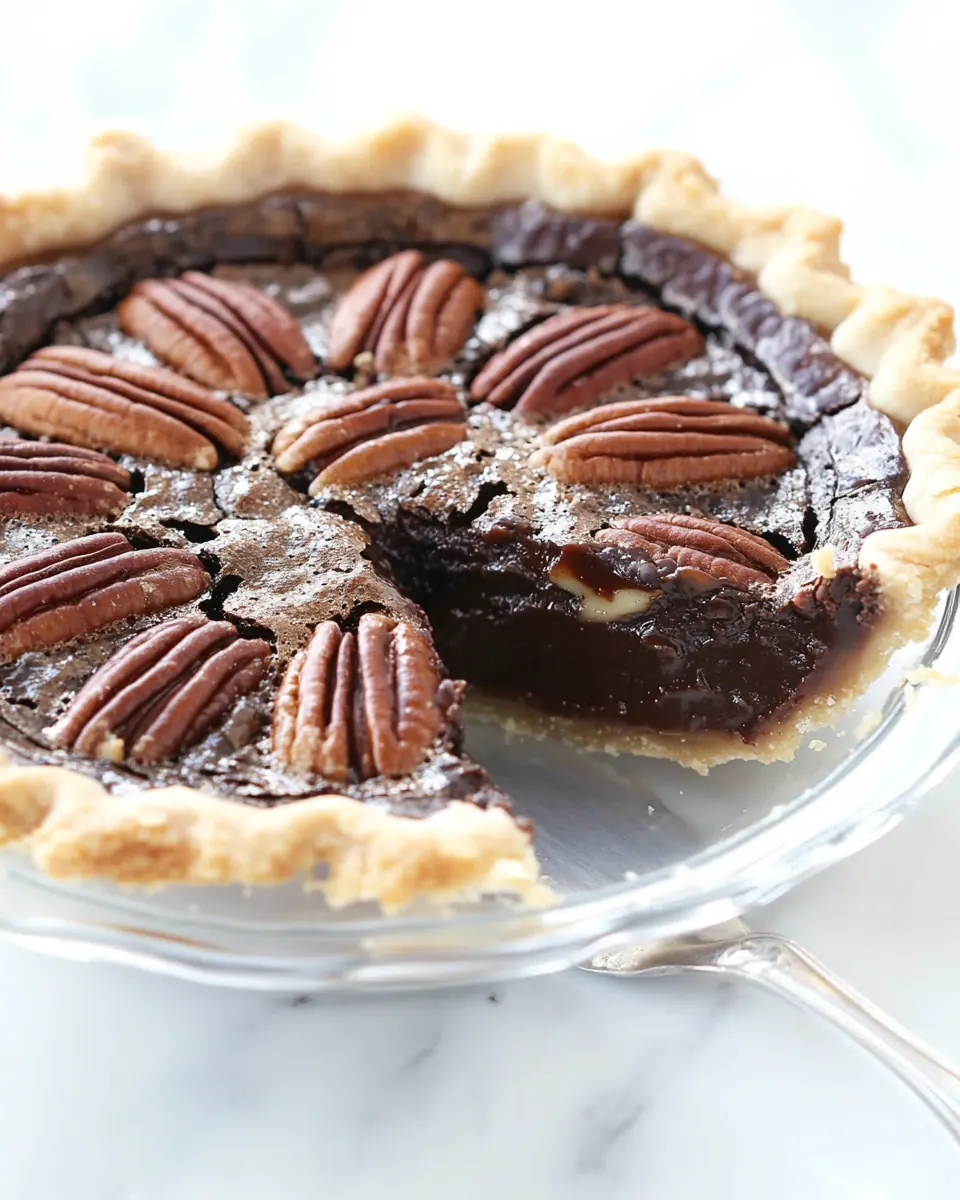
Chocolate Fudge Pecan Pie
Ingredients
Equipment
Method
- To prepare crust, whisk together flour, sugar, and salt in a bowl. Add butter and shortening and mix with a pastry blender until butter is pretty evenly broken up into pea sized chunks. You can also use your hands to flatten out and break up and larger pieces of butter, as long as your hands are not too warm and will melt the butter.: Feel the dry, fine texture of the flour as it shifts under your whisk, and notice the faint sweetness and saline specks that will soon become the foundation of your crust . This step ensures even seasoning and prevents pockets of salt or sugar. The whisking also aerates the flour slightly, giving the dough a gentler structure. If you skip a thorough mix you may end up with uneven flavor or spots of concentrated salt, so take a moment to combine until homogeneous.
- Drizzle 1 tablespoon of ice water on one fourth of the dough mixture; blend with a fork until that section is evenly moistened. Sprinkle another tablespoon on the next section, and so forth. Mixing the dough a section at at time will help the dough get evenly moistened without getting overmixed. Only use as much water as you need to bring the dough together in a shaggy dough. You may need more or less depending on your specific conditions, but I found about 5 tablespoons was just the right amount.: As you cut butter and shortening into the flour, listen for the subtle change in sound as the pastry blender pushes through the pieces, and watch for small, coarse crumbs with visible bits of butter . Those pea sized pieces are crucial because they create steam pockets during baking, yielding flakiness. If the butter melts from warm hands you will lose that flakiness, so work quickly and chill your hands if they get warm.
- Gather the dough together in a ball, pressing out any large cracks. Wrap tightly in plastic wrap and refrigerate for at least 30 minutes or more to allow the flour to fully absorb the water molecules.: Using cool palms, gently press the larger butter chunks until they are similar in size to the rest of the mixture, feeling for a sandy texture. The tactile feedback tells you when the pieces are right. Overworking will warm the fats and trigger gluten, making the dough tough, so stop as soon as the texture matches.
- Roll out dough on a lightly floured surface or pastry cloth. For a 9-inch pie pan, you want a round approximately 12 inches in diameter. Drape the dough over your rolling pin and gently transfer it to your pie tin, easing it into the bottom without stretching.: The cold water should bead and slightly darken the flour rather than make it soggy, and doing this in sections helps you control hydration. The fork creates a coarse binding, preserving those fat pockets. If you add too much water at once the dough becomes sticky and loses its structure, so pause between additions.
- Trim edges. If you will be crimping your dough, trim the edges about 1/2-inch out and then fold the edge under, then crimp as desired. For a cut out effect, trim the dough to the edge of the pie pan. Reroll the scraps and cut out shapes using a small cookie cutter. Brush the edge of the crust with an egg wash and then adhere the cut out shapes to it. When finished, brush the edges of the crust that will be exposed with an egg wash and sprinkle with granulated sugar. Refrigerate pie crust for at least 15 minutes while you prepare the filling.: Continue to hydrate slowly, assessing the dough after each addition so you achieve a shaggy but cohesive mass. The controlled approach prevents over mixing, which would develop gluten and toughen the crust . If you see the dough clumping into a compact ball immediately after water, you likely added too much, so try to disperse with a fork rather than kneading.
- Preheat oven to 325 degrees F. Spread pecans (both chopped and halves) in a single layer on a baking sheet. Bake for 3 to 4 minutes or until lightly toasted and fragrant (watch them carefully as they will burn easily!) Set aside to cool.: As you work around the bowl the texture should remain slightly crumbly with areas just holding together, not overly smooth. This approach gives even hydration and better final flakiness. Resist the urge to knead the dough into uniformity, as that will tighten it and reduce tenderness.
- Gently melt chocolate and butter together in a double boiler or in the microwave, heating in 30 second intervals at 50% power, stirring after each interval. When chocolate is melted and smooth, remove from heat and whisk in sugars and salt until mixture forms a smooth paste. Whisk in eggs, one at a time, until smooth. Whisk in vanilla.: The dough should just hold when squeezed, with visible flakes of butter . This conserves the fat pockets essential for a flaky bite. A common error is adding too much water because the dough looks dry; instead, chill it briefly and test again.
- Spread chopped pecans in a layer in the bottom of chilled pie crust. Pour filling over top. Arrange pecan halves on top of filling in a decorative pattern as desired.: Ambient humidity and flour brand can change how much water you need, so treat the 5 tablespoon guideline as flexible. Trust the doughs feel rather than an exact number. If you overhydrate, put the dough in the refrigerator for 15 minutes to firm up before rolling.
- Place pie on a baking sheet (just in case) and bake at 325 degrees F for 55 to 65 minutes or until crust is golden and pie is puffed and slightly cracked around the edges, and the center is still just barely jiggly (which will result in a slightly gooey center). If you prefer a firmer pie (more like a fudgy brownie) you can bake the pie slightly longer.: Gather the shaggy dough without compacting it fully, pressing gently to bring it into a cohesive ball with small fissures still visible. These fissures help the dough relax and roll evenly later. If you over press, the crust may become dense; handle with a light touch.
- Transfer to a wire rack and let cool completely to room temperature, about 2 hours, before slicing and serving. After 2 hours if you are not serving it immediately, lightly cover with plastic wrap and refrigerate until ready to serve. Let come to room temperature prior to serving.: Chilling is a quiet but powerful step, letting the gluten relax and the butter firm up so the dough rolls cleanly. The refrigerated dough will be noticeably firmer to the touch and less sticky, which makes rolling and transferring much easier. Rushing this step often leads to a stubborn, elastic dough that springs back while rolling.
- Roll out dough on a lightly floured surface or pastry cloth: When rolling, you should see an even, pale surface with a few scattered flecks of butter visible. A gentle pressure that begins from the center and works outward keeps thickness uniform. If the dough resists or tears, let it rest chilled for 10 minutes to relax the gluten .
- For a 9 inch pie pan, you want a round approximately 12 inches in diameter: A 12 inch circle gives you enough overhang to ease the dough into the pan without stretching. Visualize the diameter as you roll, and rotate frequently to maintain a round shape. Stretching the dough to fit a pan will shrink it back while baking.
- Drape the dough over your rolling pin and gently transfer it to your pie tin, easing it into the bottom without stretching: Use the rolling pin as a bridge to move the dough, keeping your motions gentle so the layers remain intact. Ease the dough into corners rather than pressing it down, which helps preserve flakiness. Pulling or stretching during transfer will cause the crust to contract in the oven.
- Trim edges: Trim any excess dough for a neat edge, leaving about half an inch if you plan to fold under for crimping. A clean trim prevents overly thick edges that can bake unevenly. If you see thin spots after trimming, patch them with a bit of chilled dough to avoid leaks.
- If you will be crimping your dough, trim the edges about 1/2 inch out and then fold the edge under, then crimp as desired: Folding under builds a sturdy rim that browns uniformly and supports decorative crimping. Use gentle, consistent pressure when crimping to create an even pattern. Overworking the edge will warm the fats and lose flakiness.
- For a cut out effect, trim the dough to the edge of the pie pan: Trimming flush produces a tidy silhouette that is ideal for attaching cut out shapes, which will adhere better with an egg wash. Make sure the edge is smooth to avoid weak points that could tear while baking.
- Reroll the scraps and cut out shapes using a small cookie cutter: Keep any re rolled dough chilled and handle it minimally to prevent toughness. The small cut outs will add charm and a slightly different texture where they sit exposed. If the scraps become warm, return them to the refrigerator before cutting.
- Brush the edge of the crust with an egg wash and then adhere the cut out shapes to it: The egg wash acts as glue and gives a golden finish. Brush evenly and avoid dripping onto the bottom of the crust. A soggy edge can result if too much wash pools near the seam.
- When finished, brush the edges of the crust that will be exposed with an egg wash and sprinkle with granulated sugar: The sugar adds sparkle and a slight crunch as the crust bakes. Apply a thin, even coat to avoid excess moisture. If sugar melts into the dough, the edge can become overly dark, so use a light hand.
- Refrigerate pie crust for at least 15 minutes while you prepare the filling: A short chill firms the edge and helps prevent shrinkage during the initial bake, ensuring a crisp, defined rim. If you skip this chilling the edge may sag or the shape may distort.
- Preheat oven to 325 degrees F: The oven should be fully heated so the filling sets properly and the crust browns gently. You will notice a warm, steady hum when the oven is ready. Baking in an oven that is not fully preheated leads to uneven texture and longer bake times.
- Spread pecans both chopped and halves in a single layer on a baking sheet: Lay the pecan pieces and halves out so each has direct exposure to heat. This allows oils to bloom and surfaces to toast evenly. Crowding the sheet will lead to steaming rather than toasting.
- Bake for 3 to 4 minutes or until lightly toasted and fragrant watch them carefully as they will burn easily: Pay close attention in those final moments, because pecan go from toasted to burnt quickly. You should smell a warm, toasty aroma and see a slightly deeper color without dark spots. If they darken unevenly, remove immediately and let cool.
- Set aside to cool: Cooling the toasted pecan prevents them from continuing to bake in residual heat and keeps their crunch. Hot nuts can also melt the filling if layered warm, so wait until they are comfortably cool before using.
- Gently melt chocolate and butter together in a double boiler or in the microwave heating in 30 second intervals at 50% power stirring after each interval: Watch for a glossy, smooth emulsion as the chocolate and butter meld. Stirring keeps heat even and prevents scorching, and the aroma will deepen to a rich cocoa aroma. If you overheat, the chocolate can seize and become grainy, so remove from heat while a few unmelted bits remain and stir to finish melting.
- When chocolate is melted and smooth remove from heat and whisk in sugars and salt until mixture forms a smooth paste: The warm chocolate will dissolve the sugar , creating a glossy mass; whisk until you feel resistance ease into a silky texture. The mixture should be homogeneous with no gritty sugar. If grains remain, warm gently and whisk until smooth.
- Whisk in eggs one at a time until smooth: Add the eggs gradually and whisk vigorously to integrate them without scrambling. The mixture will lighten slightly and become more fluid. If the chocolate mixture is too hot when you add eggs they can cook, so allow it to cool briefly if steam is rising.
- Whisk in vanilla: The small addition of vanilla will lift the chocolate notes and round flavors. Whisk until incorporated and the mixture smells complete. Avoid adding anything acidic that could break the emulsion at this stage.
- Spread chopped pecans in a layer in the bottom of chilled pie crust: A single even layer of chopped pecan ensures texture in every bite and keeps heavier components from pooling. Press lightly so they nestle without compacting. If nuts are piled unevenly the filling may set irregularly.
- Pour filling over top: When you pour the filling it should move smoothly and settle around the pecan layer, creating a unified surface. The pour will highlight any air pockets that can be tapped out by gently tapping the pan once on the counter. Avoid overfilling beyond the rim.
- Arrange pecan halves on top of filling in a decorative pattern as desired: Placing halves in a pattern gives the pie a polished, classic appearance and provides a crunchy top layer. Press them in slightly so they adhere, but do not submerge. If they float, they may sink unevenly as the filling sets.
- Place pie on a baking sheet just in case and bake at 325 degrees F for 55 to 65 minutes or until crust is golden and pie is puffed and slightly cracked around the edges and the center is still just barely jiggly: The visual cues tell you the filling is set but still has a fudgy center. Look for a gently domed top with small cracks at the edge and a center that wiggles like soft gelatin. If the center is fully firm the result will be more brownie like, so watch the oven closely in the final 10 minutes.
- If you prefer a firmer pie you can bake the pie slightly longer: Extending bake time yields a denser, less gooey interior. Check every 5 minutes to avoid overbaking, which will dry the filling and mute the chocolate flavor.
- Transfer to a wire rack and let cool completely to room temperature about 2 hours before slicing and serving: Cooling on a rack allows air circulation so the filling firms evenly. This resting period is when the texture becomes sliceable and the flavors meld. Cutting too soon will produce a runny slice.
- After 2 hours if you are not serving it immediately lightly cover with plastic wrap and refrigerate until ready to serve: Chilling preserves freshness while maintaining structure. Remove from the refrigerator and let come to room temperature before serving for the best texture and aroma. Slicing straight from cold will mute flavors and produce a firmer mouthfeel.
Notes
- Keep everything cold: Keeping your butter, shortening, and even the bowl slightly cool helps preserve fat pockets that make the crust flaky. Chill tools and ingredients if your kitchen is warm.
- Control hydration: Add the ice water slowly and stop when the dough just holds together; overhydration causes toughness. If in doubt, err on the side of slightly drier and rest the dough longer.
- Watch the nuts: Toast pecan on a single layer for a few minutes until fragrant, turning once; they will deepen quickly so stay nearby to avoid burning.
- Temper eggs carefully: When adding eggs to warm chocolate, whisk a spoonful of the warm mixture into the eggs first, then add the tempered eggs back into the chocolate to prevent scrambling.
- Use a baking sheet underneath: Place the pie on a sheet to catch any spills from the filling, making oven cleanup easier and preventing drips from burning on the oven floor.
- Allow proper cooling: Let the pie rest at room temperature for about two hours; the filling firms as it cools, which gives cleaner slices and better balance of textures.