In a small bowl or medium saucepan, whisk the 1/2 cup with the cocoa powder until dissolved and smooth.: The moment you begin whisking, notice the cocoa disperse into the liquid and darken to a glossy slurry, a rich scent rising as the powder rehydrates. Doing this first prevents gritty pockets of cocoa in the final pot, which is essential for smoothness. If lumps appear, push the mixture through a fine mesh or whisk vigorously until satin smooth. A common mistake is adding cocoa directly to a hot pot, which can cause clumping and a chalky texture.
In a medium saucepan, combine the cocoa mixture with the remaining water, milk, maple syrup, and dash of salt. Bring this mixture to a light boil over medium-high heat, stirring often.: As you pour and stir, observe the mixture lighten and the aromas mingle, from malty cocoa to sweet maple. Bringing everything together before heating lets flavors meld evenly, so the sweetness is balanced across the pot. Use a saucepan sized to allow gentle bubbling without spilling, and stir to prevent any film forming on the surface. Avoid rushing to high heat, as sudden boiling can scald dairy and alter the flavor.
Once the mixture begins to bubble, turn the heat to low and stir in the oats. Simmer, stirring frequently, until the oats are thickened and tender. This will be 1-3 minutes for quick-cooking oats and 5-10 minutes for old-fashioned oats.: Watch for small bubbles to rise around the edges first, and listen for a soft simmering sound that deepens as it concentrates. Stirring often prevents scorching at the bottom, and you will notice the mixture slightly thickens as water evaporates and the cocoa integrates. This step builds the base flavor intensity, so patience pays off. A mistake to avoid is leaving it unattended, which can lead to burning and a bitter taste.
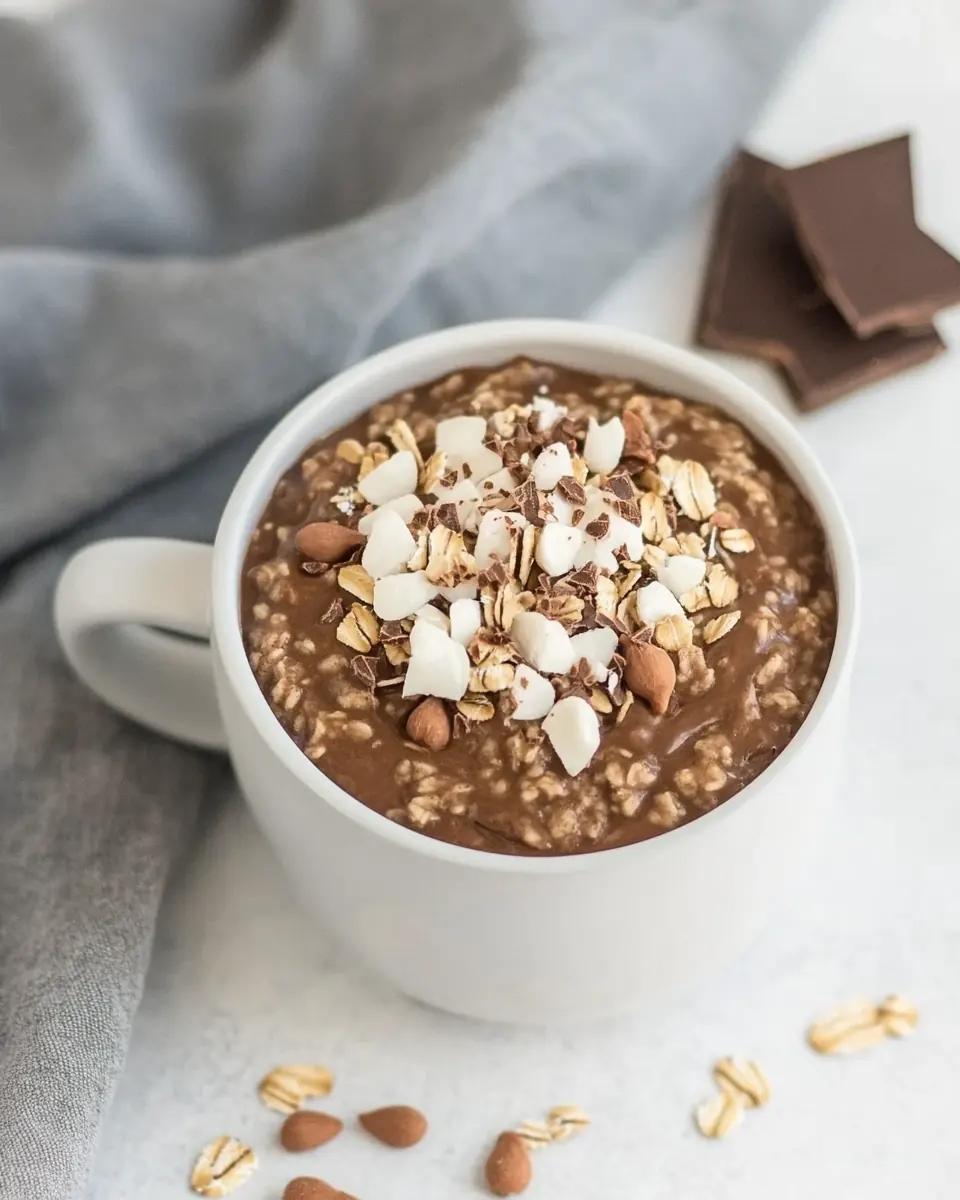
Remove the chocolate oatmeal from the heat. Stir in the vanilla extract. Serve with marshmallows if desired.: As the oats hit the warm liquid they swell and release a toasty, grainy aroma; stir to coat every flake so none clump or sit dry. Lowering the heat ensures a gentle simmer that softens the oats evenly without becoming gluey. You will hear a quieter simmer and see the texture move from soupy to creamy as the oats absorb liquid. Overcooking or keeping the heat too high will make the oats gummy, so maintain low heat and steady stirring.
Simmer, stirring frequently, until the oats are thickened and tender: Pay attention to the visual cue of oats swelling and the spoon leaving a clear trail across the bottom of the pan, indicating proper thickness. The smell becomes richer and sweeter as the mixture reduces, and the texture should be creamy with distinct oat pieces. Quick oats will reach this state in a minute or two, while old fashioned oats need longer, and that difference affects chew. A common pitfall is assuming all oats cook the same, so note which type you used to avoid under or over cooking.
Remove the chocolate oatmeal from the heat: Once the oats are tender and the consistency is to your liking, taking the pot off heat stops further softening and prevents scorching. The surface will settle and look glossy, with steam still carrying that warm cocoa scent. Letting it rest briefly thickens the porridge as it cools to serving temperature, which many prefer. Leaving it on the heat too long will dry the texture and can concentrate flavors too much.
Stir in the vanilla extract: Adding vanilla off heat preserves its aromatic top notes, which lift the chocolate and add bakery like warmth. Stirring incorporates the essence throughout the bowl, and the scent will bloom softly as it spreads. This finishing touch smooths the overall profile, making the oats taste rounded and complete. Do not skip this step, but avoid adding vanilla too early or subjecting it to prolonged heat, which dims the aroma.
Serve with marshmallows if desired: Scatter a few marshmallows on top of steaming bowls and watch them melt into soft clouds that add sweetness and playful texture. The contrast between the warm, slightly dense oatmeal and the glossy, pillowy marshmallow is satisfying and visually appealing. If you add toppings, adjust any extra sweetener to compensate. A mistake to avoid is adding too many marshmallows, which can overwhelm the chocolate balance.