Preheat oven to 160°C (320°F). Spread almond flour on a rimmed baking sheet, and toast for 5 minutes.: You'll notice a warm, even air once the oven reaches temperature, which helps the initial almond toasting and sets a gentle environment for the cake's rise. Because the first step is to toast, this lower temperature prevents the almonds from scorching, and it builds steady heat for the subsequent higher temperature. A common mistake is skipping the preheat, which can lead to uneven toasting or a cake that bakes inconsistently.
Increase the oven temperature to 180°C (350°F).: As the almond flour warms, you'll smell sweet, toasty notes and see a slight deepening in color, signaling the release of the almond oils. Toasting enhances nuttiness and reduces moisture, improving the texture of the cake. Stir once or twice for even color. Avoid overtoasting, which creates a bitter edge and can dry the cake out.
Line a 12-inch (30 cm) round cake pan with baking paper, or grease with butter or baking spray with flour.: This bump in heat prepares the oven for actual baking, ensuring the center cooks through without too long a drying period. You should hear the oven fan settle and feel the air become noticeably hotter when you open the door briefly. Not allowing the oven to reach the correct higher temperature can yield a dense or underbaked center, so be patient before placing the cake inside.
Melt the chocolate in a bowl sitting over a saucepan of simmering water, stirring occasionally.: Proper pan prep prevents sticking and promotes even browning at the edges. The tactile feel of well-fitted baking paper and a thin smear of butter helps the cake release cleanly. If you skip this, bits of cake can cling to the pan and tear when you try to unmold it, so take the extra minute for care.
Using a kitchen mixer fitted with the paddle attachment, mix the butter and sugar for approximately 7 minutes on medium speed until smooth and creamy.: As the chocolate melts, it will soften, gloss over, and develop that silky sheen that tells you it is ready. The gentle steam bath prevents scorching and keeps the chocolate smooth. Stir slowly until lump free, then remove from heat. Using direct high heat risks seizing the chocolate, so avoid applying intense heat.
Hand-whisk the egg whites until you have firm peaks (or, if preferred, use a handheld mixer). Stir the egg yolks with a spoon until smooth.: The butter and granulated sugar will transform from a grainy paste into a pale, airy cream, and you'll hear the mixer motor change pitch as the mixture aerates. This step builds structure that supports the yolks. Undercreaming leaves a denser crumb, so don't rush the seven minutes if your mixer indicates more time is needed.
Pour the egg yolks into the butter and sugar mixture and set on high speed for approximately 3 minutes.: Whipping the eggs whites yields a glossy, billowy mass that holds shape, with peaks that stand upright. You'll feel resistance when the whisk lifts. Overwhipping turns them dry and grainy, which makes folding difficult, so stop once firm but not brittle peaks form. Commonly, people underwhip and lose lift, or overwhip and end up with broken whites, so watch closely.
Pour the toasted almond flour into the butter, sugar and egg yolk mixture on medium speed for approximately 2 minutes. Pour the melted chocolate into the kitchen mixer and mix on medium speed for a further 4 minutes.: Smooth yolks blend seamlessly into the creamed butter and sugar, adding richness and color without lumps. The yolks should be a consistent pale gold, and stirring by hand keeps them from over-aerating. If they remain lumpy, they can create pockets in the batter, so ensure smoothness before adding.
Then remove the bowl from the kitchen mixer and gently fold in the egg whites, stirring from the bottom up.: The mixer will integrate the yolks, producing a glossy, cohesive batter base that has more volume and an even texture. You might hear the mixture lighten in sound as it becomes smoother. If you fold too gently here, the yolks may not fully emulsify with the butter, resulting in streaks or uneven crumb.
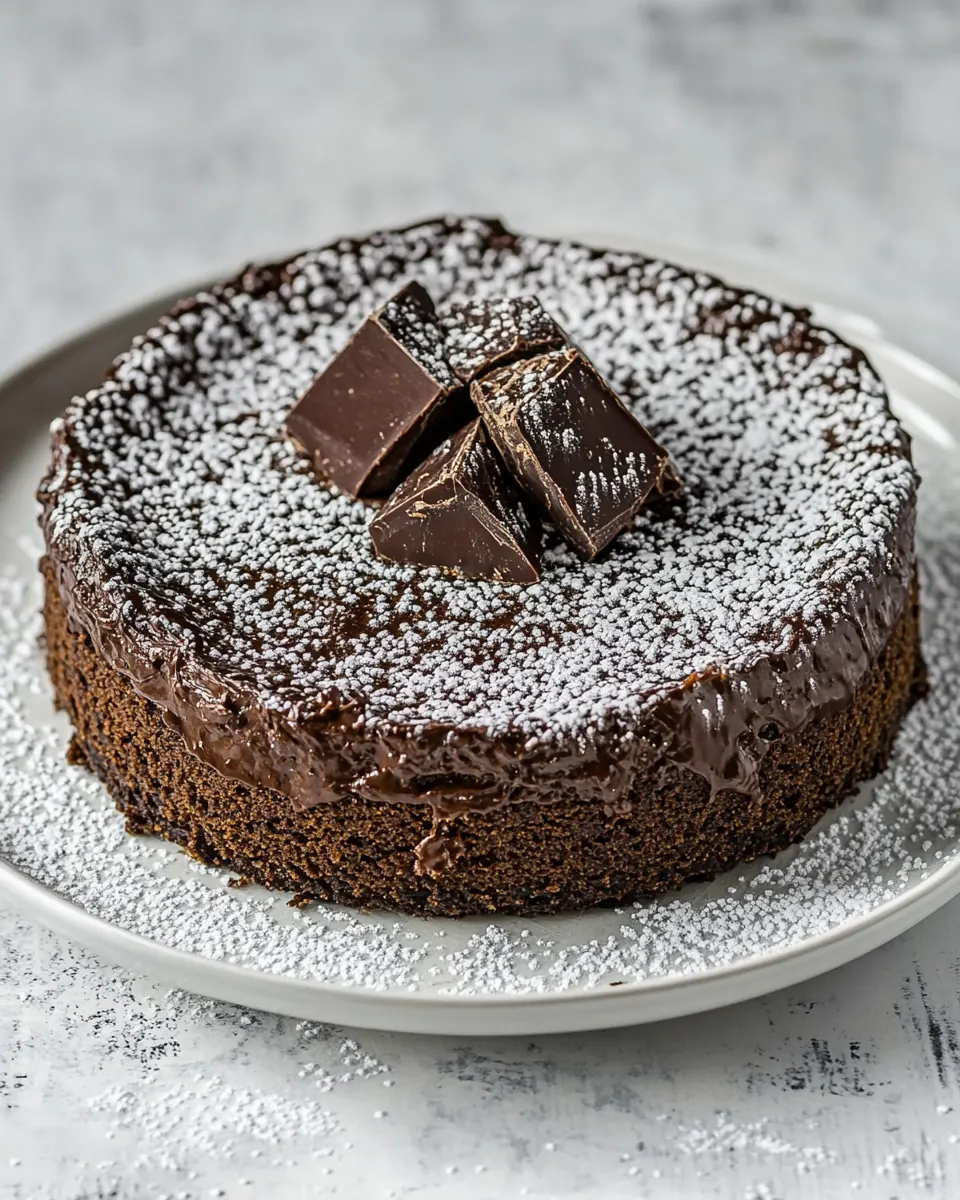
Pour the mixture into the cake tin and place it into the preheated oven for 50 minutes to 1 hour. Check with a cake tester. Once cooked, remove from the oven and then let the cake cool in the tin. Let the cake stand at least overnight before eating.: Adding the blanched almond flour now gives body, and mixing on medium produces an even distribution without overworking. The batter will thicken and take on a fine, nutty aroma. Overmixing can make the batter heavy, while undermixing leaves pockets of dry flour, so aim for uniformity.
Cut into bite-size squares to serve. Store in an airtight container for up to 4 days.: Incorporating the warm, glossy dark chocolate brings the batter to a luxuriously dark, silken consistency and amplifies aroma. You will see a uniform, glossy sheen and smell the chocolate deepen. Ensure the chocolate is not too hot to avoid cooking the eggs, and do not undermix or the chocolate may streak through the batter unevenly.
Then remove the bowl from the kitchen mixer and gently fold in the egg whites, stirring from the bottom up: Folding introduces air while preserving the batter's silkiness. Use a wide spatula and a light hand, moving from the base to the surface in sweeping motions, until no white streaks remain. You should see a billowy, cohesive batter that is light yet dense. Vigorous stirring will deflate the batter, while too gentle folding leaves visible white pockets, so find a balanced rhythm.
Pour the mixture into the cake tin and place it into the preheated oven for 50 minutes to 1 hour: As the cake bakes, the surface firms and may develop a thin crust while the interior remains moist. You will smell a concentrated chocolate fragrance and see the edges pull slightly from the pan. Check with a cake tester near the center; a few moist crumbs are fine. Baking too briefly yields a loose center, while too long risks dryness, so test toward the end of the suggested time range.
Check with a cake tester. Once cooked, remove from the oven and then let the cake cool in the tin. Let the cake stand at least overnight before eating: Cooling in the tin helps the cake settle and prevents sudden texture changes from handling. Overnight resting allows moisture and flavor to harmonize, giving the cake that signature dense yet tender finish. Cutting it too soon results in a fragile crumb that may collapse, so resist the urge to slice immediately.
Cut into bite-size squares to serve: The cake will have a satisfyingly dense, fudge-like interior and a delicate crust when fully rested, and small squares make it easy to enjoy in a single bite. Use a sharp knife wiped between cuts for clean edges. If you slice while still warm, pieces may crumble, so ensure it has rested sufficiently.
Store in an airtight container for up to 4 days: Stored properly, the cake retains moistness and flavor, and the chocolate tones remain pronounced. Refrigeration is optional depending on your climate, but an airtight container prevents drying. Exposure to air will harden the crust, so seal it well to maintain peak texture.