Pat the salmon fillets dry with paper towels. Heat a skillet with vegetable oil over medium heat. Add the salmon and cook for 1 to 2 minutes. Gently flip it using a spatula and cook the other side for an additional 1 minute, or until golden brown and just cooked through. Transfer the salmon to a serving plate and set aside.: Start by feeling the surface of the salmon as you dry it, it should lose its slickness and feel slightly tacky, which helps achieve a quick, even sear. A dry surface promotes browning, creating flavor through the Maillard reaction; a common mistake is leaving the fillets damp, which steams them instead of searing them.
Wipe the skillet and heat it over high heat. Add half of the coconut cream and cook for 1 minute. Then add the red curry paste and cook for 5 minutes, stirring occasionally, until it becomes glossy and fragrant. Add the remaining coconut cream, sugar, fish sauce, half of the cilantro, and lime zest (for an additional citrusy note). Stir well, reduce the heat to medium, and let the sauce simmer for 1 to 2 minutes until thickened.: You will notice the oil shimmer but not smoke, that visual cue tells you the pan is ready. The warm oil creates an immediate, satisfying sizzle when the salmon hits the pan, and that sound lets you know the crust is forming. If the oil smokes heavily, reduce the heat to prevent burnt flavor.
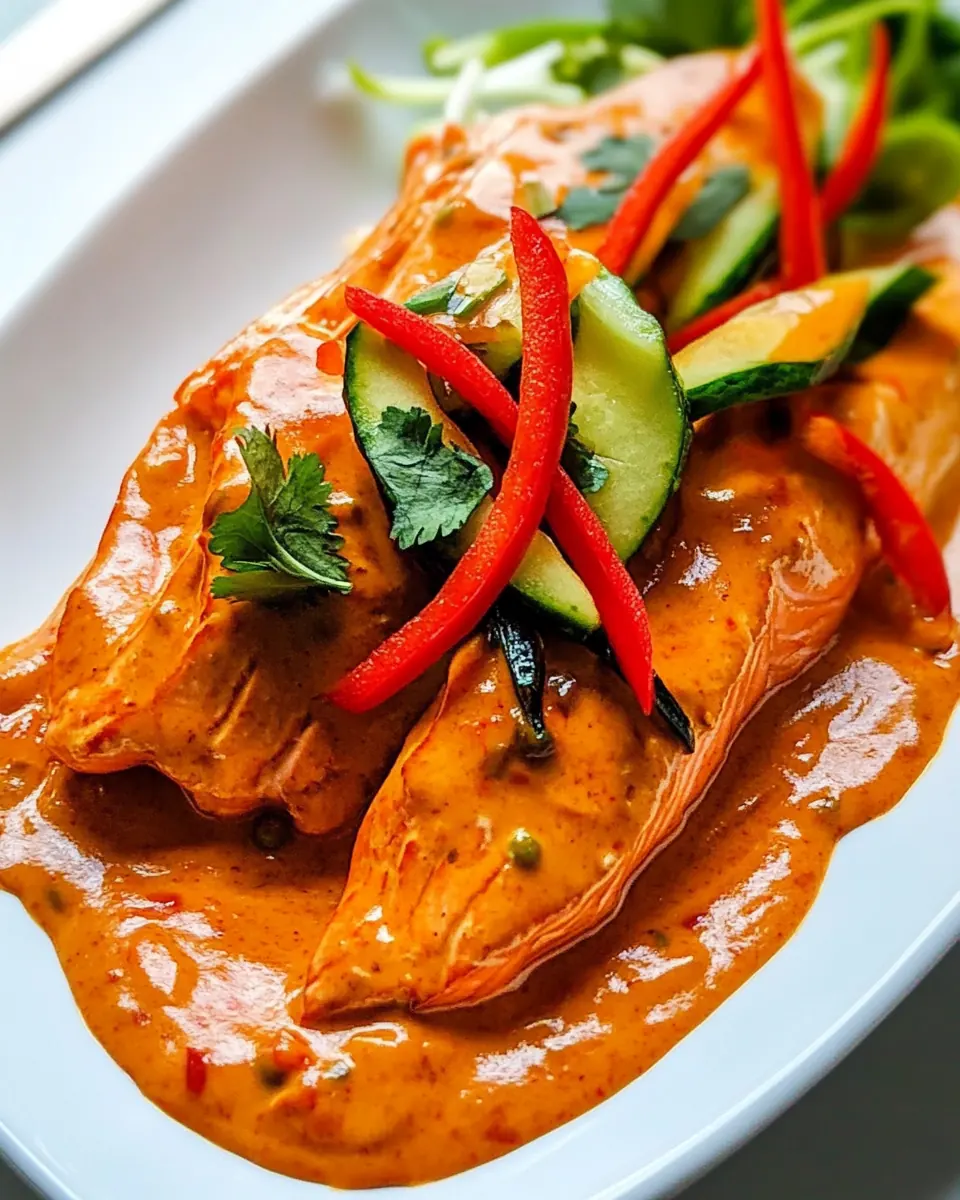
Generously coat the salmon fillets with the curry sauce using a spoon, and serve immediately, topped with cilantro and red bell pepper.: As the salmon makes contact, listen for a steady sizzle and watch for the edges to turn opaque and golden. This quick contact seals in juices; avoid moving the pieces prematurely, or the crust will not develop properly.
Gently flip it using a spatula and cook the other side for an additional 1 minute, or until golden brown and just cooked through: On flipping, observe the flesh change color through to the center, and give it a polite press with your spatula to feel slight resistance. Overcooking is easy to do here, so aim for tender flakes that still glisten, not dry and chalky meat.
Transfer the salmon to a serving plate and set aside: Place the seared salmon on a warm plate to rest briefly; residual heat finishes cooking gently. Resting helps the juices redistribute, keeping the flesh moist. Avoid covering it tightly, which can trap steam and soften the crust.
Wipe the skillet and heat it over high heat: A clean skillet prevents burnt bits from altering the sauce flavor; when the pan is hot, you will see tiny wisps of heat above it, a sign to add ingredients. Working on high helps quickly bloom the curry flavors, just be ready to adjust heat to avoid scorching.
Add half of the coconut cream and cook for 1 minute: The cream will begin to bubble gently and release a sweet coconut aroma, which signals the start of flavor development. This initial cooking slightly reduces the liquid and primes the fat to meld with the curry paste; do not let it break or separate by boiling too hard.
Then add the red curry paste and cook for 5 minutes, stirring occasionally, until it becomes glossy and fragrant: As you stir, watch the paste darken and the oil separate slightly, releasing intensified aromas of chili and spices. That glossy sheen is your cue that the paste has been transformed, and developing it avoids a raw paste taste. Scrape the pan to lift any browned fond for deeper flavor, but avoid burning the paste.
Add the remaining coconut cream, sugar, fish sauce, half of the cilantro, and lime zest: When these ingredients join the pan, the sauce will loosen then come together into a silkier consistency, and the scent will shift to a layered, fragrant harmony. Stir to incorporate, taste to balance sweet and salty, and remember fish sauce is potent so add gradually to avoid overpowering the dish.
Stir well, reduce the heat to medium, and let the sauce simmer for 1 to 2 minutes until thickened: You should see the sauce coat the back of a spoon and emit warm coconut perfume; that glossy coating indicates proper thickness. Simmering briefly concentrates flavors without reducing away the coconut richness; a common error is over reducing, which can make the sauce grainy or too salty.
Generously coat the salmon fillets with the curry sauce using a spoon: As you spoon the sauce, notice how it clings to the salmon , leaving a shiny lacquer that enhances both flavor and appearance. Finished pieces should look glossy and inviting, and the spooning motion helps the sauce seep into crevices for balanced bites. Don’t drown the fillets, aim for a harmonious coating.
Serve immediately, topped with cilantro and red bell pepper: The final garnish will add bright color, a fresh herb aroma from the cilantro , and crisp texture from the red bell pepper . Serving hot preserves the contrast between warm, creamy sauce and crisp accents; waiting too long will soften the pepper and mute fresh herb notes.