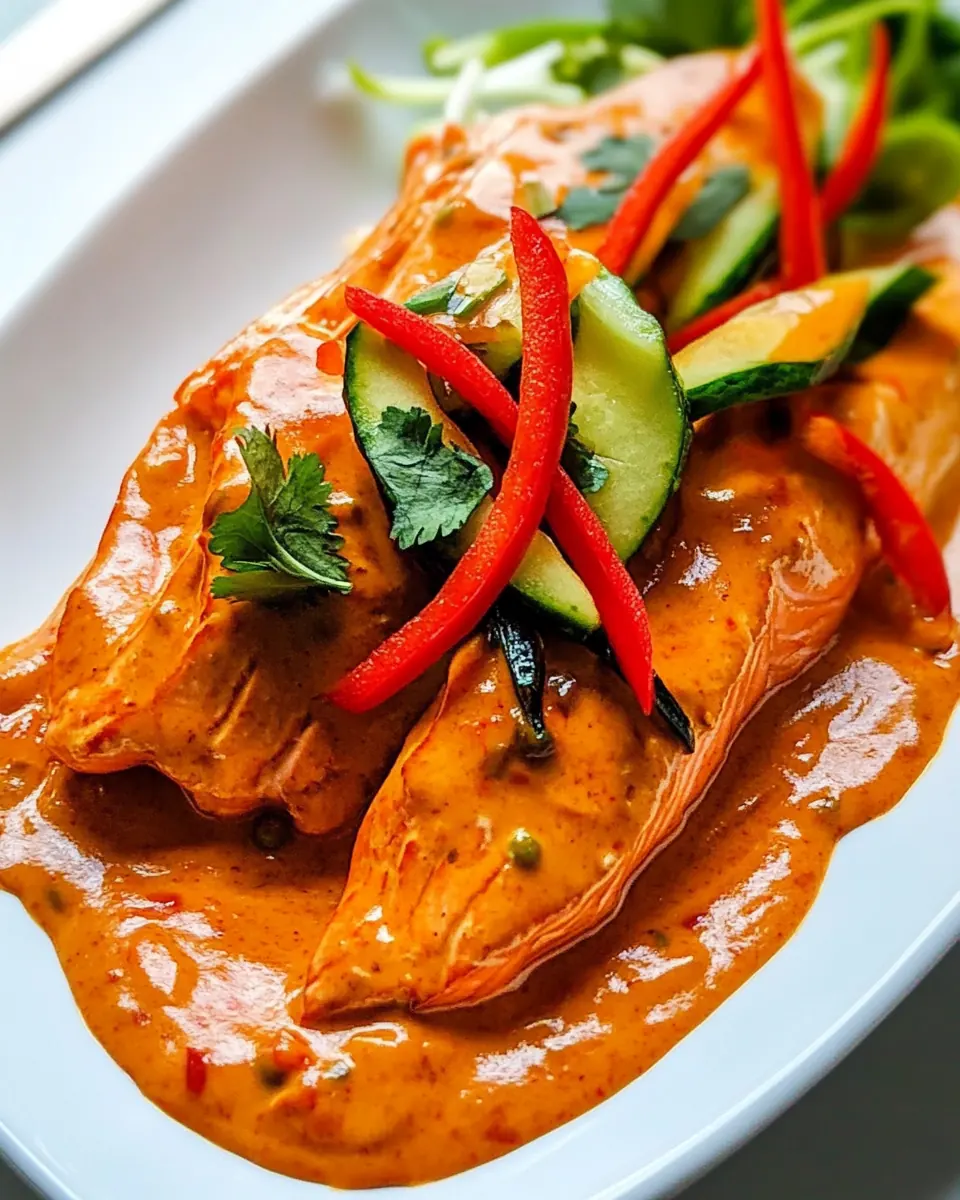
Choo Chee Salmon
Choo Chee Salmon landed on my table the first time I made it after a long week of travel, and it felt like a small, luxurious celebration. I remember unwrapping the salmon and thinking how simple ingredients can transform into something vibrantly fragrant and comforting. The curry sauce, silky from coconut cream and brightened with a touch of lime zest, wrapped the fillets in a warm, aromatic hug that made everyone at the table quiet down to savor each bite.
Later that evening, while I washed up the skillet, I kept replaying the moment the sauce turned glossy and fragrant, the sound of the curry sizzling briefly in hot fat. That small pan of sauce taught me how technique, more than fuss, makes a dish memorable. Over time I tweaked the balance of Thai red curry paste and sugar, learning when to coax out sweetness and when to step back to let the curry sing.
Recipe Snapshot
20 mins
5 mins
15 mins
Easy
400 kcal
Thai
Keto, Gluten-Free
Dinner
Skillet, Spatula, Spoon, Paper towels
The Appeal of This Choo Chee Salmon
Bold, layered flavor without fuss
I love how Choo Chee Salmon delivers intense Southeast Asian flavors without demanding a long ingredient list. The marriage of coconut cream and Thai red curry paste gives you lush mouthfeel and aromatic depth, so it tastes far more complex than the effort requires.
Quick enough for weeknights
We often need dinner that comes together fast, and this recipe answers that call. With just a few minutes of searing and a brief sauce simmer, you have a restaurant quality main that fits into a busy evening, yet still feels special for company.
Fresh textures and bright finishing notes
The final touch of cilantro, lime zest, and crisp red bell pepper adds lift and contrast. That interplay between creamy sauce and fresh, crunchy garnish keeps each bite balanced, so the dish never feels one dimensional.
Customizable heat and balance
I appreciate how forgiving the sauce is. You can adjust the amount of Thai red curry paste to suit your spice tolerance, and the sugar and fish sauce act like dials to tune sweet and savory. That makes it easy to adapt for families or adventurous eaters.
Elegant presentation with minimal effort
This recipe presents beautifully. Spoon the glossy sauce over the salmon, scatter herbs and pepper, and you have a dish that looks like you spent hours crafting it, while actually keeping things streamlined.
Choo Chee Salmon Shopping List
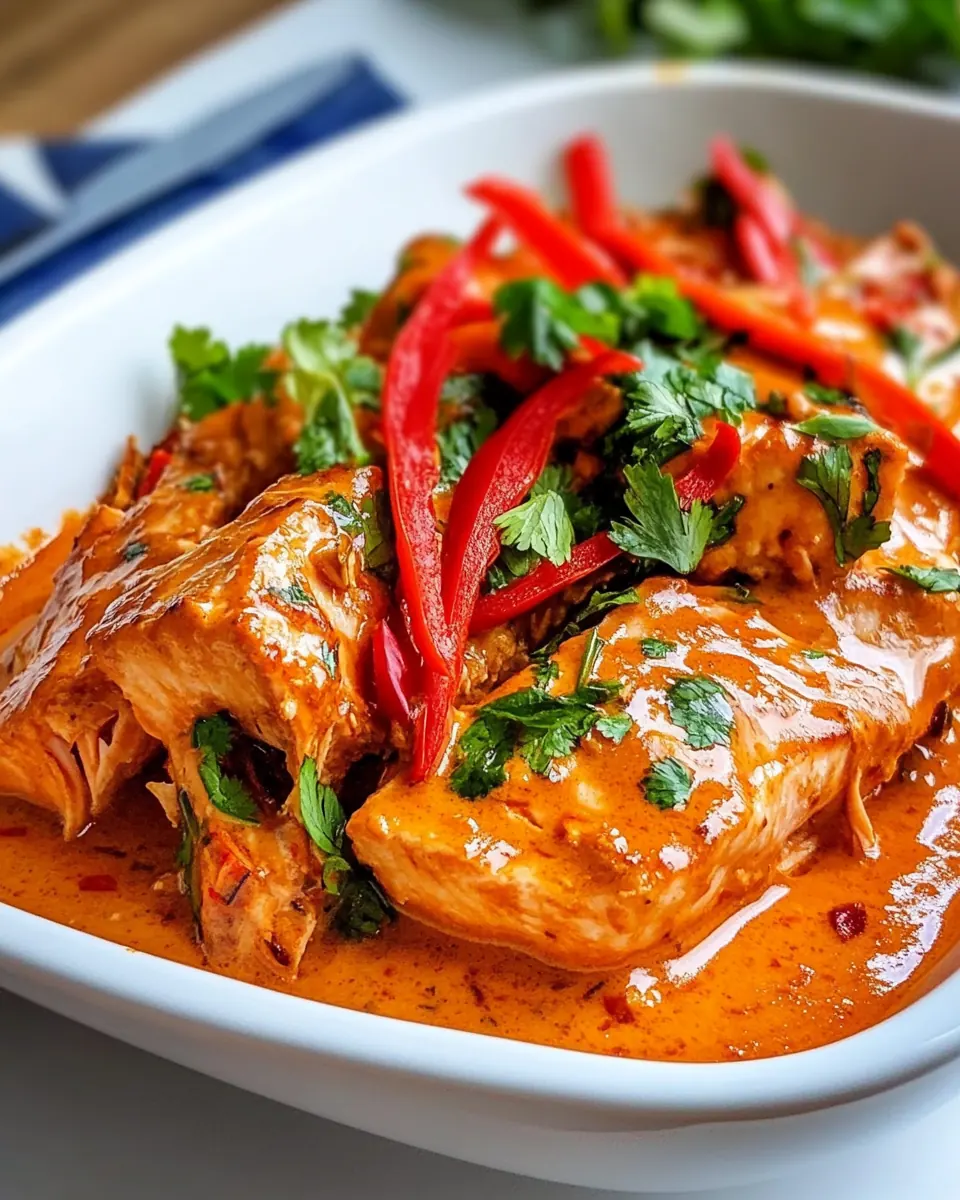
These ingredients work in concert to create the signature Choo Chee experience. The key players are the rich, fatty salmon, which stands up to a creamy sauce, the velvety coconut cream that provides body, and the punchy Thai red curry paste that defines the flavor. Supporting players like fish sauce and sugar round out savory and sweet notes, while cilantro and lime zest brighten the finished dish.
- 1 lbs salmon fillets, cut into slices: Provide rich, flaky protein and a buttery texture that serves as the main component of the Choo Chee; slice into even pieces for quick, gentle cooking and to absorb the sauce flavors uniformly. Handle carefully to keep moistness, and sear briefly to develop a light crust before simmering in the curry sauce.
- 1 tablespoon vegetable oil: Heat-bearing neutral oil used to sauté aromatics and curry paste without altering flavor; warm just until shimmering to bloom the paste and release its essential oils. Helps prevent sticking and ensures even cooking of the salmon and vegetables when building the sauce.
- 1 2/3 cups coconut cream: Add creamy, velvety body and tropical sweetness that forms the luxurious base of the Choo Chee sauce; use full-fat coconut cream for a thicker, more authentic consistency. Stir gently to incorporate with the curry paste so it thickens into a glossy, luscious coating for the fish.
- 3 tablespoons Thai red curry paste: Provide concentrated spice, color, and complex aromatics characteristic of Thai Choo Chee; fry briefly in oil to unlock its flavors before adding coconut cream. Balances sweet, salty, and savory notes and defines the curry’s signature taste profile.
- 1 tablespoon sugar: Introduce subtle sweetness that balances the heat and acidity in the curry; dissolve into the sauce to round out sharp or bitter notes from the paste. Adjust amount slightly if using a particularly sweet coconut cream or paste to maintain harmony.
- 1 teaspoon fish sauce: Contribute umami depth and a savory, salty accent that enhances other flavors without overpowering; add sparingly and taste as the sauce reduces. Complements the sweetness of coconut and brightness of lime, anchoring the overall profile.
- 1/2 cup cilantro, finely chopped: Provide fresh, herbaceous brightness and a hint of citrusy-green flavor when finely chopped and sprinkled over the finished dish; use as a finishing herb to add aroma and contrast. Stir some into the sauce at the end or scatter on top for visual appeal and freshness.
- 1 teaspoon lime zest: Supply a concentrated citrus aroma and zesty brightness that lifts the rich coconut curry; grate finely to avoid bitterness and sprinkle over the finished dish. Enhances overall freshness and provides a sharp counterpoint to the creamy sauce.
- 1 red bell pepper, julienned: Add crisp, sweet crunch and vibrant color that contrasts the soft fish and creamy sauce; cut into thin julienne strips for even texture and quick cooking. Toss in near the end to retain some bite and visual appeal while warming through in the sauce.
The Method for Choo Chee Salmon
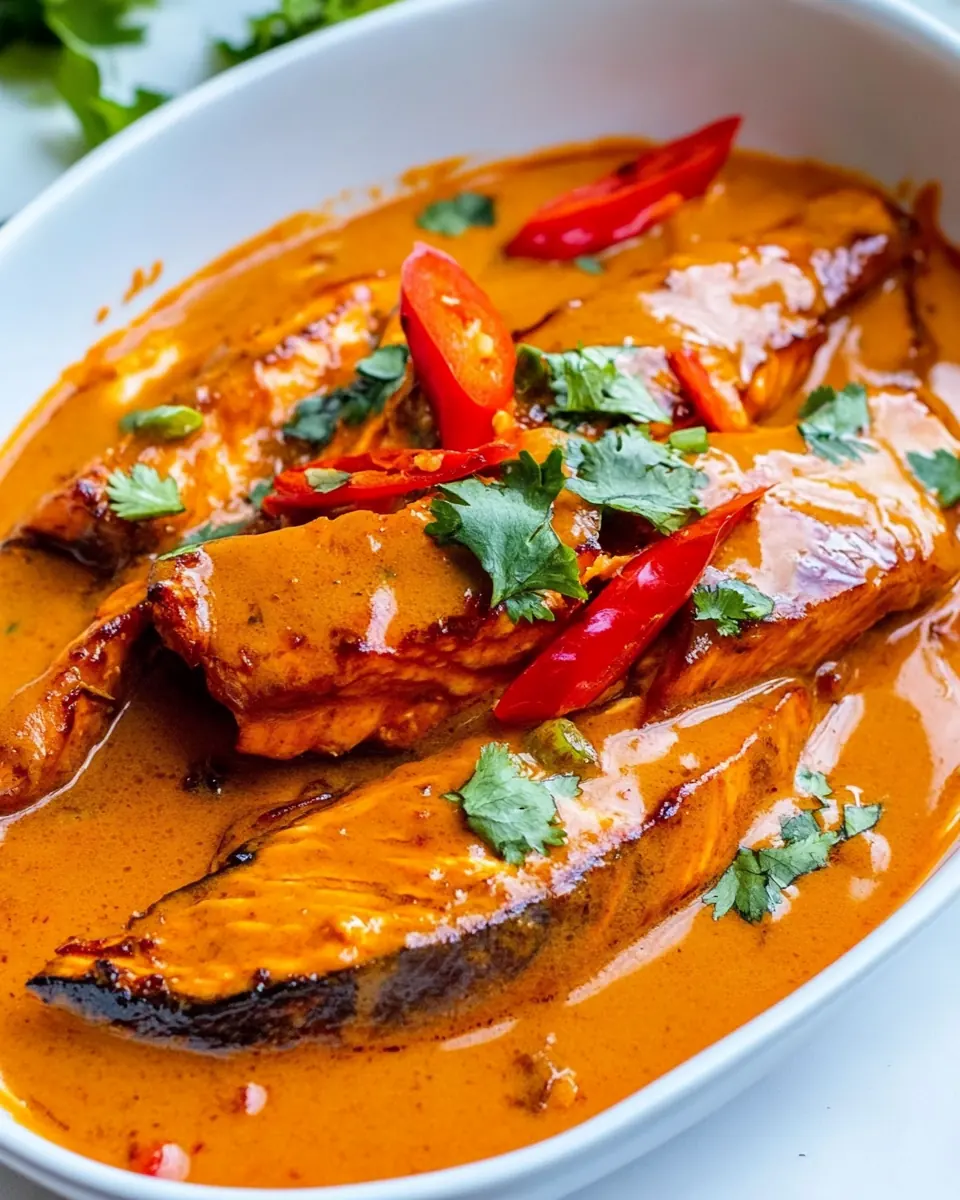
Getting the timing right makes all the difference. The following steps guide you through searing the salmon, building the sauce, and finishing with bright garnishes. Read each step slowly so you can notice the sensory cues that tell you when to move on.
- Pat the salmon fillets dry with paper towels. Heat a skillet with vegetable oil over medium heat. Add the salmon and cook for 1 to 2 minutes. Gently flip it using a spatula and cook the other side for an additional 1 minute, or until golden brown and just cooked through. Transfer the salmon to a serving plate and set aside.: Start by feeling the surface of the salmon as you dry it, it should lose its slickness and feel slightly tacky, which helps achieve a quick, even sear. A dry surface promotes browning, creating flavor through the Maillard reaction; a common mistake is leaving the fillets damp, which steams them instead of searing them.
- Wipe the skillet and heat it over high heat. Add half of the coconut cream and cook for 1 minute. Then add the red curry paste and cook for 5 minutes, stirring occasionally, until it becomes glossy and fragrant. Add the remaining coconut cream, sugar, fish sauce, half of the cilantro, and lime zest (for an additional citrusy note). Stir well, reduce the heat to medium, and let the sauce simmer for 1 to 2 minutes until thickened.: You will notice the oil shimmer but not smoke, that visual cue tells you the pan is ready. The warm oil creates an immediate, satisfying sizzle when the salmon hits the pan, and that sound lets you know the crust is forming. If the oil smokes heavily, reduce the heat to prevent burnt flavor.
- Generously coat the salmon fillets with the curry sauce using a spoon, and serve immediately, topped with cilantro and red bell pepper.: As the salmon makes contact, listen for a steady sizzle and watch for the edges to turn opaque and golden. This quick contact seals in juices; avoid moving the pieces prematurely, or the crust will not develop properly.
- Gently flip it using a spatula and cook the other side for an additional 1 minute, or until golden brown and just cooked through: On flipping, observe the flesh change color through to the center, and give it a polite press with your spatula to feel slight resistance. Overcooking is easy to do here, so aim for tender flakes that still glisten, not dry and chalky meat.
- Transfer the salmon to a serving plate and set aside: Place the seared salmon on a warm plate to rest briefly; residual heat finishes cooking gently. Resting helps the juices redistribute, keeping the flesh moist. Avoid covering it tightly, which can trap steam and soften the crust.
- Wipe the skillet and heat it over high heat: A clean skillet prevents burnt bits from altering the sauce flavor; when the pan is hot, you will see tiny wisps of heat above it, a sign to add ingredients. Working on high helps quickly bloom the curry flavors, just be ready to adjust heat to avoid scorching.
- Add half of the coconut cream and cook for 1 minute: The cream will begin to bubble gently and release a sweet coconut aroma, which signals the start of flavor development. This initial cooking slightly reduces the liquid and primes the fat to meld with the curry paste; do not let it break or separate by boiling too hard.
- Then add the red curry paste and cook for 5 minutes, stirring occasionally, until it becomes glossy and fragrant: As you stir, watch the paste darken and the oil separate slightly, releasing intensified aromas of chili and spices. That glossy sheen is your cue that the paste has been transformed, and developing it avoids a raw paste taste. Scrape the pan to lift any browned fond for deeper flavor, but avoid burning the paste.
- Add the remaining coconut cream, sugar, fish sauce, half of the cilantro, and lime zest: When these ingredients join the pan, the sauce will loosen then come together into a silkier consistency, and the scent will shift to a layered, fragrant harmony. Stir to incorporate, taste to balance sweet and salty, and remember fish sauce is potent so add gradually to avoid overpowering the dish.
- Stir well, reduce the heat to medium, and let the sauce simmer for 1 to 2 minutes until thickened: You should see the sauce coat the back of a spoon and emit warm coconut perfume; that glossy coating indicates proper thickness. Simmering briefly concentrates flavors without reducing away the coconut richness; a common error is over reducing, which can make the sauce grainy or too salty.
- Generously coat the salmon fillets with the curry sauce using a spoon: As you spoon the sauce, notice how it clings to the salmon , leaving a shiny lacquer that enhances both flavor and appearance. Finished pieces should look glossy and inviting, and the spooning motion helps the sauce seep into crevices for balanced bites. Don’t drown the fillets, aim for a harmonious coating.
- Serve immediately, topped with cilantro and red bell pepper: The final garnish will add bright color, a fresh herb aroma from the cilantro , and crisp texture from the red bell pepper . Serving hot preserves the contrast between warm, creamy sauce and crisp accents; waiting too long will soften the pepper and mute fresh herb notes.
Helpful Notes about Choo Chee Salmon
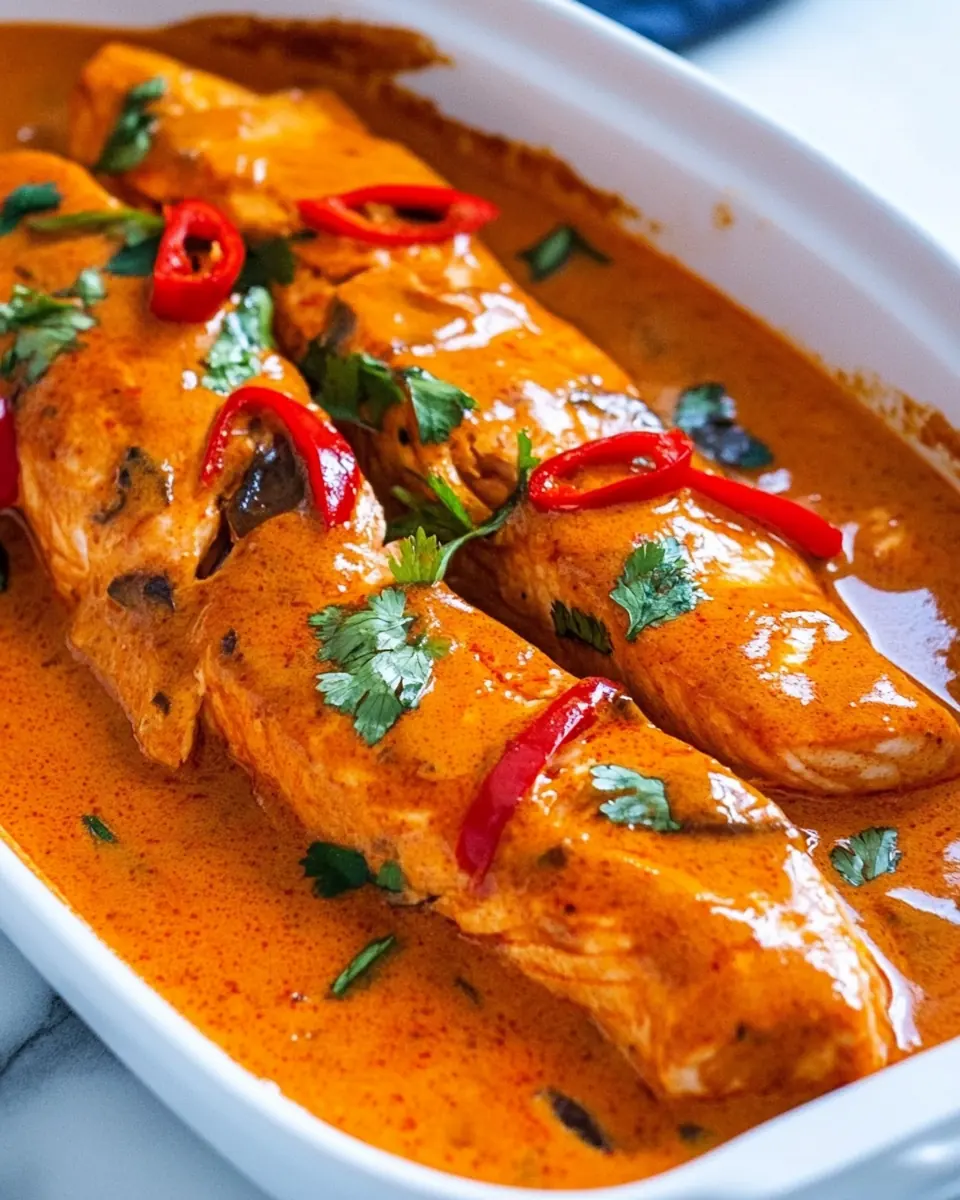
I keep these notes short and targeted, the kind I wish were tucked into the recipe card when I first tried it. They focus on simple swaps, timing cues, and plating so your Choo Chee Salmon comes out reliably excellent.
- Adjust paste first Use 2 to 3 tablespoons of Thai red curry paste to start, then taste the sauce and add more if you want extra heat, because curry paste potency varies by brand.
- Choose the right coconut Full fat coconut cream gives the glossy sauce and prevents separation, while lighter canned coconut milks may yield a thinner finish.
- Control salt with fish sauce Add the fish sauce sparingly when finishing, then taste, since it can quickly push the sauce from balanced to overly savory.
- Keep garnishes fresh Chop cilantro and julienne the red bell pepper just before serving to preserve their brightness and texture.
- Slice salmon evenly Cutting the fillets into similar sized pieces ensures even searing and uniform cooking time for all portions.
Serving Options for Choo Chee Salmon
This section offers flexible ways to present Choo Chee Salmon for weeknight dinners, special occasions, or cozy gatherings. Think about contrasts in texture, and pairings that complement the coconut and curry flavors.
- Serve with steamed rice A neutral, warm bed of plain steamed rice soaks up the sauce and lets the curry flavors shine without competing.
- Accompany with lightly sautéed greens Quick wilted greens provide a bitter green contrast that brightens the palate alongside the creamy sauce.
- Family style plating Arrange the seared salmon on a wide platter, spoon sauce over, and scatter cilantro and red bell pepper for a festive finish ideal for sharing.
- Lunch salad option Flake the finished salmon over a bowl of crisp greens for a lighter midday meal dressed by the curry sauce.
- Seasonal occasions This recipe works beautifully year round, and its bright finish makes it suitable for spring gatherings or a special Ramadan dinner when you want something elegant yet straightforward.
- Storage tips Refrigerate leftover sauced salmon in an airtight container for up to two days, reheat gently to avoid drying out the fish.
- Make ahead guidance Prepare the sauce up to a day ahead, keep it chilled, and warm it briefly before coating freshly seared salmon.
FAQ
Conclusion
Choo Chee Salmon stands out for its luxurious coconut curry sauce that complements the natural richness of salmon while staying remarkably simple to prepare. Try it when you want a quick, elegant meal that feels restaurant worthy without hours of work. The combination of creamy coconut, fragrant curry, bright lime zest, and fresh cilantro creates a memorable plate that guests will ask about. Give it a go on a weeknight or for a special dinner, and enjoy the layered flavors and satisfying textures.
Choo Chee Salmon
Ingredients
Equipment
Method
- Pat the salmon fillets dry with paper towels. Heat a skillet with vegetable oil over medium heat. Add the salmon and cook for 1 to 2 minutes. Gently flip it using a spatula and cook the other side for an additional 1 minute, or until golden brown and just cooked through. Transfer the salmon to a serving plate and set aside.: Start by feeling the surface of the salmon as you dry it, it should lose its slickness and feel slightly tacky, which helps achieve a quick, even sear. A dry surface promotes browning, creating flavor through the Maillard reaction; a common mistake is leaving the fillets damp, which steams them instead of searing them.
- Wipe the skillet and heat it over high heat. Add half of the coconut cream and cook for 1 minute. Then add the red curry paste and cook for 5 minutes, stirring occasionally, until it becomes glossy and fragrant. Add the remaining coconut cream, sugar, fish sauce, half of the cilantro, and lime zest (for an additional citrusy note). Stir well, reduce the heat to medium, and let the sauce simmer for 1 to 2 minutes until thickened.: You will notice the oil shimmer but not smoke, that visual cue tells you the pan is ready. The warm oil creates an immediate, satisfying sizzle when the salmon hits the pan, and that sound lets you know the crust is forming. If the oil smokes heavily, reduce the heat to prevent burnt flavor.
- Generously coat the salmon fillets with the curry sauce using a spoon, and serve immediately, topped with cilantro and red bell pepper.: As the salmon makes contact, listen for a steady sizzle and watch for the edges to turn opaque and golden. This quick contact seals in juices; avoid moving the pieces prematurely, or the crust will not develop properly.
- Gently flip it using a spatula and cook the other side for an additional 1 minute, or until golden brown and just cooked through: On flipping, observe the flesh change color through to the center, and give it a polite press with your spatula to feel slight resistance. Overcooking is easy to do here, so aim for tender flakes that still glisten, not dry and chalky meat.
- Transfer the salmon to a serving plate and set aside: Place the seared salmon on a warm plate to rest briefly; residual heat finishes cooking gently. Resting helps the juices redistribute, keeping the flesh moist. Avoid covering it tightly, which can trap steam and soften the crust.
- Wipe the skillet and heat it over high heat: A clean skillet prevents burnt bits from altering the sauce flavor; when the pan is hot, you will see tiny wisps of heat above it, a sign to add ingredients. Working on high helps quickly bloom the curry flavors, just be ready to adjust heat to avoid scorching.
- Add half of the coconut cream and cook for 1 minute: The cream will begin to bubble gently and release a sweet coconut aroma, which signals the start of flavor development. This initial cooking slightly reduces the liquid and primes the fat to meld with the curry paste; do not let it break or separate by boiling too hard.
- Then add the red curry paste and cook for 5 minutes, stirring occasionally, until it becomes glossy and fragrant: As you stir, watch the paste darken and the oil separate slightly, releasing intensified aromas of chili and spices. That glossy sheen is your cue that the paste has been transformed, and developing it avoids a raw paste taste. Scrape the pan to lift any browned fond for deeper flavor, but avoid burning the paste.
- Add the remaining coconut cream, sugar, fish sauce, half of the cilantro, and lime zest: When these ingredients join the pan, the sauce will loosen then come together into a silkier consistency, and the scent will shift to a layered, fragrant harmony. Stir to incorporate, taste to balance sweet and salty, and remember fish sauce is potent so add gradually to avoid overpowering the dish.
- Stir well, reduce the heat to medium, and let the sauce simmer for 1 to 2 minutes until thickened: You should see the sauce coat the back of a spoon and emit warm coconut perfume; that glossy coating indicates proper thickness. Simmering briefly concentrates flavors without reducing away the coconut richness; a common error is over reducing, which can make the sauce grainy or too salty.
- Generously coat the salmon fillets with the curry sauce using a spoon: As you spoon the sauce, notice how it clings to the salmon , leaving a shiny lacquer that enhances both flavor and appearance. Finished pieces should look glossy and inviting, and the spooning motion helps the sauce seep into crevices for balanced bites. Don’t drown the fillets, aim for a harmonious coating.
- Serve immediately, topped with cilantro and red bell pepper: The final garnish will add bright color, a fresh herb aroma from the cilantro , and crisp texture from the red bell pepper . Serving hot preserves the contrast between warm, creamy sauce and crisp accents; waiting too long will soften the pepper and mute fresh herb notes.
Notes
- Adjust paste first Use 2 to 3 tablespoons of Thai red curry paste to start, then taste the sauce and add more if you want extra heat, because curry paste potency varies by brand.
- Choose the right coconut Full fat coconut cream gives the glossy sauce and prevents separation, while lighter canned coconut milks may yield a thinner finish.
- Control salt with fish sauce Add the fish sauce sparingly when finishing, then taste, since it can quickly push the sauce from balanced to overly savory.
- Keep garnishes fresh Chop cilantro and julienne the red bell pepper just before serving to preserve their brightness and texture.
- Slice salmon evenly Cutting the fillets into similar sized pieces ensures even searing and uniform cooking time for all portions.