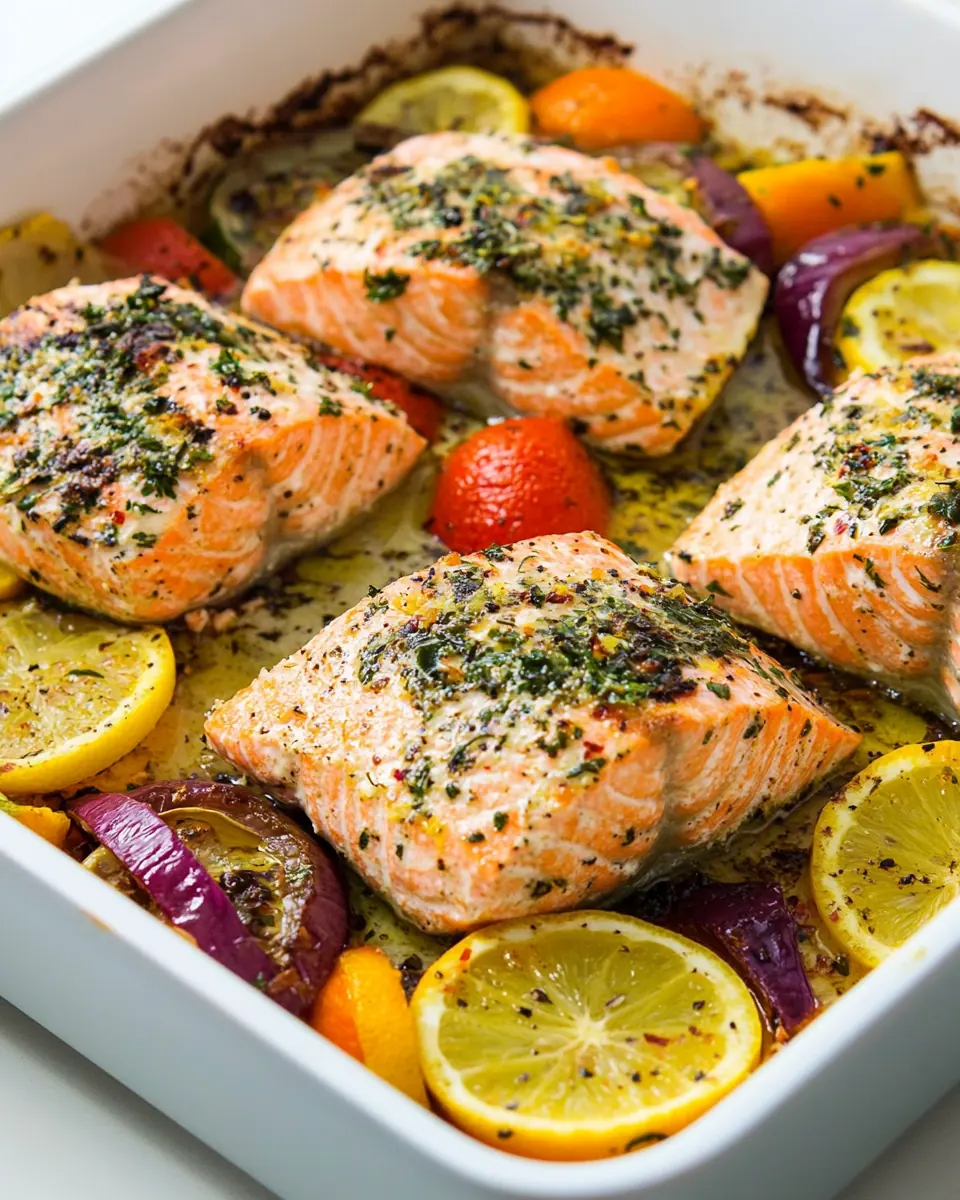
Preheat the oven to 400 °F: As the oven warms, you can feel the kitchen change from cool to cozy, and that initial dry heat is essential for achieving those caramelized edges on the vegetables and a slightly crisp exterior on the salmon . You want a consistent, even oven temperature so the proteins and vegetables finish at the same time, so give the oven at least 10 minutes to reach full heat. If your oven runs hot or cold, use an oven thermometer to verify accuracy, because an incorrect temperature will either dry the salmon or leave it undercooked. A common mistake is placing the tray too close to the heating element, which can char the tops before the centers are done; aim for the middle rack.
Combine lime zest and juice, lemon zest and juice, garlic, olive oil, basil, cilantro, and honey in a food processor and blend until well combined: Once blended, the sauce should smell bright and herbaceous, with the sweet honey balancing the citrus punch; the texture should be slightly emulsified so it coats the salmon evenly. The blending releases aromatic oils from the zests and bruises the herbs, creating an integrated flavor profile that permeates the fish instead of sitting on top. If the mixture separates, give it another quick pulse to re-emulsify, because a stable sauce clings better during roasting. Avoid over-blending into a warm paste, which can cook delicate herb notes; keep pulses short and purposeful.
Pour over salmon and place on a lined baking sheet: As you drizzle the herb citrus mixture over the salmon , watch it bead and gloss on the flesh, signaling good adhesion that will turn into a fragrant crust as it roasts. Lining the sheet with parchment or foil keeps the juices from sticking and makes cleanup effortless, while spacing the fillets so air can circulate helps them cook evenly. Pressing the sauce lightly into the fillets ensures the herbs cling and do not slide off during transfer. A frequent error is crowding the pieces; crowded fillets steam rather than roast, yielding a softer texture and muted caramelization.
Add tomatoes, red onion, summer squash, and zucchini to the baking sheet and drizzle with olive oil: When arranged around the salmon , the vegetables should have room to brown; you will hear gentle sizzling once they hit the hot pan and smell the sugars starting to caramelize. The thinly sliced squash and zucchini will soften quickly and release moisture, while the tomatoes will blister and sweeten. Tossing them with the small amount of olive oil promotes browning and helps distribute the herb juices across the tray. Resist the temptation to pile them up, because overlapping pieces steam and fail to develop those delicious browned edges everyone loves.
Bake for 18-20 minutes or until salmon is cooked through: In the oven, you will notice the surface of the salmon turning from glossy to matte and the edges will lift slightly when done, with the flesh flaking gently where you test it with a fork. The vegetables should show golden- brown caramelization on their edges and softened centers. Cooking time varies by thickness, so start checking at 18 minutes and use visual cues rather than clock watching alone. A classic slip-up is removing the fish the instant it flakes; instead, look for a uniform opaque color through most of the fillet with just a hint of translucence in the center to keep it moist.
Meanwhile, cook millet according to package instructions: While the tray roasts, the millet will simmer and softly absorb liquid, taking on a warm, nutty aroma that pairs with the citrus pan juices. Fluff it at the end to separate the grains and keep the texture light so it soaks up the sauce without becoming mushy. If you find the millet sticking to the pot, a touch more water and a gentle stir will loosen it; undercooking yields a firmer, toothy grain that does not marry as well with the juices.
Serve millet with finished salmon and veggies: When plated, spooning the roasted vegetables and a few spoonfuls of the citrus herb juices over the millet brings the dish together, offering a contrast between flaky salmon and tender grains. The aromas will be layered: herbaceous from the basil and cilantro, bright from the citrus, and sweet from the roasted vegetables, which makes each bite varied and satisfying. A last minute drizzle of any remaining sauce can refresh the top notes, but avoid heavy pouring that drowns the textures; too much liquid makes the millet soggy.