Preheat oven to 350°F. Grease and flour cake pan(s). I like to line the bottom of my pan with parchment paper for easy removal.: The kitchen will fill with a faint warmth as the oven comes up to temperature, and preheating ensures even rise and consistent browning. You'll smell the faint metallic hum from the oven and may notice the racks glowing slightly as they heat, which is normal. Taking the time to grease and flour your pan, and to line the bottom with parchment, prevents the cake from sticking and preserves clean edges when you remove it. A common mistake is skipping the parchment, which can cause tearing when unmolding; avoid this by cutting a parchment round to fit the bottom exactly. If the oven is not fully preheated, the cake may bake unevenly, so wait until the oven reaches 350°F before sliding the batter in.
Whisk salt, baking powder, and flour in a medium sized bowl. Set aside.: As you whisk, you will hear the soft rustle of the dry ingredients and see the pale flour take on a uniform texture. This step distributes leavening and seasoning evenly, which is why it matters for a consistent crumb and lift. The mixture should look free of lumps and slightly aerated, signaling even incorporation. One mistake is adding leavening straight into wet batter without sifting or whisking, which can cause pockets of baking powder and uneven rise; avoid that by whisking well now. If your flour seems lumpy, press it through a sieve to ensure a smooth, cohesive blend.
Cream sugar into melted butter until smooth. Beat in eggs, one at a time, then mix in vanilla extract. You can stir by hand or use a hand mixer or a stand mixer fitted with the paddle attachment.: When you combine melted butter and granulated sugar , the mixture will look glossy and slightly thickened. Adding the eggs one at a time helps maintain an emulsion, keeping the batter cohesive and preventing separation. You will feel the texture shift as each egg disappears into the mixture, becoming silkier and more stable. A common pitfall is adding eggs too quickly to very hot butter, which can cook them; let the butter cool slightly or temper the eggs by adding a spoonful of batter first. If your batter looks curdled, beat it gently until it smooths out, but don't overwork it.
Add dry ingredients alternately with the buttermilk, starting and ending with the flour, mixing gently between each addition. Mix until just combined. Be sure to scrape the sides of the bowl.: Alternating all-purpose flour and buttermilk keeps the batter tender and evenly hydrated, and you will hear a quieter mixing sound as the spatula moves through a thicker, ribbon-like texture. The batter should appear homogenous with no streaks of flour, but still slightly lumpy at the end to avoid overdeveloping gluten. The reason for starting and ending with flour is to minimize overmixing while ensuring full incorporation. A frequent error is vigorous mixing at this stage, which tightens the crumb, so stop mixing when you see no large pockets of dry flour.
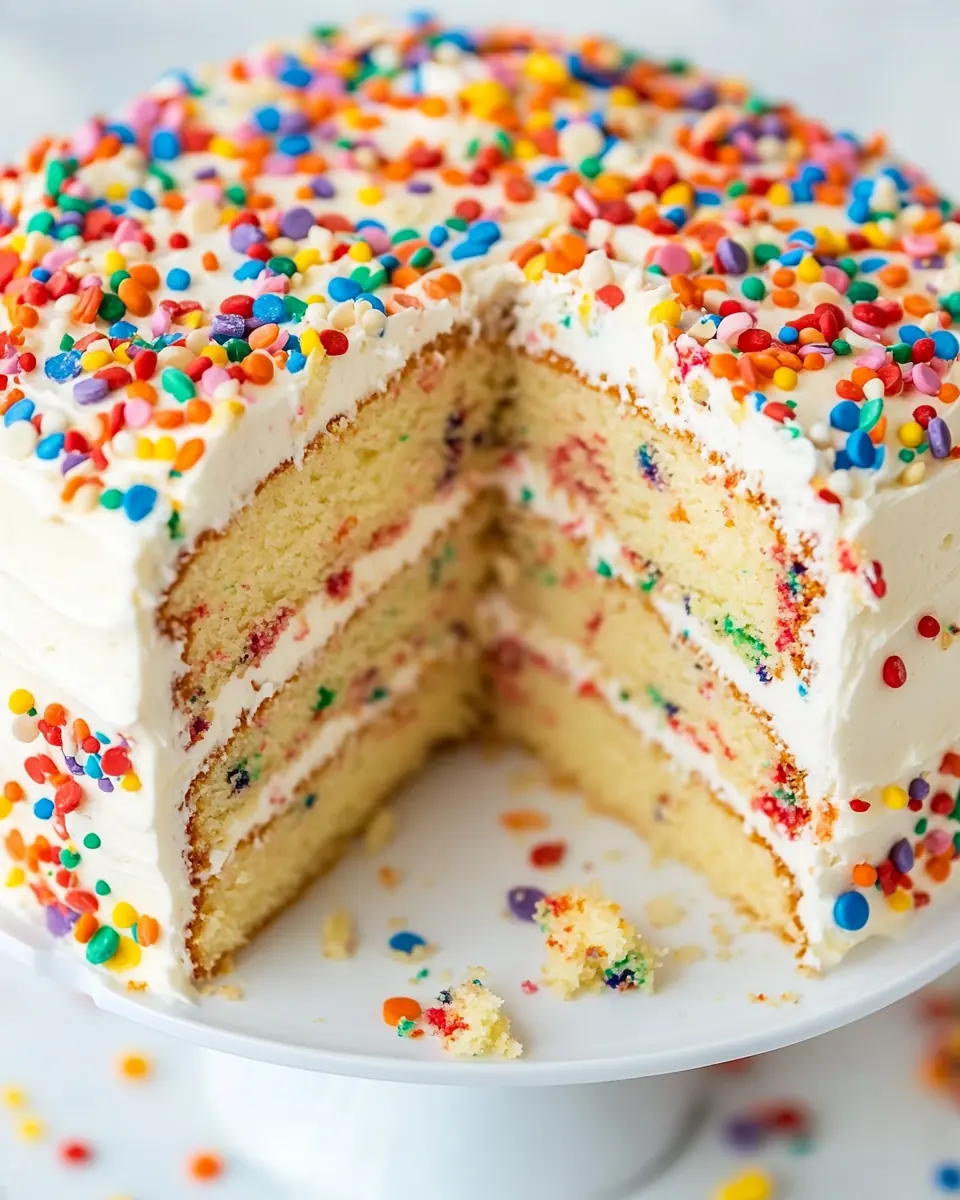
Pour batter into prepared pans and bake as directed. Cool completely before removing and frosting.: As you pour, the batter should flow smoothly, glossy and studded with tiny flecks of sprinkles . While baking, the kitchen will fill with a sweet, buttery aroma and the cake edges will begin to pull away from the pan slightly. Visual cues to look for include a light golden top and a springy center that returns when pressed gently. Cooling completely is essential so the crumb firms and the frosting does not melt; impatience here can lead to a messy, sliding finish. If the center looks set but a toothpick shows a few moist crumbs, that is fine and preferable to underbaking.
Bake Time: 24 cupcakes: 14-17 minutes // Two 9-inch round pans: 24-27 minutes // Two 8-inch round pans: 25-33 minutes // 9×13-inch pan: 30-40 minutes: 24 cupcakes: 14 to 17 minutes // Two 9 inch round pans: 24 to 27 minutes // Two 8 inch round pans: 25 to 33 minutes // 9×13 inch pan: 30 to 40 minutes : These timing ranges guide you based on your chosen pan, and the audible cues are subtle, a quiet settling and the disappearance of wet batter sheen. For cupcakes, you may hear a faint doming sound as they finish, while larger layers will give a gentle spring when pressed. Oven hot spots can alter times, so start checking toward the lower end and use a toothpick to test; a few moist crumbs are okay. A common mistake is relying solely on time instead of visual and tactile cues, so rotate pans if needed and trust the spring back test.
Beat butter until smooth with a hand or a stand mixer. Note: if you’re using a hand mixer be sure to use a very large bowl to avoid wearing the powdered sugar.: if you’re using a hand mixer be sure to use a very large bowl to avoid wearing the powdered sugar. : The softened butter should become glossy and light as air is incorporated, and you might hear a steady, even whir from the mixer. Using a large bowl prevents powdered sugar from flying out when you begin to add it. The texture at this stage should be creamy and uniform, not greasy. If the butter is too cold, it will appear chunky and resist smoothing, so bring it to room temperature. Conversely, if it is too warm, it will look oily, and your frosting will lose structure.
Add powdered sugar, one cup at a time, along with cocoa, and beat on medium speed until crumbly. Mix in salt and vanilla.: Adding powdered sugar gradually helps control texture and prevent a cloud of dust in your kitchen. As you mix, the bowl will emit a thicker sound and the mixture will go from very soft to crumbly before smoothing out. Incorporating unsweetened cocoa powder adds a dry element that needs even distribution, so scraping the bowl between additions ensures a smooth finish. A common mistake is dumping all the sugar in at once, which can overwhelm the mixer and create an uneven texture; patience here leads to silkier frosting.
Add 1 tablespoon of heavy whipping cream at a time, mixing between each addition, until the frosting is smooth and the desirable consistency.: The first spoonful will loosen the frosting and you will see it become glossier with each addition. Heavy whipping cream is the final textural adjuster, making the frosting spreadable and pipeable. Aim for a consistency that holds shape but still spreads easily with a spatula. A common error is adding too much cream too quickly, producing a runny frosting; add slowly and stop when satisfied. If it gets too thin, chill briefly and rewhip to thicken.
Frost cake or cupcakes as desired and add lots of sprinkles.: The final act is tactile and visual, smoothing the frosting and watching it hold blades from your spatula. Apply frosting when the layers are completely cool so it does not melt, and press additional sprinkles gently into the surface so they adhere. Decorating can be playful, and I often pause to tilt the cake to ensure even coverage. A classic mistake is frosting warm cake which causes slumping; patience wins here, and a clean, confident swipe creates the best presentation.