Classic Birthday Cake
Classic Birthday Cake has been the centerpiece of so many celebrations in my life, and the first sentence you read here is the same one I whispered when I slid a golden layer from the pan for my niece’s fifth birthday. I remember the warm, sugary air that filled my kitchen as I stirred batter, and how the tiny flecks of rainbow sprinkles promised joy before the oven door even closed. That first-bite memory, soft crumb giving way to a cloud of cocoa buttercream, is why I keep returning to this recipe, time and again.
There is something comforting about the ritual of making a Classic Birthday Cake, the familiar rhythm of measuring, creaming, and folding. Over years of baking for friends and family, I learned small touches that make a plain celebration feel intentional: lining the pan with parchment so the edges stay pristine, letting layers cool completely so the frosting glides on, and always saving a handful of sprinkles for the very top. These tiny habits changed my cakes from fine to unforgettable, and I love that they are simple enough for any home baker to adopt.
Recipe Snapshot
60 mins
30 mins
30 mins
Medium
350 kcal
American
Gluten-Free, Low FODMAP
Desserts
Mixer, Mixing bowls, Spatula, Cake pans, Parchment paper
Why This Classic Birthday Cake Stands Out
1. A truly nostalgic flavor profile
I grew up on cakes like this, and every time I make Classic Birthday Cake I get that same warm, familiar flavor. The balance of vanilla, butter, and just a hint of tang from the buttermilk creates a tender crumb that tastes honest, not fussy. I find that this combination brings people back to childhood parties, which is why I choose it when I want that emotional connection at the table.
2. Versatile format for any celebration
Whether I need cupcakes for a classroom or layered rounds for a dinner party, this recipe adapts easily. I often switch pans depending on the crowd size, and the batter responds predictably. That reliability matters when you’re feeding a group and want consistent results, and it’s one of the reasons I trust this cake for big and small gatherings alike.
3. Foolproof frosting that holds its shape
The cocoa buttercream here is rich yet pipeable, so it looks as good as it tastes. I appreciate a frosting that smooths nicely and stays stable while being forgiving if my bowl is a touch warm. This recipe gives you a frosting that decorates well and tastes decadent, which makes every slice feel celebratory.
4. Texture and visual fun in one recipe
I love the contrast between the soft cake crumb and the playful crunch of rainbow sprinkles. Adding sprinkles to the batter makes each bite a small surprise, and decorating with extra sprinkles creates an irresistible finish. For me, this combination of textures is a big reason kids and adults both reach for seconds.
5. Friendly for home bakers
Finally, I adore how approachable this recipe is. It does not demand advanced skills or hard to find tools, so even a nervous baker can feel confident. I often coach friends through it over a phone call, and they always finish with a cake they are proud of, which is a joy to witness.
What’s In This Classic Birthday Cake
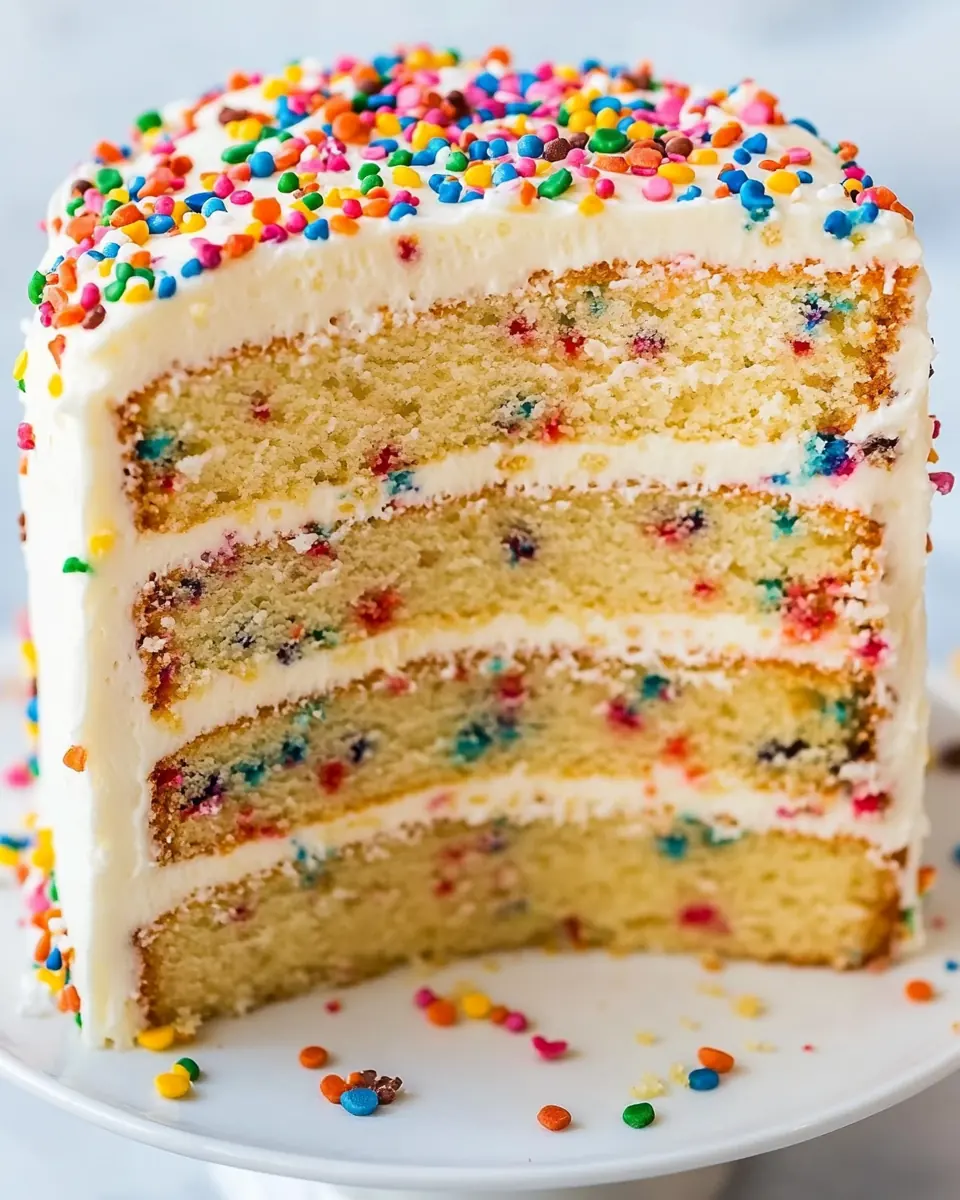
I think of these ingredients as a small team where each member has a clear role. The dry players build structure, the fats and liquids add tenderness and flavor, and the sprinkles bring charm. When they come together with attention and simple technique, the result is a cake that slices cleanly, tastes balanced, and smiles from the plate.
- 1/2 teaspoons salt: Enhance texture and balance sweetness by providing a small amount of salt to the batter; it strengthens gluten slightly and amplifies other flavors, ensuring the cake tastes well-rounded. Use precisely to avoid overpowering the delicate crumb and to control the overall savory-sweet balance.
- 3 teaspoons baking powder: Leaven the batter by creating carbon dioxide bubbles when activated, helping the cake rise and attain a light, airy crumb. Measure accurately to prevent excessive rise or a metallic aftertaste, and combine with dry ingredients before adding liquids.
- 2 1/2 cups (310 g) all-purpose flour: Provide structure and bulk to the cake while forming the gluten network that holds the crumb together; sifting can prevent lumps and ensure even distribution. Adjust handling to avoid overmixing, which can yield a dense cake, and pair with proper leaveners for optimal lift.
- 1 cup (226 g) unsalted butter, melted: Add moisture and tender richness while contributing to the cake's flavor; melted butter integrates smoothly into batter for an even texture. Cool slightly before combining with beaten eggs to avoid curdling, and use unsalted to control total salt content.
- 1 1/2 cups (300 g) granulated sugar: Supply sweetness and aid in creaming or dissolving into the batter to create a tender, moist crumb; sugar also helps with browning and flavor depth during baking. Measure carefully to maintain cake structure and avoid overly sweet results.
- 4 large eggs: Bind ingredients, provide structure, leaven slightly through steam, and contribute to richness and color in the finished cake. Bring eggs to room temperature for better incorporation and consistent texture throughout the batter.
- 1 teaspoon (5 ml) vanilla extract: Impart a sweet, aromatic flavor that complements the cake and enhances the overall taste profile; vanilla also masks minor off-notes from other ingredients. Add with liquids to distribute evenly and avoid using excessive amounts which can dominate subtle flavors.
- 1 1/4 cups (296 ml) buttermilk: Introduce acidity and richness that tenderizes gluten for a softer crumb while contributing a subtle tang; buttermilk reacts with baking powder for improved rise and texture. Use at room temperature to prevent batter temperature drops and ensure even mixing.
- 1 cup rainbow sprinkles: Provide colorful visual interest and a playful crunch dispersed throughout the batter, creating a celebratory appearance when baked. Fold in gently to minimize color bleeding and ensure even distribution without deflating the batter.
- 1 1/2 cups (339 g) unsalted butter, softened: Create a rich, fluffy buttercream base by supplying fat and stability when whipped with sugar; softened butter yields a smooth, spreadable frosting. Ensure butter is evenly softened for lump-free creaming and proper aeration for light texture.
- 3/4 cup (60 g) unsweetened cocoa powder: Contribute deep chocolate flavor and color to frostings or fillings while absorbing moisture for a balanced consistency; cocoa powder intensifies taste without adding fat. Sift to remove clumps and combine gradually to achieve a uniform chocolate profile.
- 4 1/3 cups (486 g) powdered sugar: Sweeten and structure frostings by providing bulk and a stable, silky texture when whipped with butter; powdered sugar dissolves easily for a smooth finish. Sift to avoid graininess and add gradually to control frosting thickness and sweetness.
- 1 teaspoon salt: Enhance overall flavor balance and heighten sweetness by subtly contrasting richness in the frosting; salt can also improve stability and mouthfeel. Add cautiously to prevent oversalting and to allow other flavors to shine.
- 1 1/2 teaspoons vanilla extract: Elevate aroma and add a secondary layer of vanilla flavor to the frosting, enriching the sweet notes for a rounder taste. Use measured amounts to avoid overpowering delicate flavors and combine with butter and sugar for even distribution.
- 2 3 tablespoons (15-45 ml) heavy whipping cream: Adjust frosting consistency and help achieve a spreadable, silky texture by thinning as needed; cream also adds richness and sheen to the final icing. Add gradually to reach the desired piping or spreading thickness without making the frosting too runny.
- More sprinkles for decorating: Provide additional decorative color and texture to the finished cake, creating a festive presentation and playful finish. Apply sparingly or liberally depending on desired aesthetic while ensuring sprinkles adhere to fresh frosting for best results.
The Method for Classic Birthday Cake
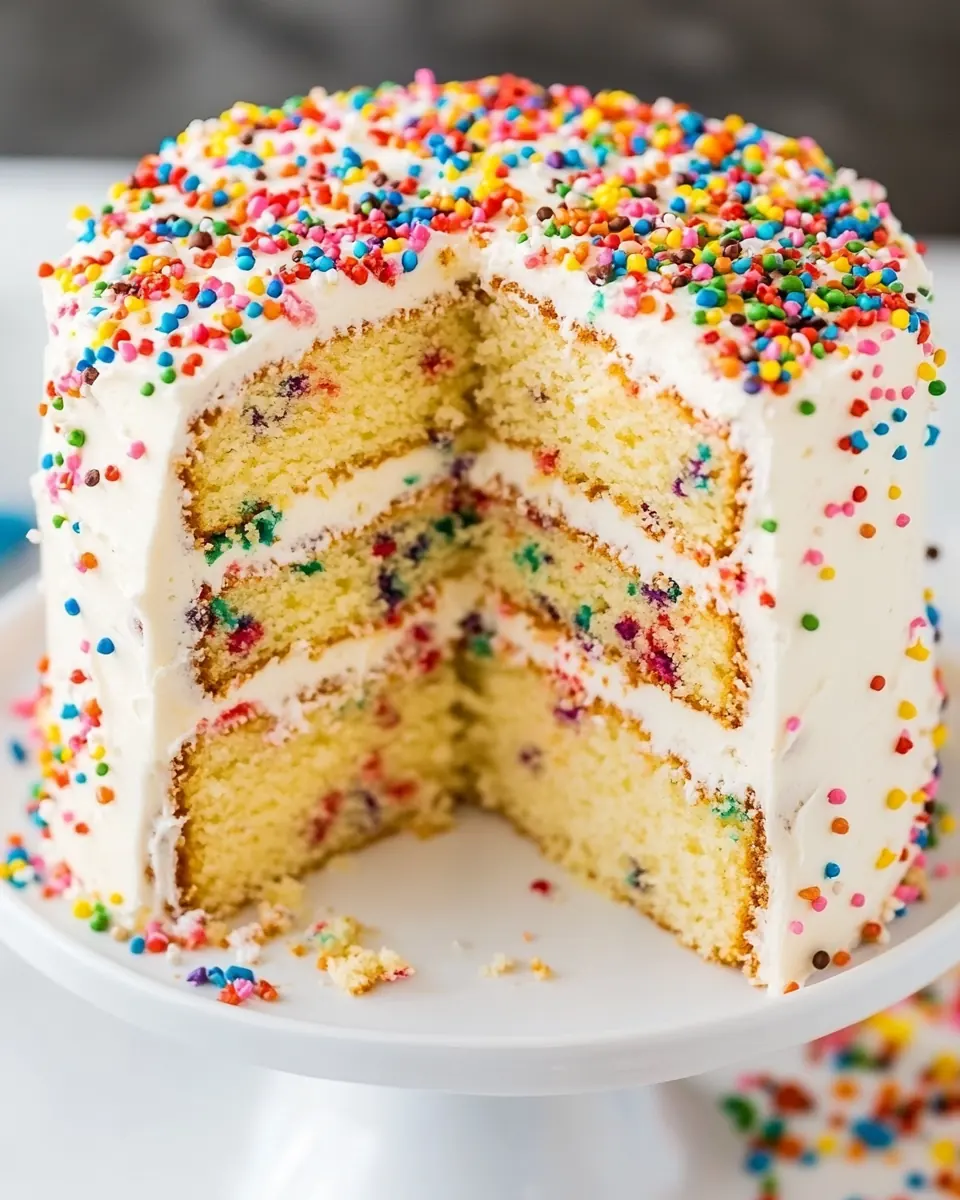
Baking this cake is a steady, mindful process that rewards attention to small cues. I like to set out all the ingredients first and work in predictable stages, so the batter and frosting come together smoothly. The steps below mirror how I bake in my kitchen, full of sensory details and troubleshooting hints to guide you through.
- Preheat oven to 350°F. Grease and flour cake pan(s). I like to line the bottom of my pan with parchment paper for easy removal.: The kitchen will fill with a faint warmth as the oven comes up to temperature, and preheating ensures even rise and consistent browning. You'll smell the faint metallic hum from the oven and may notice the racks glowing slightly as they heat, which is normal. Taking the time to grease and flour your pan, and to line the bottom with parchment, prevents the cake from sticking and preserves clean edges when you remove it. A common mistake is skipping the parchment, which can cause tearing when unmolding; avoid this by cutting a parchment round to fit the bottom exactly. If the oven is not fully preheated, the cake may bake unevenly, so wait until the oven reaches 350°F before sliding the batter in.
- Whisk salt, baking powder, and flour in a medium sized bowl. Set aside.: As you whisk, you will hear the soft rustle of the dry ingredients and see the pale flour take on a uniform texture. This step distributes leavening and seasoning evenly, which is why it matters for a consistent crumb and lift. The mixture should look free of lumps and slightly aerated, signaling even incorporation. One mistake is adding leavening straight into wet batter without sifting or whisking, which can cause pockets of baking powder and uneven rise; avoid that by whisking well now. If your flour seems lumpy, press it through a sieve to ensure a smooth, cohesive blend.
- Cream sugar into melted butter until smooth. Beat in eggs, one at a time, then mix in vanilla extract. You can stir by hand or use a hand mixer or a stand mixer fitted with the paddle attachment.: When you combine melted butter and granulated sugar , the mixture will look glossy and slightly thickened. Adding the eggs one at a time helps maintain an emulsion, keeping the batter cohesive and preventing separation. You will feel the texture shift as each egg disappears into the mixture, becoming silkier and more stable. A common pitfall is adding eggs too quickly to very hot butter, which can cook them; let the butter cool slightly or temper the eggs by adding a spoonful of batter first. If your batter looks curdled, beat it gently until it smooths out, but don't overwork it.
- Add dry ingredients alternately with the buttermilk, starting and ending with the flour, mixing gently between each addition. Mix until just combined. Be sure to scrape the sides of the bowl.: Alternating all-purpose flour and buttermilk keeps the batter tender and evenly hydrated, and you will hear a quieter mixing sound as the spatula moves through a thicker, ribbon-like texture. The batter should appear homogenous with no streaks of flour, but still slightly lumpy at the end to avoid overdeveloping gluten. The reason for starting and ending with flour is to minimize overmixing while ensuring full incorporation. A frequent error is vigorous mixing at this stage, which tightens the crumb, so stop mixing when you see no large pockets of dry flour.
- Pour batter into prepared pans and bake as directed. Cool completely before removing and frosting.: As you pour, the batter should flow smoothly, glossy and studded with tiny flecks of sprinkles . While baking, the kitchen will fill with a sweet, buttery aroma and the cake edges will begin to pull away from the pan slightly. Visual cues to look for include a light golden top and a springy center that returns when pressed gently. Cooling completely is essential so the crumb firms and the frosting does not melt; impatience here can lead to a messy, sliding finish. If the center looks set but a toothpick shows a few moist crumbs, that is fine and preferable to underbaking.
- Bake Time: 24 cupcakes: 14-17 minutes // Two 9-inch round pans: 24-27 minutes // Two 8-inch round pans: 25-33 minutes // 9×13-inch pan: 30-40 minutes: 24 cupcakes: 14 to 17 minutes // Two 9 inch round pans: 24 to 27 minutes // Two 8 inch round pans: 25 to 33 minutes // 9×13 inch pan: 30 to 40 minutes : These timing ranges guide you based on your chosen pan, and the audible cues are subtle, a quiet settling and the disappearance of wet batter sheen. For cupcakes, you may hear a faint doming sound as they finish, while larger layers will give a gentle spring when pressed. Oven hot spots can alter times, so start checking toward the lower end and use a toothpick to test; a few moist crumbs are okay. A common mistake is relying solely on time instead of visual and tactile cues, so rotate pans if needed and trust the spring back test.
- Beat butter until smooth with a hand or a stand mixer. Note: if you’re using a hand mixer be sure to use a very large bowl to avoid wearing the powdered sugar.: if you’re using a hand mixer be sure to use a very large bowl to avoid wearing the powdered sugar. : The softened butter should become glossy and light as air is incorporated, and you might hear a steady, even whir from the mixer. Using a large bowl prevents powdered sugar from flying out when you begin to add it. The texture at this stage should be creamy and uniform, not greasy. If the butter is too cold, it will appear chunky and resist smoothing, so bring it to room temperature. Conversely, if it is too warm, it will look oily, and your frosting will lose structure.
- Add powdered sugar, one cup at a time, along with cocoa, and beat on medium speed until crumbly. Mix in salt and vanilla.: Adding powdered sugar gradually helps control texture and prevent a cloud of dust in your kitchen. As you mix, the bowl will emit a thicker sound and the mixture will go from very soft to crumbly before smoothing out. Incorporating unsweetened cocoa powder adds a dry element that needs even distribution, so scraping the bowl between additions ensures a smooth finish. A common mistake is dumping all the sugar in at once, which can overwhelm the mixer and create an uneven texture; patience here leads to silkier frosting.
- Add 1 tablespoon of heavy whipping cream at a time, mixing between each addition, until the frosting is smooth and the desirable consistency.: The first spoonful will loosen the frosting and you will see it become glossier with each addition. Heavy whipping cream is the final textural adjuster, making the frosting spreadable and pipeable. Aim for a consistency that holds shape but still spreads easily with a spatula. A common error is adding too much cream too quickly, producing a runny frosting; add slowly and stop when satisfied. If it gets too thin, chill briefly and rewhip to thicken.
- Frost cake or cupcakes as desired and add lots of sprinkles.: The final act is tactile and visual, smoothing the frosting and watching it hold blades from your spatula. Apply frosting when the layers are completely cool so it does not melt, and press additional sprinkles gently into the surface so they adhere. Decorating can be playful, and I often pause to tilt the cake to ensure even coverage. A classic mistake is frosting warm cake which causes slumping; patience wins here, and a clean, confident swipe creates the best presentation.
Change It Up
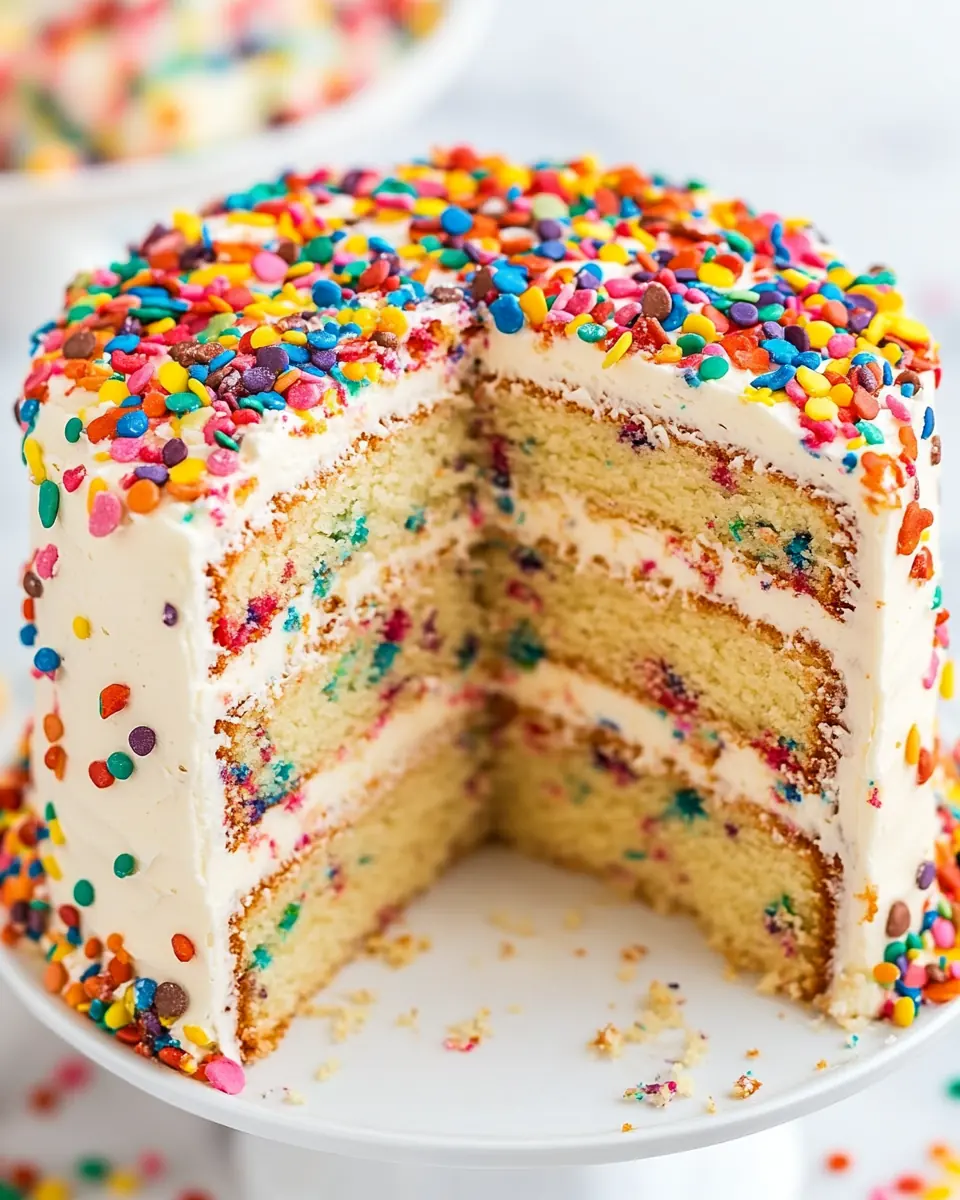
I like to tweak small things when I want a different effect, and these tips reflect choices that change texture, flavor, or presentation without altering the recipe’s soul. Each tip begins with a bold phrase so you can scan quickly and decide which direction to take.
- Swap pans strategically Use this recipe in a 9×13 inch pan for a sheet cake, or split into two 8 inch rounds for layered presentation, keeping bake times in mind so you do not overbake.
- Chill for cleaner slices For neat slices, refrigerate the frosted cake for 20 to 30 minutes so the frosting firms slightly, which makes cutting and serving tidier for parties.
- Control sprinkle bleed Fold the sprinkles gently into the batter and use jimmies rather than nonpareils if you want less color bleeding during baking.
- Adjust frosting consistency Add heavy whipping cream one tablespoon at a time to thin, or chill the frosting briefly to thicken if it becomes too soft while decorating.
- Freeze layers for easy assembly Freeze cooled layers for 30 to 60 minutes before frosting to reduce crumbs and make smoothing the frosting easier during final assembly.
- Keep supplies ready Have extra powdered sugar on hand to fix frosting that is too thin, and keep spatulas and offsets nearby for tidy work.
What Complements This Classic Birthday Cake
This cake pairs well with simple accompaniments that let its flavor shine. I like to serve it with lighter beverages or a fruit side, and to consider the occasion when finalizing presentation. The ideas below cover serving styles, storage, and occasions where this cake truly shines.
- Classic beverage pairings Serve slices with a cup of coffee or a glass of milk to balance the sweetness, especially for casual gatherings where people appreciate familiar tastes alongside cake.
- Fruit on the side Fresh berries or a fruit salad add a bright counterpoint to the rich frosting, and they work especially well for spring and summer events to lighten each bite.
- Occasion suggestions This cake is perfect for birthdays, anniversary gatherings, or any celebration where a nostalgic, crowd pleasing dessert is desired, and it scales well from intimate dinners to larger parties.
- Storage tips Store the cake loosely covered at room temperature for a day, or refrigerate to extend freshness, bringing it back to room temperature before serving for the best texture.
- Make ahead and freeze Both cake layers and frosting freeze well separately; wrap layers tightly and thaw before assembly for convenient planning ahead of busy events.
- Presentation ideas Dress the top with extra sprinkles or pipe borders with the cocoa buttercream for a festive finish that reads joyful and intentional on the table.
FAQ
Conclusion
This Classic Birthday Cake stands out because it combines a tender, buttery crumb with a rich cocoa buttercream and joyful sprinkles for a timeless celebration dessert. Give it a try the next time you need a reliable cake that looks festive and tastes unforgettable. I hope you enjoy the process of baking and decorating it as much as I do, and that it becomes a trusted recipe for your gatherings.
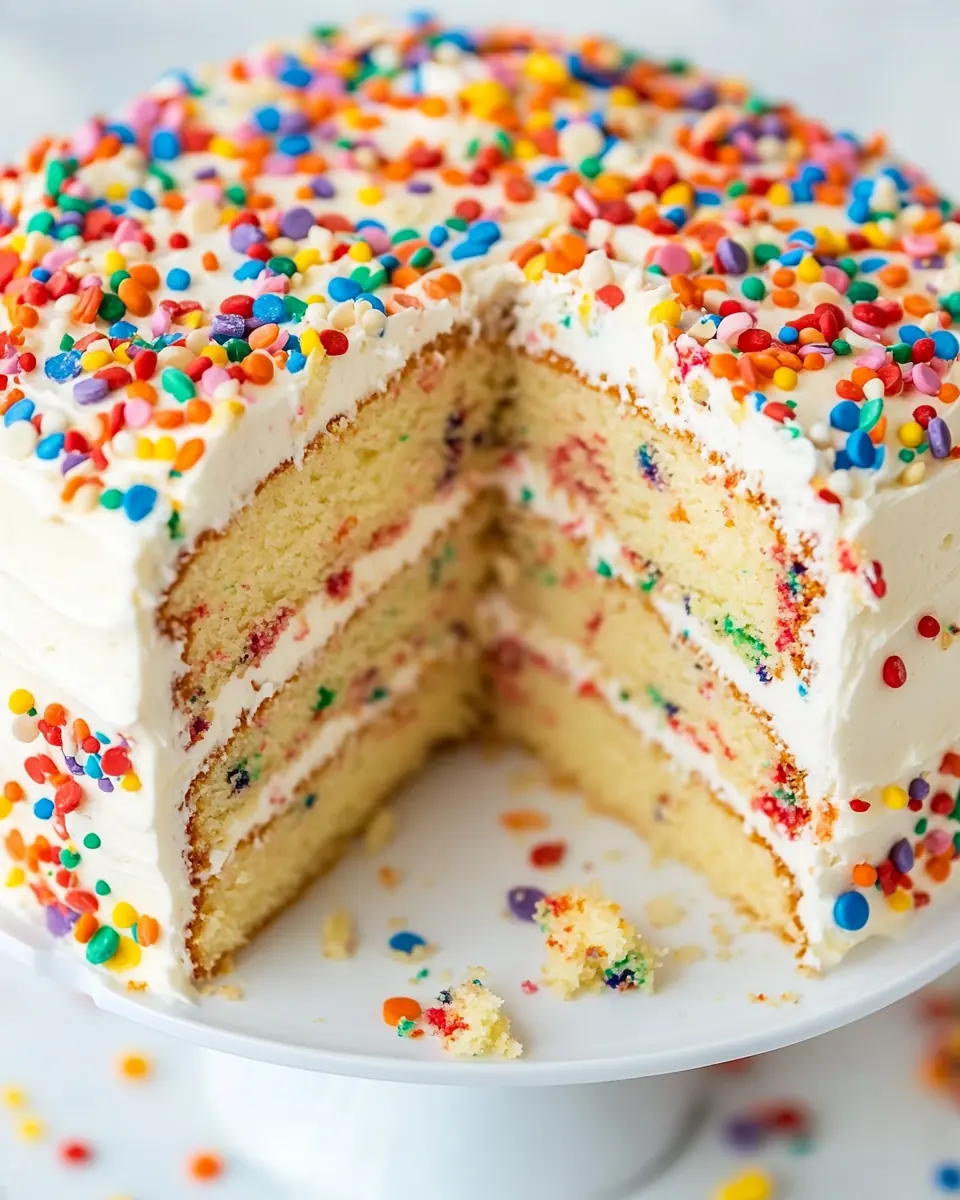
Classic Birthday Cake
Ingredients
Equipment
Method
- Preheat oven to 350°F. Grease and flour cake pan(s). I like to line the bottom of my pan with parchment paper for easy removal.: The kitchen will fill with a faint warmth as the oven comes up to temperature, and preheating ensures even rise and consistent browning. You'll smell the faint metallic hum from the oven and may notice the racks glowing slightly as they heat, which is normal. Taking the time to grease and flour your pan, and to line the bottom with parchment, prevents the cake from sticking and preserves clean edges when you remove it. A common mistake is skipping the parchment, which can cause tearing when unmolding; avoid this by cutting a parchment round to fit the bottom exactly. If the oven is not fully preheated, the cake may bake unevenly, so wait until the oven reaches 350°F before sliding the batter in.
- Whisk salt, baking powder, and flour in a medium sized bowl. Set aside.: As you whisk, you will hear the soft rustle of the dry ingredients and see the pale flour take on a uniform texture. This step distributes leavening and seasoning evenly, which is why it matters for a consistent crumb and lift. The mixture should look free of lumps and slightly aerated, signaling even incorporation. One mistake is adding leavening straight into wet batter without sifting or whisking, which can cause pockets of baking powder and uneven rise; avoid that by whisking well now. If your flour seems lumpy, press it through a sieve to ensure a smooth, cohesive blend.
- Cream sugar into melted butter until smooth. Beat in eggs, one at a time, then mix in vanilla extract. You can stir by hand or use a hand mixer or a stand mixer fitted with the paddle attachment.: When you combine melted butter and granulated sugar , the mixture will look glossy and slightly thickened. Adding the eggs one at a time helps maintain an emulsion, keeping the batter cohesive and preventing separation. You will feel the texture shift as each egg disappears into the mixture, becoming silkier and more stable. A common pitfall is adding eggs too quickly to very hot butter, which can cook them; let the butter cool slightly or temper the eggs by adding a spoonful of batter first. If your batter looks curdled, beat it gently until it smooths out, but don't overwork it.
- Add dry ingredients alternately with the buttermilk, starting and ending with the flour, mixing gently between each addition. Mix until just combined. Be sure to scrape the sides of the bowl.: Alternating all-purpose flour and buttermilk keeps the batter tender and evenly hydrated, and you will hear a quieter mixing sound as the spatula moves through a thicker, ribbon-like texture. The batter should appear homogenous with no streaks of flour, but still slightly lumpy at the end to avoid overdeveloping gluten. The reason for starting and ending with flour is to minimize overmixing while ensuring full incorporation. A frequent error is vigorous mixing at this stage, which tightens the crumb, so stop mixing when you see no large pockets of dry flour.
- Pour batter into prepared pans and bake as directed. Cool completely before removing and frosting.: As you pour, the batter should flow smoothly, glossy and studded with tiny flecks of sprinkles . While baking, the kitchen will fill with a sweet, buttery aroma and the cake edges will begin to pull away from the pan slightly. Visual cues to look for include a light golden top and a springy center that returns when pressed gently. Cooling completely is essential so the crumb firms and the frosting does not melt; impatience here can lead to a messy, sliding finish. If the center looks set but a toothpick shows a few moist crumbs, that is fine and preferable to underbaking.
- Bake Time: 24 cupcakes: 14-17 minutes // Two 9-inch round pans: 24-27 minutes // Two 8-inch round pans: 25-33 minutes // 9×13-inch pan: 30-40 minutes: 24 cupcakes: 14 to 17 minutes // Two 9 inch round pans: 24 to 27 minutes // Two 8 inch round pans: 25 to 33 minutes // 9×13 inch pan: 30 to 40 minutes : These timing ranges guide you based on your chosen pan, and the audible cues are subtle, a quiet settling and the disappearance of wet batter sheen. For cupcakes, you may hear a faint doming sound as they finish, while larger layers will give a gentle spring when pressed. Oven hot spots can alter times, so start checking toward the lower end and use a toothpick to test; a few moist crumbs are okay. A common mistake is relying solely on time instead of visual and tactile cues, so rotate pans if needed and trust the spring back test.
- Beat butter until smooth with a hand or a stand mixer. Note: if you’re using a hand mixer be sure to use a very large bowl to avoid wearing the powdered sugar.: if you’re using a hand mixer be sure to use a very large bowl to avoid wearing the powdered sugar. : The softened butter should become glossy and light as air is incorporated, and you might hear a steady, even whir from the mixer. Using a large bowl prevents powdered sugar from flying out when you begin to add it. The texture at this stage should be creamy and uniform, not greasy. If the butter is too cold, it will appear chunky and resist smoothing, so bring it to room temperature. Conversely, if it is too warm, it will look oily, and your frosting will lose structure.
- Add powdered sugar, one cup at a time, along with cocoa, and beat on medium speed until crumbly. Mix in salt and vanilla.: Adding powdered sugar gradually helps control texture and prevent a cloud of dust in your kitchen. As you mix, the bowl will emit a thicker sound and the mixture will go from very soft to crumbly before smoothing out. Incorporating unsweetened cocoa powder adds a dry element that needs even distribution, so scraping the bowl between additions ensures a smooth finish. A common mistake is dumping all the sugar in at once, which can overwhelm the mixer and create an uneven texture; patience here leads to silkier frosting.
- Add 1 tablespoon of heavy whipping cream at a time, mixing between each addition, until the frosting is smooth and the desirable consistency.: The first spoonful will loosen the frosting and you will see it become glossier with each addition. Heavy whipping cream is the final textural adjuster, making the frosting spreadable and pipeable. Aim for a consistency that holds shape but still spreads easily with a spatula. A common error is adding too much cream too quickly, producing a runny frosting; add slowly and stop when satisfied. If it gets too thin, chill briefly and rewhip to thicken.
- Frost cake or cupcakes as desired and add lots of sprinkles.: The final act is tactile and visual, smoothing the frosting and watching it hold blades from your spatula. Apply frosting when the layers are completely cool so it does not melt, and press additional sprinkles gently into the surface so they adhere. Decorating can be playful, and I often pause to tilt the cake to ensure even coverage. A classic mistake is frosting warm cake which causes slumping; patience wins here, and a clean, confident swipe creates the best presentation.
Notes
- Swap pans strategically Use this recipe in a 9×13 inch pan for a sheet cake, or split into two 8 inch rounds for layered presentation, keeping bake times in mind so you do not overbake.
- Chill for cleaner slices For neat slices, refrigerate the frosted cake for 20 to 30 minutes so the frosting firms slightly, which makes cutting and serving tidier for parties.
- Control sprinkle bleed Fold the sprinkles gently into the batter and use jimmies rather than nonpareils if you want less color bleeding during baking.
- Adjust frosting consistency Add heavy whipping cream one tablespoon at a time to thin, or chill the frosting briefly to thicken if it becomes too soft while decorating.
- Freeze layers for easy assembly Freeze cooled layers for 30 to 60 minutes before frosting to reduce crumbs and make smoothing the frosting easier during final assembly.
- Keep supplies ready Have extra powdered sugar on hand to fix frosting that is too thin, and keep spatulas and offsets nearby for tidy work.