Go Back
Classic Chicken Noodle Soup

Classic Chicken Noodle Soup

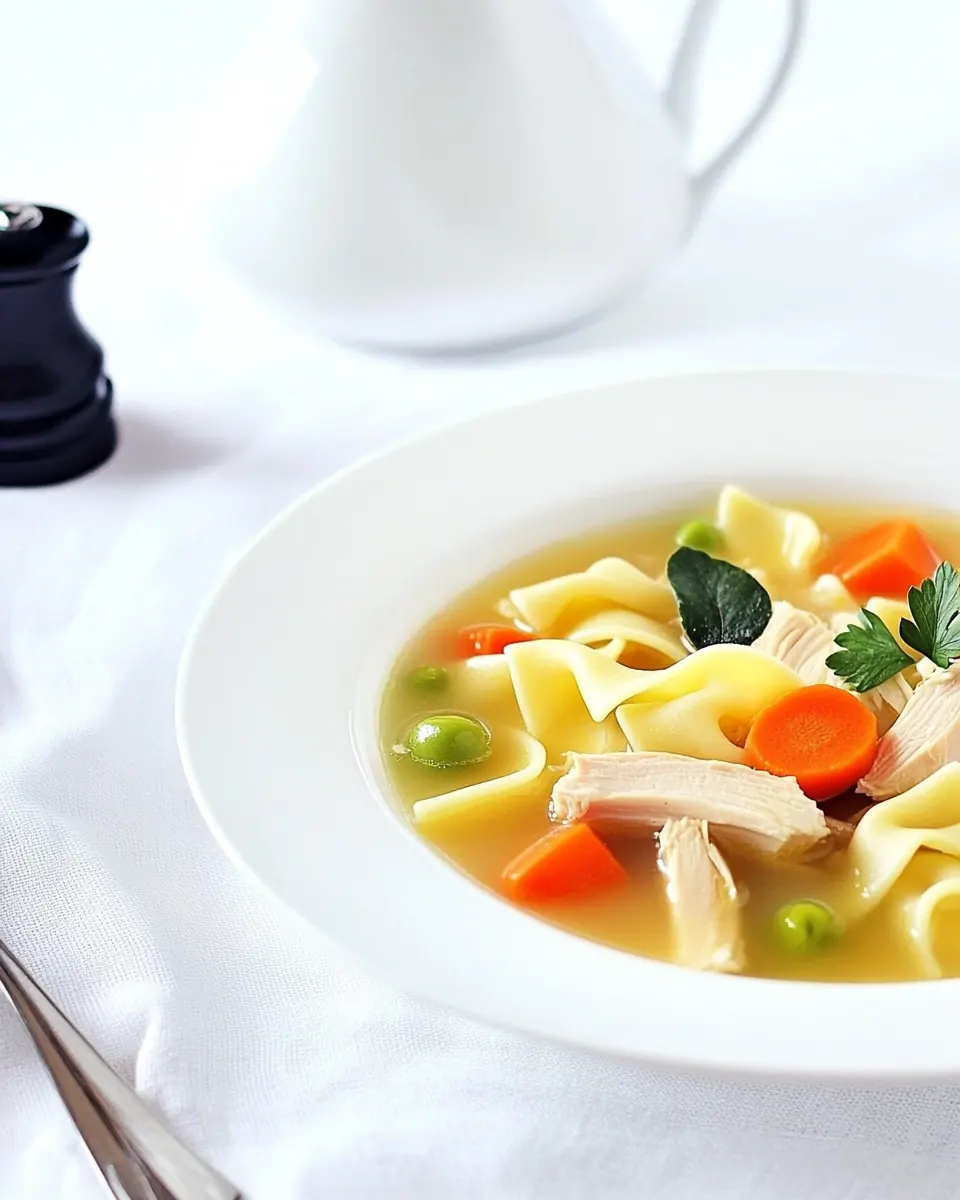
Classic Chicken Noodle Soup is a warm, savory bowl of tender chicken, slurpable egg noodles, and a fragrant chicken stock. This easy weeknight dinner offers clear broth comfort, bright aromatics, and satisfying texture that makes it perfect for cold evenings or when you need a simple, nourishing meal. Make it for friends or family who need a soothing, dependable dish.
Prep Time 10 minutes
Cook Time 20 minutes
Total Time 30 minutes
Servings: 6 servings
Course: Soups
Cuisine: American
Calories: 300

Ingredients
  

  • 1 tablespoon olive oil Sauté to provide a fragrant, fruity base and healthy fat for cooking aromatics; helps prevent sticking and enhances the overall mouthfeel of the broth when combined with butter.
  • 1 tablespoon butter Melt to add richness and a silky texture, balancing the olive oil; contributes a subtle creamy flavor that deepens the soup’s savory profile when vegetables are sweated.
  • 1/2 large onion diced Dice finely and soften to release sweet, savory aromatics that form the backbone of flavor; translucent onions add natural sweetness and complexity without overpowering the broth.
  • 1 1/2 cups carrot diced Dice evenly and simmer to contribute natural sweetness, texture, and color; carrots provide a pleasant bite, vitamin content, and visual appeal throughout the soup.
  • 1 1/2 cups celery diced Dice uniformly and cook until tender to add a mild, aromatic vegetal base; celery brings a lightly bitter, herbal note and structural crunch if not overcooked.
  • 10 cups chicken stock homemade or store bought...just use one you love Simmer as the primary liquid to carry and concentrate flavors; a quality chicken stock supplies body, depth, and the savory backbone that defines the soup.
  • salt & pepper to taste Season to adjust and enhance all flavors throughout cooking and before serving; salt and pepper balance sweetness and umami while tailoring the soup to taste.
  • 1 tablespoon dried tarragon Add dried to impart a subtle, slightly sweet, anise-like herbal note; dried tarragon blends into long-simmered soups, enriching aroma without overwhelming delicate chicken flavors.
  • 1 bay leaf Steep whole to provide a gentle, earthy layer of flavor during simmering; bay leaf releases subtle herbal and slightly floral notes that round out the broth while cooking.
  • 2 cups diced cooked chicken Stir in pre-cooked and warm through to supply protein, texture, and heartiness; diced cooked chicken keeps the soup comforting and makes it a complete meal.
  • 4 cups egg noodles such as no yolks Boil until tender to add comforting starch, body, and chew; egg noodles absorb the broth’s flavor and transform the soup into a more filling, family-friendly dish.

Equipment

  • Large Pot
  • Wooden Spoon

Method
 

  1. In a large pot, saute onion, carrot, and celery in olive oil and butter. Cook until onion starts to soften.: You will smell the vegetables sweetening as they release moisture, and the butter will melt into the oil creating a glossy sheen on the pan. The sound is a gentle sizzle, not an aggressive fry, indicating medium heat; visually the onion should turn translucent and the edges should not brown. This step matters because slow softening brings out the natural sugars that round the broth, avoiding any raw, vegetal bite. A common problem is using too high heat, which will brown or scorch the aromatics and give the soup an off flavor. If that happens, lower the heat and stir frequently to recover the gentle cook.
  2. Stir in chicken stock and seasonings. Bring to boil and stir in chicken and noodles. Reduce the heat and cook until noodles are tender.: As the chicken stock hits the pot, it will steam and mingle with the sweet vegetable aromas, creating a fragrant uplift. When you bring the pot to a boil, you will hear a full, rolling bubble, but you should reduce to a gentle simmer before adding the chicken and egg noodles so they heat through more gently. The noodles will soften and swell, absorbing flavor; the chicken warms without drying out. This technique ensures the broth remains clear and the textures hold. Avoid a hard boil while the noodles cook because that motion breaks them up and causes cloudy broth. If the soup becomes too starchy, a splash of extra stock or a brief rest off heat helps redistribute the starch.
  3. Taste, adjust seasonings, remove bay leaf, and serve.: The final stage is all about balance; take a spoon and sample the broth and noodle combination, tuning with salt and pepper to lift the flavors. Remove the bay leaf so no one bites into it, and give the soup a last whisk to distribute the aromatics. You should notice bright, herbaceous tarragon notes threading through the savory broth, and the noodles should be tender but not limp. A frequent oversight is underseasoning, which leaves the soup flat, so always taste and correct. If the seasoning seems off, add a pinch at a time and let it bloom for a minute before retasting.
Notes

  • Brighten with lemon: Add a squeeze of fresh lemon juice just before serving to lift the broth and highlight the herbs.
  • Swap noodles sparingly: Try a different shaped noodle for a playful change, but time cooking carefully to avoid overcooking.
  • Use homemade stock for depth: When possible, homemade chicken stock will add body and a fuller mouthfeel than many store bought options.
  • Add fresh herbs at the end: Stir in chopped fresh parsley or dill right before serving to preserve color and vibrancy.
  • Keep it make ahead friendly: Cook the soup slightly underdone if you plan to refrigerate, then finish cooking the noodles when reheating to retain texture.