Add water, sugar, and yeast to a large bowl and let sit for 10 minutes. Gently whisk to combine. (Using the large bowl of your stand mixer works well). 1 1/2 cups warm water, 1/2 cup sugar, 2 1/4 teaspoon yeast: As the mixture rests you should notice small bubbles forming and a slightly frothy surface, which means the yeast is active and ready. The aroma becomes faintly yeasty and sweet, signaling good fermentation. If you see no bubbles after 10 minutes, your yeast may be inactive, which will lead to dense beignets, so discard and start again. Keep the bowl in a warm spot, away from drafts, because cool air will slow activation and lengthen rising time.
In another bowl, blend together the eggs, salt, and evaporated milk until incorporated. 2 eggs, 1 1/4 teaspoon salt, 1 cup evaporated milk: The mixture should look uniform and slightly glossy, with the eggs fully mixed into the creamy evaporated milk , and the salt evenly dispersed. You will notice a richer color and a smooth texture. If the blend seems curdled, let ingredients come to room temperature before combining, because cold dairy can cause separation which affects dough consistency.
With the blender on medium, slowly add the egg mixture to the yeast mixture.: As you pour, the batter will thin then begin to thicken once flour is introduced, giving off a sweet, bready scent from the activated yeast . The gentle blending helps incorporate air and ensures even distribution. Avoid adding the eggs too quickly, because that can shock the yeast and lead to uneven fermentation, producing inconsistent rise.
In two separate bowls, measure out the bread flour, 3 cups in 1, and 3 cups in another. 6 1/2 cups bread flour: Dividing the bread flour helps with staged additions so the dough comes together gradually. You will see a shaggy mixture at first that becomes smoother with each addition. If you add all the flour at once, the dough can become tough and hard to knead, so keep the staged approach for better texture.
With the dough attachment, add 3 cups of the flour to the yeast mixture and mix to combine.: The texture will change from sticky and loose to a more cohesive mass that pulls away from the bowl, and the smell becomes more bready. This step starts gluten formation, which is important for trapping the gases that create the airy interior. Mixing too long at this stage can over develop gluten, making the beignets chewier than desired.
Add the shortening and continue to mix while adding the remaining flour, adding more flour if the dough is too wet. 1/4 cup shortening: The dough will become smoother and more elastic as the shortening is incorporated; it adds tenderness and helps the beignets brown evenly during frying. If the dough seems too wet, add small amounts of the remaining flour until it holds its shape. Overdoing flour here will make the final pastry heavy, so add cautiously.
Remove dough from the bowl and place it on a lightly floured surface.: As you transfer the dough, it should feel soft and slightly tacky but not sticky, and it will spring back slightly when poked. This tactile cue tells you the dough has enough hydration to be airy while still manageable. If it clings excessively to your hands, dust them lightly with flour, but avoid adding too much, which can dry the dough out.
Knead until smooth. About 5 to 7 minutes.: While kneading the aroma evolves into a warm, wheaty scent and the dough becomes elastic and satiny; this usually takes about 5 to 7 minutes. Proper kneading develops the gluten network, which allows the beignets to puff and hold air pockets. A common mistake is under kneading, which yields dense beignets, or over kneading, which makes them tough, so aim for that smooth, elastic feel.
Spray a large bowl with non-stick spray. Baking spray: Prepare the resting vessel so the dough can expand without sticking to the sides; the bowl should look evenly coated and dry to the touch. This prevents tearing when you remove the dough after rising. If you skip greasing, you risk ripping the dough when you try to lift it, damaging the delicate structure you've built.
Put dough into the bowl and cover with a kitchen towel.: Covered dough will hold warmth and humidity, producing a gentle rise; you should see it begin to puff and soften within the first hour. The towel keeps a light barrier while allowing some breathability. Avoid sealing it tightly, which can create excess moisture and a soggy surface.
Let rise for 90 minutes to 2 hours, or overnight (refrigerated).: During this rest the dough will roughly double in size, becoming airy and fragrant, a sure sign of good fermentation. If you refrigerate overnight, the flavor deepens and the texture improves, but allow it to come to room temperature before rolling. Rising less than recommended often results in dense, underproofed beignets.
Pre-heat oil in a deep-fryer (or skillet) to 350°F. Vegetable oil: The oil should shimmer slightly and form gentle ripples when a small bit of dough is added; maintaining a steady 350°F is crucial so the beignets cook through without burning. Use a thermometer to avoid temperature swings, because oil that is too hot will brown the exterior quickly while leaving the interior raw, and oil that is too cool will make them greasy.
Roll the dough out to a large, 1/4-inch thick rectangle.: The surface should feel smooth, and the dough should hold its shape without springing back aggressively. A thin, even thickness ensures consistent puffing and frying. Rolling too thin produces overly crisp beignets while rolling too thick can prevent thorough frying, leaving doughy centers.
Cut into 2-inch x 1-inch rectangles.: Each piece should be uniform so they cook evenly and puff similarly; they will look like small pillows waiting to rise further. Consistent sizing prevents some pieces from overcooking while others remain underdone. Irregular pieces will lead to uneven frying and inconsistent texture across the batch.
Deep-fry, flipping constantly until they become nice and golden.: As they fry you will hear gentle bubbling and see the surface turn a beautiful golden brown while the interior steams and expands; flipping helps both sides color evenly. Use tongs or a slotted spoon to turn them carefully so they do not deflate. Frying too long will make them hard and overly browned, so watch for that perfect golden cue.
Drain on paper towels.: After frying, the beignets should rest briefly on absorbent paper to remove excess vegetable oil , resulting in a lighter final texture. They will continue to puff slightly as they rest and release a whisper of steam. Skipping this step leaves them oilier and less pleasant to eat.
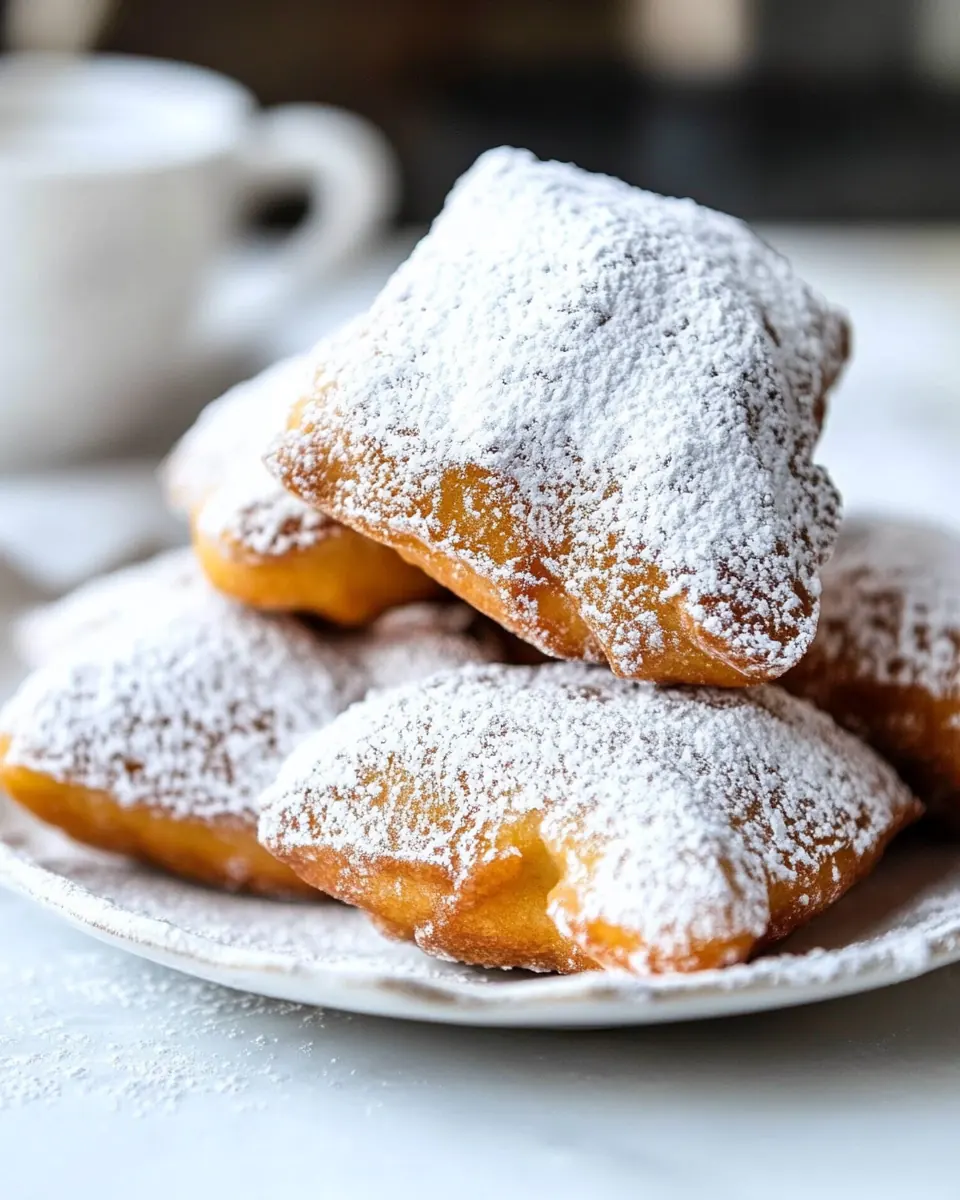
Toss in a paper bag with confectioner's sugar. 3 cups confectioners sugar: The warm beignets will pick up the confectioners sugar quickly, yielding an even, snowy coating that clings to the surface and fills crevices. Toss gently to avoid deflating them, and serve immediately for best texture. If you wait too long the sugar can dissolve into the pastry and lose its signature powdery appearance.