In a large mixing bowl, cream butter with a hand mixer for 30 seconds.: From the moment you begin, notice the texture change as the butter softens and becomes silky, producing a faint sheen and a gentle mechanical whisper from the beaters. This short creaming lifts the fat slightly, which helps incorporate the sugar more evenly later. If the butter looks greasy or separated, it was too warm; move the bowl to the fridge for a few minutes to firm it up. Avoid overcreaming here because you do not want to aerate the dough too much, which can lead to spreading during baking.
Add granulated sugar and cream for 3 minutes until light and fluffy.: As you work in the granulated sugar , feel the mixture become lighter and observe a pale color emerge, with tiny air bubbles forming on the surface. The sound of the mixer will change to a softer hum as the texture smooths. This longer creaming step builds the cookie's tender crumb, so do not rush it. A common error is to under-cream, which yields dense cookies, or to over-cream, which can make them too tender and prone to losing shape.
Add vanilla extract and mix in.: When you add the vanilla , take a breath and notice the aroma lift immediately, turning a simple dough into something more fragrant. Mix just until the vanilla is incorporated, a few short pulses with the mixer will do. Overmixing at this stage can develop gluten once flour is added, so stop as soon as the scent is even throughout the bowl. If the vanilla pools as liquid, let the mixture sit briefly so it blends uniformly.
Add chopped nuts and flour. Mix in. The dough will be thick. You can use a wooden spoon to mix in the dry ingredients.: As you fold in the chopped nuts and all purpose flour , the texture will shift to a dense, sandy dough that holds together when pressed. You should see small flecks of toasted nut throughout. Using a wooden spoon helps protect against over mixing, which keeps the cookies tender. Watch for a shaggy mixture turning into a cohesive mass; if it is crumbly and not coming together, press gently with your hands to bring it into a ball. Avoid prolonged stirring, which is the typical mistake that toughens cookies.
Cover the bowl and chill the dough for 30 minutes, to make it easier to roll.: Chilling firms the butter , making the dough easier to shape and preventing excessive spread during baking. You will notice the dough become more solid and easier to scoop after about 30 minutes. If you skip this rest, the cookies are likely to flatten. For a firmer result, chill slightly longer, but not so long that the dough is rock hard, which makes rolling difficult.
Preheat oven to 325° F. Line two large baking sheets with parchment paper or silicone baking mat.: When the oven reaches 325° F , it provides a gentle environment that bakes the cookies through without browning them too much. Lining sheets prevents sticking and encourages even heat contact across the bottoms. You should hear a soft hum from the oven and feel steady warmth near the vent. Placing cold dough onto unlined sheets can cause uneven bottoms, so prepare your sheets first. A frequent misstep is using a too hot oven, which can brown the exterior before the center sets.
Scoop 1 tablespoon of dough and roll it into balls. Place on a baking sheet, spacing them about 2" apart.: As you scoop and roll, feel the dough hold its shape in your palms, slightly crumbly but cohesive. The surface should be smooth with visible nut flecks. Spacing the balls about 2" apart gives them room to bake without crowding. If you notice dough sticking to your hands, chill them briefly or lightly flour your palms. Commonly, bakers make balls too large, which affects bake time and interior texture, so stick to the tablespoon measure.
Bake cookies for 16 to 18 minutes.: During baking you will see the cookies remain pale with faint edges, and the aroma of toasted nuts and warm butter will fill the kitchen. The surface may develop tiny hairline cracks but should not brown significantly. The sound is mostly quiet, except for a faint oven hum. If cookies brown aggressively, your oven is too hot or the tray is too low; rotate trays mid bake if your oven has hotspots. Avoid opening the oven frequently, which causes temperature fluctuations and can change the texture.
Cool cookies completely.: Cooling allows the centers to set and prevents the powdered sugar from melting when rolled. You will notice the cookies firm and their aroma settle into a more nutty note as they cool. A wire rack speeds this process by allowing air to circulate underneath. Rolling warm cookies is a common mistake because the sugar will dissolve into the surface, leaving a glossy finish rather than a snowy coat.
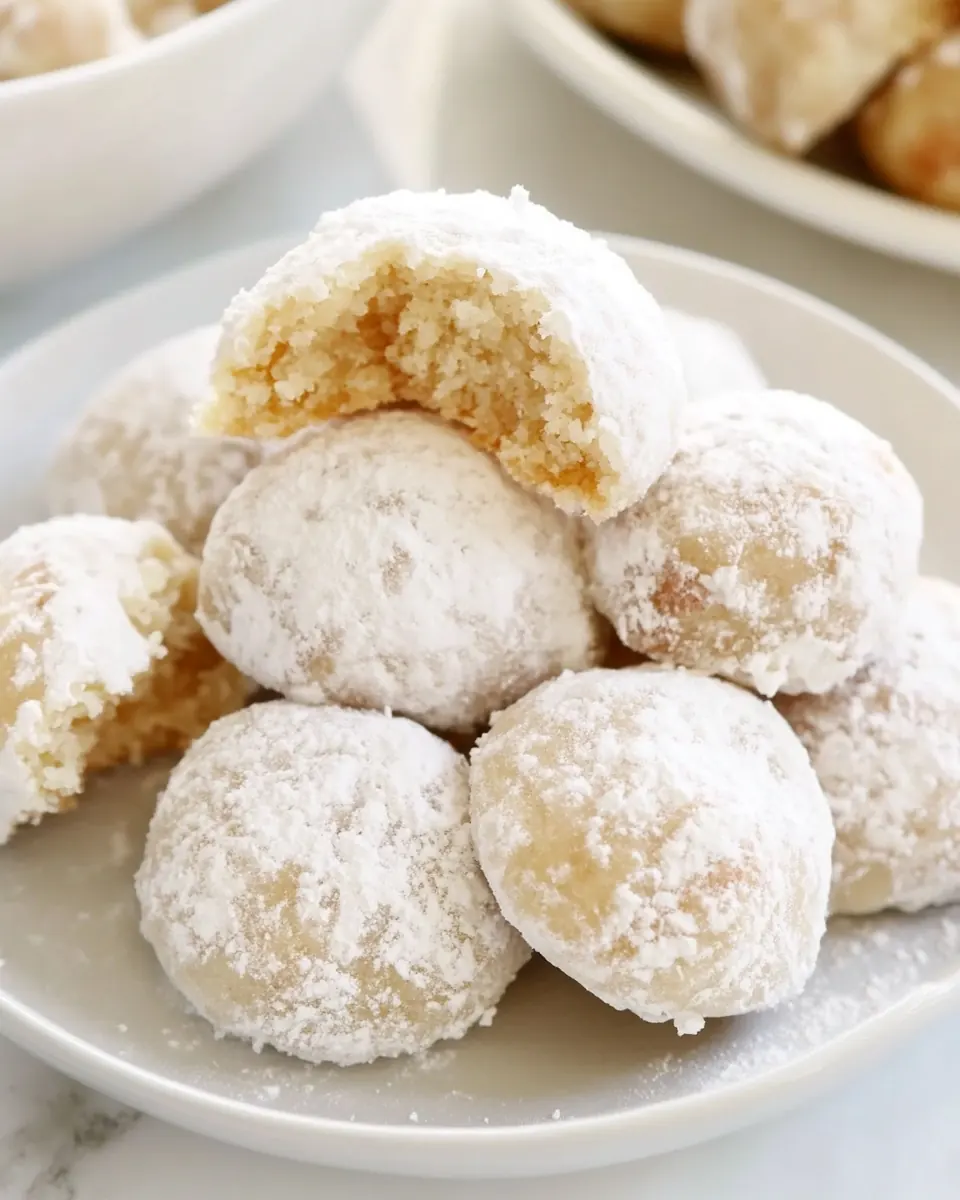
Place powdered sugar in a shallow bowl. Roll cookies in sugar, repeat twice if needed for a thicker layer.: When you roll the cooled cookies in powdered sugar , the tactile moment is gratifying as the fine sugar clings and creates that iconic white blanket. If you repeat the roll, you will build a deeper coating that stays put. Use a shallow bowl to fully submerge the rounded top, and tap off excess gently. Rolling too early or using warm cookies will cause the sugar to melt away, so patience here preserves the look and texture.