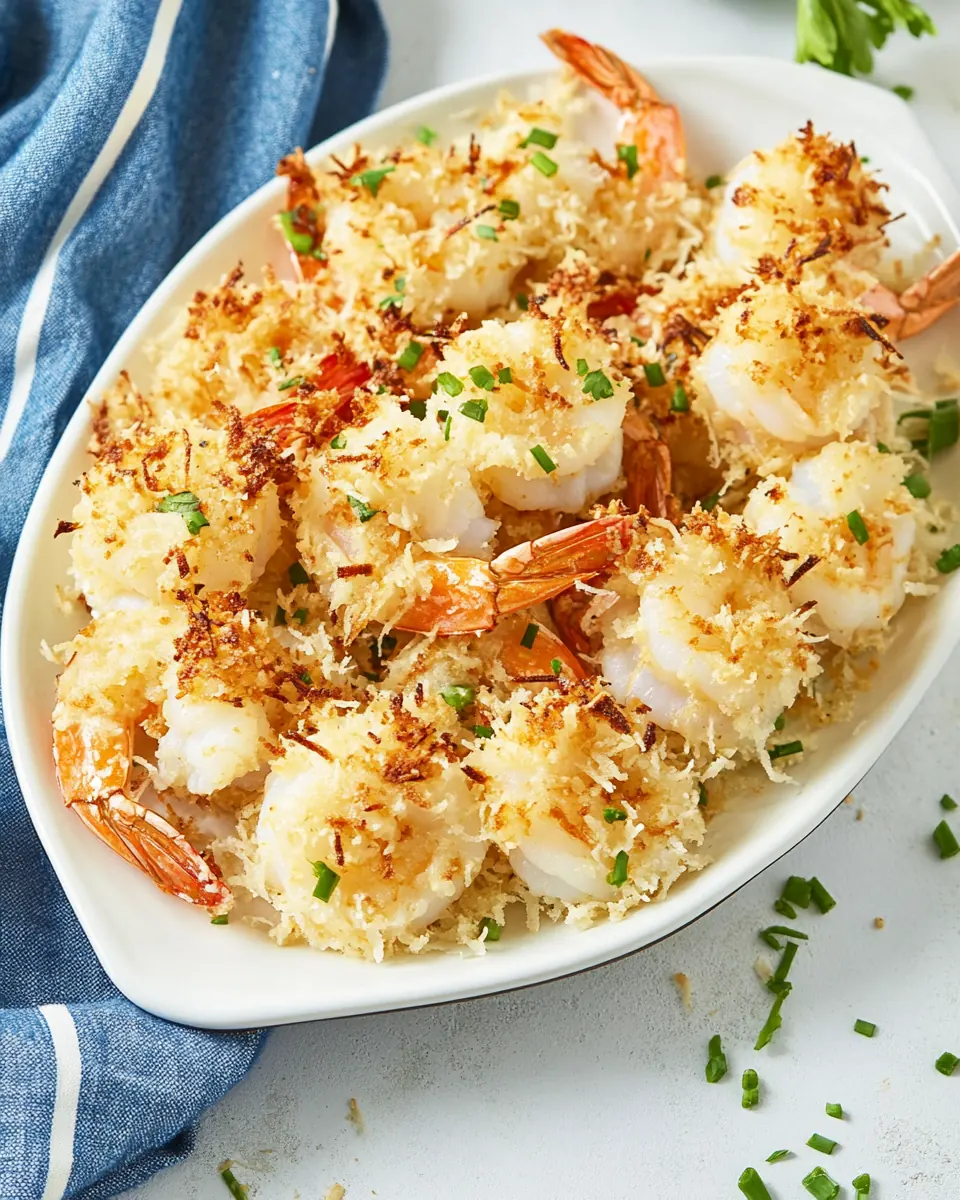
Preheat oven to broil setting.: When the oven warmth hits that intense broil heat you will sense it almost immediately, a dry, radiant air that toasts quickly. This concentrated heat is what gives the coconut its golden hue without overcooking the shrimp inside. Arrange your oven rack in the middle, not too close to the element, to avoid burning, and let the oven fully reach broil temperature before you slide anything in. A common mistake is to start broiling too early, which can cause uneven toasting, so always wait for the full blast of heat.
Pat shrimp dry with a towel and season with 1/2 tsp salt.: You will immediately notice the surface moisture disappear as you pat the shrimp , leaving a slightly tacky exterior that helps the coating stick. The small amount of kosher salt seasons the flesh and enhances natural sweetness. If you skip drying, the coating can slip off or steam instead of crisping, so take this step seriously to get that satisfying crunchy contrast.
Arrange three separate bowls in an assembly line. Place flour in one, whisked eggs (or buttermilk) in the second and shredded coconut in the third.: Setting up this station streamlines the process and keeps your hands moving, which helps the wet ingredients from clumping. Visually, you will see the transition from pale flour to glossy eggs to textured shredded coconut . If you skip organizing, you risk a messy, inconsistent coating job. One tip is to spread the shredded coconut flat in the bowl for even rolling.
Lightly coat the shrimp in the flour and gently tap to remove excess flour.: As you dust each shrimp in flour , you will feel the flour clinging lightly to the damp surface. Tapping off the excess prevents a gummy layer and ensures the next stage grabs properly. A common error is over flouring, which leads to a pasty barrier between the shrimp and the coconut, so keep it light and even for the best texture.
Dip the flour coated shrimp in the egg/buttermilk and then roll in the shredded coconut to coat.: Once dipped, the glossy egg creates that tacky surface that clings to the shredded coconut , and as you roll you will hear the strands compress against the shrimp . The sound is subtle but satisfying, and visually you should see full coverage. Press the coconut gently so it adheres, but avoid mashing the coating flat. If bits fall off, place them back on immediately to maintain an even crust.
Place coconut shrimp on a sprayed/greased baking rack over a cookie sheet. When all the shrimp are on the rack, lightly coat them with cooking oil spray.: Lining a rack over a sheet lets air circulate so the underside crisps too, and the light spray of oil encourages even browning. You will notice the oil adds sparkle to the surface and helps the coconut reach that toasted color under the broiler. A frequent problem is placing shrimp directly on the pan which causes one sided browning, so always use a rack when possible.
Place cookie sheet on the middle rack of your oven and broil for 3 minutes on each side or until golden.: Under the broiler the coconut will go from pale to golden quickly, producing a warm, toasty aroma that fills the kitchen. Flip halfway so both sides brown evenly and watch closely because color changes fast at broil intensity. The ideal cue is a uniform golden brown with toasted edges, and the shrimp should be opaque and firm to the touch. Avoid overbaking which dries the shrimp and turns the coconut too dark.
Serve with dipping sauce.: The first time you dip a warm, crunchy piece into the tangy sweet sauce you will notice the contrast that lifts the whole bite. The sauce should be glossy, with a balance of sweetness, acidity, and umami that complements the coconut and shrimp . If the sauce seems too thick, a splash of water thins it and helps it cling better. Don’t drown the shrimp, a light dip preserves the crisp texture.
Place all the ingredients in a bowl and stir to combine.: When you mix ketchup , honey , rice vinegar , water , soy sauce , and minced ginger , the aroma goes bright and slightly sweet with a savory undercurrent. Stirring until smooth ensures the sauce is cohesive and glossy, making it easy to serve alongside the hot shrimp. A common oversight is under stirring, leaving pockets of thicker honey or ketchup, so whisk until uniform.