Preheat the oven to 350 degrees F.: The oven should smell neutral with a hint of warmth as it reaches 350 degrees F . Preheating ensures the custard begins cooking immediately and sets evenly from the edges inward. If you skip preheating, the pie may bake unevenly, resulting in an overcooked rim and undercooked center. Place your rack in the center so heat circulates gently, and avoid opening the door repeatedly which causes temperature drops.
In a large bowl, use an electric mixer to combine the butter and sugar until well-mixed. Beat in the eggs, and then the milk, cream, flour, vanilla, salt, and nutmeg. Stir in the coconut flakes.: You'll notice the butter and sugar transform into a paler, slightly fluffy mixture, releasing a soft buttery aroma. This step helps dissolve the sugar and distributes fat evenly, creating a smooth base for the custard. Overbeating can introduce excess air which may cause tiny cracks on the custard surface, so mix until combined and slightly lightened, not whipped.
Pour the coconut mixture into the raw pie crust.: As you incorporate the eggs , the mixture will silk together and the batter will thin when you add the milk and cream . Whisking the flour in prevents lumps and helps stabilize the custard, while the vanilla , salt , and nutmeg layer in aromatic depth. The batter should be smooth and pourable, with a faint dairy scent and spice at the finish. Avoid high speed mixing after adding liquids to prevent foaming.
Bake until a knife inserted in the center comes out clean, about 50 to 60 minutes. Check the pie at the 45 minute mark (and every 5 minutes after) and if the crust is getting too dark, put a pie crust shield or foil on it to prevent it from over-browning.: Folding in the coconut flakes disperses chewy pockets throughout the custard, and you will see the batter speckled with white flakes. The flakes add texture and localized bursts of coconut flavor. If you add too many, the custard can struggle to set uniformly, so keep to the specified amount. Stir gently to keep the batter smooth and even.
Before slicing, cool the pie to room temperature and then refrigerate to chill, about 2 to 4 hours.: When you pour the filling into the unbaked pie crust , listen for a quiet slide as the batter settles. The contrast between the pale custard and crust edge helps you gauge fill level; leave a small gap under the rim to prevent overflow. If the crust is too warm or soft the edges may slump, so work quickly and, if needed, chill the crust briefly before filling.
If desired, serve the pie topped with whipped cream or Cool Whip and a sprinkle of toasted coconut flakes.: During baking you will notice the custard deepen slightly in color and the surface develop a gentle wobble that firms as it finishes. Between 50 to 60 minutes the center will set so that a knife comes out clean, signaling doneness. Check at the 45 minute mark, and every 5 minutes after, to avoid overbaking which yields a dry texture. If the crust edges brown too fast, shield them with foil to keep the bake even.
Check the pie at the 45 minute mark (and every 5 minutes after) and if the crust is getting too dark, put a pie crust shield or foil on it to prevent it from over-browning.: Visual monitoring helps you prevent a burnt rim while the center finishes cooking; the surface should be lightly golden and the crust not overly browned. A shield will reflect direct heat and slow browning while allowing the custard to continue setting. Avoid leaving the foil on from the start or the crust may not achieve its desired flakiness.
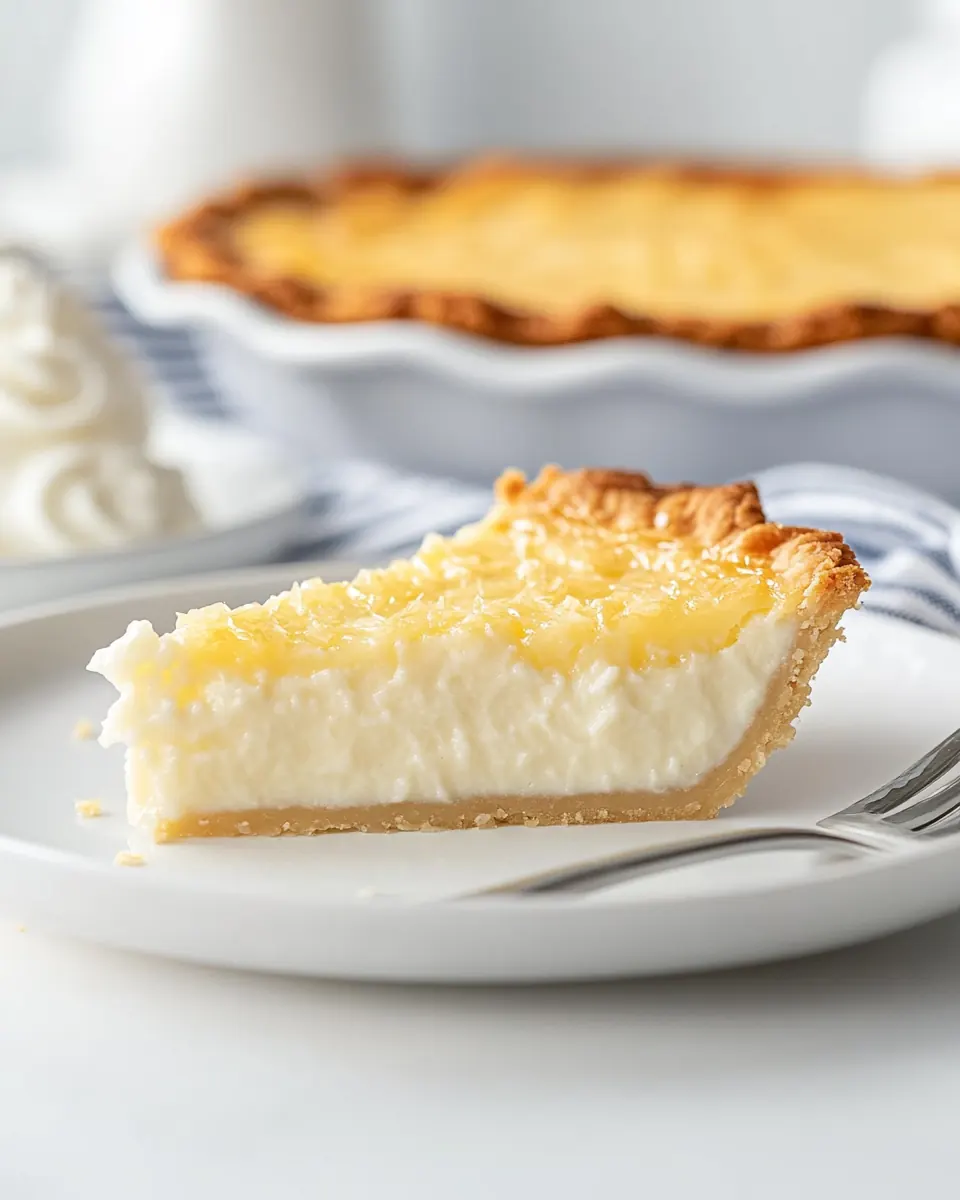
Before slicing, cool the pie to room temperature and then refrigerate to chill, about 2 to 4 hours.: Cooling lets the custard finish its gentle set and the aroma will mellow, becoming more pronounced once chilled. The texture becomes cleanly sliceable after refrigeration, providing neat wedges rather than a soft, loose filling. Cutting too soon is a common mistake and will produce sloppy slices, so be patient and let it chill fully for the best presentation.
If desired, serve the pie topped with whipped cream or Cool Whip and a sprinkle of toasted coconut flakes.: The final garnishes add visual contrast and a fresh texture, with the whipped topping giving a light creaminess and the toasted coconut flakes delivering crisp, nutty notes. Add these just before serving so they stay bright and fluffy. If you apply them too early the whipped cream may weep, and toasted flakes can lose their crunch when exposed to moisture.