Preheat the oven or the air fryer to 180 C/350 F.: When the oven or air fryer reaches 180 C/350 F , you will notice a faint warming smell, and an even ambient heat that helps the bagels begin browning immediately. Preheating ensures the exterior sets and the interior cooks through correctly, preventing dense, underbaked centers. A common mistake is skipping this step, which can lead to pale, soggy bagels. If your appliance runs hot, reduce the temperature slightly to avoid overbrowning while the interior finishes cooking.
In a large mixing bowl, combine the flour and whipped cottage cheese and mix/knead them together to form a dough. If the dough seems dry and won’t come together, add more cottage cheese or a little water.: The bowl should feel warm to the touch as you work the ingredients, and the mixture will go from crumbly to cohesive. You’ll hear a soft rustling as the dough is kneaded and see it gather into a mass that is slightly tacky but not sticky. This tactile feedback matters because it tells you the hydration is correct; underhydrated dough will be crumbly, while overhydrated dough will be gummy. Avoid adding too much liquid at once, because a wet dough can be hard to shape and may spread during cooking. If it becomes too sticky, dust your hands and surface with a touch of flour rather than adding large amounts of flour, which can toughen the final crumb.
Transfer the dough onto a floured surface and shape into eight balls. Roll into a bagel shape.: As you work, the dough should feel smooth and spring slightly back when pressed. Rolling into balls creates surface tension that helps the bagels hold shape, and when you form the bagel hole, you will notice the dough resist and then relax, indicating good structure. The sound is minimal, but you may feel a gentle elasticity as you shape. A frequent error is making the holes too small, which can close up during baking; aim for a modest opening so they remain identifiable when finished. If the dough resists forming, let it rest five minutes to relax the gluten before trying again.
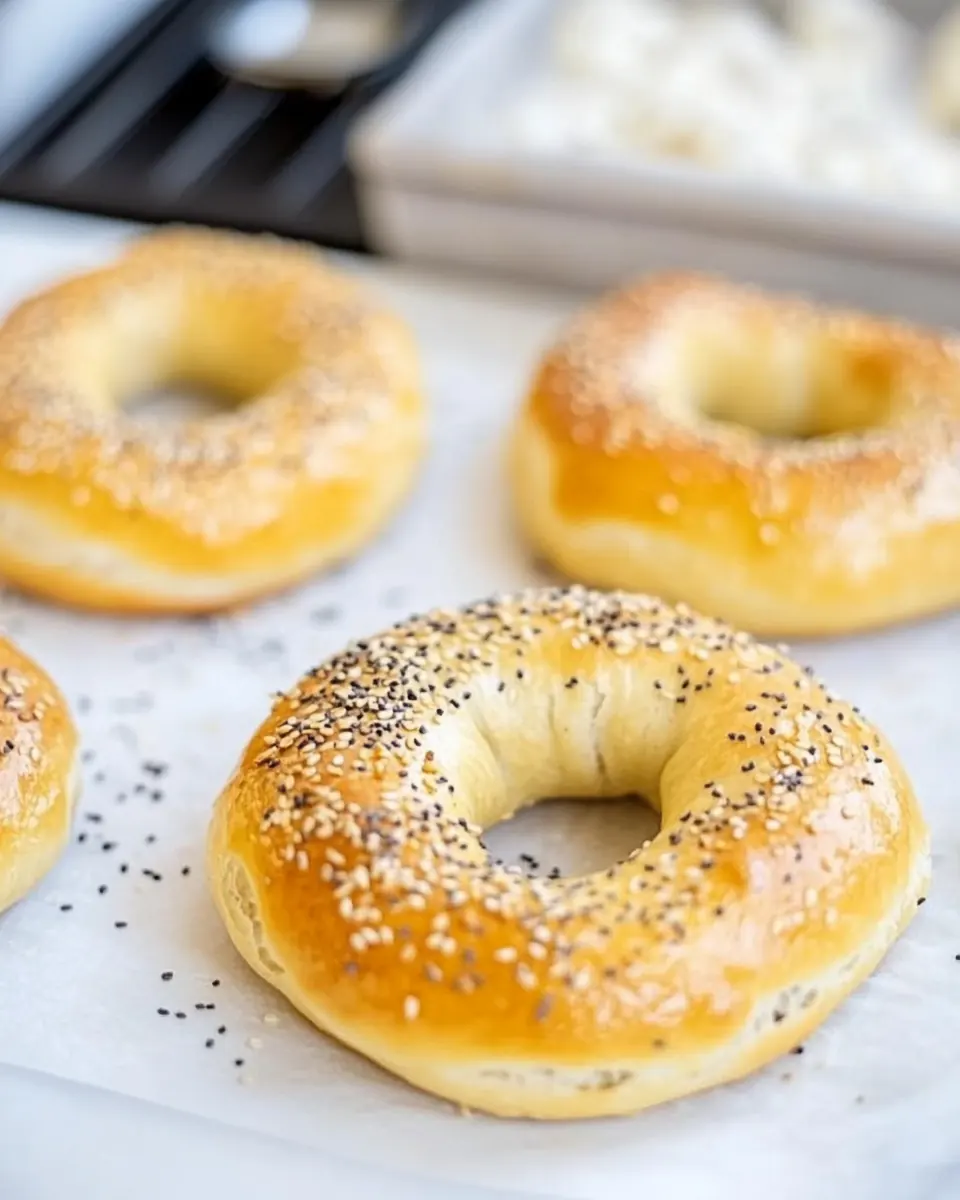
Place the shaped bagels onto parchment paper and brush with the whisked egg. Sprinkle the toppings of choice.: Brushing with the whisked egg will create a glossy sheen and help the sesame seeds and poppy seeds adhere. The smell of egg on hot dough is subtle but it encourages golden browning. When sprinkling seeds, do so from low height to ensure even coverage and to prevent scattering. One mistake is overbrushing, which can cause pooled egg to create darker spots; use a light, even stroke to achieve uniform color.
Place the bagels in the air fryer basket and air fry for 10 minutes or until golden brown.: In the air fryer , you will hear a faint rushing sound as hot air circulates; the bagels should come out with an even crisp exterior and a warm, soft interior. The tops will become deep golden and slightly firm to the touch. Air frying shortens the time to a crisp crust, but watch for rapid color change, as one minute can make a big difference. A common pitfall is overcrowding the basket, which interferes with airflow and yields uneven results. Give each bagel space so air can circulate freely.
Place the bagels on a baking sheet and bake for 18-20 minutes or until golden brown.: In the oven, the bagels will radiate gentle warmth and release a toasty aroma as the crust forms. You want a rich golden color and a hollow sound when you tap the bottom, which signals doneness. The oven provides a more gradual, even bake compared to the air fryer , giving slightly different crust texture. A common mistake is relying on time alone; instead, watch for color and feel to judge readiness. If they brown too quickly, lower the temperature slightly and extend the time so the interior fully cooks without burning the exterior.