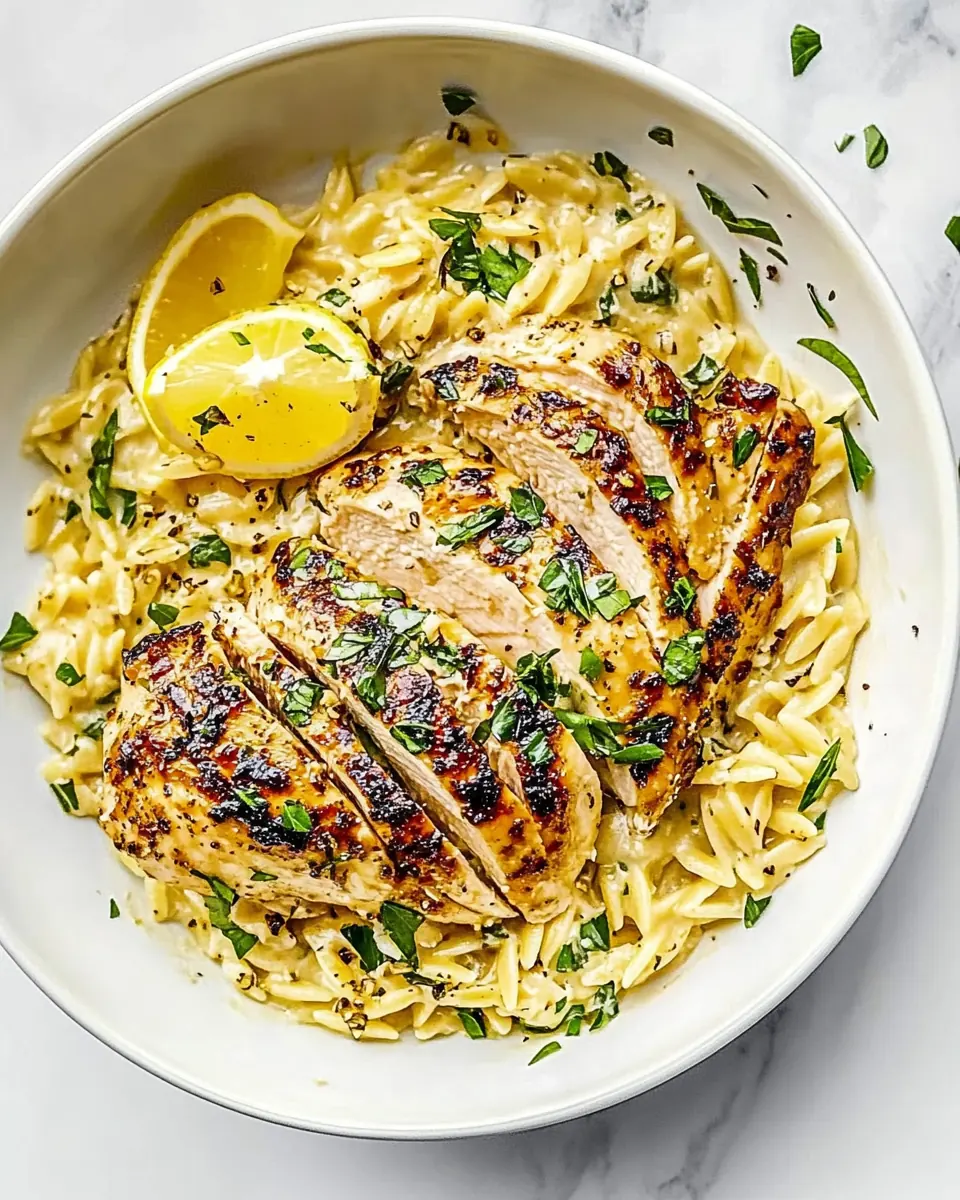
Heat 1 tablespoon butter and the oil in a large skillet over moderate heat. Season both sides of the chicken breasts with 1/2 teaspoon salt and 1/4 teaspoon pepper and add to the pan. Cook until golden, about 5 minutes. Flip the chicken and add the broth, dill, and 1/4 teaspoon salt. Bring to a simmer and cook partially covered for 4-5 minutes or until the chicken is cooked through. Transfer the chicken to a plate and cover to keep warm. Set the skillet aside with the broth.: The moment the butter foams and the oil glistens you will smell a sweet, nutty aroma, that tells you the pan is ready. A properly heated pan creates a golden crust on the chicken , sealing juices and adding deep savory notes. If the fat smokes, lower the heat immediately to avoid bitterness. Common mistake to avoid, do not overcrowd the pan because that will steam the chicken instead of browning it, losing flavor and texture.
Meanwhile, in a large pot of boiling, salted water, cook the orzo for 8 minutes. Add the asparagus and continue cooking until the orzo is tender and the asparagus is bright green, about 4 minutes longer. Drain, return to the pot, season with 1/2 teaspoon kosher salt and 1/4 teaspoon pepper, and stir in the butter until melted. Cover to keep warm and set aside.: You will feel the sizzle when the chicken hits the surface, and within a minute the edges will begin to turn opaque. This initial contact is where the Maillard reaction starts, producing fragrant, browned bits that deepen the dish. Press lightly to ensure even contact. Avoid flipping too soon, or the crust will not form and the chicken will stick.
In a medium bowl, whisk the eggs with the lemon juice and 1/2 teaspoon pepper until frothy. Bring the reserved chicken broth mixture back to a simmer, then set the heat to the lowest possible setting and whisk in the eggs in a thin stream. Cook over super low heat, whisking continuously for about 3 minutes and the sauce thickens. Don’t let the sauce come to a simmer or it could curdle. Taste for seasoning and adjust salt and pepper as needed.: Look for an even golden brown on the underside and a firm but springy feel when you press the chicken . The sizzling sound should be steady, not aggressive popping. Browning adds both texture and complex, savory flavor, which will infuse the reserved broth. A common pitfall is using too low heat so the chicken stews rather than browns, resulting in a pale color and weaker flavor.
Slice the chicken breasts and stir any chicken drippings into the sauce. Divide the orzo and asparagus between plates, top with the chicken, and ladle with the sauce. Sprinkle with lemon zest and fresh dill if desired.: Once flipped, pour in the warm broth and toss in the dill, which will release its aroma into the simmer. The sound will change as the liquid meets the hot pan, shifting to a gentle simmer. This step allows the chicken to finish cooking while imparting flavor to the liquid, which later becomes the sauce. Avoid boiling vigorously here, because aggressive heat can toughen the meat and evaporate delicate aromatics.
Bring to a simmer and cook partially covered for 4 to 5 minutes or until the chicken is cooked through: As it simmers, you will see the broth slightly thicken and the chicken fibers relax, indicating doneness. The internal temperature should reach a safe range and the juices should run clear. Keeping the pan partially covered keeps the top from drying while allowing steam to escape. A frequent error is overcooking; pull the chicken a touch early because it will rest and continue to carry heat.
Transfer the chicken to a plate and cover to keep warm: Resting the chicken under a loose tent of foil lets juices redistribute, ensuring tender slices. The residual heat finishes the internal cook without drying the meat. Covering also preserves the pan juices for the sauce. Do not stack the pieces too tightly or they will steam and lose crispness.
Set the skillet aside with the broth: Reserving the broth in the skillet captures all those seared bits and infused herbs. This flavored liquid is the foundation of the final sauce, so keep it intact. If you pour it off and scrape the pan, you will be losing concentrated flavor. A mistake to avoid is discarding the fond remaining in the pan, because that is where most of the depth lives.
Meanwhile, in a large pot of boiling, salted water, cook the orzo for 8 minutes: The moment the orzo hits the rolling water you will see it tumble and swell; eight minutes should bring it to tender yet slightly toothsome. Properly salted water seasons pasta all the way through. Stir occasionally to prevent clumping. A common misstep is under salting the water, which leaves the orzo bland even after saucing.
Add the asparagus and continue cooking until the orzo is tender and the asparagus is bright green, about 4 minutes longer: The color transformation of the asparagus is immediate, turning vivid green when the chlorophyll is released, and the stalks will offer a pleasant snap. Cooking them with the orzo keeps textures harmonious. Avoid overcooking because limp, dull asparagus will undermine the dish.
Drain, return to the pot, season with 1/2 teaspoon kosher salt and 1/4 teaspoon pepper, and stir in the butter until melted: The orzo should glisten when you stir in the butter, and the aroma will become slightly nutty. This finishing butter binds starches and helps the grains feel pillowy. Taste and adjust seasoning before plating. A mistake to watch for is adding cold butter which will not integrate smoothly and can chill the pasta.
Cover to keep warm and set aside: Holding the orzo covered preserves heat and prevents a crust from forming on the surface. The retained steam also keeps the kernels supple. Be mindful not to let it sit too long, which can make the texture gluey.
In a medium bowl, whisk the eggs with the lemon juice and 1/2 teaspoon pepper until frothy: The mixture will lighten and become slightly aerated, and you will smell the lemon lift the mixture. This emulsion is crucial, because it is what gives the sauce its silky texture and bright acidity. Whisk vigorously to combine. A common error is not whisking enough, which makes tempering uneven and increases the risk of curdling.
Bring the reserved chicken broth mixture back to a simmer, then set the heat to the lowest possible setting and whisk in the eggs in a thin stream: You should see only gentle movement in the surface of the broth, not a boil. Adding the egg mixture slowly while whisking ensures a smooth, custardy sauce that clings to the orzo and chicken . If the heat is too high the eggs will scramble, giving a grainy texture. The goal is glossy, not curdled.
Cook over super low heat, whisking continuously for about 3 minutes and the sauce thickens: As you whisk, the sauce will change from translucent to creamy, and you will smell the lemon and broth meld. Continuous motion keeps the texture even and prevents hot spots. If you stop whisking, you risk uneven thickening or curdling, so keep a steady rhythm. If the sauce threatens to simmer, lift the pan off the heat briefly and continue whisking.
Don’t let the sauce come to a simmer or it could curdle: The surface should remain smooth, with tiny ripples from your whisk, never boiling. Gentle warmth encourages the eggs to thicken gradually into a velvety emulsion. If curdling starts, remove from heat and whisk vigorously, but note significant curdling is hard to reverse.
Taste for seasoning and adjust salt and pepper as needed: Always taste the sauce before combining with the orzo . You want a balance of salt, lemon, and pepper, with no single element overpowering the others. Small adjustments here make the final dish sing. Over salting at the end is hard to fix, so add small amounts and taste between additions.
Slice the chicken breasts and stir any chicken drippings into the sauce: Slicing releases a little extra juiciness and the thin pieces absorb sauce beautifully. Stirring any juices into the sauce integrates those caramelized flavors, creating cohesion across the plate. Slice against the grain for the most tender bite. A common mistake is slicing too early while the meat is cold, which can make the slices fall apart.
Divide the orzo and asparagus between plates, top with the chicken, and ladle with the sauce: When plated, the contrast of bright asparagus , tender orzo , and glossy sauce is appealing visually and texturally. Spoon the sauce so it pools around the pasta and coats the chicken . Serve immediately because the sauce is best warm and silky; if left too long it can set and lose that luxurious mouthfeel.
Sprinkle with lemon zest and fresh dill if desired: The zest adds an aromatic lift, a tiny citrus burst on each bite, and fresh dill contributes herbaceous brightness. These final touches sharpen the flavors and create an inviting aroma. Add them at the end so they retain their vibrancy, and avoid adding too early which will diminish their fragrance.