Cook pasta in a large pot of salted water according to package directions. Drain and place in a large pot with the butter. Use tongs to coat the pasta with the butter as it melts. Set aside.: The moment you drain the pasta your kitchen fills with a toasty wheaty aroma, a comforting cue that dinner is close. When you add the cold butter pieces to the hot pasta they melt into glossy ribbons that cling to each strand, creating a protective layer so the sauce will adhere instead of sliding off. Use tongs to gently lift and tumble the pasta , watching as the butter sheens across the surface, and listen for the quiet sigh as steam rises. This technique matters because it gives each bite a silky mouthfeel and helps the sauce bind evenly. A common mistake is letting the pasta sit after draining without tossing with fat, which causes the sauce to pool at the bottom and leaves some noodles under seasoned. If the pasta seems cool, warm the pot briefly over low heat while tossing, but avoid prolonged heat which will overcook delicate Angel Hair pasta .
Heat olive oil in a large nonstick skillet. Add shrimp and asparagus and cook for 2 minutes. Add garlic and continue to cook until shrimp are opaque. Add red pepper flakes and season with salt and pepper. Set aside.: As the olive oil warms it releases a fruity aroma, and when you lay the shrimp in the skillet you should hear a delicate sizzle, a sound that promises browning and flavor. The asparagus responds with a bright green hiss and faint caramelized notes at the tips. After about two minutes, adding the minced garlic unleashes a warm, heady scent that should not be allowed to scorch, because burnt garlic tastes bitter and can spoil the dish. Cook until the shrimp lose translucency and are fully opaque, checking by slicing a thicker piece if you are unsure; they should feel firm but springy. Finish with the crushed red pepper flakes for a gentle lift and season with salt and cracked black pepper to taste. The reason for cooking the shrimp and asparagus briefly is to preserve their texture and allow them to finish integrating with the warm sauce rather than becoming limp. A frequent error is crowding the pan, which causes steaming instead of searing; give the ingredients room so they color nicely.
Whisk together heavy cream and egg yolks in a medium saucepan. Heat over medium heat just until really warm, do NOT let it boil. Then stir in lemon juice and zest and Parmesan cheese. Remove from heat. Season to taste with salt and pepper.: As you whisk the heavy cream with the egg yolks , the mixture takes on a silky, pale consistency, and when gently warmed you begin to perceive a sweet dairy scent. Keep the heat moderate so the custard warms through without curdling; you should see wisps of steam but no bubbling. When you fold in the freshly grated Parmesan cheese it melts into creamy pockets, adding a savory aroma that rounds the sharp citrus notes. Stirring in the freshly squeezed lemon juice and zest brightens the mixture instantly, and the sauce will glimmer slightly as you lift the spoon. This gentle warming is crucial because it allows the egg yolks to thicken the sauce without scrambling, yielding a luxurious texture. A common pitfall is overheating which leads to graininess or broken sauce; if you see tiny cooked yolk bits, strain the sauce and restart with lower heat.
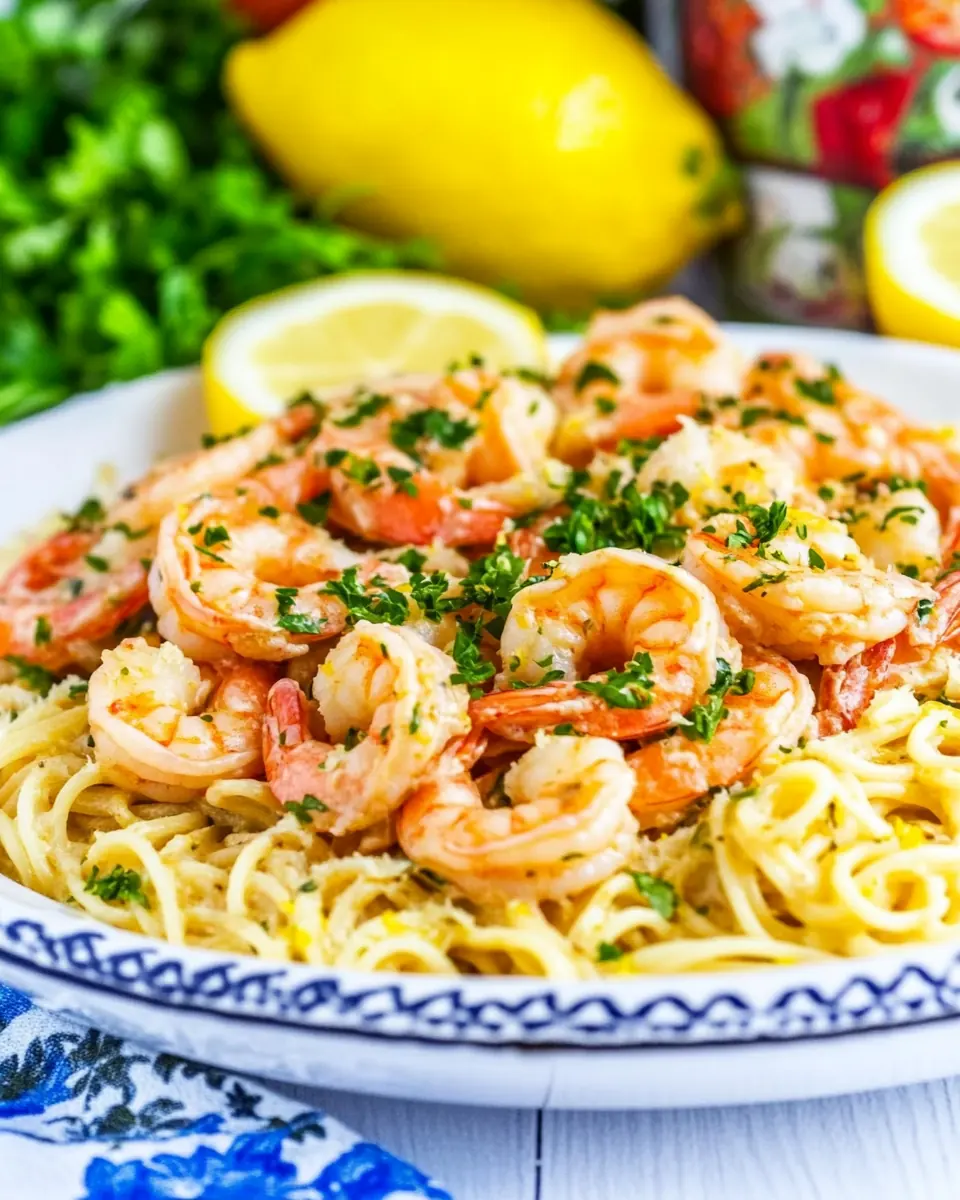
Pour lemon sauce over pasta and mix in. Add shrimp/asparagus mixture. Sprinkle parsley on top and serve.: Pouring the warm lemony custard over the glossy, buttered pasta creates an immediate visual transformation, as the thin strands pick up the sauce and each forkful promises a creamy, citrus kissed bite. As you fold the shrimp and asparagus into the bowl, you will notice steam rising and the aromas mingling, with the briny sweetness of the shrimp playing against the fresh brightness of the lemon . Scatter the chopped parsley across the top for a herbaceous pop and an appealing contrast of color. Serve straight away so the textures remain distinct; prolonged sitting can soften the asparagus and change the mouthfeel of the pasta . One common mistake is not tasting and adjusting seasoning at the end, especially because the Parmesan cheese and salted cooking water both influence final salt levels. Plate with confidence and enjoy the layered flavors immediately.