To make the dressing, combine the olive oil, lemon juice, garlic, salt, and pepper in a small bowl or jar. Whisk until well combined.: Bright citrus and rich olive oil should smell fresh and slightly fruity as you whisk them together, and the sharp bite of minced garlic will add a savory undertone that perfumes the mixture. Vigorously whisking until it emulsifies gives the dressing body so it clings to the quinoa and vegetables rather than pooling at the bottom, and you should see a slight sheen and uniform texture when it is ready. If you use a jar, you will hear a gentle clinking as you shake everything, which means the ingredients are marrying. Why this matters: an emulsified dressing distributes flavor evenly, preventing dry pockets in the salad. Troubleshooting tip: if the dressing separates, whisk or shake again vigorously, and add a tiny pinch of salt which can help stabilize the emulsion. Avoid adding the dressing to piping hot quinoa , because heat can make the herbs wilt and change the texture.
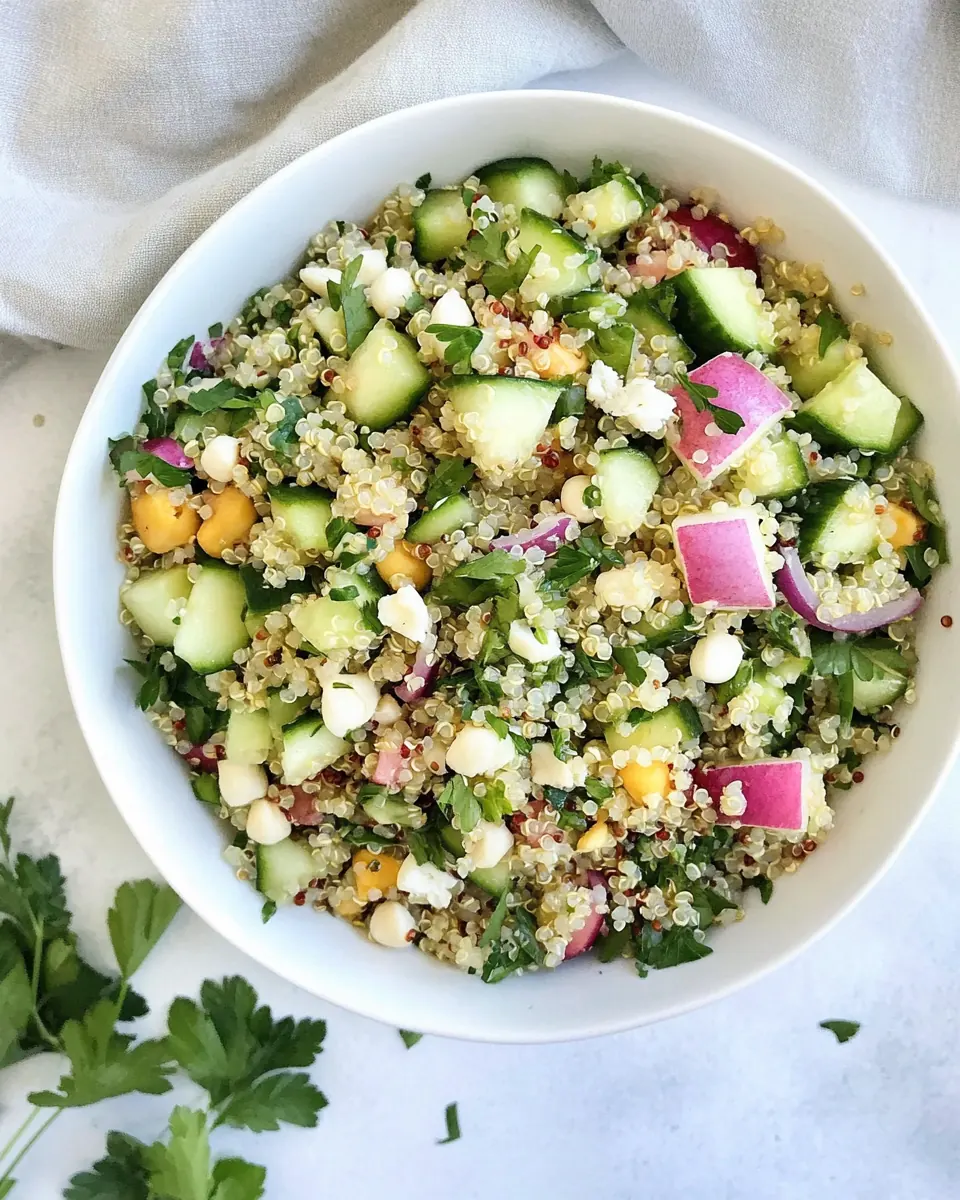
Place the cooked quinoa in a large bowl. Add the chickpeas, cucumber, red onion, parsley, mint, dill, and feta cheese. Drizzle in the lemon dressing and stir until combined. Season with salt and pepper, to taste. Serve.: The quinoa should be fluffy and separate, not gluey, and you can test this with your fingers or a fork, noting a light, slightly nutty aroma. As you transfer it into a big bowl you will hear a soft, dry rustle of grains, and that texture is the foundation for the salad. It is important to use quinoa that has cooled to room temperature or chilled so it does not steam the herbs or soften the cucumber . Why this matters: warm grains can make the salad limp and reduce the contrast between ingredients. Troubleshooting tip: if your quinoa feels clumpy, fluff it with a fork and spread it on a rimmed tray to cool quickly before assembling.
Note - follow the package instructions to cook the quinoa.: As you spoon in the ingredients, notice the color and texture contrast, the pale roundness of the chickpeas , the bright green flecks of herbs, and the creamy white of the feta cheese . The chopped cucumber will give crisp, juicy snaps when you bite, while thinly sliced red onion provides a clean, sharp counterpoint. Toss gently so the feta cheese breaks into small pieces and distributes without turning to paste. Why this matters: careful mixing preserves the integrity of each component for a more interesting mouthfeel. Troubleshooting tip: avoid over mixing which can mangle the feta cheese and bruise the herbs, making the salad look muddy rather than bright.
Drizzle in the lemon dressing and stir until combined: As you pour the vinaigrette over the bowl you should hear a soft splatter and see the olive oil glisten on the surface of the grains and vegetables, creating an appetizing shine. Use a wide spoon or spatula to fold the dressing through so every grain is lightly coated, which enhances both flavor and mouthfeel. Why this matters: an even coating ensures each bite is balanced and prevents dry areas in the salad. Troubleshooting tip: if the salad seems dry after a gentle toss, add a little more dressing a teaspoon at a time, tasting as you go to avoid over dressing.
Season with salt and pepper, to taste: After the dressing brings everything together, taste a small spoonful to judge final seasoning, paying attention to the salty notes from the feta cheese . Add kosher salt sparingly, because the feta cheese may already contribute enough salinity, and finish with a few twists of freshly ground black pepper for warmth. Why this matters: correct seasoning lifts flavors and gives the salad clarity instead of flatness. Troubleshooting tip: if you over salt, add a bit more rinsed chickpeas or an extra squeeze of lemon juice to rebalance the bowl gently.
Serve: When plating, you will notice the salad retains a bright sheen from the dressing and a mosaic of colors from herbs, cucumber, and feta cheese . Serve immediately if you prefer maximum crunch from the cucumber , or allow it to rest for 10 to 20 minutes for flavors to meld and the texture to soften slightly. Why this matters: resting allows the dressing to penetrate and marry the ingredients, producing a more cohesive taste profile. Troubleshooting tip: if you plan to store leftovers, keep them chilled in an airtight container and know the texture of the cucumber will mellow over time, so if you plan to enjoy it over several days, consider adding freshly chopped cucumber just before serving to preserve crunch.
Note - follow the package instructions to cook the quinoa: Properly cooked quinoa should be tender with a tiny white ring around each grain, and you often hear a whispery pop when it finishes cooking, indicating the germ has separated. Rinsing prior to cooking removes bitterness, and following the package water ratio prevents gummy results. Why this matters: the texture of the quinoa underpins the entire salad, so precise cooking is essential for an ideal chew. Troubleshooting tip: if your quinoa is too wet or sticky after cooking, drain any excess water and spread it on a baking sheet to cool slightly and dry out before assembling.