Preheat the oven to 350 degrees Fahrenheit. Thoroughly grease a 12 cup bundt pan.: You will feel the warmth building in the kitchen as the oven approaches 350 degrees Fahrenheit , and a faint metallic hum signals it has reached temperature. Greasing the bundt pan thoroughly prevents sticking and ensures the cake releases cleanly, creating a smooth exterior. I use a pastry brush or paper towel to get into the pan curves so no batter clings, and I like to dust a touch of flour after greasing for extra insurance. A common mistake is skimping on grease, which leads to tearing when unmolding; if parts of the pan remain ungreased you will see batter residue and an uneven surface. Also, letting the oven fully preheat is crucial because baking in a cooler oven can give a gummy interior and uneven rise.
Whisk together the flour, cocoa, baking powder, and salt.: As you whisk, you should notice the dry mixture take on a uniform color, with the deep brown of the cocoa blending into the pale flour. This step prevents lumps and distributes the leavening, which is why a thorough whisk matters. The powdery aroma of the cocoa will become more pronounced, and you can sift if you see clumps. One pitfall is adding the dry ingredients directly to wet without mixing them first, which can create pockets of baking powder or concentrated cocoa that discolor the crumb or cause uneven rise. Properly combined dry ingredients lead to a consistent texture throughout the cake.
In a separate bowl, cream together the sugar and butter with an electric mixer until a thick paste forms. Beat in each egg, one at a time. When the mixture looks smooth, beat in the vanilla.: At the outset the butter and sugar will look grainy, then transform into a pale, fluffy cream as air is incorporated; this is the sound of a tender crumb forming. Adding the eggs one at a time allows the batter to emulsify and prevents separation, producing a glossy texture. After each addition, scrape the bowl so everything mixes evenly; when it looks smooth and slightly shiny, add the vanilla and enjoy the warm, fragrant note it brings. A common error is adding eggs too quickly which can break the emulsion and leave a curdled looking batter; if that happens, slow down and beat until smooth before continuing.
With the mixer speed on low, add 1/3 of the flour mixture, mixing until combined. Add half of the milk and mix until combined. Repeat until all of the flour and milk has been added.: You will see the batter thicken with each addition, moving from glossy to a more substantial ribbon that holds shape for a beat before settling back. Using low speed prevents overworking the gluten in the flour , which keeps the cake tender rather than tough. Alternating dry and wet ingredients helps them incorporate evenly, and the batter should be smooth with no streaks. One mistake is mixing vigorously after all ingredients are added, which develops gluten and yields a denser cake. Stop mixing as soon as the batter is homogeneous for the lightest texture.
Gently fold in the cranberries and dark chocolate pieces. Transfer mixture to prepared bundt pan. Bake for 65 to 70 minutes, or until a thin knife inserted into the center comes out clean.: Folding should be a gentle, deliberate motion so you can preserve the air you created, and you will see flecks of red cranberry and pockets of dark chocolate distributed throughout the batter. The batter should flow but still hold some body as you pour it into the greased pan; tap the pan lightly on the counter to settle the batter and release any trapped air bubbles. As the cake bakes you will smell deep chocolate and a faint fruit aroma; the surface should become matte and set, and a thin knife inserted in the center should come out with minimal crumbs. One common mistake is opening the oven frequently, which can cause the center to sink, so avoid peeking for the first 45 minutes unless you are checking through the oven light.
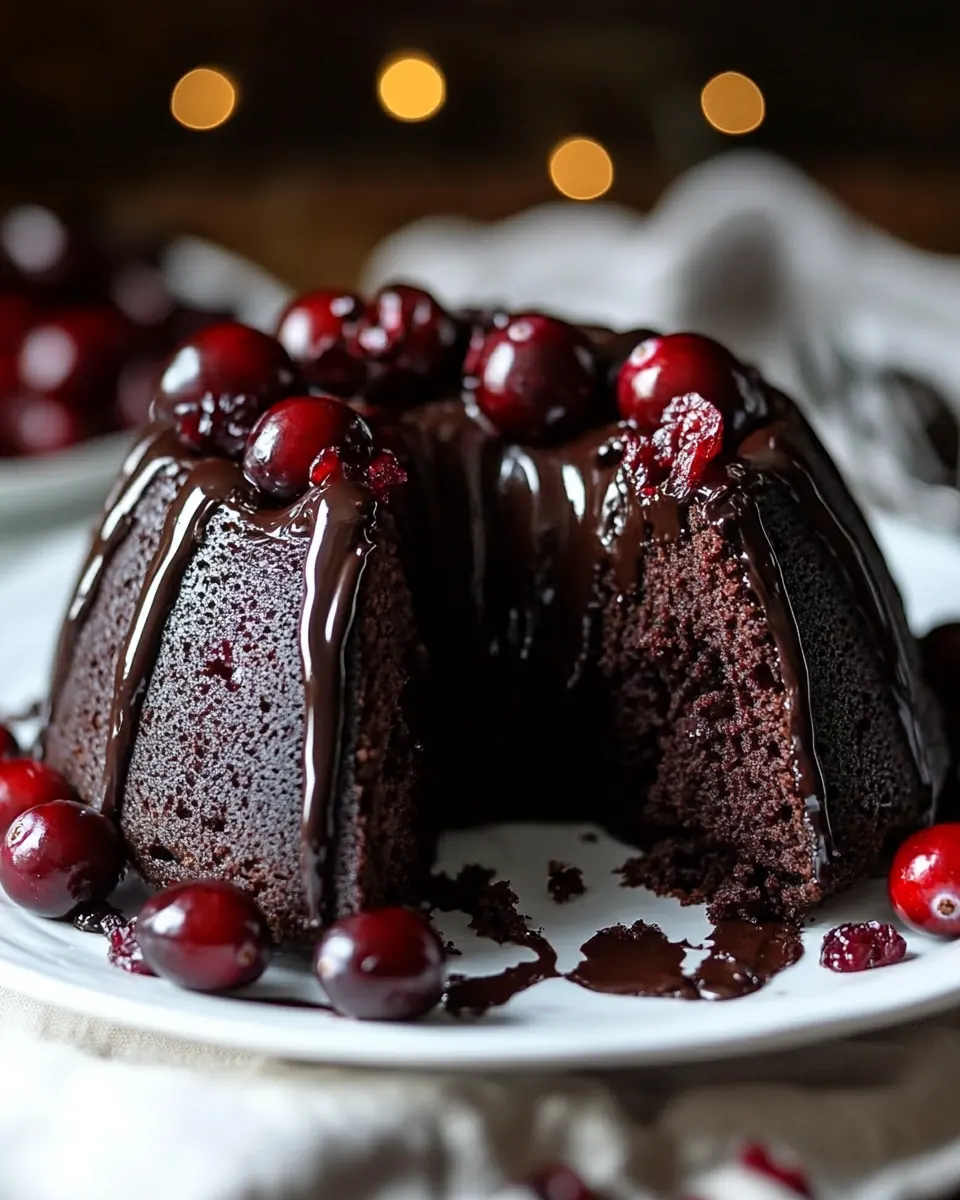
Cool in pan for 10 minutes. Carefully turn out of pan onto wire rack and cool completely. Serve with Chocolate Ganache and Cranberry Sauce.: After pulling from the oven the cake will release a warm, chocolate aroma and the edges will pull slightly from the pan. Cooling for about 10 minutes lets the cake stabilize so it unmolds cleanly; if you try to invert too soon it may crack. Once turned out, the surface will feel set and slightly springy to the touch; let it reach room temperature on a wire rack to finish setting the crumb. Serving warm is lovely, but fully cooled slices hold the ganache and sauce better. A frequent error is leaving the cake in the pan to cool completely, which can trap steam and make the exterior soggy.
Set a heatproof bowl over a small saucepan of simmering water.: This double boiler setup creates gentle, even heat for melting, and you will see a little steam rise as the water simmers. It prevents the chocolate from scorching, which can happen quickly with direct heat; a smooth, glossy ganache depends on low, indirect warmth. Keep the water at a low simmer rather than a rolling boil to avoid overheating the bowl, and make sure the bowl does not touch the water. A mistake is letting water splash into the bowl, which can seize the chocolate and ruin the texture.
Melt the 2 tablespoons of butter, 1/2 cup heavy cream, and 3 ounces dark chocolate in the bowl, stirring often until mixture is smooth. Remove from heat.: As the ingredients melt together you will notice the ganache turn silky and shiny, with a rich chocolate aroma that fills the kitchen. Stirring frequently ensures even melting and a uniform emulsion; once combined, remove from heat so it does not become too thin. The butter contributes sheen and mouthfeel, while the heavy cream softens the chocolate for a glossy pourable glaze. Overheating can make ganache thin and oily, so take it off the heat as soon as it is smooth.
Add all the ingredients to a medium saucepan. Cook over medium heat until cranberries pop and mixture is thick.: For the sauce you will hear the cranberries begin to pop, a bright popping rhythm that signals they are breaking down; the mixture will bubble and thicken into a jewel toned compote. Stir often to prevent sticking, and scrape the pan sides so nothing burns. The scent of citrus and warm spice will develop as the sauce concentrates. A common mistake is cooking too long at high heat, which can burn the fruit and turn the sauce bitter, so reduce heat if it begins to darken excessively.