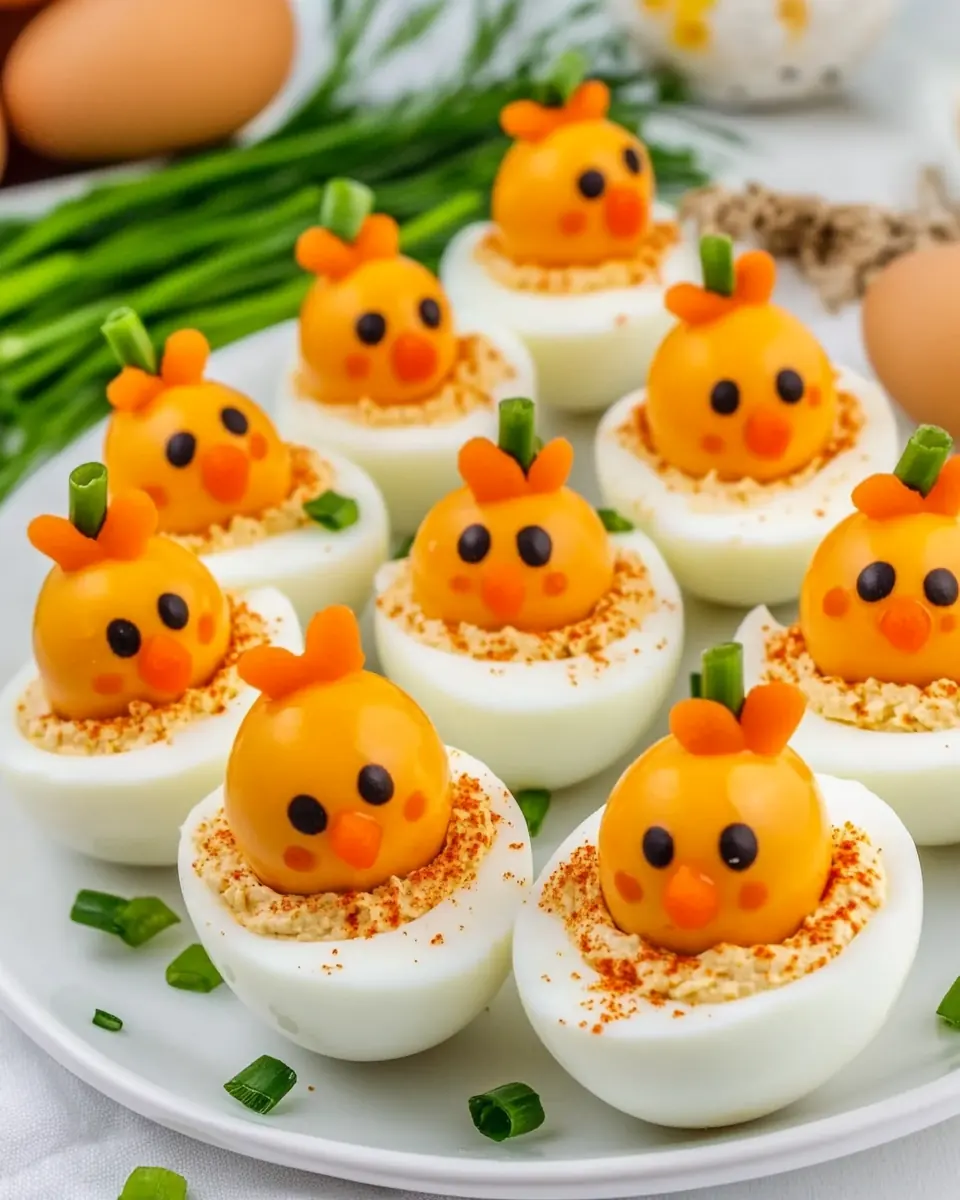
Peel your hard-boiled eggs carefully so that the egg whites are nice and smooth.: The moment you start peeling, you notice the tactile difference between a pitted white and a smooth one, the ideal being glossy and intact. Gentle tapping all over the shell and rolling it between your hands can loosen the membrane, and peeling under a trickle of cool water helps the shell slip away without tearing the white. A common issue is ragged edges from rushing, which makes it harder to hold the filling and reduces the visual appeal, so take your time to preserve a clean silhouette. If a white tears, set it aside for slicing into a salad rather than forcing it into the presentation platter. The reason this matters is that a smooth white provides a stable bowl for the creamy filling and makes the final plate feel polished.
Cut a small sliver off the bottom of the egg to make a flat edge for the egg to stand on its own. Cut 1/3 of the egg off the top to make a "hat" for the chick's head.: When you cut the tiny flat on the bottom, you create a practical base that prevents wobbling on the serving plate, which is important when arranging many pieces. The action of slicing off a third of the top yields a little hat that will later sit like a cap over the piped filling. Use a sharp paring knife and steady pressure so the egg white does not crumble; a dull blade causes jagged cuts and can ruin the aesthetic. If the cut slips, place the egg in the refrigerator to firm it up before trying again, as a slightly chilled white is easier to slice cleanly. The visual payoff is worth the care because the hat contrasts with the bright filling and completes the chick silhouette.
Scoop out the yolks and place them in a bowl with the Dijon mustard, mayonnaise, garlic powder, smoked paprika, chives, salt, and pepper. Use a fork to mash everything together, and stir until the mix is smooth.: As you remove the yolks, you will feel their crumbly texture, which transforms under pressure into a silky paste. The aroma of smoked paprika and the sharpness of Dijon mustard begin to show as you mash, releasing fragrant oils that mingle with the creamy tang of the mayonnaise . A fork works fine for rustic textures, but if you want ultra smooth filling, use a small whisk or a hand blender for a few seconds. A frequent misstep is under seasoning, so taste and tweak the salt and pepper as you go. If the mixture feels dry, add a tad more mayonnaise to reach a pipeable consistency. The why here is clear: a smooth, balanced filling holds its shape and tastes bright against the neutral white.
Fill a piping bag with the egg yolk mixture (or use a plastic storage bag with one corner snipped off).: When you load the piping bag, you will feel the weight of the filling and see it settle into the tip, ready to form neat swirls. The tactile control makes the difference between messy globs and tidy faces. If you do not have a piping bag, a sturdy storage bag with a small corner cut works surprisingly well, though you will have to steady the pressure with both hands for even results. A common mistake is cutting too large an opening, which creates oversized dollops that can overwhelm the white; start small and widen if needed. This step matters because piping yields consistent height and shape, giving each chick a uniform charm on the platter.
Arrange the egg bottoms on a serving plate. Pipe the yolk mixture into the egg hollows. Add three or so layers on top to make a "face" for the chick.: As you pipe, listen for the gentle squeeze and watch the filling form soft peaks, building a small mound that looks almost like cream. Layering the filling creates dimension and a little raised 'face' that the hat will later perch upon. If your piping is uneven, spin the plate slowly as you work to maintain consistent motion and pressure. A typical error is overfilling, which causes the hat not to sit flush, so leave a little room at the top for the cap. The tactile feedback and visual rhythm of piping are satisfying, and the layered filling gives the chick a lovable profile.
Use a sharp knife to cut tiny triangle beaks and L-shaped legs out of the carrot.: When carving the carrot, the bright orange contrasts beautifully with the pale filling, and using a crisp knife produces clean geometric shapes that are instantly recognizable as beaks and legs. The sound of the knife through the carrot is firm and satisfying, and the snapped edges should be sharp enough to hold their form when inserted. A frequent slip is cutting the pieces too thin, which makes them fragile and prone to snapping while assembling; aim for thickness that balances delicacy with durability. These little shapes add a crunchy texture that plays nicely against the creamy yolk, enhancing each bite.
Place the "hats" on top of the piped yolk on each egg. Press two peppercorns into the yolk to create the "eyes" for each chick, and then place the "beaks" below the eyes. Create two small slits at the bottom of each egg and attach the "legs" into the slits.: As you set the hat, you will feel a gentle resistance, the cap sitting snugly on the piped mound like a lid. Pressing the peppercorns in gives a satisfying tactile click and instantly anthropomorphizes the eggs into recognizable chicks. Inserting the carrot beak and legs creates a three dimensional expression, and you will notice how the combination of textures invites curiosity before the first taste. Be careful not to press too hard when embedding decorations, or the filling will squeeze out; steady, shallow inserts are best. This final assembly step is where the dish earns its charm, uniting shape, color, and texture into a playful nibble.