Easter Deviled Eggs
Easter Deviled Eggs are the kind of recipe that brings me right back to childhood kitchens and sunny spring brunches. The first time I shaped these little chicks I remember laughing at how whimsical they looked, and how the simple combination of creamy yolk filling and playful carrot beaks turned a classic egg into a centerpiece conversation starter. I still get a little giddy when I peel that first egg and see the smooth white surface ready to become a tiny edible bird.
Over the years I’ve made versions for potlucks, school celebrations, and lazy weekend breakfasts, and each time I tweak the balance between tang and cream to match the mood. For family gatherings I crank up the Dijon mustard for a brighter bite, while for kid friendly spreads I keep the filling mellow and extra silky with a touch more mayonnaise. The ritual of slicing the top to create a hat, piping the filling, and pressing in peppercorn eyes always feels like crafting, not cooking.
Recipe Snapshot
40 mins
30 mins
10 mins
Medium
150 kcal
American
Gluten-Free, Low FODMAP
Appetizers
Paring knife, Mixing bowl, Fork, Piping bag, Serving plate
The Charm of This Easter Deviled Eggs
Playful presentation
I love how Easter Deviled Eggs transform simple egg basics into something visually joyful. The technique of cutting a hat and piping the yolk mixture makes each piece feel handmade, and guests always comment on the cute presentation before they taste anything. That immediate smile is a big part of why I return to this recipe year after year.
Reliable crowd pleaser
These are the sort of appetizers that disappear first at any party. The texture contrast between smooth, whipped yolk filling and firm egg whites is universally appealing, and the flavors are mild enough to please both adults and kids. When I bring these to gatherings I know they will be eaten quickly, and that predictability is comforting.
Simple pantry ingredients
I appreciate that the ingredient list is short and mostly pantry staples. With just Dijon mustard, mayonnaise, and a few seasonings I can make something festive without a special grocery run. That low barrier to entry means I can assemble them at the last minute and still feel proud of the result.
Creative but forgiving
This recipe lets you add personal touches, yet it is forgiving if measurements are a bit off. If your filling ends up looser, chill the mixture briefly before piping, and if it is too firm a spoonful of mayonnaise smooths it out. I like recipes that encourage small experiments, because they build confidence.
Kid friendly hands on activity
Turning deviled egg assembly into an activity is one of my favorite party hacks. Kids enjoy adding the peppercorn eyes and carrot beaks, and the process becomes part of the celebration. I find that the hands on element makes everyone more invested in trying the final result.
Easter Deviled Eggs Ingredients
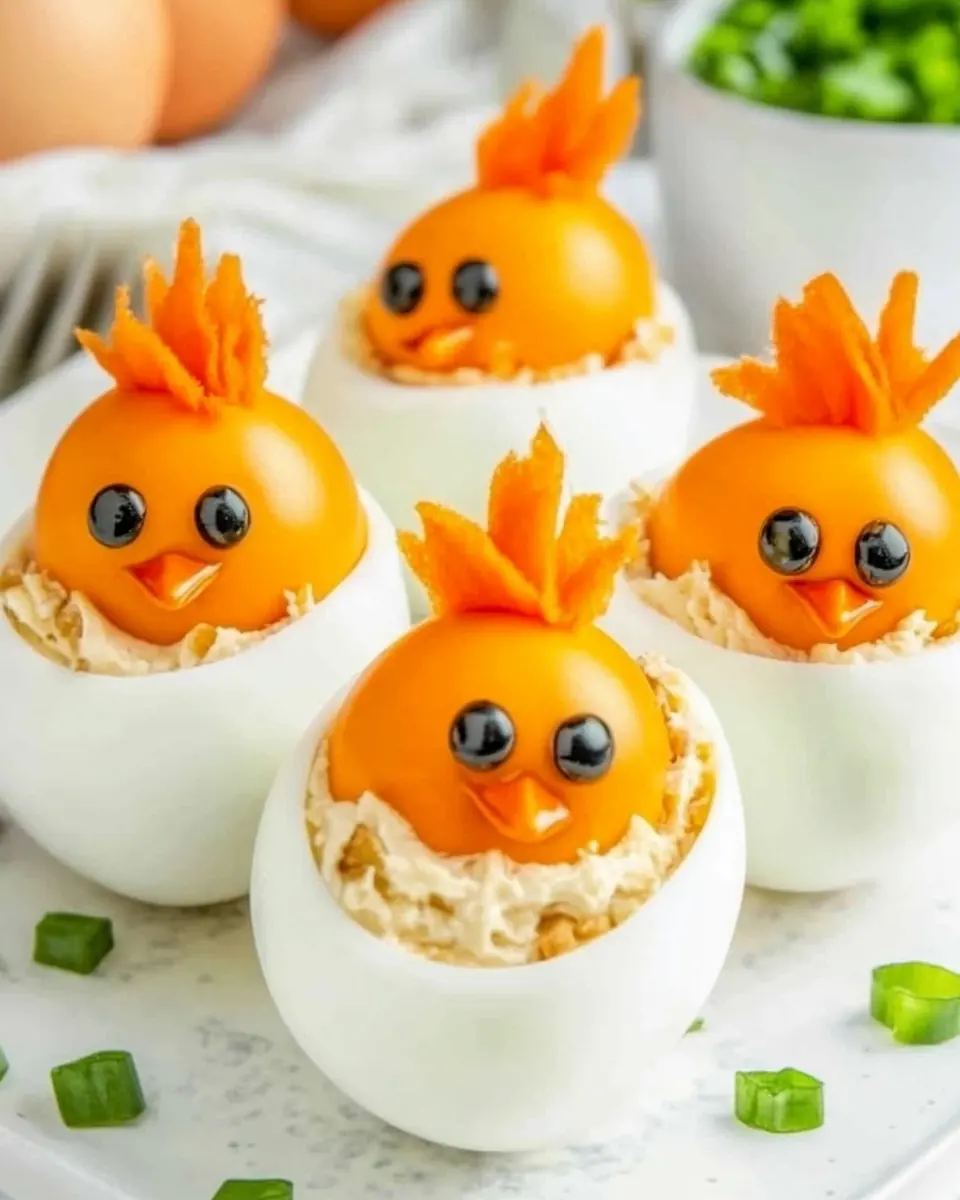
These ingredients are deliberately straightforward, each playing a clear role in flavor and texture. The foundation is the hard cooked egg white, which holds shape and frames the creamy center. The yolks deliver richness, while the Dijon mustard and garlic powder add gentle tang and savory depth. Mayonnaise is the emollient that makes the filling spreadable, and the finishing touches of smoked paprika and chives add color and aroma. Small garnishes like peppercorns and carrot turn the bites into charming chick faces.
- 12 hard-boiled eggs: Provide a firm, creamy base for the deviled filling and supply structure when halved; hard–boiled eggs contribute richness and a tender yolk texture that blends smoothly with other seasonings. Ensure eggs are cooled and peeled carefully to produce neat halves for filling and attractive presentation.
- 1/2 teaspoon Dijon mustard: Add a subtle tang and gentle heat to the yolk mixture while helping to emulsify mayo and yolk for a silky filling. Use sparingly to enhance flavor without overpowering the other delicate components.
- 1/3 cup light mayonnaise: Contribute a smooth, rich creaminess that binds the yolk and seasonings together and provides moisture to the filling; light mayonnaise keeps the mixture slightly lighter in texture. Adjust quantity to reach desired creaminess while maintaining scoopable consistency.
- 1/4 teaspoon garlic powder: Impart a mild savory onion-garlic note that deepens the overall flavor without adding moisture; garlic powder blends easily into the yolk mixture for even seasoning. Sprinkle carefully to avoid overwhelming the delicate balance of spices.
- 1 teaspoon smoked paprika: Provide a smoky, slightly sweet depth and vibrant color when mixed into or dusted atop the filling; smoked paprika enhances visual appeal and complements the creamy yolk. Use part in the filling and a pinch on top for garnish to amplify smoky nuance.
- 2 tablespoons chives finely sliced: Introduce a fresh, mild oniony flavor and bright green color when finely sliced, adding textural contrast and garnish appeal; chives lighten the richness and add a subtle herbal note. Scatter evenly over finished deviled eggs for an attractive finish.
- Salt and pepper: Season to taste to elevate all flavors and balance richness; salt enhances savory and creamy elements while pepper adds mild heat and complexity. Add incrementally and taste the yolk mixture to avoid over-salting.
- 1 carrot: Offer a decorative and whimsical option for creating carrot-based garnishes or simulating decorative features; a whole carrot can be sliced, shaped, or grated to add color and crunch as desired. Prepare and trim appropriately for safe, attractive garnish use.
- 24 peppercorns: Serve as tiny, colorful edible accents or to create faux eyes or details for a festive presentation; whole peppercorns can be pressed into garnishes for visual contrast and slight bite. Use sparingly to avoid hard pieces that could be unpleasant to bite into.
Easter Deviled Eggs Instructions
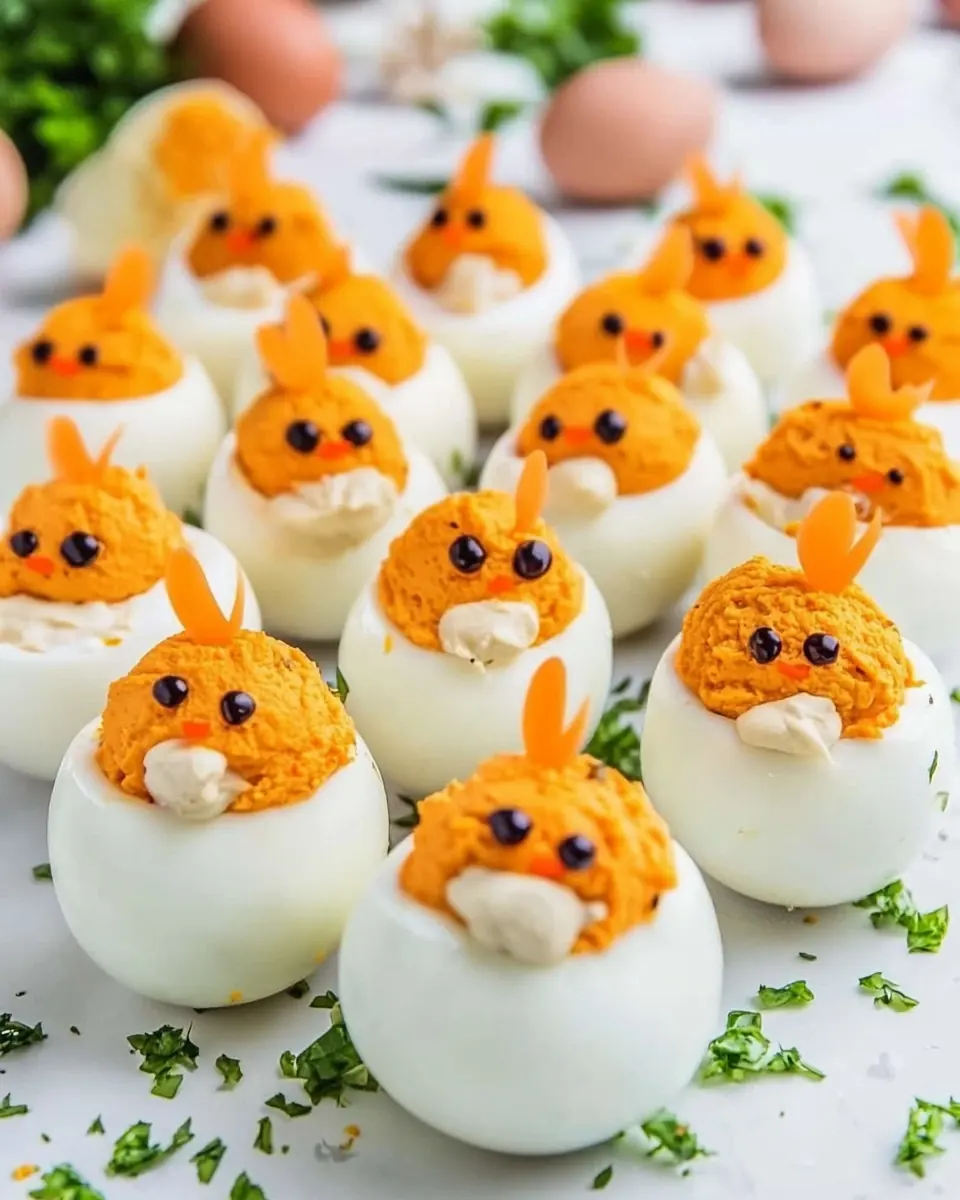
These instructions walk you through the assembly as if we are chatting side by side at the counter. I like to work methodically from peeling to piping, so the finished chicks look neat and consistent. Keep a towel and a small bowl for trimmings nearby to stay organized.
- Peel your hard-boiled eggs carefully so that the egg whites are nice and smooth.: The moment you start peeling, you notice the tactile difference between a pitted white and a smooth one, the ideal being glossy and intact. Gentle tapping all over the shell and rolling it between your hands can loosen the membrane, and peeling under a trickle of cool water helps the shell slip away without tearing the white. A common issue is ragged edges from rushing, which makes it harder to hold the filling and reduces the visual appeal, so take your time to preserve a clean silhouette. If a white tears, set it aside for slicing into a salad rather than forcing it into the presentation platter. The reason this matters is that a smooth white provides a stable bowl for the creamy filling and makes the final plate feel polished.
- Cut a small sliver off the bottom of the egg to make a flat edge for the egg to stand on its own. Cut 1/3 of the egg off the top to make a "hat" for the chick's head.: When you cut the tiny flat on the bottom, you create a practical base that prevents wobbling on the serving plate, which is important when arranging many pieces. The action of slicing off a third of the top yields a little hat that will later sit like a cap over the piped filling. Use a sharp paring knife and steady pressure so the egg white does not crumble; a dull blade causes jagged cuts and can ruin the aesthetic. If the cut slips, place the egg in the refrigerator to firm it up before trying again, as a slightly chilled white is easier to slice cleanly. The visual payoff is worth the care because the hat contrasts with the bright filling and completes the chick silhouette.
- Scoop out the yolks and place them in a bowl with the Dijon mustard, mayonnaise, garlic powder, smoked paprika, chives, salt, and pepper. Use a fork to mash everything together, and stir until the mix is smooth.: As you remove the yolks, you will feel their crumbly texture, which transforms under pressure into a silky paste. The aroma of smoked paprika and the sharpness of Dijon mustard begin to show as you mash, releasing fragrant oils that mingle with the creamy tang of the mayonnaise . A fork works fine for rustic textures, but if you want ultra smooth filling, use a small whisk or a hand blender for a few seconds. A frequent misstep is under seasoning, so taste and tweak the salt and pepper as you go. If the mixture feels dry, add a tad more mayonnaise to reach a pipeable consistency. The why here is clear: a smooth, balanced filling holds its shape and tastes bright against the neutral white.
- Fill a piping bag with the egg yolk mixture (or use a plastic storage bag with one corner snipped off).: When you load the piping bag, you will feel the weight of the filling and see it settle into the tip, ready to form neat swirls. The tactile control makes the difference between messy globs and tidy faces. If you do not have a piping bag, a sturdy storage bag with a small corner cut works surprisingly well, though you will have to steady the pressure with both hands for even results. A common mistake is cutting too large an opening, which creates oversized dollops that can overwhelm the white; start small and widen if needed. This step matters because piping yields consistent height and shape, giving each chick a uniform charm on the platter.
- Arrange the egg bottoms on a serving plate. Pipe the yolk mixture into the egg hollows. Add three or so layers on top to make a "face" for the chick.: As you pipe, listen for the gentle squeeze and watch the filling form soft peaks, building a small mound that looks almost like cream. Layering the filling creates dimension and a little raised 'face' that the hat will later perch upon. If your piping is uneven, spin the plate slowly as you work to maintain consistent motion and pressure. A typical error is overfilling, which causes the hat not to sit flush, so leave a little room at the top for the cap. The tactile feedback and visual rhythm of piping are satisfying, and the layered filling gives the chick a lovable profile.
- Use a sharp knife to cut tiny triangle beaks and L-shaped legs out of the carrot.: When carving the carrot, the bright orange contrasts beautifully with the pale filling, and using a crisp knife produces clean geometric shapes that are instantly recognizable as beaks and legs. The sound of the knife through the carrot is firm and satisfying, and the snapped edges should be sharp enough to hold their form when inserted. A frequent slip is cutting the pieces too thin, which makes them fragile and prone to snapping while assembling; aim for thickness that balances delicacy with durability. These little shapes add a crunchy texture that plays nicely against the creamy yolk, enhancing each bite.
- Place the "hats" on top of the piped yolk on each egg. Press two peppercorns into the yolk to create the "eyes" for each chick, and then place the "beaks" below the eyes. Create two small slits at the bottom of each egg and attach the "legs" into the slits.: As you set the hat, you will feel a gentle resistance, the cap sitting snugly on the piped mound like a lid. Pressing the peppercorns in gives a satisfying tactile click and instantly anthropomorphizes the eggs into recognizable chicks. Inserting the carrot beak and legs creates a three dimensional expression, and you will notice how the combination of textures invites curiosity before the first taste. Be careful not to press too hard when embedding decorations, or the filling will squeeze out; steady, shallow inserts are best. This final assembly step is where the dish earns its charm, uniting shape, color, and texture into a playful nibble.
Pro Tips and Tweaks
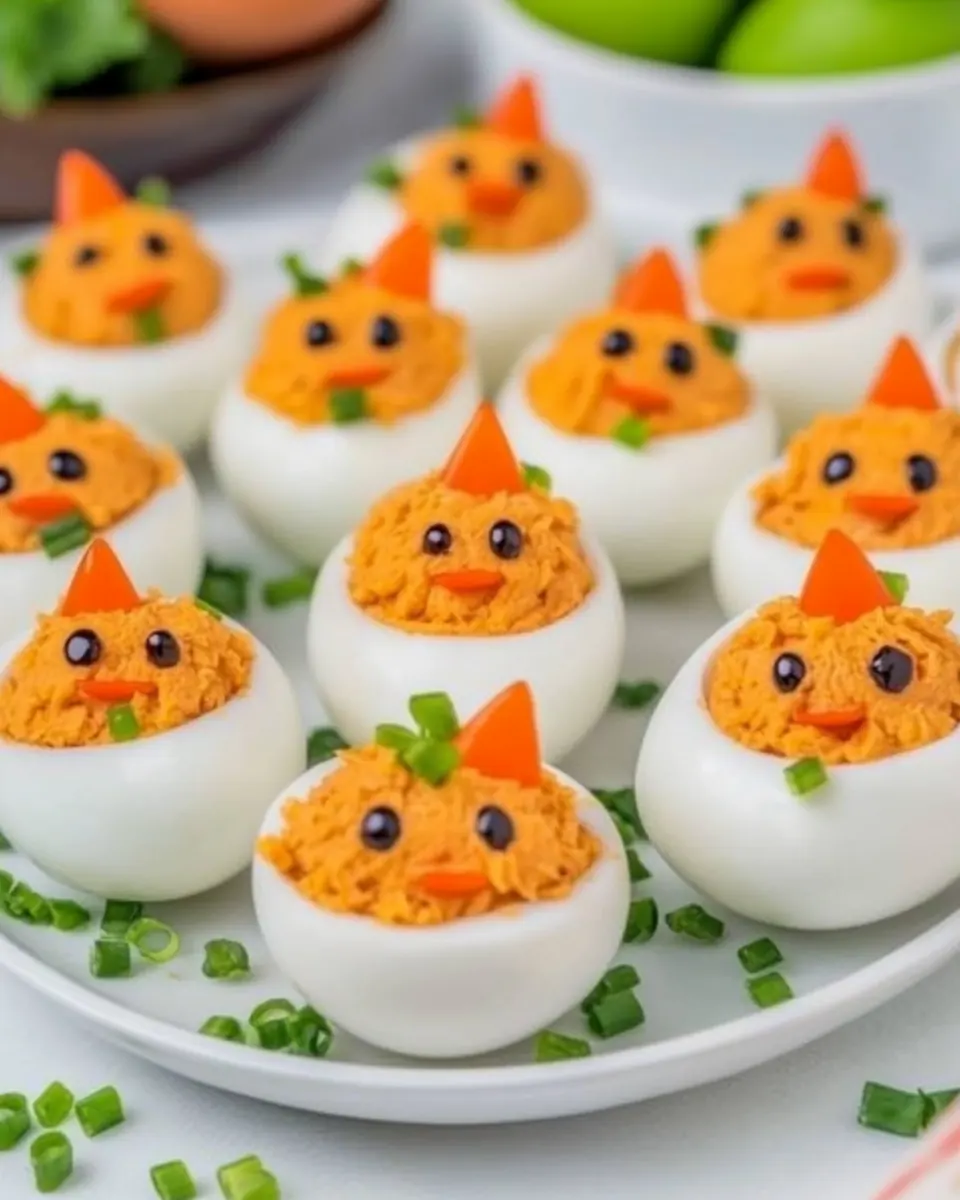
These pro tips will help you produce flawless, picture perfect Easter Deviled Eggs every time. Small adjustments to temperature, texture, and tools make a big difference in the final look and mouthfeel. Read through and choose a couple that fit your pace and the crowd you are serving.
- Peeling trick Use cold shocked eggs for cleaner peeling after boiling, because the abrupt temperature change helps separate the membrane from the white.
- Smoothing the filling For ultra silky texture, press the yolk mixture through a fine mesh sieve into the piping bag, because this removes any stubborn lumps and gives a professional finish.
- Piping control Start with a small tip or corner cut and apply steady pressure, because consistent force yields even mounds and prevents sudden bursts that create uneven peaks.
- Make ahead Store whites and filling separately for up to one day, because assembling just before serving keeps the whites from absorbing moisture and losing structure.
- Garnish timing Add delicate chives and peppercorn eyes just before serving, because prolonged refrigeration can dull fresh herb color and loosen glued decorations.
- Transport tips Use a shallow container with a paper towel base and slight dividers, because this prevents shifting and protects the delicate toppings during travel.
How to Enjoy Easter Deviled Eggs
These little chicks are perfect for festive spreads and everyday nibbling alike. They work well as part of a brunch board or as a starter during family dinners. Because they are portable and bite sized they also shine at picnics and potlucks. Below are serving ideas and storage suggestions to make your gathering effortless.
- Serve chilled Place the platter directly from the fridge to the table so the filling holds shape and flavors are bright.
- Pairings Offer crunchy vegetables on the side, because the crisp textures contrast with the creamy filling and refresh the palate.
- Occasions Ideal for spring gatherings and holiday brunches, because the playful chick presentation adds thematic charm.
- Plating Arrange the eggs in concentric circles or rows on a flat platter to showcase the hats and faces, because symmetry enhances visual appeal.
- Storage Keep assembled eggs refrigerated for up to one day, because longer storage can soften the whites and cause fillings to weep.
- Make ahead Refrigerate whites and filling separately, assemble within a few hours of serving, because last minute construction preserves texture and presentation.
- Serving size Plan on one to two halves per person as an appetizer, because they are rich and often accompany other small bites.
FAQ
Conclusion
Easter Deviled Eggs are special because they turn a humble egg into an inviting, playful bite that appeals to every age. They combine creamy, tangy yolk filling with simple, visual decorations to create an eye catching appetizer that disappears fast at gatherings. I encourage you to try them for your next spring brunch or holiday table; they are quick to assemble and always bring smiles. Enjoy the process of shaping, piping, and decorating these charming chicks, and take pleasure in how such modest ingredients can deliver so much joy.
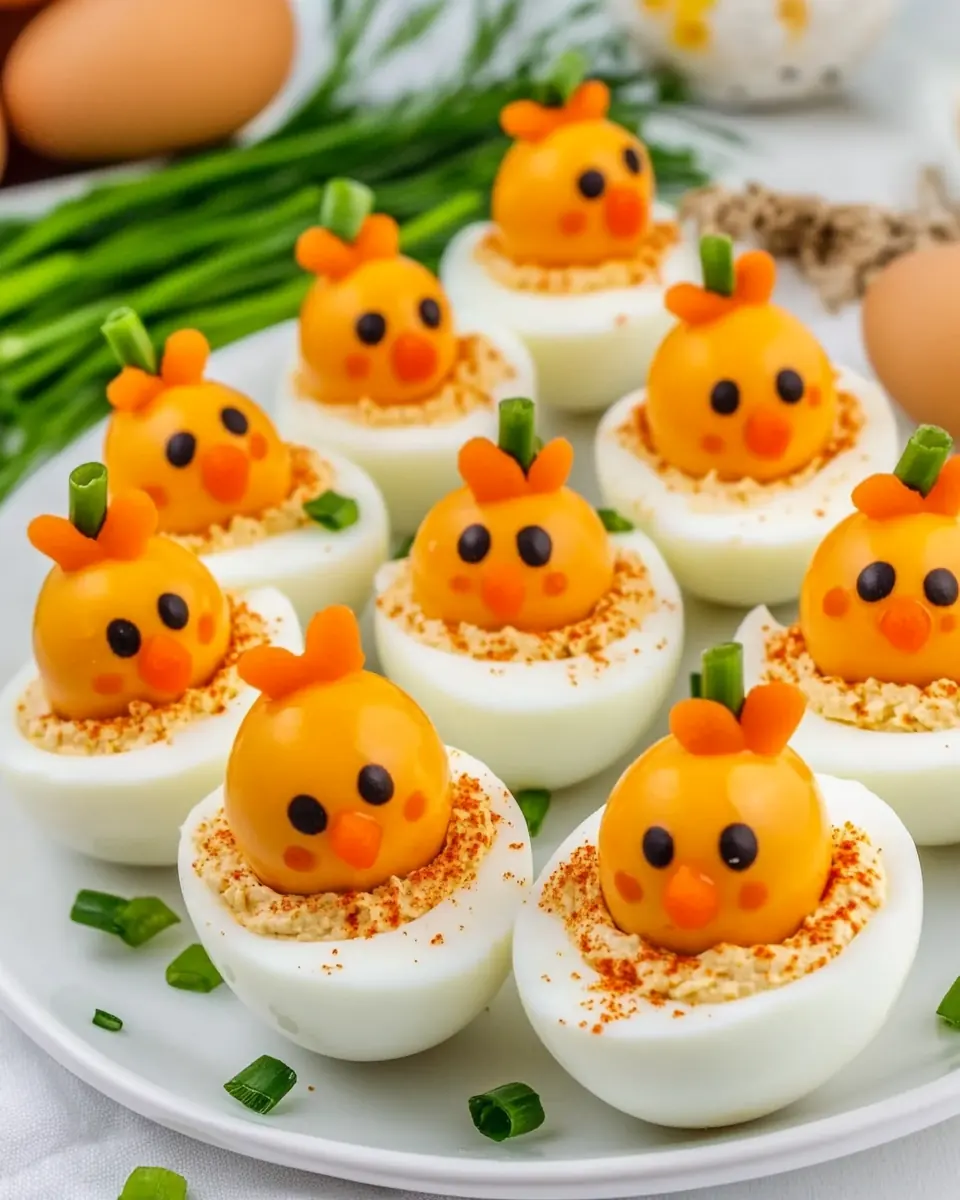
Easter Deviled Eggs
Ingredients
Equipment
Method
- Peel your hard-boiled eggs carefully so that the egg whites are nice and smooth.: The moment you start peeling, you notice the tactile difference between a pitted white and a smooth one, the ideal being glossy and intact. Gentle tapping all over the shell and rolling it between your hands can loosen the membrane, and peeling under a trickle of cool water helps the shell slip away without tearing the white. A common issue is ragged edges from rushing, which makes it harder to hold the filling and reduces the visual appeal, so take your time to preserve a clean silhouette. If a white tears, set it aside for slicing into a salad rather than forcing it into the presentation platter. The reason this matters is that a smooth white provides a stable bowl for the creamy filling and makes the final plate feel polished.
- Cut a small sliver off the bottom of the egg to make a flat edge for the egg to stand on its own. Cut 1/3 of the egg off the top to make a "hat" for the chick's head.: When you cut the tiny flat on the bottom, you create a practical base that prevents wobbling on the serving plate, which is important when arranging many pieces. The action of slicing off a third of the top yields a little hat that will later sit like a cap over the piped filling. Use a sharp paring knife and steady pressure so the egg white does not crumble; a dull blade causes jagged cuts and can ruin the aesthetic. If the cut slips, place the egg in the refrigerator to firm it up before trying again, as a slightly chilled white is easier to slice cleanly. The visual payoff is worth the care because the hat contrasts with the bright filling and completes the chick silhouette.
- Scoop out the yolks and place them in a bowl with the Dijon mustard, mayonnaise, garlic powder, smoked paprika, chives, salt, and pepper. Use a fork to mash everything together, and stir until the mix is smooth.: As you remove the yolks, you will feel their crumbly texture, which transforms under pressure into a silky paste. The aroma of smoked paprika and the sharpness of Dijon mustard begin to show as you mash, releasing fragrant oils that mingle with the creamy tang of the mayonnaise . A fork works fine for rustic textures, but if you want ultra smooth filling, use a small whisk or a hand blender for a few seconds. A frequent misstep is under seasoning, so taste and tweak the salt and pepper as you go. If the mixture feels dry, add a tad more mayonnaise to reach a pipeable consistency. The why here is clear: a smooth, balanced filling holds its shape and tastes bright against the neutral white.
- Fill a piping bag with the egg yolk mixture (or use a plastic storage bag with one corner snipped off).: When you load the piping bag, you will feel the weight of the filling and see it settle into the tip, ready to form neat swirls. The tactile control makes the difference between messy globs and tidy faces. If you do not have a piping bag, a sturdy storage bag with a small corner cut works surprisingly well, though you will have to steady the pressure with both hands for even results. A common mistake is cutting too large an opening, which creates oversized dollops that can overwhelm the white; start small and widen if needed. This step matters because piping yields consistent height and shape, giving each chick a uniform charm on the platter.
- Arrange the egg bottoms on a serving plate. Pipe the yolk mixture into the egg hollows. Add three or so layers on top to make a "face" for the chick.: As you pipe, listen for the gentle squeeze and watch the filling form soft peaks, building a small mound that looks almost like cream. Layering the filling creates dimension and a little raised 'face' that the hat will later perch upon. If your piping is uneven, spin the plate slowly as you work to maintain consistent motion and pressure. A typical error is overfilling, which causes the hat not to sit flush, so leave a little room at the top for the cap. The tactile feedback and visual rhythm of piping are satisfying, and the layered filling gives the chick a lovable profile.
- Use a sharp knife to cut tiny triangle beaks and L-shaped legs out of the carrot.: When carving the carrot, the bright orange contrasts beautifully with the pale filling, and using a crisp knife produces clean geometric shapes that are instantly recognizable as beaks and legs. The sound of the knife through the carrot is firm and satisfying, and the snapped edges should be sharp enough to hold their form when inserted. A frequent slip is cutting the pieces too thin, which makes them fragile and prone to snapping while assembling; aim for thickness that balances delicacy with durability. These little shapes add a crunchy texture that plays nicely against the creamy yolk, enhancing each bite.
- Place the "hats" on top of the piped yolk on each egg. Press two peppercorns into the yolk to create the "eyes" for each chick, and then place the "beaks" below the eyes. Create two small slits at the bottom of each egg and attach the "legs" into the slits.: As you set the hat, you will feel a gentle resistance, the cap sitting snugly on the piped mound like a lid. Pressing the peppercorns in gives a satisfying tactile click and instantly anthropomorphizes the eggs into recognizable chicks. Inserting the carrot beak and legs creates a three dimensional expression, and you will notice how the combination of textures invites curiosity before the first taste. Be careful not to press too hard when embedding decorations, or the filling will squeeze out; steady, shallow inserts are best. This final assembly step is where the dish earns its charm, uniting shape, color, and texture into a playful nibble.
Notes
- Peeling trick Use cold shocked eggs for cleaner peeling after boiling, because the abrupt temperature change helps separate the membrane from the white.
- Smoothing the filling For ultra silky texture, press the yolk mixture through a fine mesh sieve into the piping bag, because this removes any stubborn lumps and gives a professional finish.
- Piping control Start with a small tip or corner cut and apply steady pressure, because consistent force yields even mounds and prevents sudden bursts that create uneven peaks.
- Make ahead Store whites and filling separately for up to one day, because assembling just before serving keeps the whites from absorbing moisture and losing structure.
- Garnish timing Add delicate chives and peppercorn eyes just before serving, because prolonged refrigeration can dull fresh herb color and loosen glued decorations.
- Transport tips Use a shallow container with a paper towel base and slight dividers, because this prevents shifting and protects the delicate toppings during travel.