Preheat the oven to 350°F/180°C. Grease 3 x 9-inch pans with shortening or butter and dust with a tablespoon of flour each. Set pans aside.: The warm, dry oven smell is a comforting cue that baking has begun, and greasing plus flouring the pans prevents sticking, producing clean, even edges. As you lull the pans to sleep with a light coating, listen for the soft scratch of parchment or the gentle clink of metal, signs your workspace is orderly. A common mistake is over greasing, which can cause a greasy edge; use a thin, even layer and tap out excess flour so the cakes release with minimal fuss.
In a large bowl, cream together the butter and sugar with an electric mixer on medium speed. Add the eggs, one at a time, and make sure each egg is fully incorporated before adding the next. Add the vanilla extract, and beat until well blended.: You will notice the mixture transform from pale to almost ribbon like as air becomes trapped, giving a light, tender crumb after baking. The sound changes from a thump to a steady smooth churn, and the aroma becomes sweet and buttery. The reason we add eggs one at a time is to maintain a stable emulsion; adding them all at once risks a broken batter. Avoid beating after adding flour; over mixing tightens gluten and yields a tougher cake.
In a separate medium bowl, sift and then whisk together the flour, baking powder, baking soda, and salt to make sure it’s thoroughly combined. With a wooden spoon or spatula, gradually fold in the dry ingredients to the wet ingredients, alternating adding the flour and the buttermilk, until just barely combined. Do not over-mix the batter.: The flour mixture should look uniform and pale, and a soft cloud of flour when sifting signals even distribution of leaveners. This step ensures consistent rise across all layers, because undispersed baking powder can create uneven pockets. A common error is skipping the whisk; this can leave clumps of leavening that cause holes or uneven texture in the finished cake.
Divide the batter equally into three small or medium bowls. (It’s best to use a digital kitchen scale to make sure the weights are equal.) Add a drop of the pink, blue, and yellow food coloring separately to each bowl of batter. Stir the batter gently until the color is well mixed. Pour each batter into each of the 3 cake tins.: Folding preserves the air you created during creaming, which contributes to a tender crumb and consistent lift. The batter should be soft and slightly glossy, not flat or elastic. If you hear a heavy thud when stirring, you are overworking the flour; stop as soon as streaks disappear. Over mixing is the fastest way to a dense cake, so restraint is flavor positive here.
Bake on the middle rack of the oven for 20-25 minutes, or until a toothpick inserted in the middle comes out clean. Let the cakes cool in the tin for about ten minutes, then transfer them to a cooling rack to cool the cakes completely.: Equal batter distribution gives uniform bake times and layer heights, and the paste like gel color will tint the batter vividly with just a tiny dot. Stir gently until the color is homogenous and there are no streaks, taking care not to deflate the batter. A common slip is adding too much color which can alter consistency or stain hands and equipment; a toothpick sized drop usually suffices for bright tones.
While the cakes are cooling, cream the 2 cups of butter with an electric hand mixer on medium speed. Gradually add in the powdered sugar (about 1/2 cup at a time) until all of the powdered sugar has been mixed into the butter.: During baking the kitchen will fill with a warm, sweet aroma and the tops should turn lightly golden while the centers spring back to the touch. The toothpick test eliminates guesswork and ensures the crumb is set. Letting them rest in the pan allows the cake to firm up, making transfer easier; peel slowly to avoid tearing. Removing them while too hot is a frequent error that causes breakage, so patience here pays off.
Pour in the vanilla extract, salt, and heavy whipping cream, and blend at low speed until completely smooth. Put about a 1/4 of the buttercream into a piping bag with a large round tip.: The buttercream will change from glossy to thick and billowy as you add sugar, and you should hear a bright, rhythmic hum from the mixer. Adding the powdered sugar slowly prevents a gritty texture and keeps the air you fold in. If the frosting looks sandy, keep mixing on low for a minute; if it is too soft, chill briefly before piping. Over beading the mixer at high speed can cause flourishing clouds of sugar, so cover when possible.
Put a small amount of buttercream onto the base of a cake stand or platter, and place the blue cake in the middle of the stand. Pipe the buttercream around the top of the blue cake, and spiral inward until the top is covered. Use a spatula to smooth out the buttercream. Continue with the yellow cake and then the pink cake.: The cream rounds out the texture and the sound of the mixer will become smoother as the buttercream homogenizes into a silky paste. The salt balances sweetness and the vanilla amplifies the flavors. Reserving a portion for piping ensures you have a clean interior fill and defined decorative swirls. A mistake to avoid is adding too much liquid at once; add cream gradually to control consistency.
Use a spatula to add buttercream to the sides of the cake and spread thinly. This will be your crumb coat. Place the cake in the freezer for 20 minutes (or in the refrigerator for 40 minutes).: The tactile feel of spreading buttercream is gratifying, and smoothing creates a neat surface for subsequent decorating. Each layer should sit level so the cake stacks straight. Using a small dab of frosting as glue prevents sliding during assembly. A frequent issue is uneven layers; level them gently with a serrated knife if needed before stacking.
Add a fresh layer of buttercream to the sides so it covers the cake neatly.: The crumb coat traps stray crumbs and creates a neutral canvas for the final frosting layer, and chilling firms the buttercream so you can apply the final coat cleanly. The snap of cold hitting the frosting gives a satisfying firmness that aids piping. Avoid skipping chill time or the final layer will pick up crumbs, marring the finish.
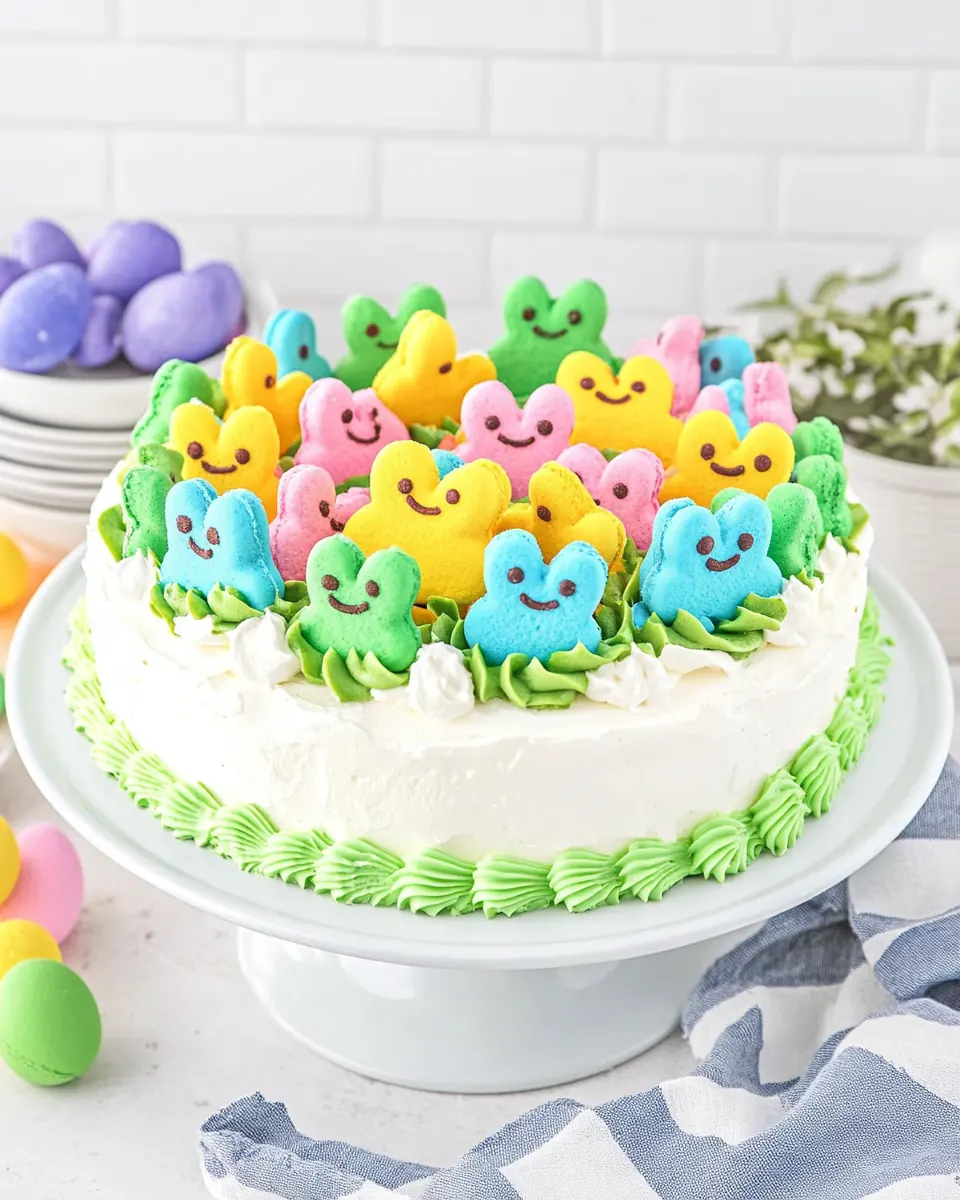
Then place the Bunny Peeps around the sides of the cake, alternating Pink, Blue, and Yellow.: The final coat should look smooth and even, reflecting light subtly where the spatula passed. This fresh layer conceals imperfections and provides structure for decorations. If the frosting seems to tear or pull, it may be too cold; let it warm slightly at room temperature and smooth again. Applying too much pressure with the spatula can create ridges, so use light, continuous strokes.
With a large star tip, pipe the remainder of the frosting into small swirls around the edge of the top of the cake. Sprinkle the middle of the cake with green coconut and M&M's.: Pressing the Bunny Peeps gently into the frosting creates a whimsical border and anchors the decoration visually. The marshmallow should adhere without sliding if the frosting is stable. Place them with consistent spacing for a neat aesthetic. Avoid pushing too hard, which can indent the cake and cause the candies to tilt.
With a large star tip, pipe the remainder of the frosting into small swirls around the edge of the top of the cake. Sprinkle the middle of the cake with green coconut and M&M's.: The sound of the piping bag moving is steady and the frosting swirls will hold distinct points if the buttercream is the right stiffness, creating attractive texture and height. The green coconut flakes add a grassy look and chew, while the M&M's contribute crunchy bursts. A common misstep is piping while the frosting is too soft, which flattens swirls; chill briefly to firm up if needed.