Easter Peep Cake
Easter Peep Cake always brings back the kind of kitchen chaos I secretly love, the sugar fueled, pastel splattered kind that makes everyone laugh and crave second helpings. The first time I made this cake it was for a neighborhood spring party, and I remember juggling three bowls of batter on the counter while my neighbor’s toddler proudly insisted on placing each Bunny Peeps in a row, which turned into a delightful parade of fluffy marshmallow faces.
Since then, Easter Peep Cake has become my go to showstopper for anything festive and family centered. I love that it blends a simple, classic layer cake with playful, bright frosting colors and a whimsical finish of sweetened coconut flakes and M&M’s. It is the sort of dessert that invites hands, conversation, and a few inevitable frosting smudges on cheeks. Over the years I’ve learned small tricks that make the layers bake evenly and the frosting pipe like a charm, and I enjoy sharing those little wins so others can recreate the same happy mess in their own kitchens.
Recipe Snapshot
55 mins
30 mins
25 mins
Medium
450 kcal
American
Gluten-Free, Low FODMAP
Desserts
39-inch cake pans, 3 Parchment paper circles, Electric mixer, Offset spatula
Why This Easter Peep Cake Shines
Colorful Celebration Ready
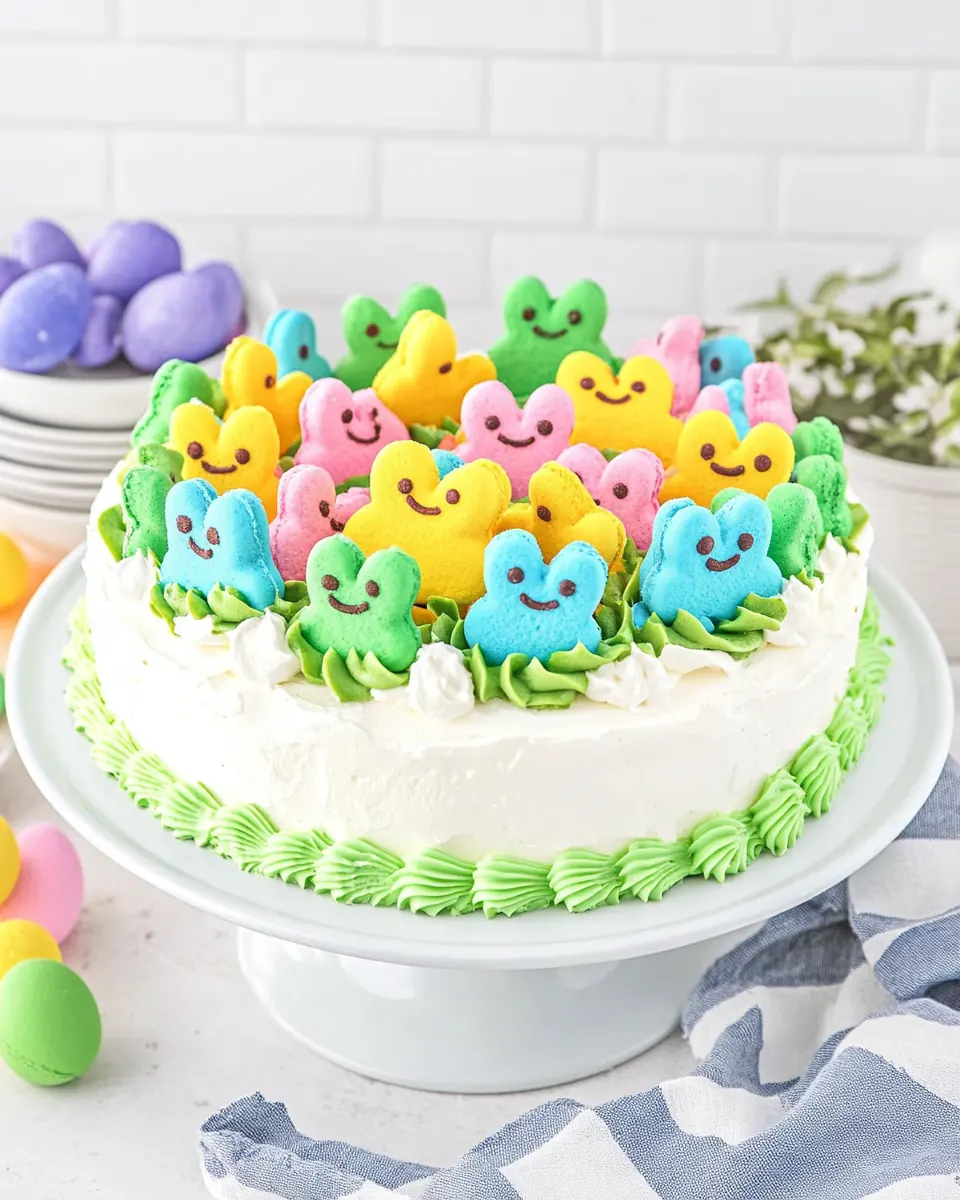
I adore how Easter Peep Cake looks at the table. The three pastel layers, tinted in pink, blue, and yellow, read like a springtime confetti, and they make the cake feel festive without much extra effort. I like to think of the colors as the mood setter, because guests smile before they even take a bite.
Classic Texture with a Fun Twist
The cake crumb itself is tender and buttery, thanks to the amount of unsalted butter and the gentle folding technique. I find that alternating the dry and wet ingredients keeps the batter light, and the result is a slice that is moist but not dense, a perfect canvas for a silky buttercream that complements rather than overwhelms.
Kid Friendly and Crowd Pleasing
One of the best parts of this recipe is how approachable it is. Children love decorating with the Bunny Peeps and M&M’s, and adults appreciate the nostalgic charm. I’ve seen this cake become the highlight at potlucks because you can scale the decorations up or down depending on the audience, yet the core flavors remain comforting and familiar.
Flexible Finishing Touches
I value recipes that allow creative freedom, and Easter Peep Cake does exactly that. The green dyed coconut flakes mimic fresh grass and give a pleasing texture contrast, while the piped frosting swirls frame the central candy scatter. You can make the cake as ornate or as rustic as you like, and either way it photographs beautifully.
Learnable Techniques
This recipe teaches a few transferable skills, like achieving an even crumb coat and piping consistent swirls. I find that once you practice the simple steps here, you can apply them to many other layered cakes. Those small technical wins are satisfying, and they help bakers feel more confident in the kitchen.
Ingredients for Easter Peep Cake
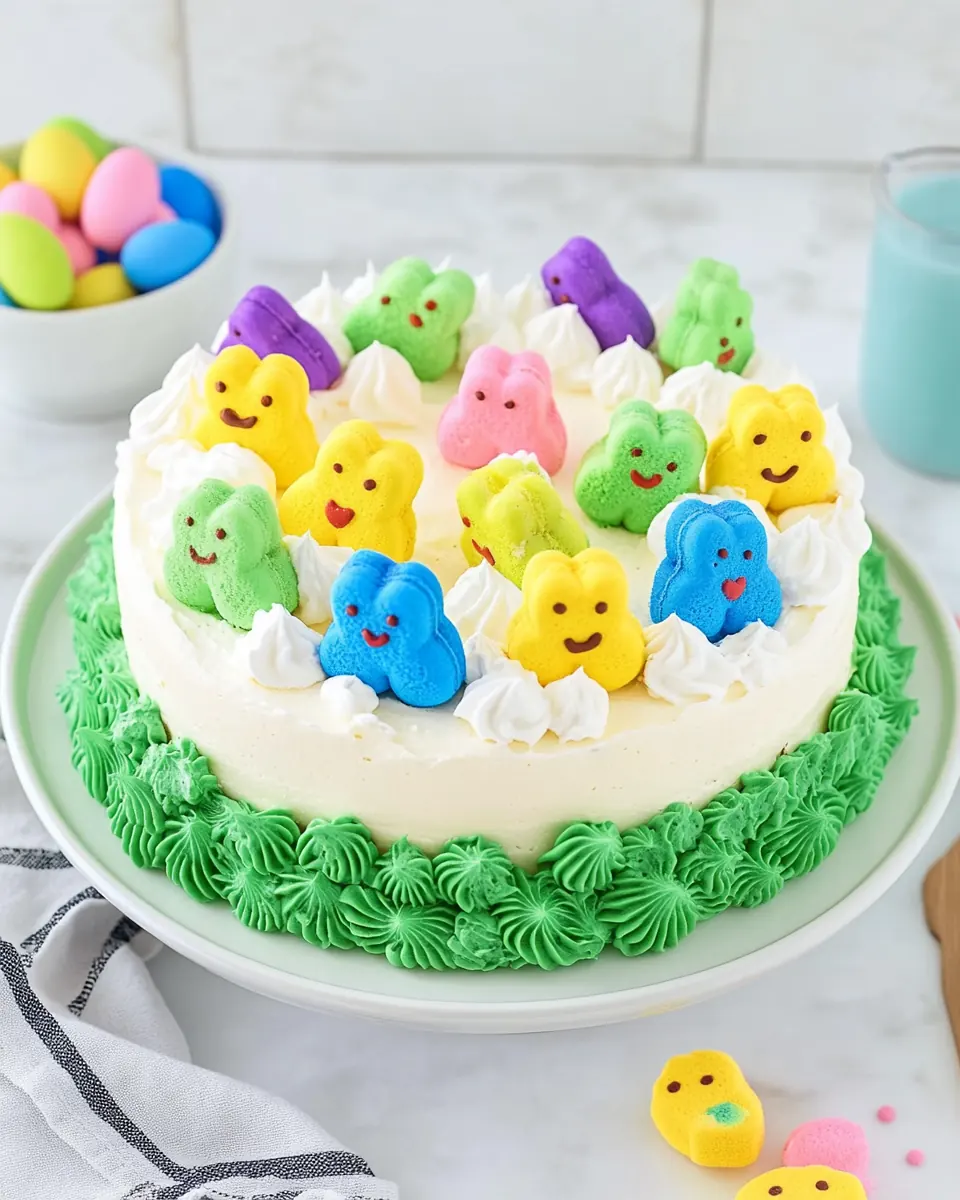
These ingredients come together to create an indulgent, playful cake with sturdy structure and a creamy finish. The key players are the unsalted butter for richness, the granulated sugar to tenderize and sweeten, and the combination of leaveners to lift the layers. The buttercream relies on a high ratio of powdered sugar and butter to pipe and hold shape while the colorful accents transform the cake into a festive centerpiece.
- 1 cup 2 sticks (250 g) unsalted butter softened: Cream until light and fluffy to provide richness, moisture, and structure to the cake batter; ensure butter is softened for proper creaming with sugar.
- 2 cups (400 g) granulated sugar: Sweeten and tenderize by dissolving into the butter and eggs, helping to create a fine crumb and promote browning during baking.
- 3 large eggs at room temperature: Incorporate at room temperature to contribute structure, leavening, and moisture; beat well with sugar and butter to trap air for a lighter cake.
- 1 cup buttermilk or whole milk: Moisten and tenderize the batter while adding slight acidity if buttermilk is used, which reacts with leaveners to improve texture and flavor.
- 2 teaspoons pure vanilla extract: Enhance overall flavor with a warm, sweet aromatic note; add to batter for balanced taste without overpowering other ingredients.
- 3 cups all purpose flour spooned and leveled, plus extra for dusting pans: Provide the primary starch and framework for the cake; sift or spoon and level to avoid packing and ensure accurate measurement for proper texture.
- 2 teaspoons baking powder: Leaven the cake by producing carbon dioxide when heated, helping the cake rise and become airy; combine with baking soda if using acidic liquid.
- 1 teaspoon baking soda: React with acid in buttermilk to create additional lift and brown the cake slightly, complementing baking powder for balanced leavening.
- 1/2 teaspoon salt: Balance flavor and strengthen gluten development slightly while enhancing overall taste; use measured amount to avoid overly salty results.
- 1 drop Gel Food Coloring each about 1/4 teaspoon: Pink, yellow, and blue: Tint the batter with concentrated gel colors to create distinct pastel layers without thinning the batter; use minimal drops for vivid hues.
- 2 cups 4 sticks (450 g) unsalted butter softened: Whip into a smooth, creamy frosting base to add richness and stability; ensure softened consistency for proper emulsification with powdered sugar.
- 8 cups powdered sugar: Sweeten and thicken the frosting while providing structure for piping and holding decorations; sift if lumpy for a silky finish.
- 1 tablespoon pure vanilla extract: Flavor the frosting with a warm, sweet vanilla note to complement the cake and enhance the overall dessert aroma.
- 1/2 teaspoon salt: Enhance and balance frosting flavor while stabilizing and preventing sweetness from becoming cloying; small amount improves overall taste.
- 1/4 cup heavy whipping cream: Loosen and smooth the frosting to achieve spreadable consistency and glossy finish; adjust amount to reach desired firmness for decorating.
- 24 Bunny Peeps pink, blue, and yellow: Decorate and add playful marshmallow texture and color on top of the cake; place strategically for visual impact and extra sweetness.
- 1 cup sweetened coconut flakes dyed green: Simulate grassy texture and add visual contrast with a sweet, chewy coconut topping dyed green; sprinkle around Peeps for a spring effect.
- 1 bag Easter M&M's: Garnish and provide crunchy, colorful contrast as a finishing touch; scatter for bursts of chocolate and candy-coated color.
Instructions for Easter Peep Cake
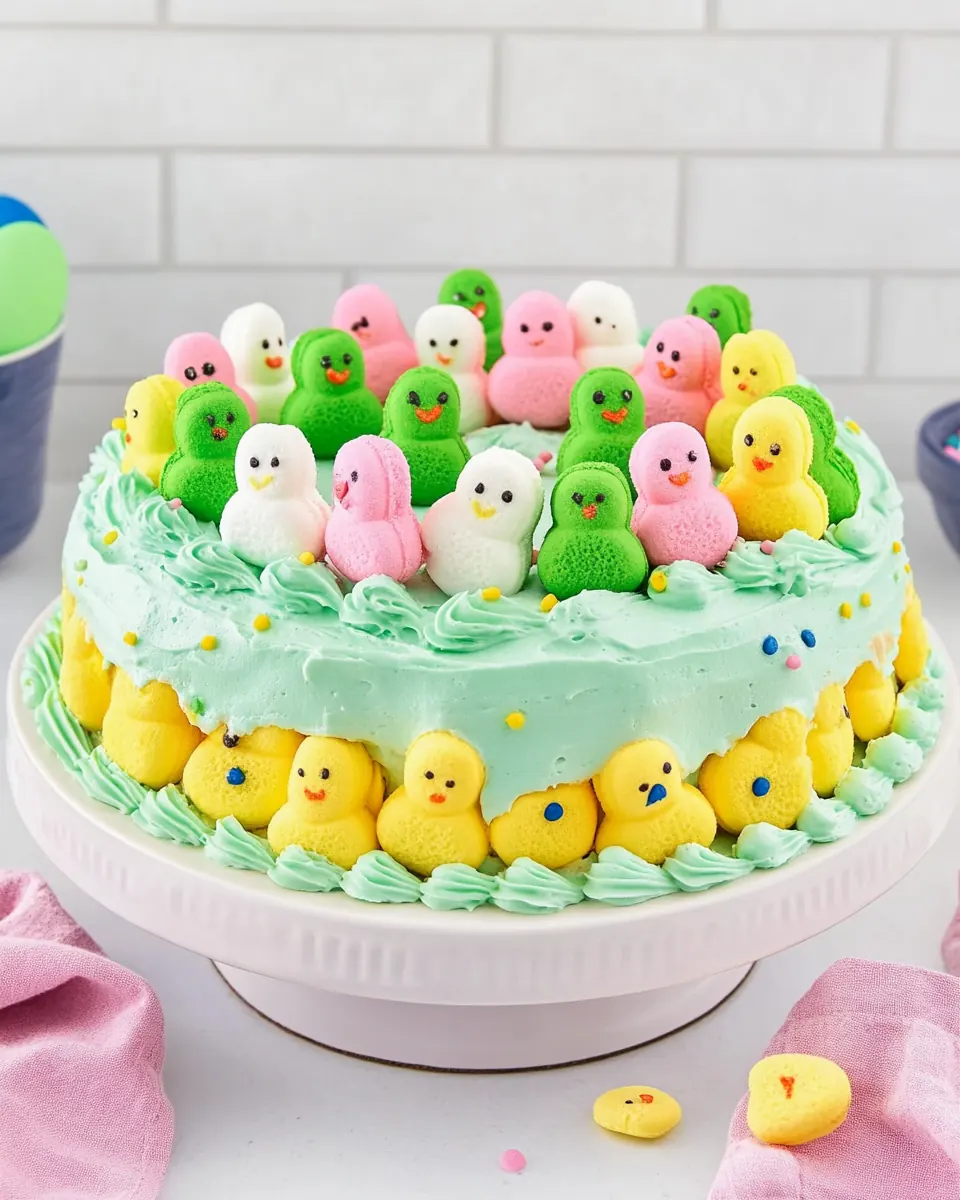
I find that making this cake is more about gentle confidence than speed. Take your time creaming, folding, and coloring so the layers bake evenly and the frosting pipes well. Below are each of the original directions refined into detailed, sensory forward steps to guide you through the process.
- Preheat the oven to 350°F/180°C. Grease 3 x 9-inch pans with shortening or butter and dust with a tablespoon of flour each. Set pans aside.: The warm, dry oven smell is a comforting cue that baking has begun, and greasing plus flouring the pans prevents sticking, producing clean, even edges. As you lull the pans to sleep with a light coating, listen for the soft scratch of parchment or the gentle clink of metal, signs your workspace is orderly. A common mistake is over greasing, which can cause a greasy edge; use a thin, even layer and tap out excess flour so the cakes release with minimal fuss.
- In a large bowl, cream together the butter and sugar with an electric mixer on medium speed. Add the eggs, one at a time, and make sure each egg is fully incorporated before adding the next. Add the vanilla extract, and beat until well blended.: You will notice the mixture transform from pale to almost ribbon like as air becomes trapped, giving a light, tender crumb after baking. The sound changes from a thump to a steady smooth churn, and the aroma becomes sweet and buttery. The reason we add eggs one at a time is to maintain a stable emulsion; adding them all at once risks a broken batter. Avoid beating after adding flour; over mixing tightens gluten and yields a tougher cake.
- In a separate medium bowl, sift and then whisk together the flour, baking powder, baking soda, and salt to make sure it’s thoroughly combined. With a wooden spoon or spatula, gradually fold in the dry ingredients to the wet ingredients, alternating adding the flour and the buttermilk, until just barely combined. Do not over-mix the batter.: The flour mixture should look uniform and pale, and a soft cloud of flour when sifting signals even distribution of leaveners. This step ensures consistent rise across all layers, because undispersed baking powder can create uneven pockets. A common error is skipping the whisk; this can leave clumps of leavening that cause holes or uneven texture in the finished cake.
- Divide the batter equally into three small or medium bowls. (It’s best to use a digital kitchen scale to make sure the weights are equal.) Add a drop of the pink, blue, and yellow food coloring separately to each bowl of batter. Stir the batter gently until the color is well mixed. Pour each batter into each of the 3 cake tins.: Folding preserves the air you created during creaming, which contributes to a tender crumb and consistent lift. The batter should be soft and slightly glossy, not flat or elastic. If you hear a heavy thud when stirring, you are overworking the flour; stop as soon as streaks disappear. Over mixing is the fastest way to a dense cake, so restraint is flavor positive here.
- Bake on the middle rack of the oven for 20-25 minutes, or until a toothpick inserted in the middle comes out clean. Let the cakes cool in the tin for about ten minutes, then transfer them to a cooling rack to cool the cakes completely.: Equal batter distribution gives uniform bake times and layer heights, and the paste like gel color will tint the batter vividly with just a tiny dot. Stir gently until the color is homogenous and there are no streaks, taking care not to deflate the batter. A common slip is adding too much color which can alter consistency or stain hands and equipment; a toothpick sized drop usually suffices for bright tones.
- While the cakes are cooling, cream the 2 cups of butter with an electric hand mixer on medium speed. Gradually add in the powdered sugar (about 1/2 cup at a time) until all of the powdered sugar has been mixed into the butter.: During baking the kitchen will fill with a warm, sweet aroma and the tops should turn lightly golden while the centers spring back to the touch. The toothpick test eliminates guesswork and ensures the crumb is set. Letting them rest in the pan allows the cake to firm up, making transfer easier; peel slowly to avoid tearing. Removing them while too hot is a frequent error that causes breakage, so patience here pays off.
- Pour in the vanilla extract, salt, and heavy whipping cream, and blend at low speed until completely smooth. Put about a 1/4 of the buttercream into a piping bag with a large round tip.: The buttercream will change from glossy to thick and billowy as you add sugar, and you should hear a bright, rhythmic hum from the mixer. Adding the powdered sugar slowly prevents a gritty texture and keeps the air you fold in. If the frosting looks sandy, keep mixing on low for a minute; if it is too soft, chill briefly before piping. Over beading the mixer at high speed can cause flourishing clouds of sugar, so cover when possible.
- Put a small amount of buttercream onto the base of a cake stand or platter, and place the blue cake in the middle of the stand. Pipe the buttercream around the top of the blue cake, and spiral inward until the top is covered. Use a spatula to smooth out the buttercream. Continue with the yellow cake and then the pink cake.: The cream rounds out the texture and the sound of the mixer will become smoother as the buttercream homogenizes into a silky paste. The salt balances sweetness and the vanilla amplifies the flavors. Reserving a portion for piping ensures you have a clean interior fill and defined decorative swirls. A mistake to avoid is adding too much liquid at once; add cream gradually to control consistency.
- Use a spatula to add buttercream to the sides of the cake and spread thinly. This will be your crumb coat. Place the cake in the freezer for 20 minutes (or in the refrigerator for 40 minutes).: The tactile feel of spreading buttercream is gratifying, and smoothing creates a neat surface for subsequent decorating. Each layer should sit level so the cake stacks straight. Using a small dab of frosting as glue prevents sliding during assembly. A frequent issue is uneven layers; level them gently with a serrated knife if needed before stacking.
- Add a fresh layer of buttercream to the sides so it covers the cake neatly.: The crumb coat traps stray crumbs and creates a neutral canvas for the final frosting layer, and chilling firms the buttercream so you can apply the final coat cleanly. The snap of cold hitting the frosting gives a satisfying firmness that aids piping. Avoid skipping chill time or the final layer will pick up crumbs, marring the finish.
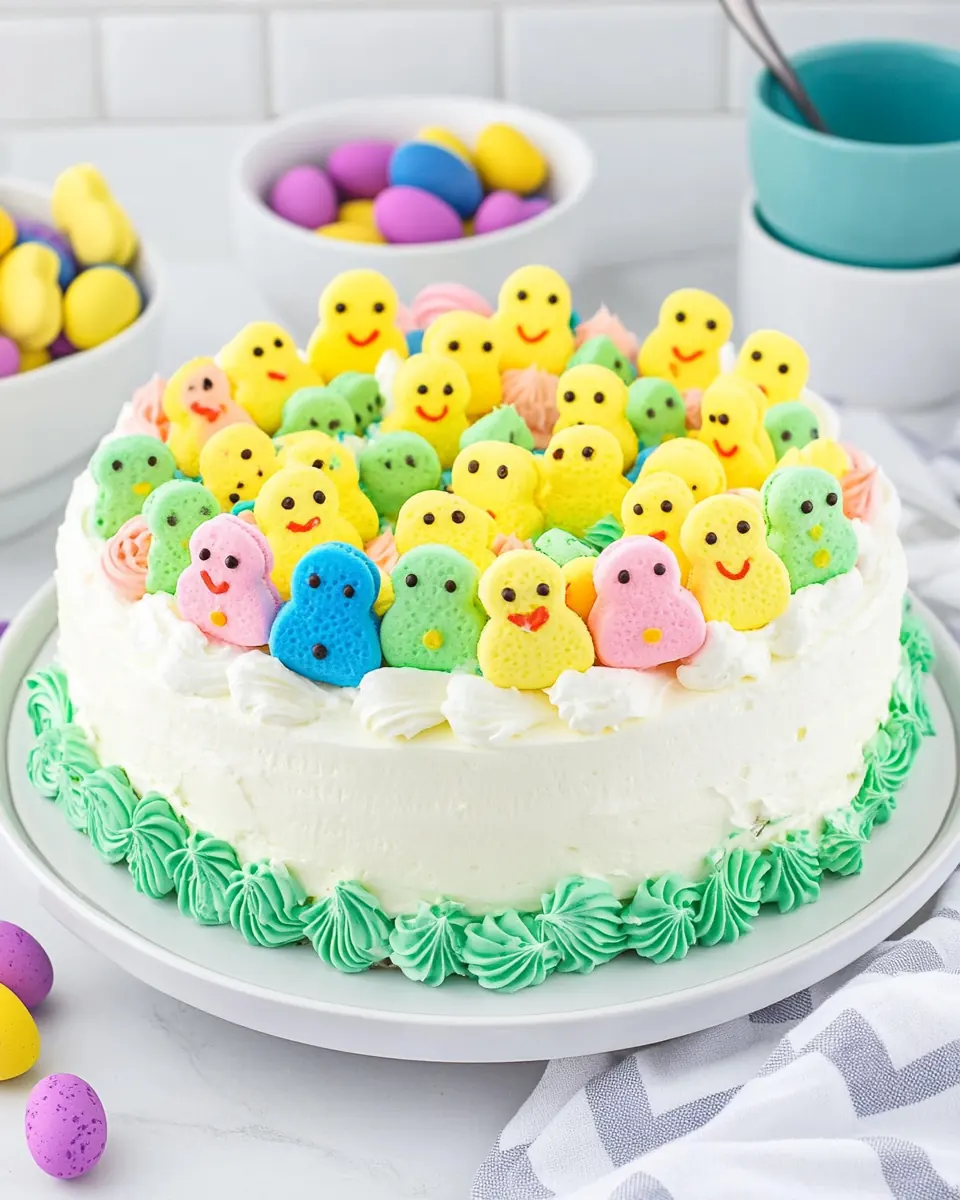
- Then place the Bunny Peeps around the sides of the cake, alternating Pink, Blue, and Yellow.: The final coat should look smooth and even, reflecting light subtly where the spatula passed. This fresh layer conceals imperfections and provides structure for decorations. If the frosting seems to tear or pull, it may be too cold; let it warm slightly at room temperature and smooth again. Applying too much pressure with the spatula can create ridges, so use light, continuous strokes.
- With a large star tip, pipe the remainder of the frosting into small swirls around the edge of the top of the cake. Sprinkle the middle of the cake with green coconut and M&M's.: Pressing the Bunny Peeps gently into the frosting creates a whimsical border and anchors the decoration visually. The marshmallow should adhere without sliding if the frosting is stable. Place them with consistent spacing for a neat aesthetic. Avoid pushing too hard, which can indent the cake and cause the candies to tilt.
- With a large star tip, pipe the remainder of the frosting into small swirls around the edge of the top of the cake. Sprinkle the middle of the cake with green coconut and M&M's.: The sound of the piping bag moving is steady and the frosting swirls will hold distinct points if the buttercream is the right stiffness, creating attractive texture and height. The green coconut flakes add a grassy look and chew, while the M&M's contribute crunchy bursts. A common misstep is piping while the frosting is too soft, which flattens swirls; chill briefly to firm up if needed.
Expert Tips about Easter Peep Cake
These expert tips refine technique and troubleshooting to help you bake with confidence and polish the final presentation. Each tip focuses on one practical improvement to make this cake reliably charming.
- Measure by weight when possible. Using a scale ensures batter is divided evenly, which leads to uniform layer height and predictable bake times. Volume measurements can vary by how flour is scooped, while grams remove that variable.
- Add gel coloring sparingly. Gel is intense, so start with the smallest possible amount and build color gradually. Too much can change batter texture and stain utensils and hands.
- Room temperature ingredients emulsify better. Bringing eggs and butter to room temperature helps them incorporate smoothly, preventing a broken batter and ensuring an even crumb.
- Use a thin crumb coat first. A light initial layer of frosting traps crumbs and sets a clean surface for the final coat, producing a polished look without excessive scraping.
- Chill between frosting stages. A brief chill stabilizes the buttercream, making piping clean and preventing decorations from sliding on warm frosting.
- Dye coconut in a sealed bag then dry. This technique produces evenly colored coconut without puddles of dye, and drying prevents moisture from spoiling frosting texture.
Serving This Easter Peep Cake
This cake suits festive spring gatherings and playful celebrations. Below are detailed serving suggestions and storage notes to keep your cake looking fresh and tasting its best.
- Serve at room temperature. Allow the cake to sit for thirty to forty five minutes after refrigeration so the buttercream softens and flavors bloom, which makes each slice tender and aromatic.
- Presentation on a platter. Place the cake on a flat cake stand or platter to highlight the layered colors and decorative border of Bunny Peeps, letting guests admire the pastel tiers before slicing.
- Portioning guidance. For twelve servings, slice into twelve even wedges using a long serrated knife, wiping the blade between cuts to maintain clean edges and neat plates.
- Occasions. This cake is ideal for spring brunches, Easter dessert tables, family gatherings, and children’s parties, offering both visual impact and approachable flavor.
- Side ideas. Pair slices with a lightly brewed coffee, a fruity iced tea, or a bowl of fresh berries to balance richness and add a refreshing contrast.
- Storage tips. Store leftover cake covered in a cake keeper or airtight container in the refrigerator for up to four days; bring to room temperature before serving for best texture.
- Traveling with the cake. Use a secure cake box and store in a cool place to prevent buttercream melting; press a few toothpicks into the top to anchor a light cover if needed for short transports.
- Seasonal pairing. This pastel centerpiece fits spring menus, garden parties, and holiday brunches, and the colorful design complements floral table settings and playful décor.
- Serving size note. Adjust slice thickness for larger crowds; thin slices from a tall cake can increase the number of servings without leaving guests unsatisfied.
- Garnish timing. Add M&M’s and dyed coconut flakes shortly before serving to maintain crisp texture and vibrant color.
FAQ
Conclusion
Easter Peep Cake stands out for its cheerful appearance and classic, buttery flavor, which combine to make a memorable spring centerpiece. Give it a try the next time you want a dessert that invites both decorating fun and delicious results. Baking this cake is a lovely way to celebrate with family and friends, and the simple techniques you practice here will carry over to many other layered cakes.
Easter Peep Cake
Ingredients
Equipment
Method
- Preheat the oven to 350°F/180°C. Grease 3 x 9-inch pans with shortening or butter and dust with a tablespoon of flour each. Set pans aside.: The warm, dry oven smell is a comforting cue that baking has begun, and greasing plus flouring the pans prevents sticking, producing clean, even edges. As you lull the pans to sleep with a light coating, listen for the soft scratch of parchment or the gentle clink of metal, signs your workspace is orderly. A common mistake is over greasing, which can cause a greasy edge; use a thin, even layer and tap out excess flour so the cakes release with minimal fuss.
- In a large bowl, cream together the butter and sugar with an electric mixer on medium speed. Add the eggs, one at a time, and make sure each egg is fully incorporated before adding the next. Add the vanilla extract, and beat until well blended.: You will notice the mixture transform from pale to almost ribbon like as air becomes trapped, giving a light, tender crumb after baking. The sound changes from a thump to a steady smooth churn, and the aroma becomes sweet and buttery. The reason we add eggs one at a time is to maintain a stable emulsion; adding them all at once risks a broken batter. Avoid beating after adding flour; over mixing tightens gluten and yields a tougher cake.
- In a separate medium bowl, sift and then whisk together the flour, baking powder, baking soda, and salt to make sure it’s thoroughly combined. With a wooden spoon or spatula, gradually fold in the dry ingredients to the wet ingredients, alternating adding the flour and the buttermilk, until just barely combined. Do not over-mix the batter.: The flour mixture should look uniform and pale, and a soft cloud of flour when sifting signals even distribution of leaveners. This step ensures consistent rise across all layers, because undispersed baking powder can create uneven pockets. A common error is skipping the whisk; this can leave clumps of leavening that cause holes or uneven texture in the finished cake.
- Divide the batter equally into three small or medium bowls. (It’s best to use a digital kitchen scale to make sure the weights are equal.) Add a drop of the pink, blue, and yellow food coloring separately to each bowl of batter. Stir the batter gently until the color is well mixed. Pour each batter into each of the 3 cake tins.: Folding preserves the air you created during creaming, which contributes to a tender crumb and consistent lift. The batter should be soft and slightly glossy, not flat or elastic. If you hear a heavy thud when stirring, you are overworking the flour; stop as soon as streaks disappear. Over mixing is the fastest way to a dense cake, so restraint is flavor positive here.
- Bake on the middle rack of the oven for 20-25 minutes, or until a toothpick inserted in the middle comes out clean. Let the cakes cool in the tin for about ten minutes, then transfer them to a cooling rack to cool the cakes completely.: Equal batter distribution gives uniform bake times and layer heights, and the paste like gel color will tint the batter vividly with just a tiny dot. Stir gently until the color is homogenous and there are no streaks, taking care not to deflate the batter. A common slip is adding too much color which can alter consistency or stain hands and equipment; a toothpick sized drop usually suffices for bright tones.
- While the cakes are cooling, cream the 2 cups of butter with an electric hand mixer on medium speed. Gradually add in the powdered sugar (about 1/2 cup at a time) until all of the powdered sugar has been mixed into the butter.: During baking the kitchen will fill with a warm, sweet aroma and the tops should turn lightly golden while the centers spring back to the touch. The toothpick test eliminates guesswork and ensures the crumb is set. Letting them rest in the pan allows the cake to firm up, making transfer easier; peel slowly to avoid tearing. Removing them while too hot is a frequent error that causes breakage, so patience here pays off.
- Pour in the vanilla extract, salt, and heavy whipping cream, and blend at low speed until completely smooth. Put about a 1/4 of the buttercream into a piping bag with a large round tip.: The buttercream will change from glossy to thick and billowy as you add sugar, and you should hear a bright, rhythmic hum from the mixer. Adding the powdered sugar slowly prevents a gritty texture and keeps the air you fold in. If the frosting looks sandy, keep mixing on low for a minute; if it is too soft, chill briefly before piping. Over beading the mixer at high speed can cause flourishing clouds of sugar, so cover when possible.
- Put a small amount of buttercream onto the base of a cake stand or platter, and place the blue cake in the middle of the stand. Pipe the buttercream around the top of the blue cake, and spiral inward until the top is covered. Use a spatula to smooth out the buttercream. Continue with the yellow cake and then the pink cake.: The cream rounds out the texture and the sound of the mixer will become smoother as the buttercream homogenizes into a silky paste. The salt balances sweetness and the vanilla amplifies the flavors. Reserving a portion for piping ensures you have a clean interior fill and defined decorative swirls. A mistake to avoid is adding too much liquid at once; add cream gradually to control consistency.
- Use a spatula to add buttercream to the sides of the cake and spread thinly. This will be your crumb coat. Place the cake in the freezer for 20 minutes (or in the refrigerator for 40 minutes).: The tactile feel of spreading buttercream is gratifying, and smoothing creates a neat surface for subsequent decorating. Each layer should sit level so the cake stacks straight. Using a small dab of frosting as glue prevents sliding during assembly. A frequent issue is uneven layers; level them gently with a serrated knife if needed before stacking.
- Add a fresh layer of buttercream to the sides so it covers the cake neatly.: The crumb coat traps stray crumbs and creates a neutral canvas for the final frosting layer, and chilling firms the buttercream so you can apply the final coat cleanly. The snap of cold hitting the frosting gives a satisfying firmness that aids piping. Avoid skipping chill time or the final layer will pick up crumbs, marring the finish.
- Then place the Bunny Peeps around the sides of the cake, alternating Pink, Blue, and Yellow.: The final coat should look smooth and even, reflecting light subtly where the spatula passed. This fresh layer conceals imperfections and provides structure for decorations. If the frosting seems to tear or pull, it may be too cold; let it warm slightly at room temperature and smooth again. Applying too much pressure with the spatula can create ridges, so use light, continuous strokes.
- With a large star tip, pipe the remainder of the frosting into small swirls around the edge of the top of the cake. Sprinkle the middle of the cake with green coconut and M&M's.: Pressing the Bunny Peeps gently into the frosting creates a whimsical border and anchors the decoration visually. The marshmallow should adhere without sliding if the frosting is stable. Place them with consistent spacing for a neat aesthetic. Avoid pushing too hard, which can indent the cake and cause the candies to tilt.
- With a large star tip, pipe the remainder of the frosting into small swirls around the edge of the top of the cake. Sprinkle the middle of the cake with green coconut and M&M's.: The sound of the piping bag moving is steady and the frosting swirls will hold distinct points if the buttercream is the right stiffness, creating attractive texture and height. The green coconut flakes add a grassy look and chew, while the M&M's contribute crunchy bursts. A common misstep is piping while the frosting is too soft, which flattens swirls; chill briefly to firm up if needed.
Notes
- Measure by weight when possible. Using a scale ensures batter is divided evenly, which leads to uniform layer height and predictable bake times. Volume measurements can vary by how flour is scooped, while grams remove that variable.
- Add gel coloring sparingly. Gel is intense, so start with the smallest possible amount and build color gradually. Too much can change batter texture and stain utensils and hands.
- Room temperature ingredients emulsify better. Bringing eggs and butter to room temperature helps them incorporate smoothly, preventing a broken batter and ensuring an even crumb.
- Use a thin crumb coat first. A light initial layer of frosting traps crumbs and sets a clean surface for the final coat, producing a polished look without excessive scraping.
- Chill between frosting stages. A brief chill stabilizes the buttercream, making piping clean and preventing decorations from sliding on warm frosting.
- Dye coconut in a sealed bag then dry. This technique produces evenly colored coconut without puddles of dye, and drying prevents moisture from spoiling frosting texture.