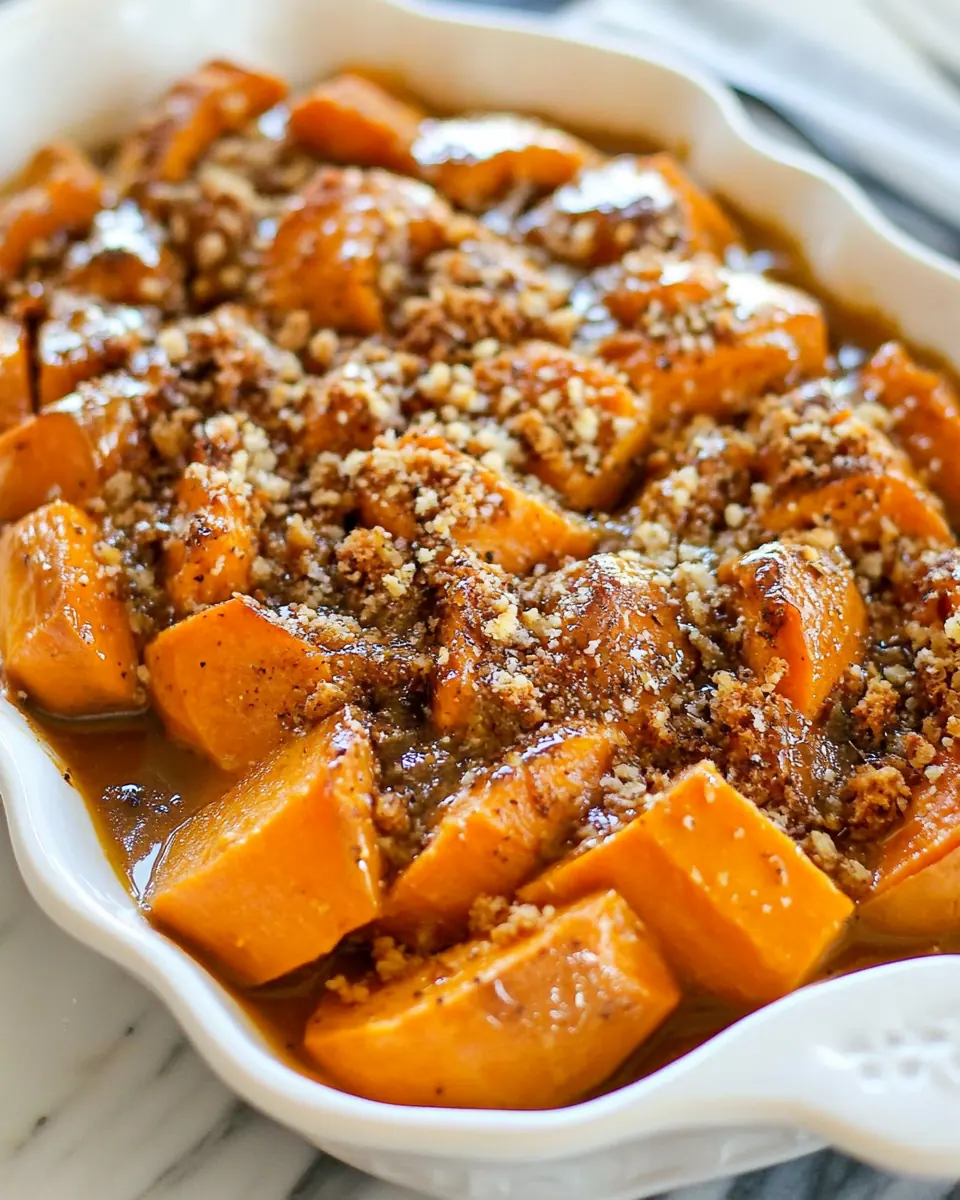
Preheat the oven to 350 degrees F. Spray the bottom of a glass or non-stick baking dish with nonstick spray. Wash and peel the sweet potatoes. Cut them into medium size pieces. Place the cut sweet potatoes in the baking dish and turn them so that they are coated with the oil. Bake for 60 minutes or until soft. Slice the cooked potatoes into bite-sized pieces and return them to the baking dish.: As the oven comes to temperature, you will notice a warm, slightly sweet scent beginning to circulate, which primes you for the slow roast ahead. Preheating ensures even baking from the moment the dish goes in, which is crucial for consistent texture, because an oven that is not fully hot can lead to unevenly cooked sweet potatoes . Be careful not to skip the light spray, since it prevents the caramelized glaze from sticking excessively to the dish and makes serving much easier. A common mistake is opening the oven frequently during the long bake, which lets heat escape and lengthens cook time; trust the process and only peek when necessary.
Sprinkle the potatoes with brown sugar and dot with butter. Cover the dish and bake for 15 minutes. Turn the oven to broil.: Running your hands over scrubbed sweet potatoes you will feel their firm, cool texture before they soften in the oven. Peeling removes the exterior skin for a smoother mouthfeel in the finished dish, which many people prefer for this glazed preparation. Use a sharp peeler and work steadily to avoid gouging too deeply into the flesh, because excessive peeling wastes the interior. If some potatoes are oddly shaped, you can trim only the problematic spots so you retain as much good flesh as possible.
Remove the potatoes from the oven and sprinkle the marshmallows on top. Place under the broiler for a minute or two, just until the marshmallows turn light brown.: The cut pieces should be uniform, about one to one and a half inch chunks, so they bake evenly and reach the tender stage at the same time. Visual cues matter here, you want pieces that are substantial enough to hold their shape but small enough to become soft all the way through during the bake. A common pitfall is cutting too large, which results in centers that remain firm; if pieces vary in size, remove smaller ones earlier to avoid overcooking.
Place the cut sweet potatoes in the baking dish and turn them so that they are coated with the oil: As you toss the chunks in the dish, you will see a light sheen form, helping the butter and glaze adhere later. The oil creates a first layer that promotes even heat transfer and helps prevent sticking, which contributes to an even caramelization. If you skip coating, you may end up with dry spots or uneven browning. Keep an eye on the dish during the initial minutes of baking to ensure none of the pieces are overlapping too heavily, because crowded pieces steam instead of roasting.
Bake for 60 minutes or until soft: The oven will softly hum while the interior of the sweet potatoes turns tender and fragrant, the edges may gently darken where sugars concentrate. To test doneness, a fork should slide in without resistance and the surface will look slightly wrinkled where moisture has evaporated. This slow bake is essential because it deepens natural sugars and creates the sweet, creamy base that the glaze clings to; rushing this step will yield less flavorful results. Avoid opening the oven too often during this long bake, because each peek lowers the temperature and extends the cooking time.
Slice the cooked potatoes into bite-sized pieces and return them to the baking dish: When you slice, you will see a rich, silky interior and possibly a thin caramelized film on some edges from the initial roast. Returning the pieces to the dish prepares them to receive the brown sugar and butter so the glaze can form uniformly across all units. Do this carefully to keep the tender pieces intact, because rough handling can turn them to mash prematurely. If some pieces fall apart slightly, tuck them in among firmer pieces so they still benefit from the glaze without losing their shape entirely.
Sprinkle the potatoes with brown sugar and dot with butter: The moment the brown sugar meets the warm sweet potatoes , you will notice the aroma shift toward caramel, and the small butter pieces will begin to melt into glossy rivulets. This combination is why the dish tastes decadent despite its simplicity; the butter carries flavor and helps the sugar melt into a sticky glaze. Be mindful to distribute the sugar evenly so some areas do not become overly sweet and syrupy while others remain plain. If you add too much butter, the glaze can pool rather than cling, which dilutes the caramelization.
Cover the dish and bake for 15 minutes: With the dish covered, heat and steam mingle, allowing the sugar and butter to meld into the potato surfaces without drying them out, and you may smell a warm molasses note. This covered bake helps the glaze form and settle into the nooks of the pieces, improving cohesion and mouthfeel. A mistake here is leaving the dish uncovered which can dry out the exposed surfaces and prevent the sugar from properly melting into a glaze. Keep the cover tight so steam is retained and check only when the time is nearly up.
Turn the oven to broil: Switching to broil raises the heat dramatically at the top of the oven, creating intense radiant heat that is perfect for toasting the marshmallows quickly. The sensory change is immediate, you may smell an intensified caramel scent and hear the oven fan adjust. This step is crucial for achieving the lightly browned, cloud like finish on the marshmallows without melting everything into a single puddle. Be careful not to forget the dish under the broiler, because broiling is rapid and can take a pleasant golden color to burnt in seconds.
Remove the potatoes from the oven and sprinkle the marshmallows on top: As you scatter the marshmallows , notice how they settle into the sweet glossy pockets and create a playful top layer. Their small size helps them toast fast and evenly when returned to the broiler, and their sweetness amplifies the caramel notes of the glaze. Avoid piling too many in one spot, because clusters can melt into one large mass instead of forming delightful individual toasted pillows.
Place under the broiler for a minute or two, just until the marshmallows turn light brown: Watch closely as the marshmallows bloom into golden domes, their edges crisping while centers remain oozy and soft; the visual cue to stop is a warm golden brown that is uniform but not charred. The heat will be intense and the marshmallows go from pale to deeply browned quickly, so stand by the oven and listen for any faint sizzling as sugars caramelize. One common mistake is walking away during this final step, which risks burning the topping; set a timer and stay present for those last few seconds.