Easy Glazed Sweet Potatoes
Easy Glazed Sweet Potatoes has been one of those dishes I reach for when I want nostalgia and ease in the same pan. The scent of warm sweet potatoes slow baking while brown sugar melts into sticky pockets always brings me back to a particular autumn afternoon when my grandmother handed me the wooden spoon and said, do not rush this part. I remember how the kitchen hummed with conversation, and how the sugar bubbled around the edges like a tiny caramel shoreline.
My version of Easy Glazed Sweet Potatoes grew out of that memory, but also from the practical need to serve a crowd without fuss. I learned to trust simple ingredients and patient oven time. The result is a dish that looks indulgent but practically makes itself while you tend to other things. When I serve it, guests always ask for the recipe, and I like that it invites sharing without complicated techniques.
There is a warmth to this recipe that is more than temperature, it is about comfort and texture. I love the contrast between the creamy, tender interior of the sweet potatoes and the shiny caramelized brown sugar coating, finished with little clouds of toasted, gooey marshmallows. It feels celebratory but not precious, perfect for slow afternoons or festive dinners where you want something familiar and crowd pleasing.
Recipe Snapshot
1 hr 45 mins
25 mins
80 mins
Medium
150 kcal
American
Gluten-Free, Low FODMAP
Side Dishes
Oven, Glass or non-stick baking dish, Peeler, Knife
Why This Easy Glazed Sweet Potatoes Stands Out
Simple, honest ingredients
I adore how Easy Glazed Sweet Potatoes relies on just a few pantry staples, which means the flavors are pure and focused. The interplay of brown sugar and butter creates a glossy glaze that clings to the sweet potatoes, and the marshmallows add a playful, toasty finish. Because each component is recognizable, it feels approachable to home cooks at any level.
Comforting textures and contrasts
One of the biggest reasons I keep making this is the texture play. The sweet potatoes become silky when baked through, while the glaze adds a sticky surface. Then the brief broil gives the marshmallows a light toasted skin that yields to a melty center. That mix of tender and slightly crisp is what brings people back for seconds.
Effort that rewards patience
This recipe asks for time in the oven, not babysitting. I like recipes that ask for patience because the payoff is predictable and decadent without complicated technique. The long bake lets the natural sweetness of the sweet potatoes concentrate, and the brown sugar caramelizes in a way that a quick method cannot replicate.
Perfect for gatherings
When I host, I want dishes that travel from oven to table with minimal fuss. Easy Glazed Sweet Potatoes holds heat well and presents beautifully in a single baking dish. It scales easily, which means you can double up for larger crowds without changing the approach. Serve it straight from the dish and watch people dig in.
Kid friendly and nostalgic
There is something about toasted marshmallows on a vegetable that taps into childhood joy. I find this recipe reads as both grown up and playful, which makes it a hit across generations. It often becomes the bridge between traditional holiday expectations and modern, simpler cooking.
What to Gather for Easy Glazed Sweet Potatoes
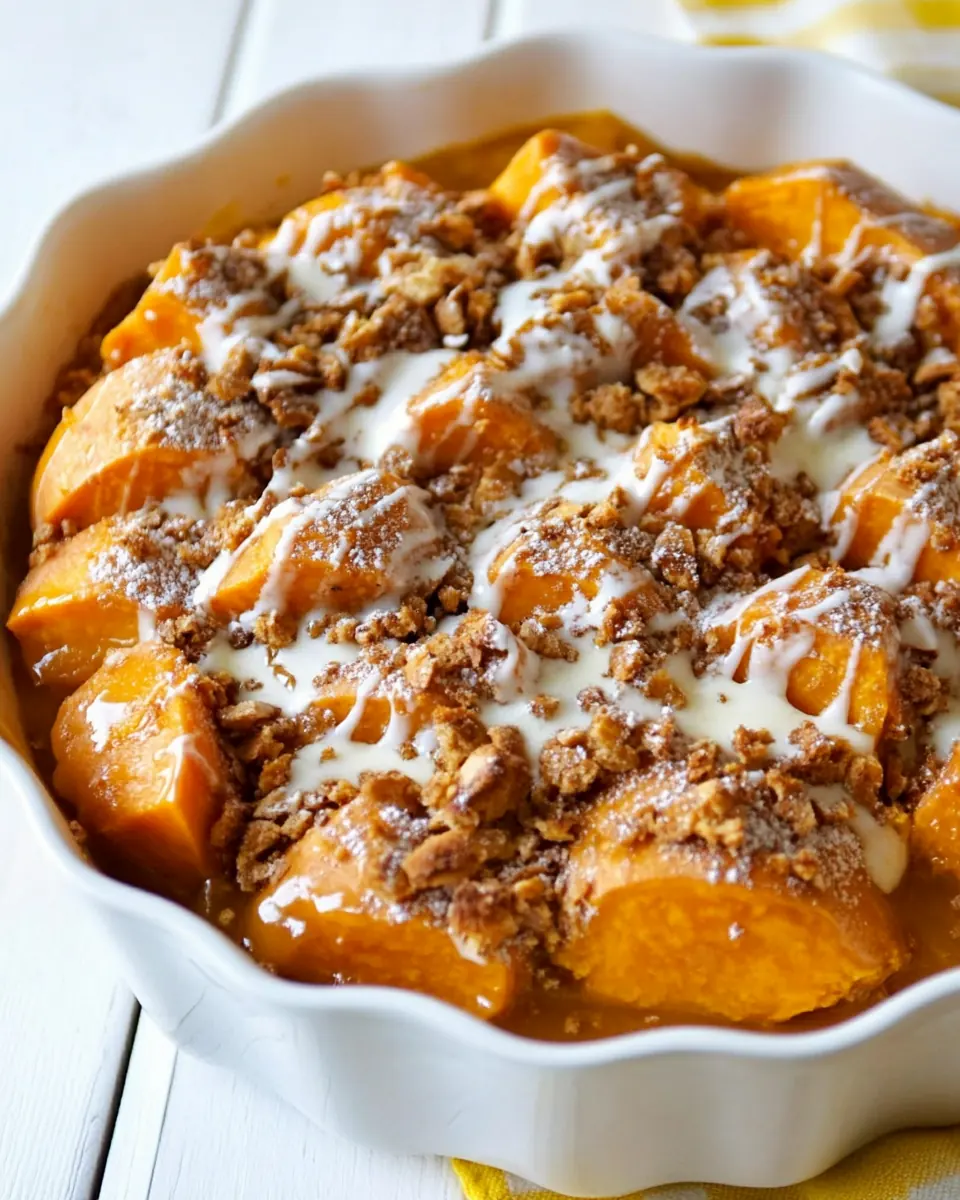
These ingredients are intentionally few, each one playing a key role in flavor and texture. The philosophy here is balance; the sweet potatoes provide hearty body and natural sweetness, the brown sugar and butter build a caramel like glaze, and the marshmallows add that browned, pillowy finish. Together they create depth without complexity.
- 2 pounds sweet potatoes (purple skin, orange flesh): Provide natural sweetness and hearty texture while serving as the main component that softens when baked; choose firm, evenly sized pieces to ensure uniform cooking and a creamy interior.
- 2/3 cup packed light brown sugar: Add deep, molasses-like sweetness and moisture that helps form a sticky, caramelized glaze; pack firmly into the measuring cup for accurate sweetness balance.
- 6 tablespoons butter, cut into small pieces: Contribute rich, buttery flavor and smooth mouthfeel while helping to create a glossy, saucy coating when melted and combined with the brown sugar.
- 2 cups mini marshmallows: Create a light, pillowy topping that browns slightly and contrasts the tender potatoes with gooey sweetness; scatter evenly near the end of baking to melt without overbrowning.
Recipe Directions for Easy Glazed Sweet Potatoes
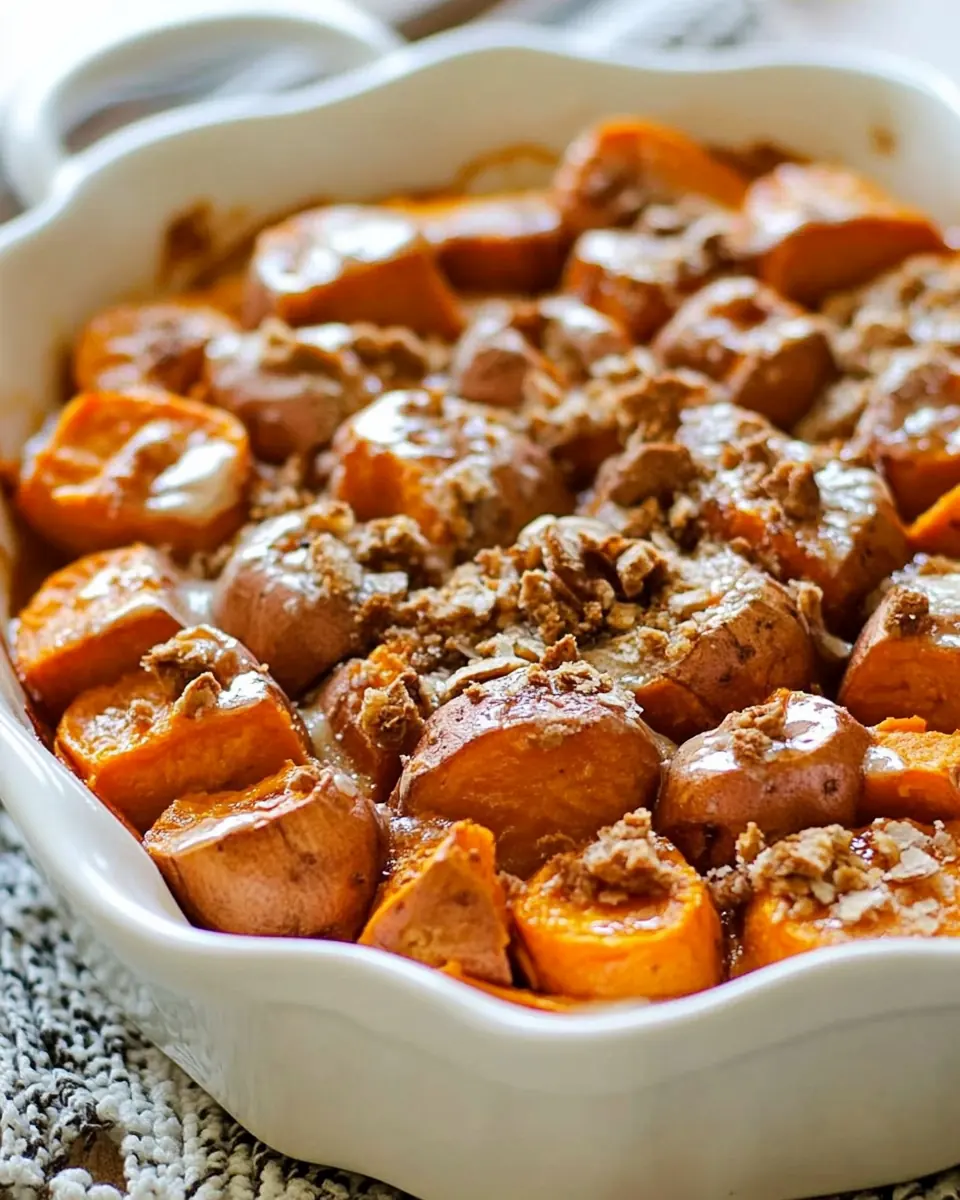
These directions follow a straightforward, oven first then broil finish approach that rewards patience. I like to move through the steps with confidence, knowing the long bake forms the foundation and the final broil adds the celebratory top note. Read through the whole process so you know when to watch the finishing steps closely.
- Preheat the oven to 350 degrees F. Spray the bottom of a glass or non-stick baking dish with nonstick spray. Wash and peel the sweet potatoes. Cut them into medium size pieces. Place the cut sweet potatoes in the baking dish and turn them so that they are coated with the oil. Bake for 60 minutes or until soft. Slice the cooked potatoes into bite-sized pieces and return them to the baking dish.: As the oven comes to temperature, you will notice a warm, slightly sweet scent beginning to circulate, which primes you for the slow roast ahead. Preheating ensures even baking from the moment the dish goes in, which is crucial for consistent texture, because an oven that is not fully hot can lead to unevenly cooked sweet potatoes . Be careful not to skip the light spray, since it prevents the caramelized glaze from sticking excessively to the dish and makes serving much easier. A common mistake is opening the oven frequently during the long bake, which lets heat escape and lengthens cook time; trust the process and only peek when necessary.
- Sprinkle the potatoes with brown sugar and dot with butter. Cover the dish and bake for 15 minutes. Turn the oven to broil.: Running your hands over scrubbed sweet potatoes you will feel their firm, cool texture before they soften in the oven. Peeling removes the exterior skin for a smoother mouthfeel in the finished dish, which many people prefer for this glazed preparation. Use a sharp peeler and work steadily to avoid gouging too deeply into the flesh, because excessive peeling wastes the interior. If some potatoes are oddly shaped, you can trim only the problematic spots so you retain as much good flesh as possible.
- Remove the potatoes from the oven and sprinkle the marshmallows on top. Place under the broiler for a minute or two, just until the marshmallows turn light brown.: The cut pieces should be uniform, about one to one and a half inch chunks, so they bake evenly and reach the tender stage at the same time. Visual cues matter here, you want pieces that are substantial enough to hold their shape but small enough to become soft all the way through during the bake. A common pitfall is cutting too large, which results in centers that remain firm; if pieces vary in size, remove smaller ones earlier to avoid overcooking.
- Place the cut sweet potatoes in the baking dish and turn them so that they are coated with the oil: As you toss the chunks in the dish, you will see a light sheen form, helping the butter and glaze adhere later. The oil creates a first layer that promotes even heat transfer and helps prevent sticking, which contributes to an even caramelization. If you skip coating, you may end up with dry spots or uneven browning. Keep an eye on the dish during the initial minutes of baking to ensure none of the pieces are overlapping too heavily, because crowded pieces steam instead of roasting.
- Bake for 60 minutes or until soft: The oven will softly hum while the interior of the sweet potatoes turns tender and fragrant, the edges may gently darken where sugars concentrate. To test doneness, a fork should slide in without resistance and the surface will look slightly wrinkled where moisture has evaporated. This slow bake is essential because it deepens natural sugars and creates the sweet, creamy base that the glaze clings to; rushing this step will yield less flavorful results. Avoid opening the oven too often during this long bake, because each peek lowers the temperature and extends the cooking time.
- Slice the cooked potatoes into bite-sized pieces and return them to the baking dish: When you slice, you will see a rich, silky interior and possibly a thin caramelized film on some edges from the initial roast. Returning the pieces to the dish prepares them to receive the brown sugar and butter so the glaze can form uniformly across all units. Do this carefully to keep the tender pieces intact, because rough handling can turn them to mash prematurely. If some pieces fall apart slightly, tuck them in among firmer pieces so they still benefit from the glaze without losing their shape entirely.
- Sprinkle the potatoes with brown sugar and dot with butter: The moment the brown sugar meets the warm sweet potatoes , you will notice the aroma shift toward caramel, and the small butter pieces will begin to melt into glossy rivulets. This combination is why the dish tastes decadent despite its simplicity; the butter carries flavor and helps the sugar melt into a sticky glaze. Be mindful to distribute the sugar evenly so some areas do not become overly sweet and syrupy while others remain plain. If you add too much butter, the glaze can pool rather than cling, which dilutes the caramelization.
- Cover the dish and bake for 15 minutes: With the dish covered, heat and steam mingle, allowing the sugar and butter to meld into the potato surfaces without drying them out, and you may smell a warm molasses note. This covered bake helps the glaze form and settle into the nooks of the pieces, improving cohesion and mouthfeel. A mistake here is leaving the dish uncovered which can dry out the exposed surfaces and prevent the sugar from properly melting into a glaze. Keep the cover tight so steam is retained and check only when the time is nearly up.
- Turn the oven to broil: Switching to broil raises the heat dramatically at the top of the oven, creating intense radiant heat that is perfect for toasting the marshmallows quickly. The sensory change is immediate, you may smell an intensified caramel scent and hear the oven fan adjust. This step is crucial for achieving the lightly browned, cloud like finish on the marshmallows without melting everything into a single puddle. Be careful not to forget the dish under the broiler, because broiling is rapid and can take a pleasant golden color to burnt in seconds.
- Remove the potatoes from the oven and sprinkle the marshmallows on top: As you scatter the marshmallows , notice how they settle into the sweet glossy pockets and create a playful top layer. Their small size helps them toast fast and evenly when returned to the broiler, and their sweetness amplifies the caramel notes of the glaze. Avoid piling too many in one spot, because clusters can melt into one large mass instead of forming delightful individual toasted pillows.
- Place under the broiler for a minute or two, just until the marshmallows turn light brown: Watch closely as the marshmallows bloom into golden domes, their edges crisping while centers remain oozy and soft; the visual cue to stop is a warm golden brown that is uniform but not charred. The heat will be intense and the marshmallows go from pale to deeply browned quickly, so stand by the oven and listen for any faint sizzling as sugars caramelize. One common mistake is walking away during this final step, which risks burning the topping; set a timer and stay present for those last few seconds.
Tips and Tricks about Easy Glazed Sweet Potatoes
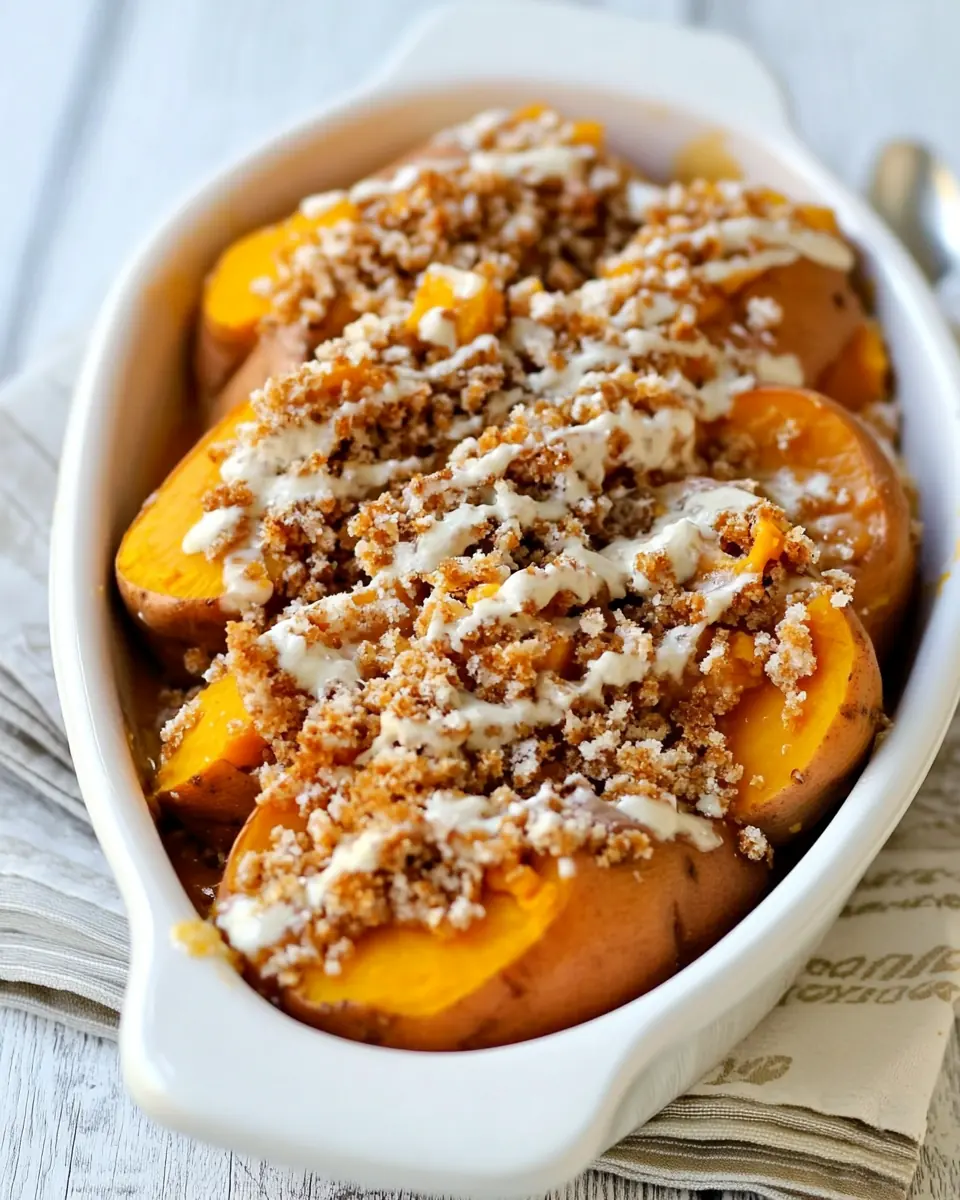
This dish rewards a few focused habits that help you get consistent results. Below are practical tips I rely on each time I make Easy Glazed Sweet Potatoes, from timing to presentation.
- Choose the right sweet potatoes: Look for firm sweet potatoes without soft spots, which ensures even baking and a smooth texture.
- Cut for consistency: Slice into uniform pieces so that each chunk reaches tenderness at the same time, avoiding a mix of undercooked and overcooked bites.
- Distribute sugar evenly: Sprinkle the packed brown sugar across the surface rather than dumping it in one spot to create an even glaze.
- Use small butter pats: Dotting with 6 small pieces of butter allows controlled melting and prevents oily pooling that can dilute flavor.
- Watch the broiler closely: The broiler step is quick and requires close attention so the marshmallows reach a light golden color without burning.
What Complements This Easy Glazed Sweet Potatoes
This is a cozy dish that pairs well with hearty mains and seasonal sides, and it adapts to many occasions. Below I outline serving suggestions, storage notes, and how to present it across meals and gatherings.
- Serve warm straight from the baking dish: The dish looks inviting when placed on the table hot, allowing guests to scoop glossy pieces with toasted marshmallows.
- Pair with roasted mains: It complements roasted poultry or vegetarian mains for holiday dinners, offering sweet contrast to savory entrees.
- Make ahead and reheat gently: You can prepare the potatoes through the covered 15 minute bake, refrigerate, and finish with brown sugar, butter and marshmallows right before serving; reheat in a moderate oven until warm and then broil briefly for the topping.
- Portion for occasions: For family dinners, a single casserole serves well, and for larger gatherings, double the ingredients and use a larger roasting pan to maintain the glaze to potato ratio.
- Store leftovers properly: Refrigerate in an airtight container for up to four days, and reheat in a covered dish in a 325 degree F oven until warmed through, then add a few fresh marshmallows and broil briefly if you want the toasted finish.
- Seasonal fit: This dish is especially welcome in cool months, making it ideal for fall and winter gatherings and holiday menus like Thanksgiving.
FAQ
Conclusion
This recipe captures what makes a great holiday side, the combination of simple ingredients and a little patience producing a memorable outcome. The concentrated sweetness of the baked potatoes, the glossy brown sugar and butter glaze, and the toasty marshmallow finish make it both nostalgic and foolproof. Give it a try at your next gathering or cozy weeknight dinner, and enjoy the warm compliments that follow.
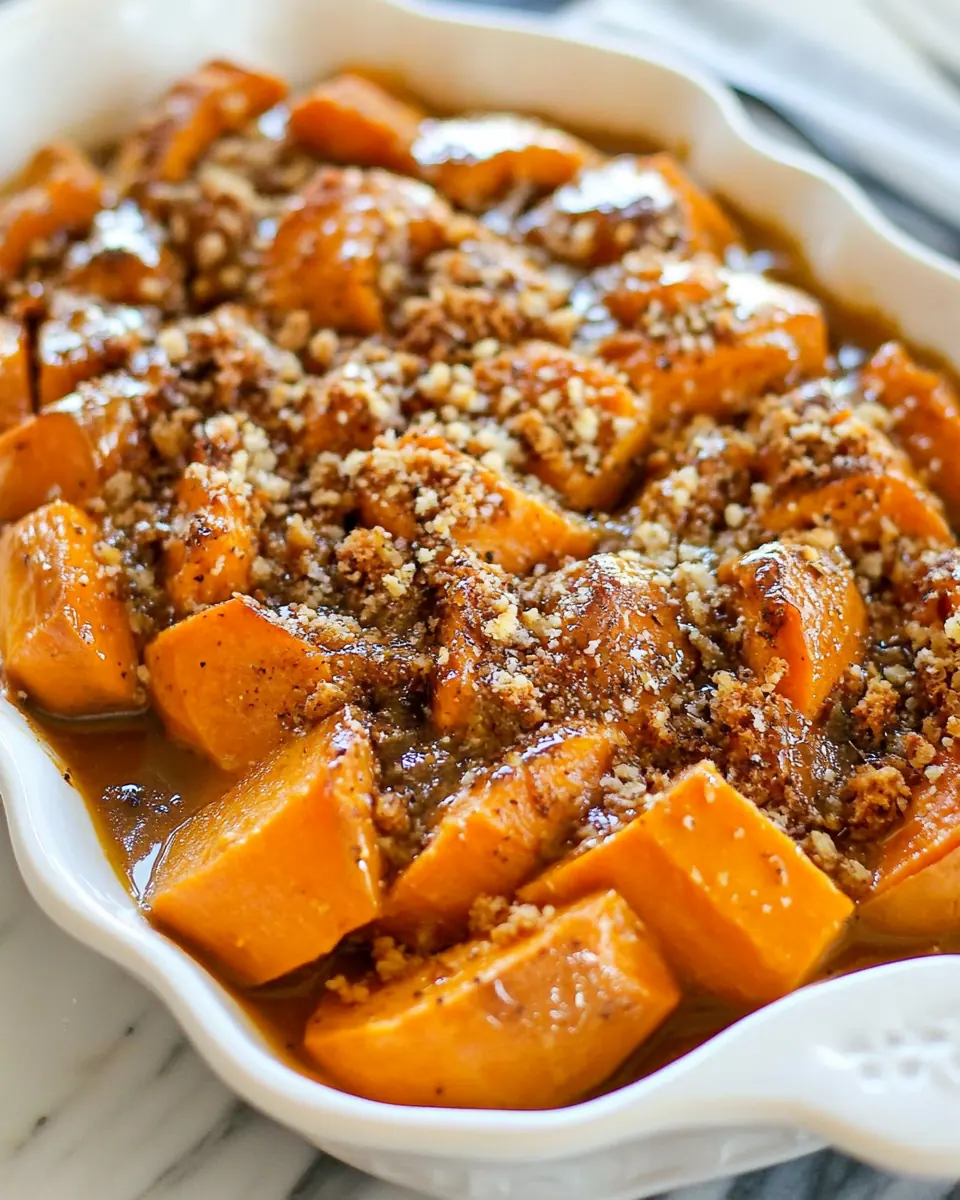
Easy Glazed Sweet Potatoes
Ingredients
Equipment
Method
- Preheat the oven to 350 degrees F. Spray the bottom of a glass or non-stick baking dish with nonstick spray. Wash and peel the sweet potatoes. Cut them into medium size pieces. Place the cut sweet potatoes in the baking dish and turn them so that they are coated with the oil. Bake for 60 minutes or until soft. Slice the cooked potatoes into bite-sized pieces and return them to the baking dish.: As the oven comes to temperature, you will notice a warm, slightly sweet scent beginning to circulate, which primes you for the slow roast ahead. Preheating ensures even baking from the moment the dish goes in, which is crucial for consistent texture, because an oven that is not fully hot can lead to unevenly cooked sweet potatoes . Be careful not to skip the light spray, since it prevents the caramelized glaze from sticking excessively to the dish and makes serving much easier. A common mistake is opening the oven frequently during the long bake, which lets heat escape and lengthens cook time; trust the process and only peek when necessary.
- Sprinkle the potatoes with brown sugar and dot with butter. Cover the dish and bake for 15 minutes. Turn the oven to broil.: Running your hands over scrubbed sweet potatoes you will feel their firm, cool texture before they soften in the oven. Peeling removes the exterior skin for a smoother mouthfeel in the finished dish, which many people prefer for this glazed preparation. Use a sharp peeler and work steadily to avoid gouging too deeply into the flesh, because excessive peeling wastes the interior. If some potatoes are oddly shaped, you can trim only the problematic spots so you retain as much good flesh as possible.
- Remove the potatoes from the oven and sprinkle the marshmallows on top. Place under the broiler for a minute or two, just until the marshmallows turn light brown.: The cut pieces should be uniform, about one to one and a half inch chunks, so they bake evenly and reach the tender stage at the same time. Visual cues matter here, you want pieces that are substantial enough to hold their shape but small enough to become soft all the way through during the bake. A common pitfall is cutting too large, which results in centers that remain firm; if pieces vary in size, remove smaller ones earlier to avoid overcooking.
- Place the cut sweet potatoes in the baking dish and turn them so that they are coated with the oil: As you toss the chunks in the dish, you will see a light sheen form, helping the butter and glaze adhere later. The oil creates a first layer that promotes even heat transfer and helps prevent sticking, which contributes to an even caramelization. If you skip coating, you may end up with dry spots or uneven browning. Keep an eye on the dish during the initial minutes of baking to ensure none of the pieces are overlapping too heavily, because crowded pieces steam instead of roasting.
- Bake for 60 minutes or until soft: The oven will softly hum while the interior of the sweet potatoes turns tender and fragrant, the edges may gently darken where sugars concentrate. To test doneness, a fork should slide in without resistance and the surface will look slightly wrinkled where moisture has evaporated. This slow bake is essential because it deepens natural sugars and creates the sweet, creamy base that the glaze clings to; rushing this step will yield less flavorful results. Avoid opening the oven too often during this long bake, because each peek lowers the temperature and extends the cooking time.
- Slice the cooked potatoes into bite-sized pieces and return them to the baking dish: When you slice, you will see a rich, silky interior and possibly a thin caramelized film on some edges from the initial roast. Returning the pieces to the dish prepares them to receive the brown sugar and butter so the glaze can form uniformly across all units. Do this carefully to keep the tender pieces intact, because rough handling can turn them to mash prematurely. If some pieces fall apart slightly, tuck them in among firmer pieces so they still benefit from the glaze without losing their shape entirely.
- Sprinkle the potatoes with brown sugar and dot with butter: The moment the brown sugar meets the warm sweet potatoes , you will notice the aroma shift toward caramel, and the small butter pieces will begin to melt into glossy rivulets. This combination is why the dish tastes decadent despite its simplicity; the butter carries flavor and helps the sugar melt into a sticky glaze. Be mindful to distribute the sugar evenly so some areas do not become overly sweet and syrupy while others remain plain. If you add too much butter, the glaze can pool rather than cling, which dilutes the caramelization.
- Cover the dish and bake for 15 minutes: With the dish covered, heat and steam mingle, allowing the sugar and butter to meld into the potato surfaces without drying them out, and you may smell a warm molasses note. This covered bake helps the glaze form and settle into the nooks of the pieces, improving cohesion and mouthfeel. A mistake here is leaving the dish uncovered which can dry out the exposed surfaces and prevent the sugar from properly melting into a glaze. Keep the cover tight so steam is retained and check only when the time is nearly up.
- Turn the oven to broil: Switching to broil raises the heat dramatically at the top of the oven, creating intense radiant heat that is perfect for toasting the marshmallows quickly. The sensory change is immediate, you may smell an intensified caramel scent and hear the oven fan adjust. This step is crucial for achieving the lightly browned, cloud like finish on the marshmallows without melting everything into a single puddle. Be careful not to forget the dish under the broiler, because broiling is rapid and can take a pleasant golden color to burnt in seconds.
- Remove the potatoes from the oven and sprinkle the marshmallows on top: As you scatter the marshmallows , notice how they settle into the sweet glossy pockets and create a playful top layer. Their small size helps them toast fast and evenly when returned to the broiler, and their sweetness amplifies the caramel notes of the glaze. Avoid piling too many in one spot, because clusters can melt into one large mass instead of forming delightful individual toasted pillows.
- Place under the broiler for a minute or two, just until the marshmallows turn light brown: Watch closely as the marshmallows bloom into golden domes, their edges crisping while centers remain oozy and soft; the visual cue to stop is a warm golden brown that is uniform but not charred. The heat will be intense and the marshmallows go from pale to deeply browned quickly, so stand by the oven and listen for any faint sizzling as sugars caramelize. One common mistake is walking away during this final step, which risks burning the topping; set a timer and stay present for those last few seconds.
Notes
- Choose the right sweet potatoes: Look for firm sweet potatoes without soft spots, which ensures even baking and a smooth texture.
- Cut for consistency: Slice into uniform pieces so that each chunk reaches tenderness at the same time, avoiding a mix of undercooked and overcooked bites.
- Distribute sugar evenly: Sprinkle the packed brown sugar across the surface rather than dumping it in one spot to create an even glaze.
- Use small butter pats: Dotting with 6 small pieces of butter allows controlled melting and prevents oily pooling that can dilute flavor.
- Watch the broiler closely: The broiler step is quick and requires close attention so the marshmallows reach a light golden color without burning.