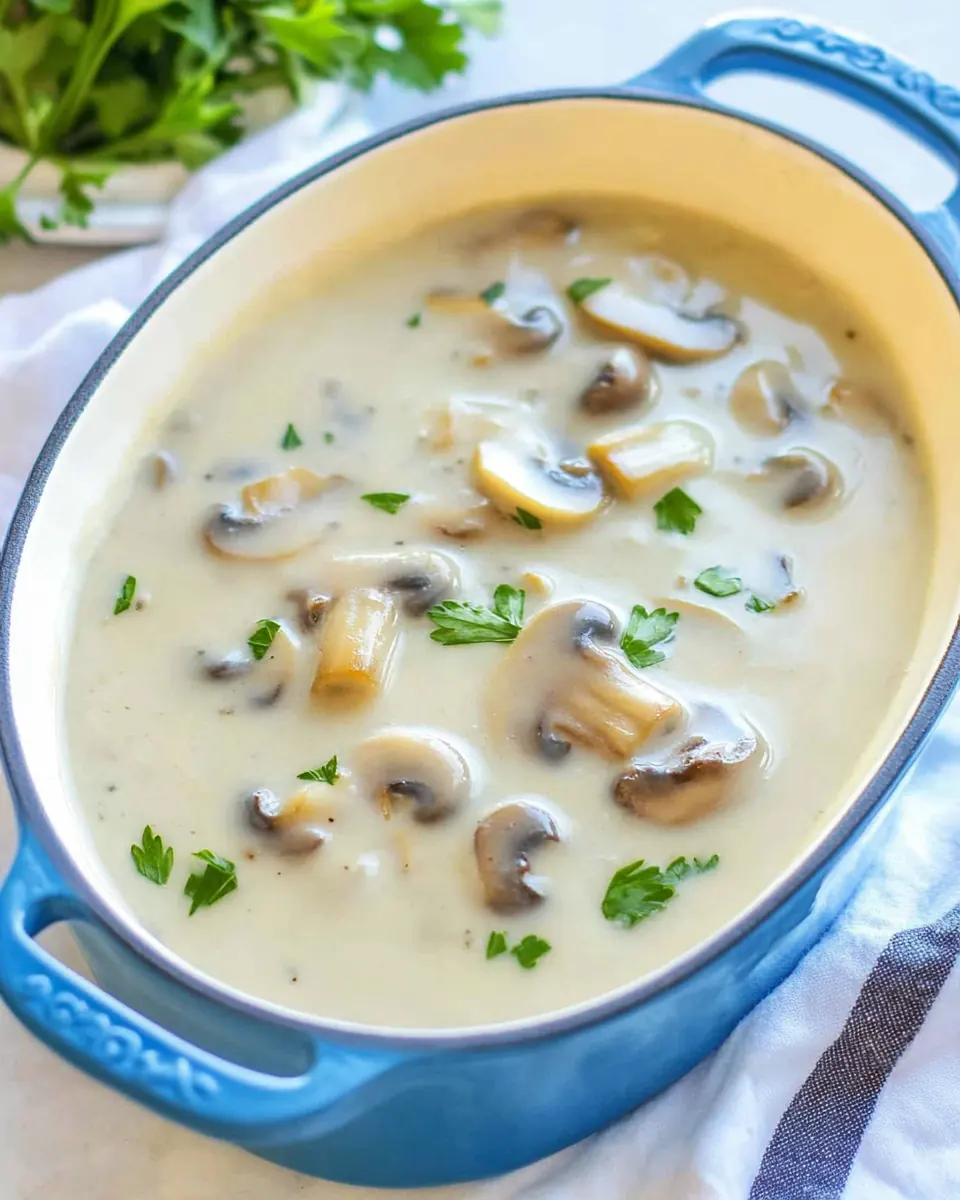
Rinse mushrooms (yes, I rinse my mushrooms), then pat them dry with paper towels and slice. Heat a large skillet over medium heat and add 1 tbsp olive oil. When oil is hot, add mushrooms and saute until golden and soft. Remove mushrooms from pan.: The first sensory cue you will notice is the earthy scent when you rinse and then slice the mushrooms , a damp but fresh aroma that turns fragrant when they hit heat. Patting them dry is crucial because surface moisture will steam the mushrooms instead of letting them brown, which removes the toasty notes you want. As you slice, watch the clean white or tan flesh; uniform thickness helps even cooking. A common error here is leaving them wet, which causes a soft rubbery texture rather than the pleasantly tender, slightly crisp edges you are aiming for. When the knife glides through and the pieces look glossy but not wet, you are ready.
Add 2 tbsp butter to pan along with 2 tbsp flour. Whisk until your flour roux is a light golden brown (1-2 min).: You will see the olive oil shimmer and smell a faint fruity warmth as it becomes ready, but it should not smoke. Medium heat gives the best balance so the mushrooms begin to color without the fat burning. If your pan is too cool you will not get browning and the mushrooms will exude water; if it is too hot you risk scorching. A telltale sign that the pan is ready is when a single test slice sizzles gently and begins to color in about 30 to 60 seconds.
Whisk in 1/2 cup stock then 1 cup milk and stir until hot and thickened.: As the mushrooms hit the pan you should hear an immediate sizzle, and in a few minutes they will begin to brown and shrink, releasing a concentrated, savory aroma. Stir them occasionally so they color on all sides, moving from pale to golden to a deeper caramel tone, and watch the edges crisp slightly. This browning creates Maillard flavors, which are essential for depth in the gravy. Avoid stirring constantly, which prevents browning, but do not leave them untouched to burn. If they release a lot of liquid and become soggy, the pan was crowded or too cool, which is the most common mistake.
Add the mushrooms back to the pan, season with salt and pepper to taste and bring to a simmer. When gravy is at desired consistency, remove from heat (keep in mind it will still thicken slightly as it cools).: The moment the mushrooms are soft and golden, transfer them to a plate so you can use the pan for the roux. You will notice the pan has brown bits and concentrated juices, these fond pieces are flavor gold and will be integrated into the gravy. Leaving the mushrooms in while making the roux can overcook them and change texture, so remove them to preserve that perfect bite. A slip here is leaving them in the pan, which often leads to a gluey or overcooked result.
Add 2 tbsp butter to pan along with 2 tbsp flour: When you add the butter it should melt and foam slightly, and combining it with the flour creates a paste that will thicken the sauce. Whisk them together so the mixture becomes smooth and takes on a light golden color in about one to two minutes, releasing a warm, nutty aroma. This step removes the raw flour taste and builds the base texture, so patience is rewarded. Overcooking the roux until it darkens too much will change the final color and flavor of the gravy, while undercooking leaves a starchy aftertaste.
Whisk until your flour roux is a light golden brown (1 to 2 min): You will see the roux transition from pale to a warm tan, and the smell will shift from pasty to toasty. Whisk constantly so the heat is distributed evenly and no lumps form. A smooth, glossy paste signals readiness. If you smell anything bitter, the roux has started to burn and you should start again to avoid tainting the gravy. This careful cooking ensures a subtle, cooked flour flavor rather than rawness in the finished sauce.
Whisk in 1/2 cup stock then 1 cup milk and stir until hot and thickened: Adding the stock first loosens the roux, and you will see the mixture turn fluid and fragrant as the pan fond dissolves into the liquid. Pour slowly while whisking to prevent lumps, then add the milk and continue to stir. As the sauce heats you will notice it go from glossy to velvety, thickening to coat the back of a spoon. The scent becomes rounded and savory, with the mushroom notes threading through. A common mistake is pouring cold liquids in too quickly, which can cause clumping; tempering with a little warm stock first helps it come together smoothly.
Add the mushrooms back to the pan, season with salt and pepper to taste and bring to a simmer: Returning the mushrooms introduces the concentrated juices back into the sauce, and you will see the gravy take on flecks and texture. Season gradually so the salt enhances but does not overpower, tasting as you go. Bring just to a gentle simmer so the gravy thickens and the flavors meld, watching for small bubbles around the edges. Let it linger on the heat briefly so the mushrooms warm through and soak up the sauce. The usual mistake here is boiling vigorously, which can break the smoothness and make it too thin or grainy.
When gravy is at desired consistency, remove from heat: As you lift the pan from the stove you will notice the gravy slows in movement, and it will continue to thicken slightly as it cools. The finished texture should be glossy and coat the back of a spoon without being pasty. If you find it too thick once cooled, stir in a splash of warm stock or milk to loosen it. Avoid overcooking which concentrates and can make it gluey, the best result is a silky, pourable gravy that clings to whatever it dresses.