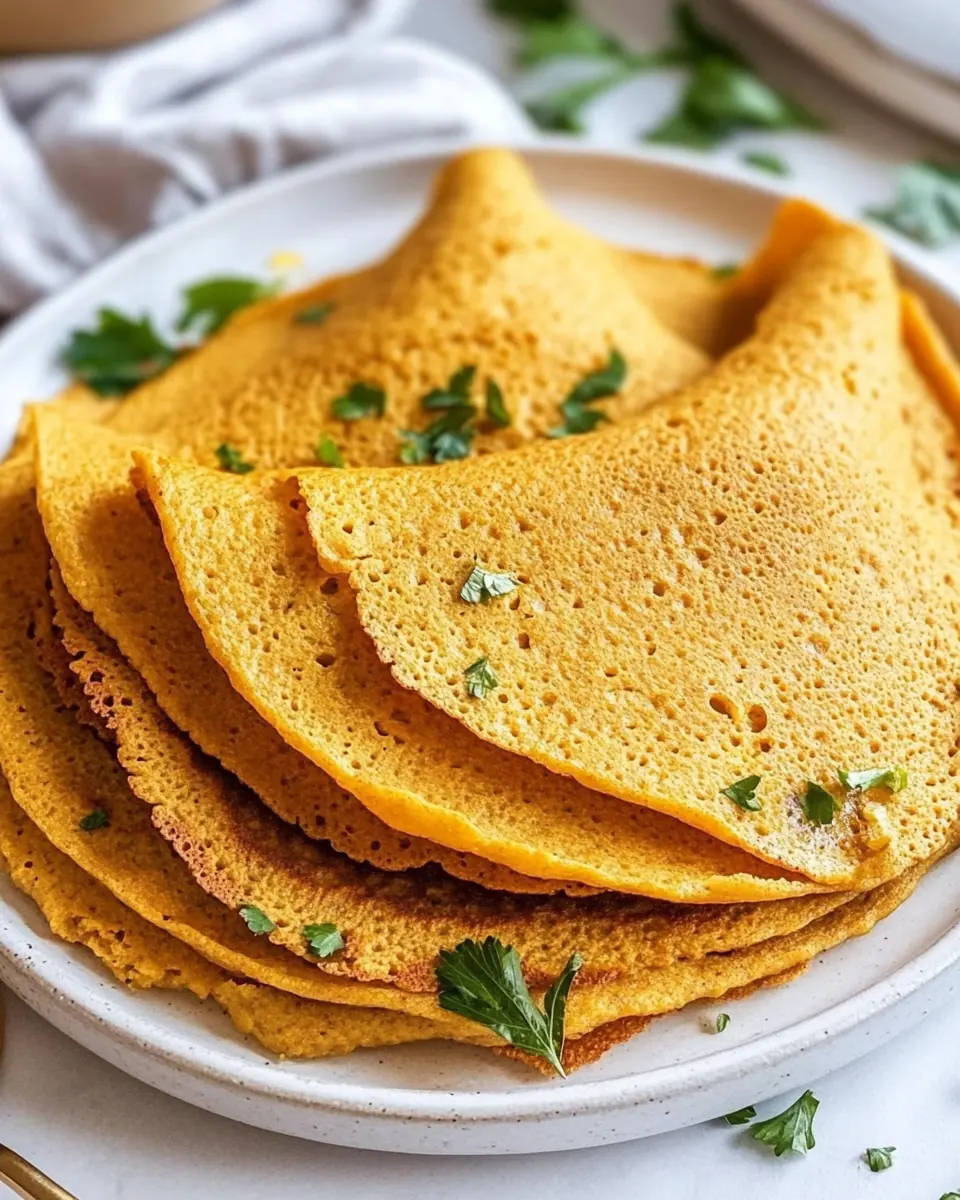
Soak the lentils in still water and let them sit for at least 2 hours or until they absorb all the liquid.: The soaking allows the red lentils to plump and soften, releasing starches that help bind the batter. You should notice the lentils swelling and the water becoming slightly cloudy, a sign that starch is loosening. The aroma at this stage is mild and earthy, and the texture should be tender when pressed between fingers. Why this matters, I have found, is that properly soaked lentils require less blending to reach a smooth consistency, preserving a pleasant mouthfeel. A common mistake is skimping on soak time, which leads to gritty batter and uneven cooking, so resist the urge to rush this step.
Then add them to a blender and blend until you get a liquid, soft pancake batter-like consistency.: As you blend the soaked red lentils with the reserved still water , listen for the motor tone to steady, and watch for a smooth, silky pourable batter. The visual cue is a batter that ribbons slowly from the blade, without large lentil pieces. The scent becomes slightly sweeter, and the surface looks glossy. Blending releases air which lightens the batter, making the pancakes tender. Avoid overloading the blender, which can lead to uneven processing; if the mixture seems lumpy, pulse and scrape the sides to ensure even texture.
In a non-stick pan pour 2-3 tablespoons of the batter and spread it gently with a spatula (the batter is thick and will not spread by turning the pan as you would for pancakes).: When you pour the batter, you will feel its weight; it will not flow like a wheat pancake mix. Use a spatula to gently coax it into a thin circle, watching the edges set and change from wet to matte. The surface will show tiny bubbles where steam escapes, and aroma shifts to a warm, toasty note. This spreading technique matters because it creates even thickness, ensuring the center cooks through while the edges crisp. A frequent error is trying to tip the pan to spread the batter, which results in irregular thickness and inconsistent cooking.
Cook on both sides for 2-3 minutes or until firm enough to handle easily.: As the pancake cooks, you will hear a subtle sizzle and see the edges lifting slightly from the pan. The bottom should develop a golden to light brown color, and the top will look set rather than glossy. Flip when the underside is firm and the surface stops appearing wet. The scent will become nuttier and more pronounced. Cooking both sides ensures a pleasant contrast of tender interior and firmer edge. A common mistake is flipping too early, which can tear the pancake, so wait until it feels resilient when nudged with a spatula.
Repeat until you use up all the batter.: Keep the pan at consistent medium heat and repeat the pour, spread, and cook cycle. You will develop a rhythm, and the pancakes will become more uniform as you adjust heat and oil. Between batches, wipe the pan if bits accumulate to prevent burning that could taint later pancakes. The auditory cue of a steady gentle sizzle indicates correct temperature. A trap to avoid is overcrowding the pan, which lowers the heat and leads to soggy centers, so give each pancake enough space.
Enjoy with fresh vegetables, in wraps, with salads or soups.: Serving is flexible, and the warm aroma pairs beautifully with crisp vegetables or tangy dressings. I love tearing a pancake and wrapping it around a pile of greens, noticing the contrast between soft interior and crunchy veg. The aroma and texture interplay make each bite balanced. One tip is to serve immediately for the best texture; letting them steam under a cover will soften the edges, so if you must hold them, place on a cooling rack to maintain crispness.
You can also add spices to the batter or use a splash of oil when frying if you don't have a non-stick pan.: Incorporating your favorite spices into the batter releases fragrant oils when cooked, giving a layered scent and deeper flavor. A light splash of cooking oil in a regular pan ensures even browning and a pleasing crisp edge. When adding spices, mix sparingly at first and adjust after tasting a small test pancake. Avoid adding too much liquid, which would thin the batter and change cooking times; if pancakes spread too much, reduce added liquids in future batches.