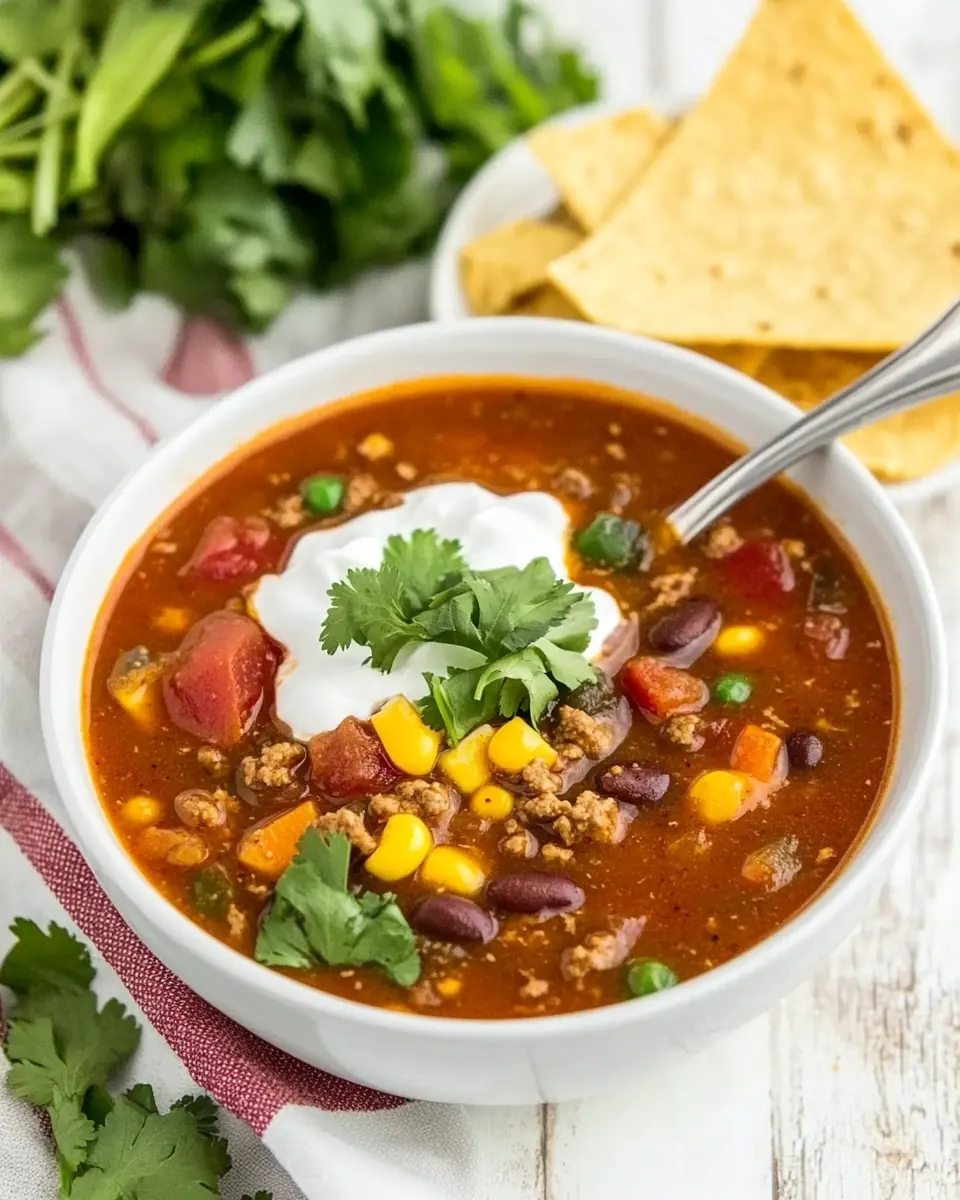
Heat 1 tsp. olive oil in frying pan, add ground beef and cook until well browned, breaking into small pieces with turner as you cook it. Remove beef to large soup pot.: The sizzling sound is your friend here, it signals that the meat is searing and developing those caramelized bits that make the broth rich; you should notice the aroma deepen as the beef takes on color. Use medium high heat so the exterior browns while the inside cooks through, and break the meat into small, even pieces to ensure consistent texture in the final soup. If you rush this step by turning down the heat too low, the meat will stew and you will lose that toasted flavor which the recipe relies on. A common issue is overcrowding the pan, which causes moisture to accumulate and prevents proper browning; if your pan feels crowded, work in batches so each piece can sear properly. After transferring to the soup pot, scrape the pan to capture any fond.
In same frying pan heat second tsp. of olive oil, add onions and saute until onions are starting to soften and brown, about 3 minutes.: When the onions hit the warm oil you will hear a gentle sizzle and soon smell a sweet, savory perfume; aim for translucence with a hint of golden edges, that balance gives a lightly caramelized flavor without bitterness. Keep the heat at medium so the onions soften and release sugars gradually, stirring to avoid uneven cooking. If you cook them too fast at very high heat they will brown too quickly on the outside and remain sharp inside, which can create hotspots of flavor that dominate. Watch for tiny brown bits forming at the pan surface, those are good signs the onions are developing depth.
Add garlic, Mexican oregano, cumin, Ancho chile powder, and chili powder and saute about 1 minute, or until the spices are fragrant.: The moment the spices hit the hot onions the kitchen will fill with a warm, toasted aroma, which is when you know they are releasing their essential oils and integrating into the base. Stir constantly for about a minute, as spices can burn quickly and turn bitter; you want a toasty scent without any acrid notes. This step is crucial because it intensifies the spices beyond what raw powder can offer, building layers of flavor in the eventual broth. A frequent mistake is leaving the spices unattended where they can scorch, so keep stirring and reduce the heat if you sense smoking.
Add onion mixture to the soup pot, then rinse out the frying pan with 1 cup beef broth and add that to the pot.: Deglazing the pan with broth pulls loose the concentrated browned bits, which are flavor gold, and folding that liquid into the soup ensures nothing is wasted. Use a spoon to scrape the pan while the broth warms so those caramelized fragments dissolve into the liquid, adding umami and complexity. If you skip this rinse, the pot misses nuanced depth and the pan waste goes down the drain. Make sure the broth is warm enough to lift the fond easily, cold liquid can be slower to dissolve those bits.
Add the rest of broth, canned tomatoes, and can of undrained beans.: Pouring in the remaining broth and the tomatoes with their juice creates the main body of the soup, while the undrained beans contribute starch and creaminess that thicken the mouthfeel as they simmer. Stir gently to integrate, and bring the pot to a low simmer so flavors marry without aggressive boiling. If you boil vigorously the tomatoes can break down too quickly and create a frothy, less unified broth. A common oversight is draining the beans, which reduces the velvety texture they add; keeping their liquid helps maintain thickness and flavor balance.
Let soup cook at very low simmer for 45 minutes, stirring occasionally and adding a bit more water if it cooks down too much.: During the long gentle simmer the flavors knit and the broth mellows, producing a comforting aroma that fills the kitchen; you will notice the liquid mellow and thicken slightly as starches from the beans integrate. Keep the heat low so the surface shows gentle movement, not a rolling boil, which preserves texture and prevents the meat from getting tough. Stir every so often to prevent sticking, especially toward the end as the liquid reduces, and add small amounts of water if the pot seems to be getting too thick. The mistake to avoid is stepping away entirely, because reductions can concentrate salt and heat, altering the intended balance.
When the soup is done, stir in desired amount of lime juice. You can also add some Green Tabasco Sauce if you'd like it a bit spicier!: The bright citrus pop of fresh lime juice is the finishing note that lifts the whole pot, and adding it right at the end preserves that fresh tang; you should taste and add juice gradually until the acidity complements the savory base. If you choose to add a few drops of hot sauce, do so sparingly and taste, because it can quickly overpower the delicate lift of the lime. A common error is adding acidic elements too early, which causes them to fade during simmering, so reserve this step for the finish.