Easy Taco Soup
Easy Taco Soup is the kind of bowl I turn to when I want something hearty, a little spicy, and utterly comforting after a long day. I first made this version on a blustery winter evening when errands ran late and the pantry was mostly basics, and the way the aromas of ground beef, onion, and warming spices filled the kitchen convinced me I had a new staple.
The memory of serving that pot to friends who dropped by unexpectedly still makes me smile, because everyone scraped their bowls clean and asked for the recipe. I liked how flexible the soup felt, how the simple act of simmering melded canned tomatoes and beans into something that tasted far more thoughtful than the short ingredient list would suggest. Whenever I need a cozy, crowd pleasing meal that does not demand attention, I reach for this recipe.
Recipe Snapshot
60 mins
15 mins
45 mins
Medium
350 kcal
Mexican
Gluten-Free, Keto
Soups
Frying Pan, Large Soup Pot, Turner
Why This Easy Taco Soup Is a Winner
Comfort in a Bowl
I love Easy Taco Soup because it hits that sweet spot between familiar and exciting. The combination of ground beef and warm spices creates a deeply savory base, while the tomatoes and beans add body and texture. It feels like a hug that also wakes up your palate.
Speed and Simplicity
We can get a full meal on the table without fuss, which is a huge reason this recipe lives in my weeknight rotation. With just a handful of steps and mostly pantry items, you get big flavor for little effort, and that makes it perfect for busy nights.
Flexible and Crowd Friendly
I often double the pot because guests love it, and it scales beautifully. The flavors deepen if you let it simmer longer, so it works whether you need dinner in an hour or want something to come alive on the stove while you relax.
Layered Flavor from Simple Techniques
Browned ground beef and sautéed onion give the soup a roasted savor that canned ingredients alone cannot provide. Toasting the spices briefly unlocks their aroma, and deglazing the pan captures every bit of flavor, so nothing gets wasted.
Customizable Heat and Finish
We can dial the heat up or down at the end, and the fresh squeeze of lime juice brightens the whole pot. That finishing touch turns a hearty soup into something that feels fresh and lifted.
Easy Taco Soup Ingredients
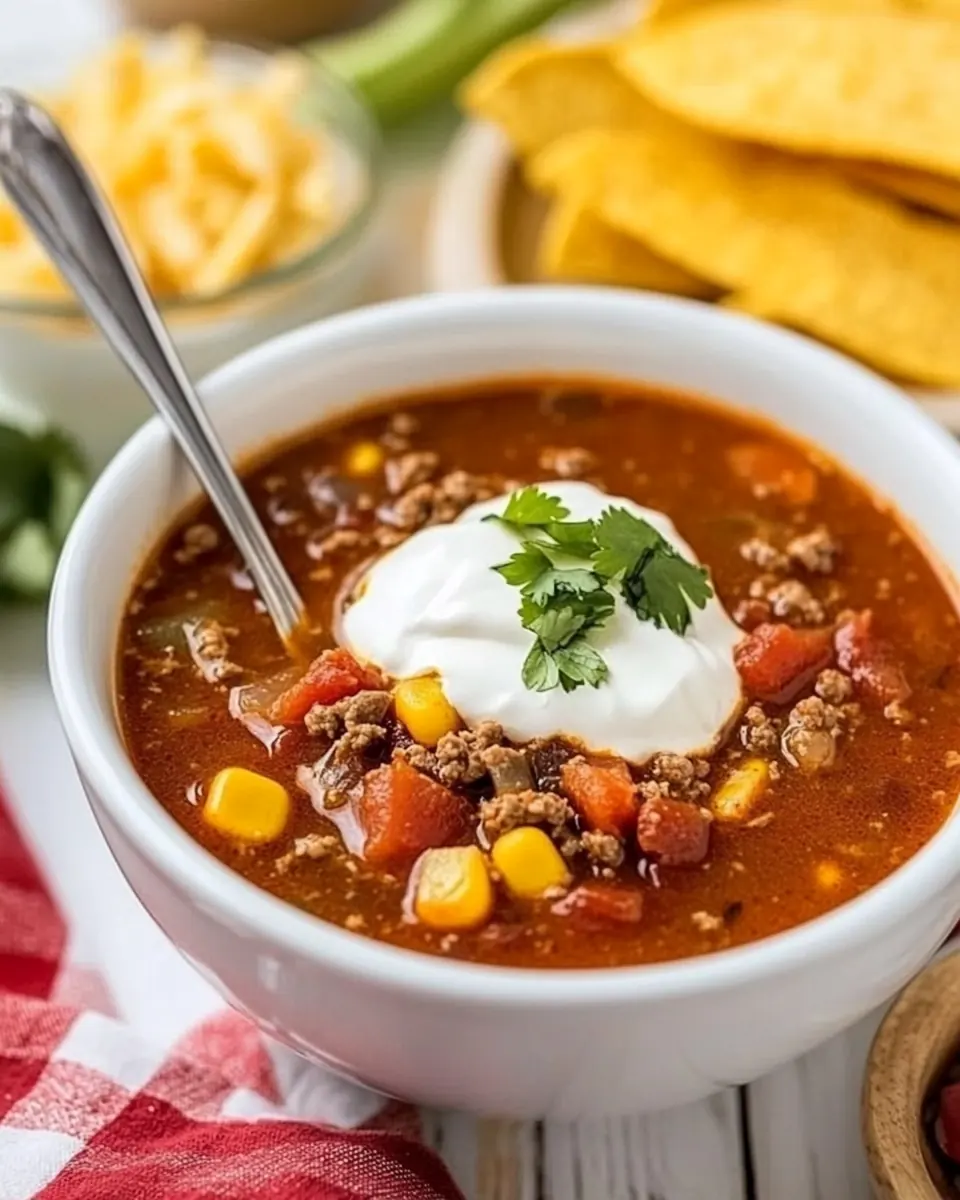
These ingredients are built around a philosophy of layering simple, robust flavors. The key players are the ground beef for savory depth, the aromatics like onion and garlic to build fragrance, and a blend of spices that gives the broth its taco inspired profile. Canned tomatoes and beans provide body and convenience, while a splash of lime juice at the end lifts everything.
- 1 1/2 lb s. lean ground beef: Brown thoroughly to develop savory flavor and render fat; forms the hearty protein base for the soup and provides texture and richness throughout the dish. Season while cooking to build layers of flavor that complement the spices and broth.
- 1 tsp . + 1 tsp. olive oil: Heat gently to create a cooking medium for aromatics and meat; helps prevent sticking and promotes even browning of the onion and ground beef. Use measured amounts to control overall fat and flavor intensity in the final soup.
- 1 onion, chopped small: Sauté until softened and translucent to release natural sugars and savory depth; adds a sweet, aromatic backbone that balances the spice and acidity in the soup. Chop small for even distribution and quick cooking without large onion pieces.
- 1 T minced garlic (more or less to taste): Mince and cook briefly to bloom pungent aroma and sharpness; contributes garlicky warmth and umami that enhances the overall savory profile. Add according to taste to avoid overpowering the other seasonings.
- 2 T dried oregano (preferably Mexican oregano): Crumble and toast briefly to release herbal oils and citrus-like notes; contributes a warm, slightly floral oregano flavor that pairs well with Mexican-style spices. Prefer Mexican oregano for a more earthy, robust profile closer to traditional taco seasoning.
- 2 T ground cumin: Toast and stir to unlock warm, earthy, slightly citrusy notes; provides the distinctive cumin flavor that anchors many Mexican-inspired soups and stews. Measure carefully to prevent overwhelming the blend of chile and oregano.
- 1 T ground Ancho chile powder: Sprinkle and toast lightly to release smoky, fruity heat; adds depth and a mild chocolatey pepper flavor that complements the chili powder and cumin. Choose ancho chile powder for a richer, mildly sweet heat that enhances the soup’s complexity.
- 1 T chili powder: Add for robust chili flavor and gentle heat; blends multiple chili varieties and spices to create classic taco seasoning character. Balances other spices and helps tie the tomato, lime, and beef flavors together.
- two 14 oz. cans beef broth, (see notes): Pour in to provide a savory, umami-rich liquid base that cooks and marries all ingredients; beef broth contributes meaty depth and body to the soup. Adjust quantity to control soup thickness and overall saltiness.
- two 14.5 oz. cans petite diced tomatoes with juice: Stir in with juice to contribute bright tomato acidity and chunky texture; petite diced tomatoes distribute small pieces evenly while adding sweetness and liquid. Use with broth to create a balanced, comforting base for the spices and beans.
- one 15 oz. can pinto beans (see notes): Drain or add with liquid per preference to provide creamy texture and subtle nutty flavor; pinto beans add protein, fiber, and body to make the soup more filling. Rinse if desired to control sodium and to reduce canning flavors.
- 2 T fresh-squeezed lime juice (more or less to taste): Squeeze in at the end to lift and brighten the finished soup; fresh lime juice adds acidity that balances richness and enhances all other flavors. Adjust amount to taste for the desired pop of freshness.
Recipe Steps for Easy Taco Soup
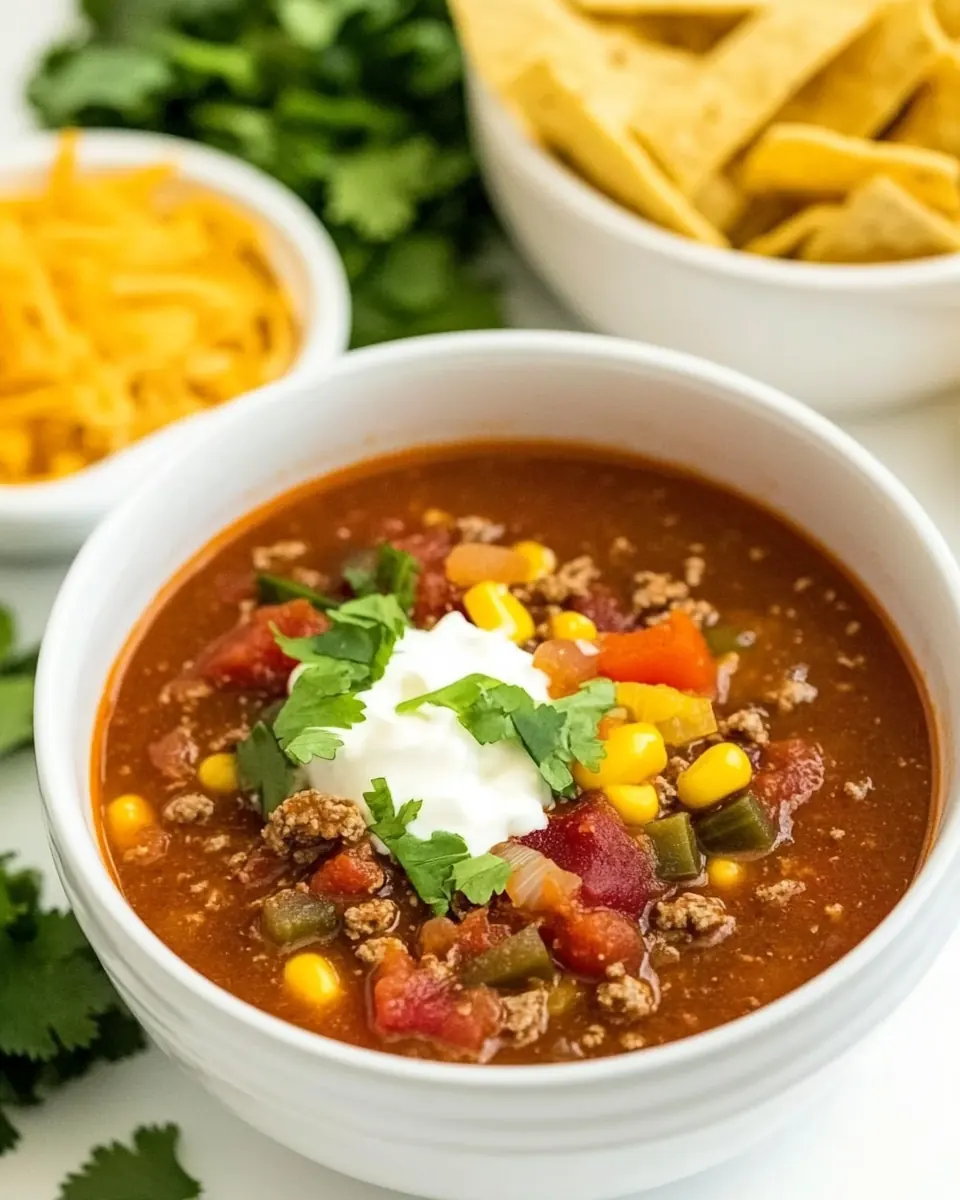
These steps are straightforward, but I like to narrate them as if we are cooking together. Follow the sequence to layer flavors properly, and take your time with browning and toasting to get the most aromatic result. Keep an eye on the pot during the simmer so nothing sticks or reduces too drastically.
- Heat 1 tsp. olive oil in frying pan, add ground beef and cook until well browned, breaking into small pieces with turner as you cook it. Remove beef to large soup pot.: The sizzling sound is your friend here, it signals that the meat is searing and developing those caramelized bits that make the broth rich; you should notice the aroma deepen as the beef takes on color. Use medium high heat so the exterior browns while the inside cooks through, and break the meat into small, even pieces to ensure consistent texture in the final soup. If you rush this step by turning down the heat too low, the meat will stew and you will lose that toasted flavor which the recipe relies on. A common issue is overcrowding the pan, which causes moisture to accumulate and prevents proper browning; if your pan feels crowded, work in batches so each piece can sear properly. After transferring to the soup pot, scrape the pan to capture any fond.
- In same frying pan heat second tsp. of olive oil, add onions and saute until onions are starting to soften and brown, about 3 minutes.: When the onions hit the warm oil you will hear a gentle sizzle and soon smell a sweet, savory perfume; aim for translucence with a hint of golden edges, that balance gives a lightly caramelized flavor without bitterness. Keep the heat at medium so the onions soften and release sugars gradually, stirring to avoid uneven cooking. If you cook them too fast at very high heat they will brown too quickly on the outside and remain sharp inside, which can create hotspots of flavor that dominate. Watch for tiny brown bits forming at the pan surface, those are good signs the onions are developing depth.
- Add garlic, Mexican oregano, cumin, Ancho chile powder, and chili powder and saute about 1 minute, or until the spices are fragrant.: The moment the spices hit the hot onions the kitchen will fill with a warm, toasted aroma, which is when you know they are releasing their essential oils and integrating into the base. Stir constantly for about a minute, as spices can burn quickly and turn bitter; you want a toasty scent without any acrid notes. This step is crucial because it intensifies the spices beyond what raw powder can offer, building layers of flavor in the eventual broth. A frequent mistake is leaving the spices unattended where they can scorch, so keep stirring and reduce the heat if you sense smoking.
- Add onion mixture to the soup pot, then rinse out the frying pan with 1 cup beef broth and add that to the pot.: Deglazing the pan with broth pulls loose the concentrated browned bits, which are flavor gold, and folding that liquid into the soup ensures nothing is wasted. Use a spoon to scrape the pan while the broth warms so those caramelized fragments dissolve into the liquid, adding umami and complexity. If you skip this rinse, the pot misses nuanced depth and the pan waste goes down the drain. Make sure the broth is warm enough to lift the fond easily, cold liquid can be slower to dissolve those bits.
- Add the rest of broth, canned tomatoes, and can of undrained beans.: Pouring in the remaining broth and the tomatoes with their juice creates the main body of the soup, while the undrained beans contribute starch and creaminess that thicken the mouthfeel as they simmer. Stir gently to integrate, and bring the pot to a low simmer so flavors marry without aggressive boiling. If you boil vigorously the tomatoes can break down too quickly and create a frothy, less unified broth. A common oversight is draining the beans, which reduces the velvety texture they add; keeping their liquid helps maintain thickness and flavor balance.
- Let soup cook at very low simmer for 45 minutes, stirring occasionally and adding a bit more water if it cooks down too much.: During the long gentle simmer the flavors knit and the broth mellows, producing a comforting aroma that fills the kitchen; you will notice the liquid mellow and thicken slightly as starches from the beans integrate. Keep the heat low so the surface shows gentle movement, not a rolling boil, which preserves texture and prevents the meat from getting tough. Stir every so often to prevent sticking, especially toward the end as the liquid reduces, and add small amounts of water if the pot seems to be getting too thick. The mistake to avoid is stepping away entirely, because reductions can concentrate salt and heat, altering the intended balance.
- When the soup is done, stir in desired amount of lime juice. You can also add some Green Tabasco Sauce if you'd like it a bit spicier!: The bright citrus pop of fresh lime juice is the finishing note that lifts the whole pot, and adding it right at the end preserves that fresh tang; you should taste and add juice gradually until the acidity complements the savory base. If you choose to add a few drops of hot sauce, do so sparingly and taste, because it can quickly overpower the delicate lift of the lime. A common error is adding acidic elements too early, which causes them to fade during simmering, so reserve this step for the finish.
Tips and Variations
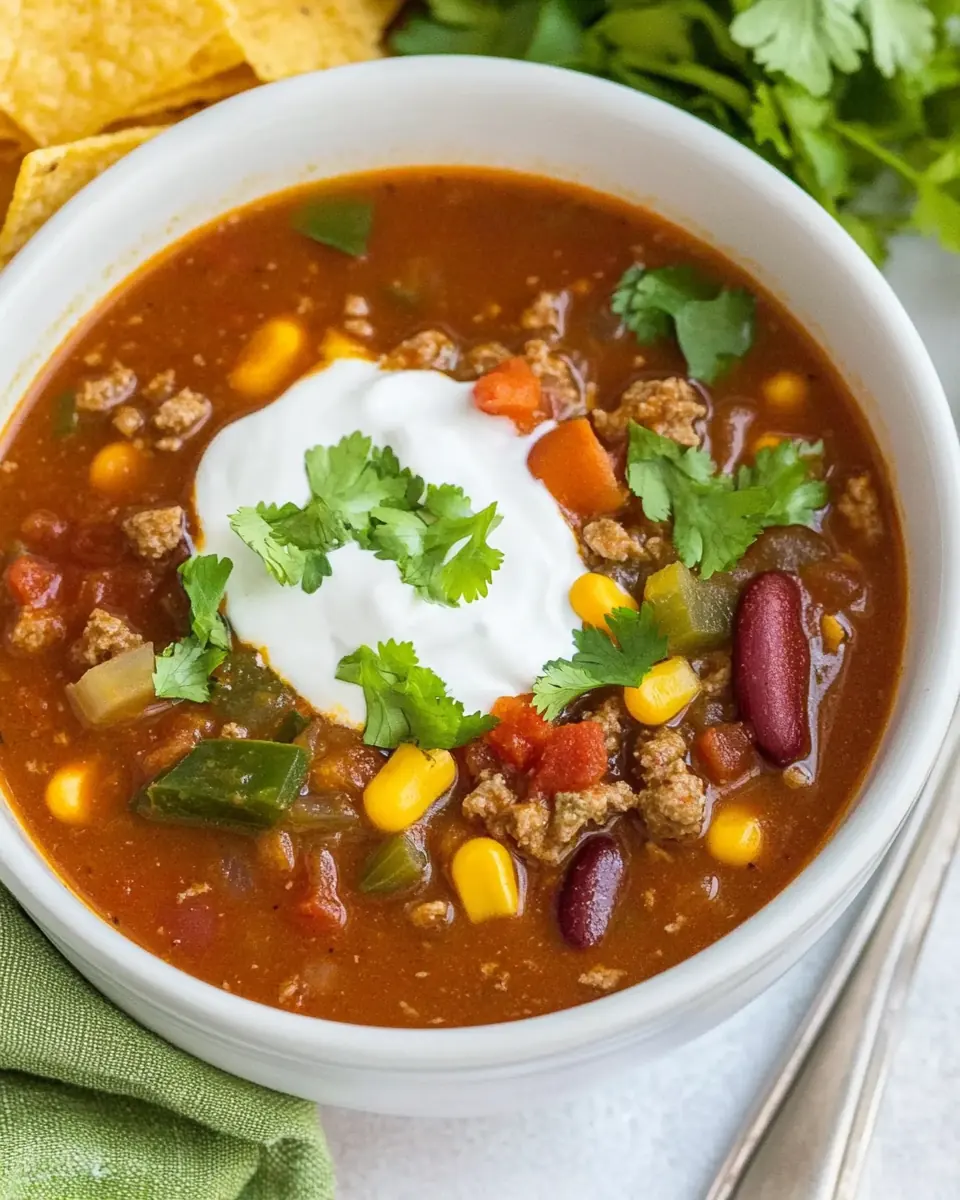
I like to think of tips as small chef secrets that make the recipe shine. These suggestions will help you get consistent results and offer ideas to adapt the soup to your mood or pantry.
- Brown the meat properly: Allow ground beef to develop color and fond, which adds depth to the broth; if the pan is crowded, brown in batches so you avoid steaming.
- Adjust spice intensity: Taste as you go and add a touch of the chili powder or Ancho chile powder gradually, because different brands vary in heat and potency.
- Reserve liquid for deglazing: Keep one cup of the beef broth aside to rinse the pan so all that caramelized flavor makes it into the pot.
- Control salt with canned items: If your canned tomatoes or broth are high in sodium, dilute with a bit of water and taste before adding any extra salt.
- Finish with brightness: Fresh lime juice at the end lifts the whole bowl, so add it slowly and taste to find the right balance for you.
Serving Suggestions
This soup is wonderfully versatile and easy to dress up for company or keep rustic for a weeknight. Below are serving ideas, pairings, and storage notes to help you enjoy it across seasons and occasions.
- Family dinners: Serve bowls topped with a spoonful of extra diced tomatoes for freshness and an optional sprinkle of chopped fresh herbs if available, making it a hearty weeknight Dinner option.
- Casual gatherings: Offer tortilla chips or warm corn tortillas on the side so guests can scoop or dunk, creating a fun, interactive meal.
- Meal prep: Cool and refrigerate in airtight containers for up to four days, and reheat gently on the stovetop, adding a splash of water if it has thickened too much.
- Make ahead: This soup holds up well, and flavors often deepen after resting overnight, making it ideal for preparing a day ahead and reheating before serving.
- Seasonal pairing: In winter, pair with a simple green salad to cut through the richness; in cooler months it stands as a warming, satisfying main dish.
- Occasions: Great for casual lunches, weeknight dinners, or feeding a small crowd when you want something filling and low fuss.
- Storage tip: Freeze in portions for up to three months, thaw overnight in the fridge before reheating to maintain texture.
FAQ
Conclusion
This recipe stands out for its easy, layered flavors and comforting warmth, making it a reliable bowl to turn to when you want something satisfying with minimal fuss. Try it on a chilly evening or when friends stop by, and you will see how a few simple steps create a dish that tastes far more complex than the ingredient list suggests. I hope you enjoy the cozy ritual of browning, toasting spices, and finishing with a fresh squeeze of lime; it makes the process as rewarding as the meal itself.
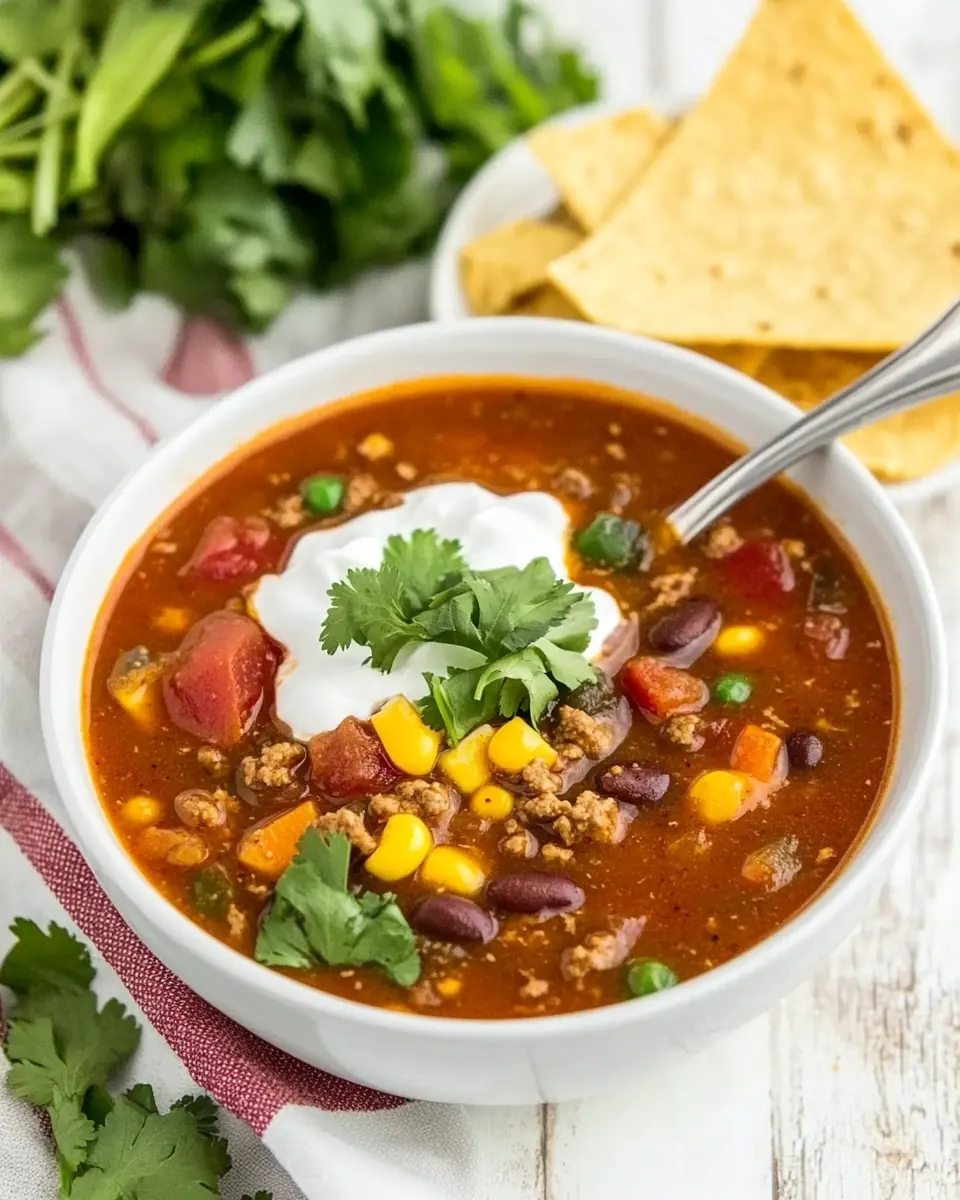
Easy Taco Soup
Ingredients
Equipment
Method
- Heat 1 tsp. olive oil in frying pan, add ground beef and cook until well browned, breaking into small pieces with turner as you cook it. Remove beef to large soup pot.: The sizzling sound is your friend here, it signals that the meat is searing and developing those caramelized bits that make the broth rich; you should notice the aroma deepen as the beef takes on color. Use medium high heat so the exterior browns while the inside cooks through, and break the meat into small, even pieces to ensure consistent texture in the final soup. If you rush this step by turning down the heat too low, the meat will stew and you will lose that toasted flavor which the recipe relies on. A common issue is overcrowding the pan, which causes moisture to accumulate and prevents proper browning; if your pan feels crowded, work in batches so each piece can sear properly. After transferring to the soup pot, scrape the pan to capture any fond.
- In same frying pan heat second tsp. of olive oil, add onions and saute until onions are starting to soften and brown, about 3 minutes.: When the onions hit the warm oil you will hear a gentle sizzle and soon smell a sweet, savory perfume; aim for translucence with a hint of golden edges, that balance gives a lightly caramelized flavor without bitterness. Keep the heat at medium so the onions soften and release sugars gradually, stirring to avoid uneven cooking. If you cook them too fast at very high heat they will brown too quickly on the outside and remain sharp inside, which can create hotspots of flavor that dominate. Watch for tiny brown bits forming at the pan surface, those are good signs the onions are developing depth.
- Add garlic, Mexican oregano, cumin, Ancho chile powder, and chili powder and saute about 1 minute, or until the spices are fragrant.: The moment the spices hit the hot onions the kitchen will fill with a warm, toasted aroma, which is when you know they are releasing their essential oils and integrating into the base. Stir constantly for about a minute, as spices can burn quickly and turn bitter; you want a toasty scent without any acrid notes. This step is crucial because it intensifies the spices beyond what raw powder can offer, building layers of flavor in the eventual broth. A frequent mistake is leaving the spices unattended where they can scorch, so keep stirring and reduce the heat if you sense smoking.
- Add onion mixture to the soup pot, then rinse out the frying pan with 1 cup beef broth and add that to the pot.: Deglazing the pan with broth pulls loose the concentrated browned bits, which are flavor gold, and folding that liquid into the soup ensures nothing is wasted. Use a spoon to scrape the pan while the broth warms so those caramelized fragments dissolve into the liquid, adding umami and complexity. If you skip this rinse, the pot misses nuanced depth and the pan waste goes down the drain. Make sure the broth is warm enough to lift the fond easily, cold liquid can be slower to dissolve those bits.
- Add the rest of broth, canned tomatoes, and can of undrained beans.: Pouring in the remaining broth and the tomatoes with their juice creates the main body of the soup, while the undrained beans contribute starch and creaminess that thicken the mouthfeel as they simmer. Stir gently to integrate, and bring the pot to a low simmer so flavors marry without aggressive boiling. If you boil vigorously the tomatoes can break down too quickly and create a frothy, less unified broth. A common oversight is draining the beans, which reduces the velvety texture they add; keeping their liquid helps maintain thickness and flavor balance.
- Let soup cook at very low simmer for 45 minutes, stirring occasionally and adding a bit more water if it cooks down too much.: During the long gentle simmer the flavors knit and the broth mellows, producing a comforting aroma that fills the kitchen; you will notice the liquid mellow and thicken slightly as starches from the beans integrate. Keep the heat low so the surface shows gentle movement, not a rolling boil, which preserves texture and prevents the meat from getting tough. Stir every so often to prevent sticking, especially toward the end as the liquid reduces, and add small amounts of water if the pot seems to be getting too thick. The mistake to avoid is stepping away entirely, because reductions can concentrate salt and heat, altering the intended balance.
- When the soup is done, stir in desired amount of lime juice. You can also add some Green Tabasco Sauce if you'd like it a bit spicier!: The bright citrus pop of fresh lime juice is the finishing note that lifts the whole pot, and adding it right at the end preserves that fresh tang; you should taste and add juice gradually until the acidity complements the savory base. If you choose to add a few drops of hot sauce, do so sparingly and taste, because it can quickly overpower the delicate lift of the lime. A common error is adding acidic elements too early, which causes them to fade during simmering, so reserve this step for the finish.
Notes
- Brown the meat properly: Allow ground beef to develop color and fond, which adds depth to the broth; if the pan is crowded, brown in batches so you avoid steaming.
- Adjust spice intensity: Taste as you go and add a touch of the chili powder or Ancho chile powder gradually, because different brands vary in heat and potency.
- Reserve liquid for deglazing: Keep one cup of the beef broth aside to rinse the pan so all that caramelized flavor makes it into the pot.
- Control salt with canned items: If your canned tomatoes or broth are high in sodium, dilute with a bit of water and taste before adding any extra salt.
- Finish with brightness: Fresh lime juice at the end lifts the whole bowl, so add it slowly and taste to find the right balance for you.