Go Back
French Toast

French Toast

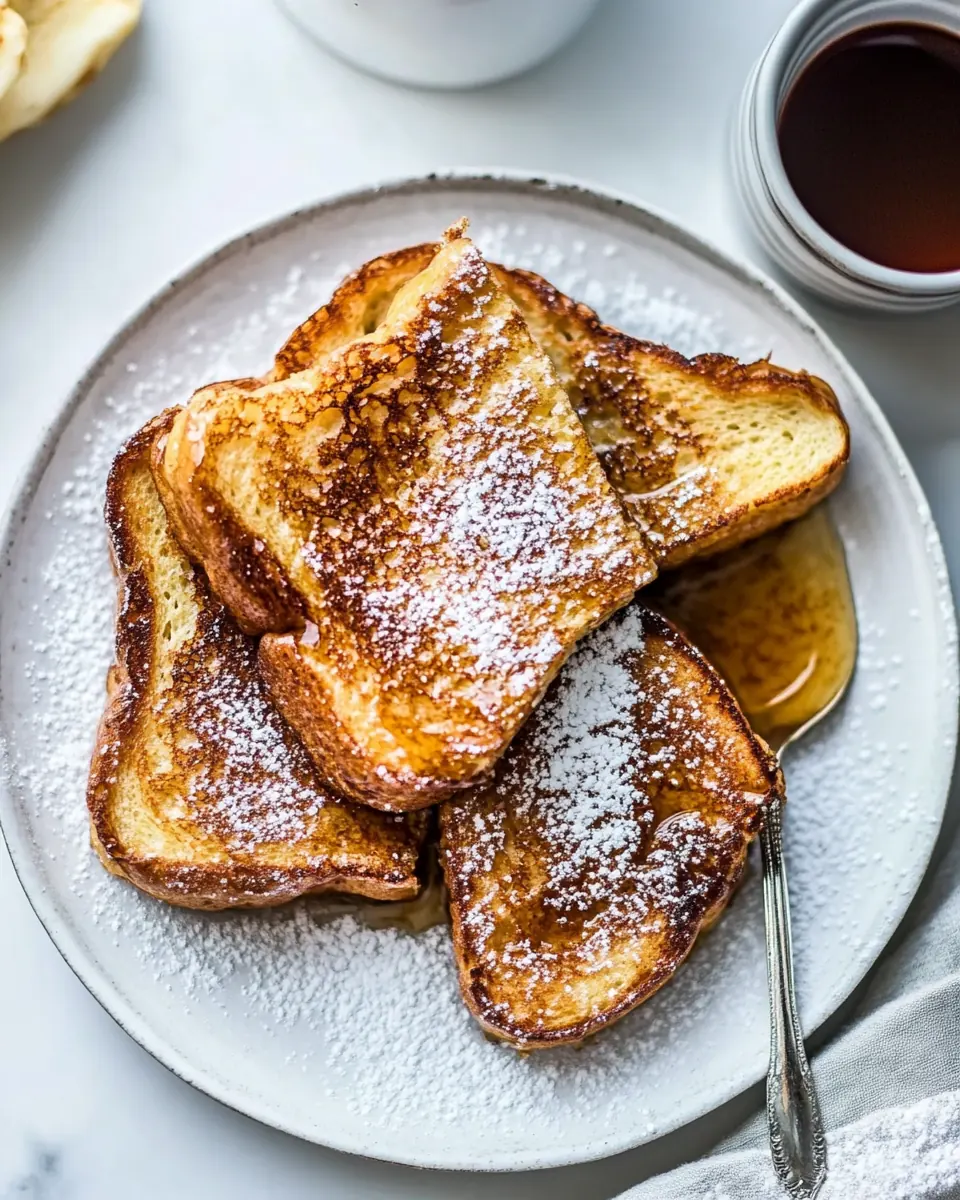
French Toast turns simple pantry ingredients into a creamy, golden breakfast treat with a soft custard interior and a lightly crisped exterior. This easy, crowd friendly recipe uses a batter enriched with a touch of flour for extra fluffiness, perfect for weekend brunch or an easy weeknight dinner. Make it for company or a cozy morning, you will love how quickly it comes together.
Prep Time 5 minutes
Cook Time 10 minutes
Total Time 15 minutes
Servings: 8 servings
Course: Breakfast
Cuisine: American
Calories: 250

Ingredients
  

  • 4 large eggs Beat thoroughly to provide structure and richness to the custard base, helping bind the wet and dry components together. Add moisture and contribute to a tender interior when the bread soaks in the mixture. Help create a golden, slightly puffed surface when cooked.
  • 2/3 cup milk (160 ml) Whisk in to loosen the custard and provide creaminess, contributing to a silky texture when bread soaks it up. Control the consistency of the batter so it soaks evenly without becoming soggy. Aid in browning and mouthfeel during cooking.
  • 1/4 cup all-purpose flour (30 grams) Whisk into the batter to slightly thicken and stabilize the custard, improving coating adhesion to the bread slices. Help achieve a custardy interior by combining with eggs and milk for a uniform texture. Prevent the mixture from being too runny while maintaining a smooth finish.
  • 1/4 cup granulated sugar (50 grams) Dissolve into the custard to provide sweetness and enhance flavor, balancing the egginess and dairy. Promote caramelization on the surface during cooking for appealing color and slight crispness. Support overall palatability and counteract any bitterness.
  • 1/4 teaspoons salt Sprinkle sparingly to enhance flavors and balance sweetness, amplifying the other ingredients without overwhelming them. Tighten the overall taste profile and support proper seasoning in the custard. Help accentuate subtle flavors so the final dish tastes well-rounded.
  • 1 teaspoon ground cinnamon Stir in to provide warm aromatic notes and subtle complexity, complementing sugar and vanilla within the custard. Add depth to each bite and contribute to the signature flavor profile of classic French toast. Enhance perceived sweetness without adding sugar.
  • 1 teaspoon vanilla extract (5 ml) Measure and mix into the custard to impart fragrant, sweet vanilla aroma that elevates the dish's overall flavor. Provide a familiar baking scent and roundness to the taste, tying together the dairy and spices. Use sparingly to avoid overpowering delicate flavors.
  • 8 thick slices bread Soak thoroughly to absorb the custard mixture while providing structure and texture, serving as the main vehicle for the flavors and custardy interior. Toast to develop a crisp exterior and warm, tender center; thickness helps prevent rapid sogginess and ensures even cooking. Act as the primary component that becomes golden and satisfying when cooked.

Equipment

  • Griddle

Method
 

  1. Preheat griddle to 350 degrees F or heat a skillet over medium heat.: You will notice a faint warmth rising from the surface and, when the pan is ready, a small drop of water will sizzle and evaporate quickly, which is the cue for proper temperature. Getting this right ensures a golden exterior without burning, so the middle has time to set. A common error is starting on a pan that is too hot, which browns the outside too fast while leaving the center undercooked. If your pan is smoking, reduce the heat and wait for it to cool, then try again.
  2. In a blender, add the eggs, milk, flour, sugar, salt, cinnamon, and vanilla. Blend until smooth. If you prefer whisking by hand, start by mixing the flour and eggs together in a shallow dish, then whisk in the rest of the ingredients until combined.: Right after blending or whisking you should see a glossy, slightly thick batter with tiny specks of cinnamon distributed throughout. The aroma will lift floral and sweet notes from the vanilla, which signals that your flavor base is ready. This step matters because a smooth batter coats the bread evenly, producing a consistent custard texture. If chunks of flour remain, pockets may cook oddly, so strain or blend again. A common pitfall is over mixing by hand, which can produce a lot of foam, so let the batter rest for a minute to let bubbles settle.
  3. Dip bread slices into the batter, dredging them well on both sides, and place on hot, greased griddle or skillet.: As you dip, you should see the bread darken slightly and feel heavier as it soaks up the batter. Allow excess to drip back into the bowl, but do not press the slices down, or they may become soggy. Arranging them on the heated surface, you will hear a soft sizzle, which is the sound of the custard beginning to set. The why here is simple: even coating ensures each bite has that creamy interior and a nicely browned exterior. Avoid oversaturating very soft bread, which can fall apart when flipped.
  4. Cook for a few minutes, until the bottom of the breads starts to get golden brown. Flip and cook on the other side the same.: You will see the edges firm and the underside transition from pale to a warm golden brown, and the aroma will deepen into buttery toasted notes. Flipping at the right moment ensures an even crust and prevents the interior from turning gummy. If the color progresses too quickly, lower the heat; if it is not browning after several minutes, slightly increase the heat. A frequent mistake is flipping too often, which prevents full color development and results in less texture contrast.
  5. Remove to a plate. Serve warm with syrup and a sprinkle of powdered sugar.: The finished slices should be springy to the touch in the center and fragrant with cinnamon and vanilla. Serving immediately preserves the crisp edge and custardy middle, while toppings like syrup add sweet, sticky contrast. If you leave them to sit too long, they can lose their texture, so keep them warm in a low oven if needed. Avoid covering tightly right away, or trapped steam will soften the crust.
Notes

  • Use richer milk for creamier batter. Swapping in whole milk or adding a splash of cream gives a silkier texture and more indulgent mouthfeel, which helps create a custardy interior that feels luxurious.
  • Try day old or slightly stale bread. Bread that is a little dry soaks up the batter without collapsing, yielding a more structured interior and preventing a soggy outcome when cooking.
  • Blend for a smooth batter. Using a blender ensures the flour is fully incorporated and creates an even coating on the bread, which reduces lumps and improves the final texture.
  • Control sweetness with toppings. Keep the batter moderately sweet and let toppings like syrup or powdered sugar provide adjustable sweetness so everyone can customize their slice.
  • Make ahead the batter. You can prepare the batter one to two days ahead and keep it chilled, which is helpful when hosting and keeps the process smooth on the morning of service.
  • Reheat without losing texture. Store cooled slices in a freezer bag for up to three months, and rewarm on a skillet or in a toaster to revive the exterior crispness and warm the custard center.