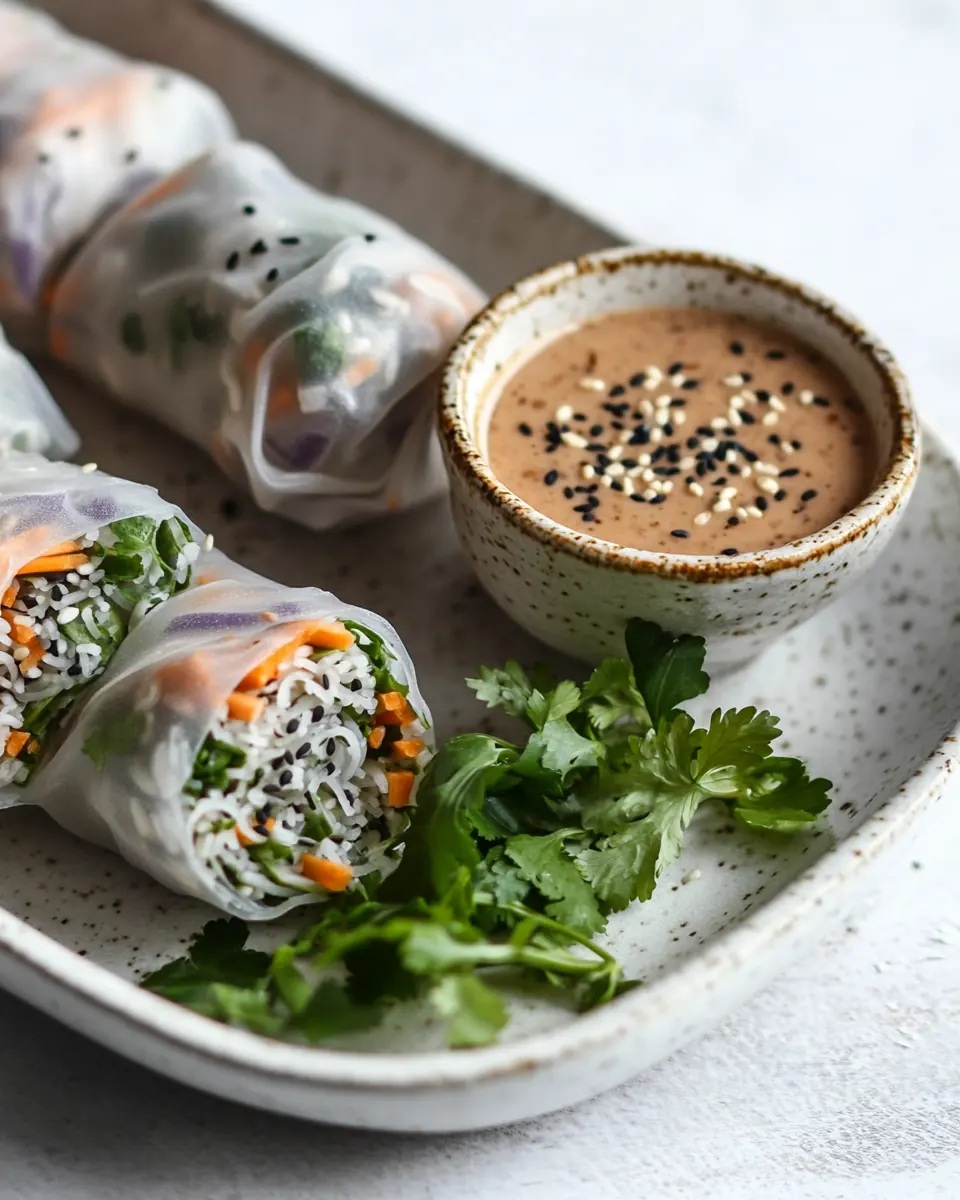
Bring a large pot of salted water to boil and cook the soba noodles just until al dente, according to package directions. Rinse them under cold water, drain, and return them to the pot. Toss the noodles with the sesame seeds and toasted sesame oil. Set aside.: The kitchen will fill with a toasty, wheaty aroma as the water simmers, and the soba noodles should feel springy when the package timing ends. Rinsing them under cold water stops the cooking and removes excess starch, keeping the noodles separate and slippery rather than clumping. Tossing them with the sesame seeds and toasted sesame oil while still slightly warm helps the seeds stick and releases their fragrance into the noodles. A common mistake is overcooking the noodles, which leads to a mushy filling that lacks pleasant bite, so test a strand a minute or two before the end of the suggested time.
Meanwhile, make the dipping sauce: In a small bowl, whisk together the almond butter, vinegar, tamari, honey, lime juice, sesame oil, ginger, garlic, and pepper flakes until well combined. If the sauce is too thick for dipping, stir in a little more lime juice.: In a small bowl, whisk together the almond butter, vinegar, tamari, honey, lime juice, sesame oil, ginger, garlic, and pepper flakes until well combined : When you whisk, the sauce becomes glossy and the aromas of ginger and garlic open up, offering a warm scent. If the mixture seems thick, adding a splash of extra lime juice thins it to a perfect dipping consistency while boosting brightness. The why here is flavor balance, as acid and salt lift the creamy almond butter so it does not feel heavy. One mistake is adding too much liquid at once, which can make the sauce too thin; add small amounts and taste as you go.
To prepare the spring rolls: Run a julienne peeler or vegetable peeler down the length of the carrot and cucumber repeatedly, turning halfway, to create long 'noodles.' Toss the carrot and cucumber with the soba noodles.: Run a julienne peeler or vegetable peeler down the length of the carrot and cucumber repeatedly, turning halfway, to create long 'noodles' : As you peel, you will see long, translucent ribbons forming, their crunch and vibrant color promising freshness. Tossing the carrot and cucumber with the soba noodles helps distribute moisture and flavor, so the vegetables do not sit dry inside the roll. This technique ensures even bites and pleasing texture contrasts. A common error is cutting pieces too short, which makes rolling awkward, so aim for long, even strips.
Fill a shallow pan larger than your rice papers (a pie pan works great) with warm water. Fold a lint-free towel in half and place it next to the dish (I just used a plastic cutting board). Make sure your prepared fillings are within reach.: The warm water softens the rice papers quickly, and you will hear a faint slosh as you submerge each sheet. Lay a lint free towel next to the pan to catch the softened wrapper and keep your workspace tidy. Having fillings within reach prevents over soaking which would produce an overly fragile wrapper that can tear during assembly. Avoid using boiling water, since it will over soften the sheets almost instantly and make them hard to handle.
Place one rice paper in the water and let it rest for about 20 seconds. You'll learn to go by feel here—wait until the sheet is pliable but not super floppy. Carefully lay it flat on the towel.: You will notice the sheet turn from opaque to translucent; that is your cue that it is pliable. Carefully transfer it to the towel and pat lightly to remove excess water, leaving it soft but not soggy. This timing matters because an under softened wrapper will crack when you roll, while an over soaked one can fall apart and leak fillings. Practice makes perfect with timing, so test one sheet first to learn your preferred feel.
Leaving about one inch of open rice paper around the edges, cover the lower third of the paper with a handful of soba, carrot and cucumber noodles. Top with a few strips of jalapeño and avocado in a row on top of the noodles, then sprinkle with green onions and chopped cilantro.: The sight of colorful layers is satisfying as you layer soba noodles and vegetable ribbons, and the tactile act of shaping a mound helps determine portion size. Adding a few strips of jalapeno and avocado gives spice and creamy contrast, while sprinkling green onions and cilantro adds fresh pops of flavor. The trick is to avoid overfilling; too much causes tearing or a loose roll that will not seal properly.
Fold the lower edge over the fillings, then fold over the shorter sides like you would to make a burrito. Lastly, roll it up, stretching the remaining long side around the roll to seal it. Repeat with the remaining ingredients. Halve the rolls on the diagonal with a sharp chef's knife (or serve whole) with the almond butter dipping sauce on the side.: You will feel the rice paper snug against the fillings as you fold, and the roll will start to compact, holding its shape. Stretch the remaining long side over the roll to seal it tightly, which helps create a neat, cohesive cylinder that slices cleanly. If you rush this step, the wrapper may slip or seal incompletely, so take a calm moment to press and align the edges for a tidy finish.
Repeat with the remaining ingredients: Each roll will develop its own small character as you work, with variations in thickness or filling placement, and you will likely refine your technique after two or three. Keep used rolls covered with a damp towel to prevent drying while you finish the batch. A common slip up is letting completed rolls sit uncovered, which dries the rice paper and makes the texture papery instead of supple.
Halve the rolls on the diagonal with a sharp chef's knife or serve whole with the almond butter dipping sauce on the side: The diagonal cut reveals the colorful layers, and a clean slice depends on a very sharp blade to avoid squashing the roll. Serving them immediately ensures the avocado stays bright and the wrappers retain their pleasurable chew. If you must wait, store the rolls in a single layer covered to preserve texture; stacking can bruise and flatten them.