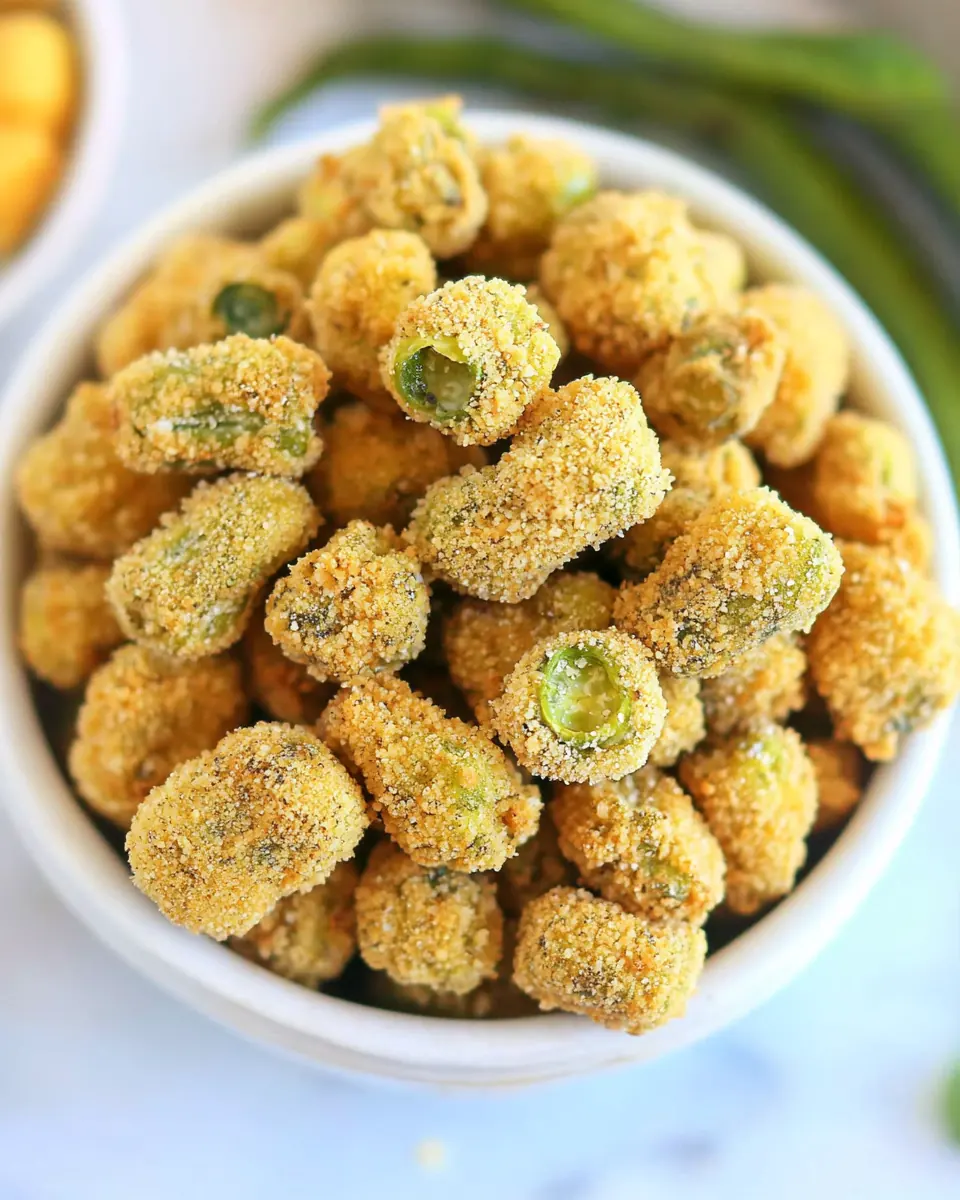
Cut okra stalks down to 1/4 inch pieces. Discard ends.: The first thing you will notice is the clean, green smell as you trim the okra , and slicing into uniform quarter inch pieces ensures even cooking and predictable texture. Use a sharp knife to avoid tearing the pods, which helps prevent extra mucilage release. One reason uniformity matters is that smaller pieces will cook faster and become crisp while larger pieces may stay underdone. A common mistake is leaving uneven sizes, which creates batches that are overcooked and undercooked simultaneously, so take a minute to get consistent pieces.
Beat 2 eggs in a bowl and place cut pieces of okra directly into egg mixture. Mix well to evenly coat all pieces.: When you beat the eggs , you'll see them become a glossy, frothy liquid that clings to each piece of okra . Work gently so the coating covers all sides, creating a sticky layer for the corn meal to adhere to. This step matters because a well coated surface prevents the breading from falling off in the oil, and it helps the crumbs form a cohesive shell. Avoid under mixing, which leads to patchy coating, and do not overwork the okra into the egg, which can damage the pieces.
Let okra set for about 5 minutes while oil is heating up.: Allowing the okra to rest in the egg lets the coating take hold, and you will notice the liquid look slightly tackier after a few minutes. This short rest helps the batter adhere better during frying, producing a more uniform crust. While the okra sits, preheating the oil prevents the temperature from dropping when you add food. Avoid skipping this rest, because immediate frying can cause poor adhesion and lost breading.
Heat at least 2-3 inches of oil in a saucepan until 375 degrees.: As the oil warms, you will see faint ripples and then a shimmering surface at the correct heat, and a thermometer shows the most reliable reading. Hitting roughly 375 degrees gives a fast sear that seals the coating, producing crisp exterior and tender inside. If the oil is too cool, the coating soaks up oil and becomes greasy, and if it is too hot, the exterior burns before the inside cooks. A common error is frying at low temperature, which yields soggy results, so maintain a steady heat.
In a separate bowl, add corn meal, salt and pepper seasoning and mix well to combine.: Combining the corn meal with the salt and black pepper ahead of time means every bite has balanced seasoning. The mixture should look evenly speckled, and stirring releases the aroma of the pepper into the meal. This step influences flavor distribution and crust texture, and if you forget to season the meal first, you may end up with bland fried pieces that need extra salting after frying.
Divide the okra (from the egg mixture) into fourths.: Portioning the egg coated okra into quarters helps you manage the coating process without overcrowding the bowls or the hot oil. You will appreciate the small batches because it reduces the chance of clumps and keeps the oil temperature more stable. This division is practical and prevents crowding the pan, which can cause uneven browning. A common oversight is working with too much at once, which cools the oil and results in soggy crust.
Add one fourth of the okra to the corn meal mixture and mix well to evenly coat all sides.: As you toss the portion into the seasoned corn meal , the tactile sensation of the meal clinging to the wet surface is reassuring, and you will hear a faint rustle as pieces separate. Ensure each piece has a full coating by gently tossing, so the final fry is evenly textured and gold brown all around. This technique matters because incomplete coating creates exposed okra that cooks differently. Avoid aggressive shaking that can knock off the coating before frying.
Place cornmeal covered okra into hot oil and fry until browned on both sides, about 3-5 minutes.: When the pieces hit the oil you will hear a lively sizzle, and the aroma of toasted corn will bloom quickly. Watch for a deep golden brown on one side before flipping, and use a slotted spoon or spider to turn pieces so both sides brown evenly. This timing provides a crisp exterior while keeping interior tenderness. A typical mistake is flipping too often, which prevents proper browning and prolongs cooking time, so flip only when a golden surface has formed.
Carefully remove, drain on paper towels and repeat, frying okra in batches and draining. Sprinkle with additional kosher salt as pieces come out of hot oil.: After frying, the sound of oil dropping off each piece quiets down, and placing them on paper towels helps absorb excess oil so the coating stays crisp. A light sprinkle of salt while the pieces are hot enhances flavor and adheres to the crust. Frying in batches keeps the oil temperature consistent and ensures uniform results. One pitfall is letting fried pieces sit too long on the towel, which can steam them and soften the crust, so serve promptly.
Serve fried okra immediately while still warm.: The best sensory moment is the first plate of hot, crispy okra , where the cornmeal crunch meets warm, tender interior. Serving right away preserves texture and delivers the ideal contrast of heat and crispness. This step matters because the crust begins to soften as it cools, changing the experience. Avoid holding the pieces for too long before serving, which diminishes the quality.