Bring ravioli and eggs to room temperature.: As soon as you start, notice the tactile difference when items are at room temperature, the ravioli will feel supple rather than chilled, and the eggs will blend into a smooth, glossy batter. This matters because cold eggs can seize when mixed with the bread crumbs, and cold pasta will lower the oil temperature causing oily results. If you skip this, expect uneven frying and potential tearing of the pasta skins. A good check is to gently press a ravioli and feel for flexible dough rather than stiff chill.
Combine the bread crumbs, Italian seasoning, and salt in a shallow bowl.: When you mix the crumbs, inhale the toasted notes and herbs that will become the outer crust, giving you a preview of the final aroma. A shallow bowl helps you bed the crumbs in an even layer for consistent dredging. If the crumbs are uneven, some pieces may brown faster, so shake the bowl to level them before dredging. Avoid overworking the crumbs with your hands which can compress them and reduce crispness.
Whisk together the eggs and milk in another bowl.: Whisk until the mixture is uniform and slightly frothy, you'll see tiny bubbles at the surface that indicate it is ready to coat. The texture should be fluid enough to cling but not runny, and the milk will mellow the egg flavor while helping the crumbs adhere. If it looks curdled, it might be too cold, so warm the bowl briefly in your hands. Do not overwhisk to the point of foamy peaked whites, or the coating may be uneven.
Dip the raviolis in the egg mixture and then dredge in the bread crumb mixture. Repeat this a second time so they are double-dipped 🙂 Let the raviolis set on a rack while the oil is coming up to temp.: After you dip, listen for the soft sound of crumbs settling and see how the crumb layer nests into the pasta folds. The coating will form little peaks and valleys that brown attractively. Repeat this a second time so they are double-dipped, then let the raviolis set on a rack while the oil is coming up to temp. The rest period helps the coating adhere and reduces sloughing in the oil. A common mistake is rushing to fry immediately, which can cause the crumbs to fall away when flipped.
You can either deep-fry or pan-fry the raviolis. You are looking for a temperature of 350-375.: When the oil reaches the correct range it should shimmer slightly and form small wisps at the surface without smoking. Use a thermometer for accuracy, because oil that is too cool will make greasy crusts, while oil that is too hot will brown the outside before the center warms. If you notice heavy smoking, reduce heat and let the oil stabilize. Avoid overcrowding the pan which drops temperature rapidly.
The raviolis take about 3 minutes to cook. Flip them over about halfway through to make sure they are cooking evenly.: During frying, listen for a consistent sizzle and watch the crust progress from pale to deep golden. The cook time is short so stay attentive, flipping carefully with tongs to prevent tearing. If they brown too fast, your oil is too hot, and if they stay pale after several minutes the oil is too cool. One classic misstep is leaving them unattended, leading to overbrowning on one side.
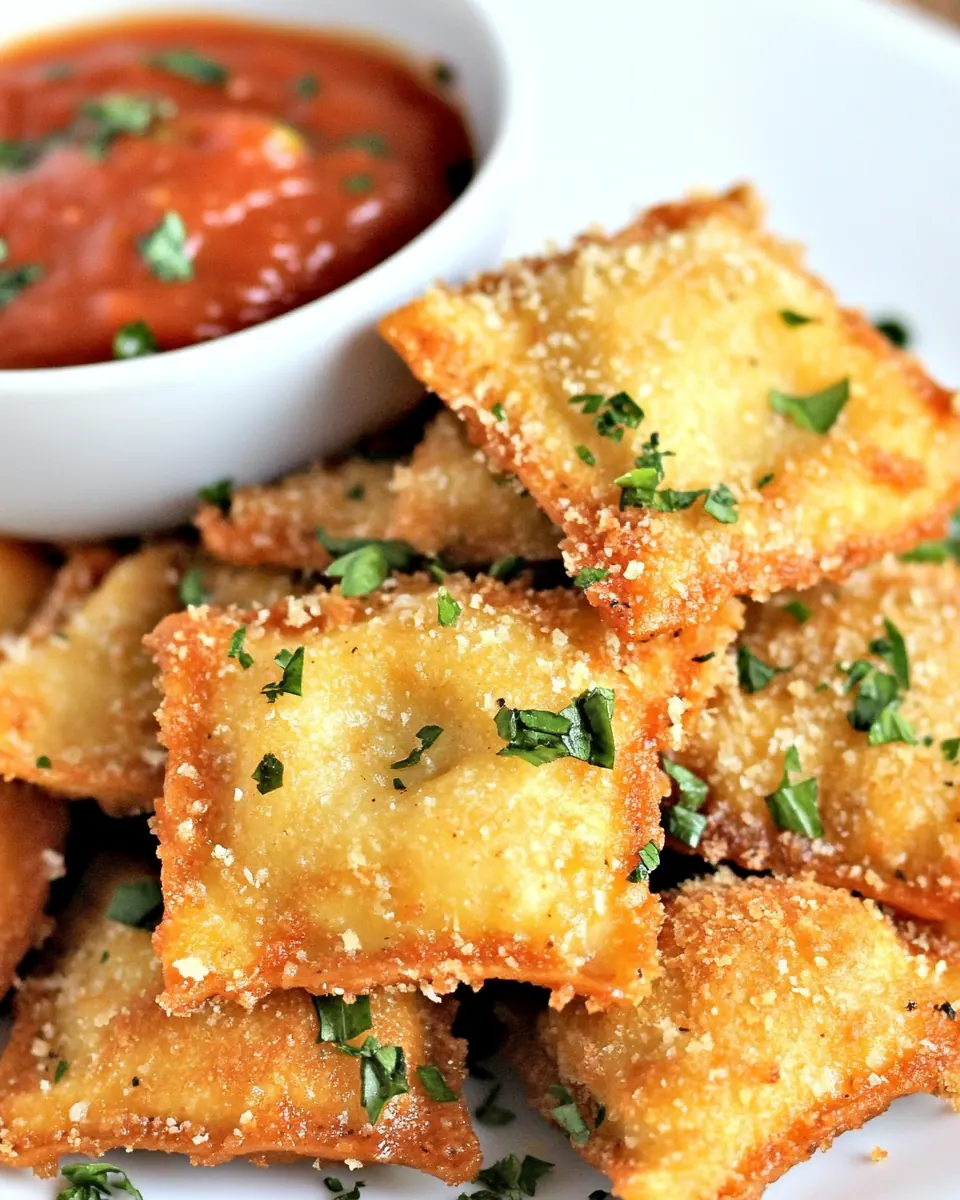
Once they are a nice golden color - take them out! The raviolis will puff up slightly just as they would if you boiled them.: As you lift them from the oil, note the crisp shatter and the faint steam rising from seams where the filling warmed. They will puff up slightly, a good visual cue that the interior is hot and the filling softened. Transfer to a rack to drain rather than paper towels to keep airflow around them and preserve crispness. If you pile them, the trapped steam will soften the crust.
Serve them warm or at room temperature.: When plated, the texture is at its best within the first 20 minutes, presenting a warm interior contrasted by the crisp shell. I often arrange them in a single layer so the bottoms do not steam, and I invite guests to grab with tongs or fingers for a convivial feel. Serving them too late results in a loss of crunch, so try to time plating with arrival.
A warm marinara makes the perfect dipping sauce for this tasty appetizer.: The tangy acidity of a warmed marinara sauce cuts through the fried richness and brightens each bite. Keep the sauce gently simmering so it is hot when you serve, and spoon a small amount into shallow bowls for dipping. Avoid thick, cold sauces which can mute the contrast between hot and crisp that makes this snack sing.