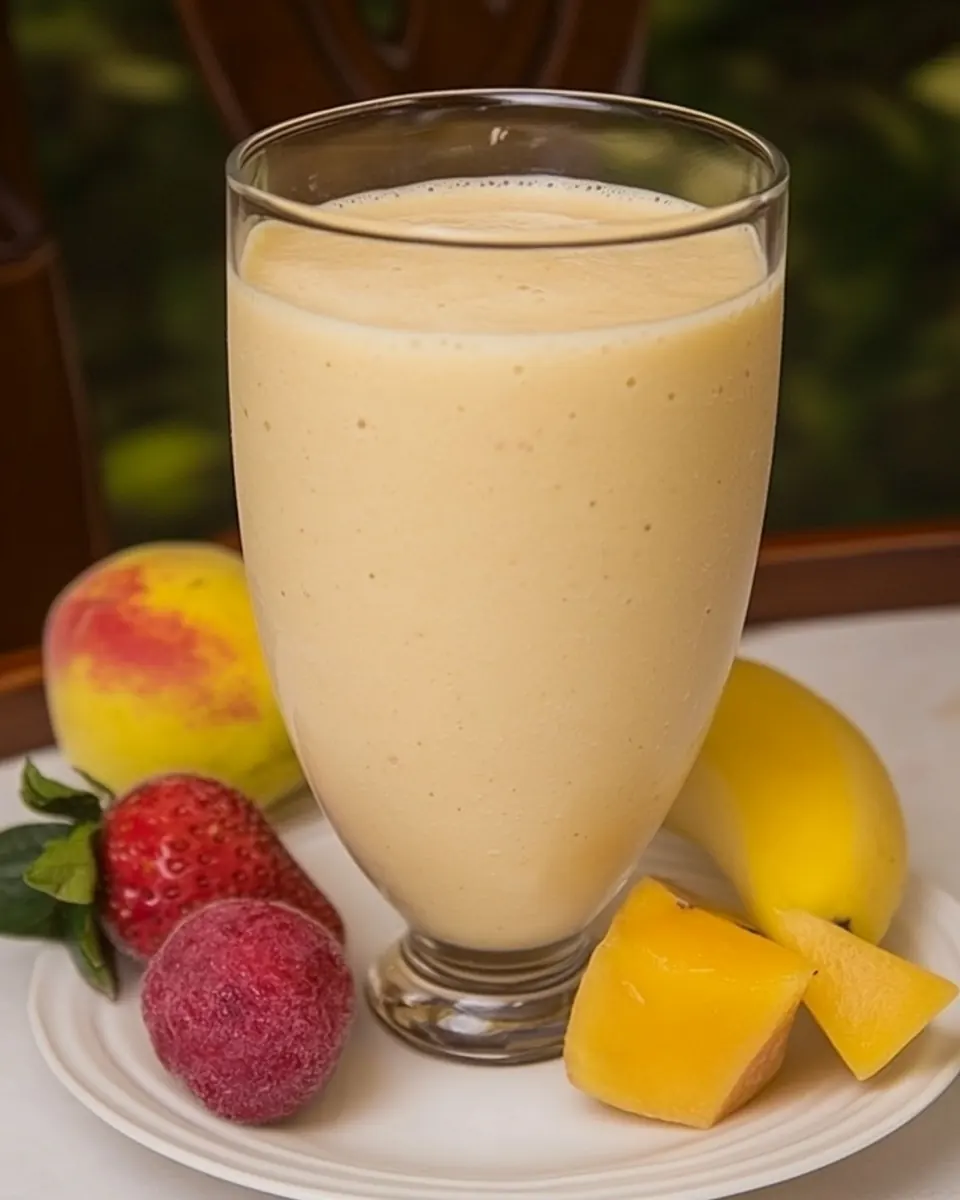
Put all the peeled and cut fruits in the blender. Cover with milk to just cover all the fruits. Add the sugar.: As you place the banana , the mango pulp, and the peaches into the blender jug you will notice a crescendo of fragrance, a bright, fruity perfume that signals ripeness. The visual should be a colorful mound of fruit pieces; larger chunks will create a louder blending noise but will still puree down. Why this matters, aroma helps you gauge ripeness and the amount of sweetness you'll need. A common mistake is adding fruit in too large chunks which strains some blenders, so aim for bite sized pieces. If your blender struggles, pause and press the fruit down with a spatula, then pulse to resume. Keep an eye on the blender's fill line, leaving room for liquid to move so you avoid overflow.
Blend until perfectly smooth and no chunks are left. Serve immediately.: Pouring the whole milk so it just reaches the top of the fruit is about controlling texture, you want enough liquid to allow the blades to move freely but not so much that the mix becomes watery. The milk will mute sharp edges and create a soft, creamy body. If you pour too much, the result can be thin and less satisfying; if you pour too little, you may end up with a chunky blend that needs extra stirring. A trick I use is to start with slightly less milk than you think you need and add more while blending until you see the silky ribboning texture in the jug.
Add the sugar: A single tablespoon of sugar dissolves quickly when the blender starts, elevating the fruit sweetness and bringing out background notes. The sugar is a balancing act, especially useful if the fruit is just short of perfect ripeness. If you oversweeten, the smoothie can taste cloying, so add less and taste after blending, then adjust. One common error is assuming every batch needs the same sugar amount, but sweetness varies with fruit, so keep your tasting spoon ready.
Blend until perfectly smooth and no chunks are left: Listening for a consistent, even whir signals that the fruit has fully pureed into a uniform texture; you should see a glossy, homogenous liquid without visible fruit fibers. Visually the surface should be smooth and slightly aerated, and the aroma will lift as the ingredients emulsify. Texture matters because a velvety mouthfeel makes the smoothie feel more indulgent. A frequent pitfall is blending too long which can warm the drink and flatten its brightness, so pulse to check and stop as soon as the smooth appearance is reached. If the mix seems too thick, add a splash more whole milk and pulse a few times to reach the ideal pourable consistency.
Serve immediately: The moment you pour the smoothie into chilled glasses you will notice that fresh fruit shines brightest right after blending, the aroma is most vibrant and the texture is at its peak. Serve quickly to capture the airy, fresh character before separation begins. A common mistake is letting it sit too long, which leads to watery separation and a dull flavor. If you must wait, stir gently before serving to recombine, and keep glasses chilled to preserve the refreshing temperature.