Combine chopped bell peppers, jalapeno peppers, whole garlic cloves, dill and parsley into a large food processor or blender and pulse to finely chop.: The first scent you will notice while pulsing is the sharp, green aroma of the jalapeños and the earthy, pungent perfume of whole garlic cloves, which together build the backbone of the marinade. As the blades pulse, listen for a rhythmic chopping sound that signals even breakup, and watch for a coarse, herb flecked texture rather than a puree. This coarse chop allows the marinade to mingle with the tomatoes without turning into a smooth sauce. One reason this technique matters is texture contrast, it helps the marinade cling to tomato surfaces and release bits of herb and pepper in each bite. A common mistake is over-processing, which will heat the mixture and smash delicate herb oils, making the marinade bitter. If you end up too smooth, stir in a few extra chopped herbs by hand to restore brightness.
Transfer mixture to medium bowl and add 1/2 cup vinegar, 1/2 cup olive oil, 1/2 cup sugar and 2 1/2 Tbsp salt. Stir to combine.: When you pour in the white vinegar and olive oil the aroma shifts to a lively tang, and the sugar starts to dissolve, softening the initial sharpness. Stirring releases aromatic compounds and dissolves the sugar and salt, creating a glossy emulsion that will coat the tomatoes evenly. The visual cue is a sheen on the liquid and suspended flecks of herb and pepper. The why here is that dissolving the seasonings before adding tomatoes ensures even distribution and prevents pockets of concentrated salt. One troubleshooting tip is to taste the marinade on a small spoon before adding tomatoes, you can adjust sugar or salt if it feels unbalanced. Avoid vigorous whisking that could warm the oil and blunt its flavor.
Cut tomatoes in halves (or quarters if using larger tomatoes), trimming off fibrous stem tops. Layer tomatoes and marinade into large 1 gallon jar, alternating with tomatoes and marinade until jar is full.: As you slice the tomatoes , note the bright, sweet juice that escapes and the firm but yielding flesh. Cutting them into uniform halves or quarters helps them layer neatly in the jar and ensures consistent marination. Remove the fibrous stem tops because they can add an unpleasant chew and detract from the clean tomato flavor. The visual sign you want is exposed, glossy tomato flesh that will readily accept the marinade. The technique matters because uneven sizes marinate at different rates, producing inconsistent bites. A common mistake is rough chopping into uneven chunks, which leads to some pieces becoming mushy while others stay under-marinated.
Cover with lid and tighten. Turn jar upside-down, placing it over a plate to catch any leaks. Refrigerate up-side-down 12 hours (*see note). After 12 hours, flip the jar right side-up and enjoy! Refrigerate remaining tomatoes keeping jar right-side-up.: As you layer, notice how the marinade settles into the tomato crevices, the surface reflecting light and carrying herb flecks. Alternate to ensure that every pocket of tomato gets contact with the liquid rather than trapping air. This layering helps distribute flavors and creates beautiful visual strata of red fruit and green herbs. The reason this matters is even exposure to the marinade gives consistent flavor throughout the jar. Avoid packing the jar too tightly, which can bruise tomatoes and release excess water, diluting the marinade. If your jar is smaller, consider using two smaller containers to maintain the layering effect.
Cover with lid and tighten. Turn jar upside-down, placing it over a plate to catch any leaks. Refrigerate up-side-down 12 hours (*see note): Flipping the jar allows the marinade to fully submerge the topmost tomatoes, ensuring everything gets evenly infused overnight. As it rests in the fridge, the smell will mellow and the garlic will soften, changing from sharp and raw to a roasted, sweet edge even without heat. Refrigerating also slows enzyme activity and keeps the tomatoes firm while they soak up flavor. One important troubleshooting tip is to use a plate beneath the jar as a safeguard for leaks, especially if your jar seal is imperfect. Avoid storing at room temperature since the recipe relies on cold marination to preserve texture and safety.
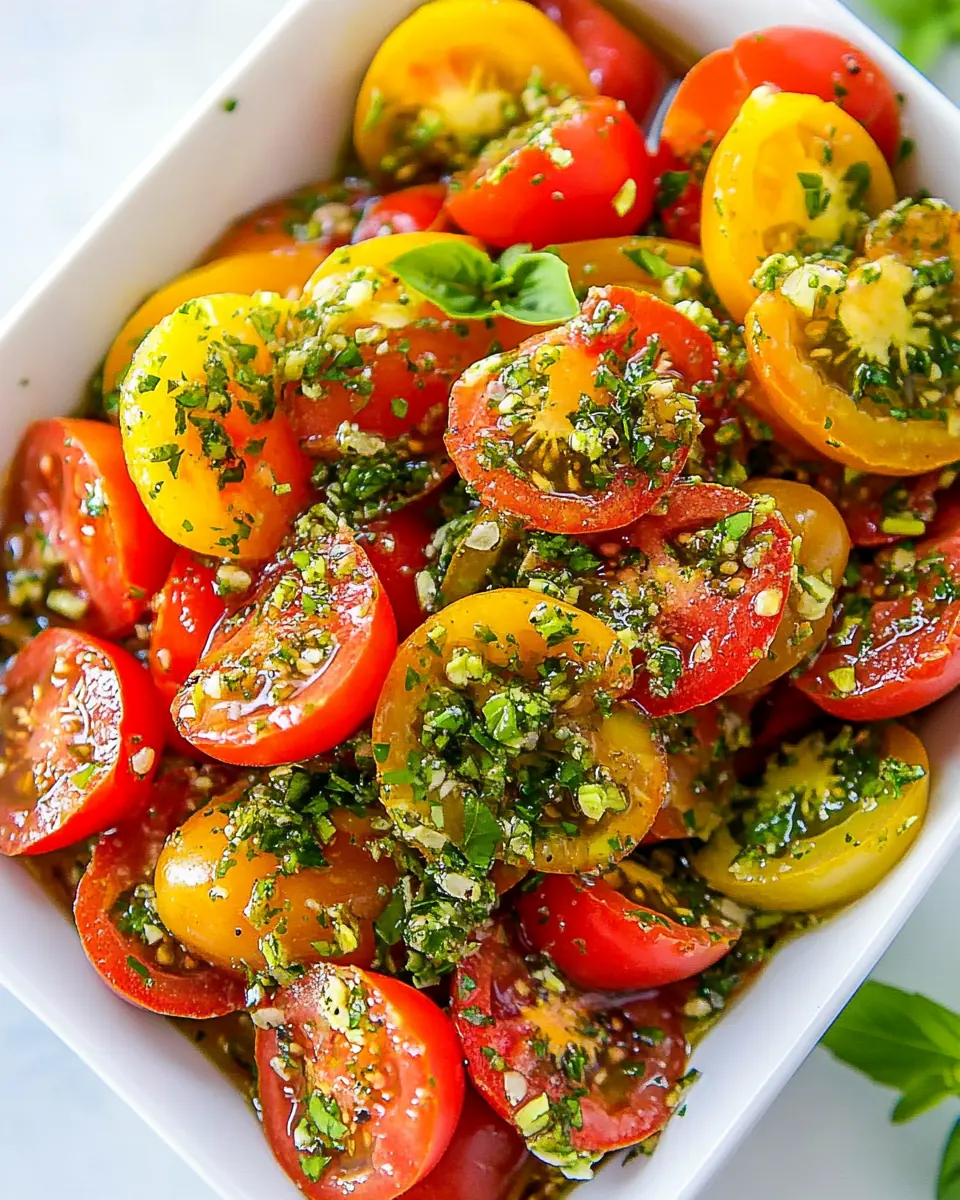
After 12 hours, flip the jar right side-up and enjoy! Refrigerate remaining tomatoes keeping jar right-side-up: At this point you should see glossy, slightly shrunken tomato pieces saturated with marinade, and the aroma will be rounded and herb forward with a mellow garlic warmth. Serve chilled or at cool room temperature, spooning some of the marinade over each portion for extra brightness. The reason to flip and then return the jar right side-up is to keep the seal intact while making the contents easy to access. A common mistake is letting the jar sit too long without flipping back, which can make storing awkward and increase the risk of sloshing during handling. If you plan to keep leftovers more than a few days, ensure the container remains tightly closed and refrigerated to preserve texture and flavor.